What are the Flavor Characteristics of Ethiopian Geisha Coffee Beans? Origin, Variety, and Grade of Geisha Village Chaka
When it comes to Ethiopia, every coffee enthusiast knows it's the birthplace of coffee. But mention Geisha, and the first thought is inevitably Panama's Hacienda La Esmeralda. In fact, the Panamanian Geisha story traces back to Gesha Mountain in Ethiopia—and today Ethiopia has estates dedicated entirely to growing Geisha. In this article, FrontStreet Coffee walks you through Ethiopian Geisha coffee.
The Origin of Gesha Village Estate
According to FrontStreet Coffee's research, the estate was founded and is run by documentary director Adam Overton and his photographer wife Rachel Samuel. The idea took root in 2007, while they were filming a documentary about Ethiopian coffee for the Ethiopian government and discovered the Gera coffee forest in the Bench Maji region. Somewhere along the way, they conceived the idea of creating their own coffee estate and brand.

In 2009, they had the good fortune to meet Willem Boot, owner of the renowned Don Pachi Estate and a BOP judge. Boot's insight gave the couple their opening: return to Ethiopia and find Geisha's birthplace. That quest led them to a village called Gesha in Bench Maji—the area most likely to hold the original Geisha.
Adam then followed Willem Boot on "adventures" through the surrounding forests, and in jungle thick with dense growth they found several wild coffee tree species. To their astonishment, they found wild Geisha.
They later learned this was the Gori Gesha forest—the very place where the Geisha variety was first discovered. They collected seeds from the original Geisha trees, screened them, and planted them at the site they eventually chose for their estate, naming it Gesha Village Estate.
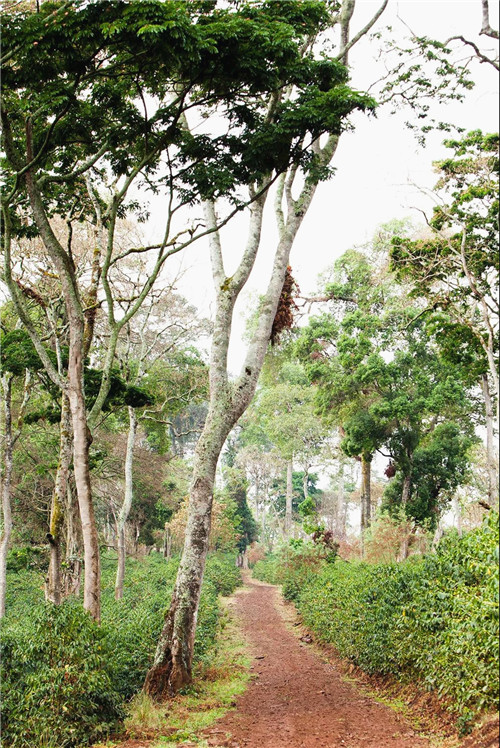
Unlike most Ethiopian coffee operations, this is no smallholder farm: it's a large estate of nearly 500 hectares, fully equipped, and planted exclusively with Geisha variety coffee.
The Gesha Village Geisha Grading System
Willem Boot also brought Panama's business model to Gesha Village, creating the estate's Geisha grading system—the same tiers you'll see on FrontStreet Coffee's menu: Gesha Village Auction, Gold Label, Red Label, Green Label, and Chaka. These standards differ markedly from Hacienda La Esmeralda's Panamanian grading, so here is a quick guide to each.
Auction Lots: Only 3.7% of Gesha Village's annual production—the estate's most rigorously selected top-tier batches, available exclusively through the 2018 Gesha Village Coffee Estate Global Auction. The 2018 auction lots cupped from 88.15 to 92.67 points and were further split into Champion's Reserve and Farm Reserve. Gesha Village 2018 Auction Lot RSV.6, for example, belongs to this category.

Gold Label Lots: Just 5% of annual production, nearly the equal of the auction lots. Competition baristas from around the world gravitate to these batches—at the 2018 WBC World Championship in the Netherlands, both the Australian and Japanese champions chose Gold Label lots for their routines. Roasters with exacting standards buy them too. They offer complete traceability and prominent, complex flavors in every batch—the second-best grade after the auction lots. FrontStreet Coffee's Gesha Village Gold Label comes from the OMA 059 batch.
Red Label Lots: Batches with complete traceability and the estate's typical Gesha Village flavor character. Flavor intensity and complexity run slightly below Gold Label, making them a very cost-effective single-origin choice.
Green Label Lots: Officially named SINGLE-TERROIR, these beans come from single farms within Gesha Village, with full traceability for every batch number—farm name, coffee variety, and processing date.
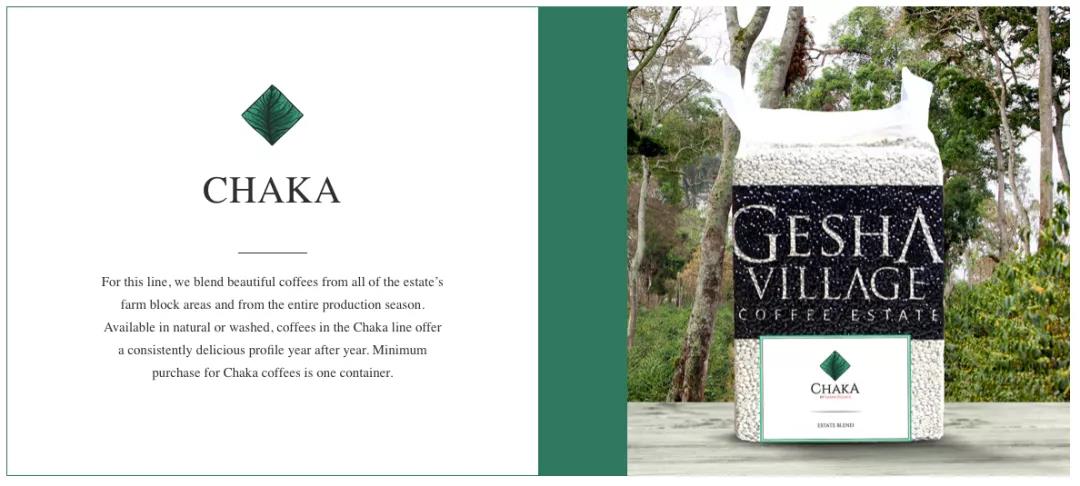
Chaka Lots: A Geisha blend produced by Gesha Village, combining three varieties: Gori Gesha, Gesha 1931, and Illubabor (an Ethiopian native disease-resistant variety).
Gesha Village Coffee Varieties
As noted above, Gesha Village grows three varieties: Gesha 1931, Gori Gesha, and Illubabor, the last supplied by the Ethiopian Coffee Research Center. Both Gesha 1931 and Gori Gesha are named for the expeditions that found the trees.
Gesha 1931 was confirmed through plant morphology, bean shape and size, and cupping quality—it is the closest to the parent variety of Panama Geisha. The Gori Gesha native variety was collected by the estate's owners in 2011 on their own expedition into the Gori Gesha wild coffee forest, about 20 kilometers from the current estate, and no duplicate samples have been found elsewhere.

Next, a brief look at the character of each variety.
Gori Gesha: This variety replicates the genetic diversity found within the Gori Gesha coffee forest.
Gesha 1931: A combination of various forest varieties, very similar to Panama Geisha, selected by observing plant morphology, bean appearance, sieve size, and cupping flavors.
Illubabor Forest 1974: Discovered during a 1974 expedition to the Illubabor forest and later developed into a disease-resistant variety by the Ethiopian Research Center.
Area and Planting Varieties of the Gesha Village Plots
The estate's owners use very detailed plot numbering to ease management and flavor traceability. The image below shows the area and planting varieties of the different Gesha Village plots.
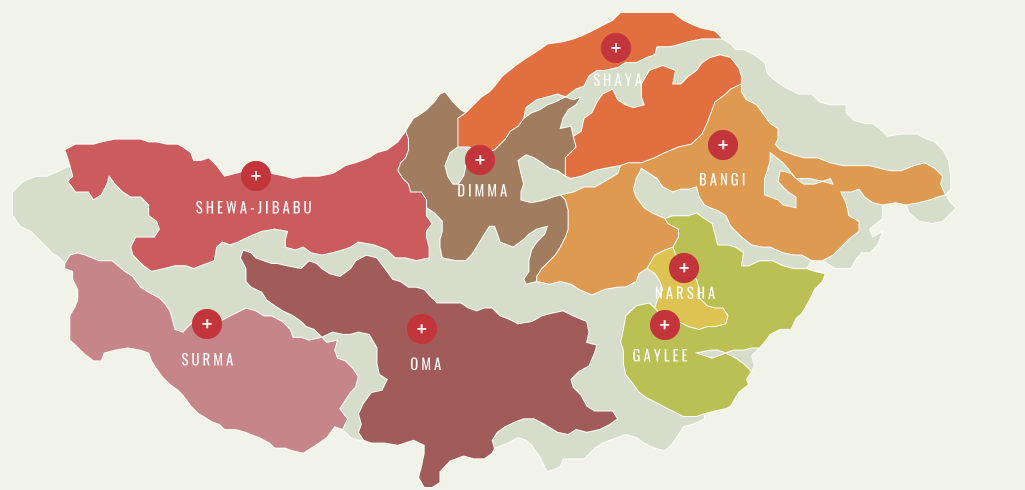
The map shows that the western part of the estate sits at higher terrain, so the OMA, SURMA, and SHEWA-JIBABU plots have slightly higher altitudes. The south carries a higher shade ratio, while the north enjoys longer sun exposure. Across the eight plots, the estate manager matches each one's microclimate—altitude, soil, shade—to the most suitable variety, ensuring each major plot develops its own distinct character.
FrontStreet Coffee's shop currently offers Gesha Village Gold Label, Red Label, and Chaka Geisha beans. Here are their profiles and brewing data.
FrontStreet Coffee: Ethiopia Gesha Village Estate Gold Label Geisha Coffee Beans
Region: Ethiopia, Bench Maji
Estate: Gesha Village Estate, Oma Plot
Altitude: 1900-2040 meters
Variety: Gesha 1931
Processing: Natural
Flavor: Citrus, lemon, tropical fruits, cream, nuts, tea-like sensation
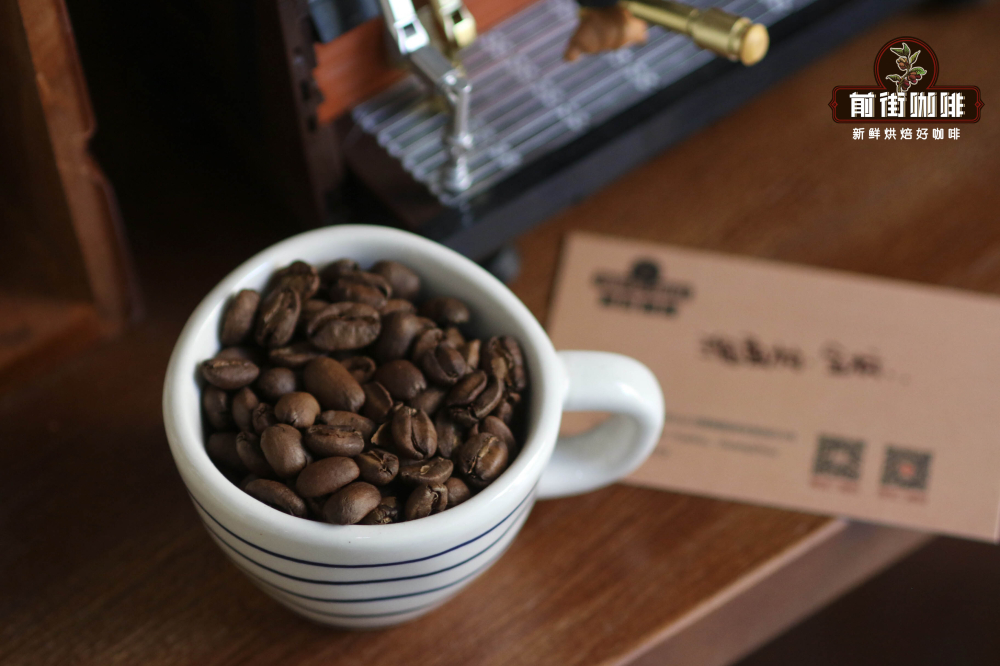
FrontStreet Coffee: Ethiopia Gesha Village Estate Red Label Geisha Coffee Beans
Region: Ethiopia, Bench Maji
Estate: Gesha Village Estate
Altitude: 1909-2069 meters
Variety: Gori Gesha
Processing: Natural
Flavor: Coconut, licorice, cream, chocolate, toffee, citrus, almond, strawberry
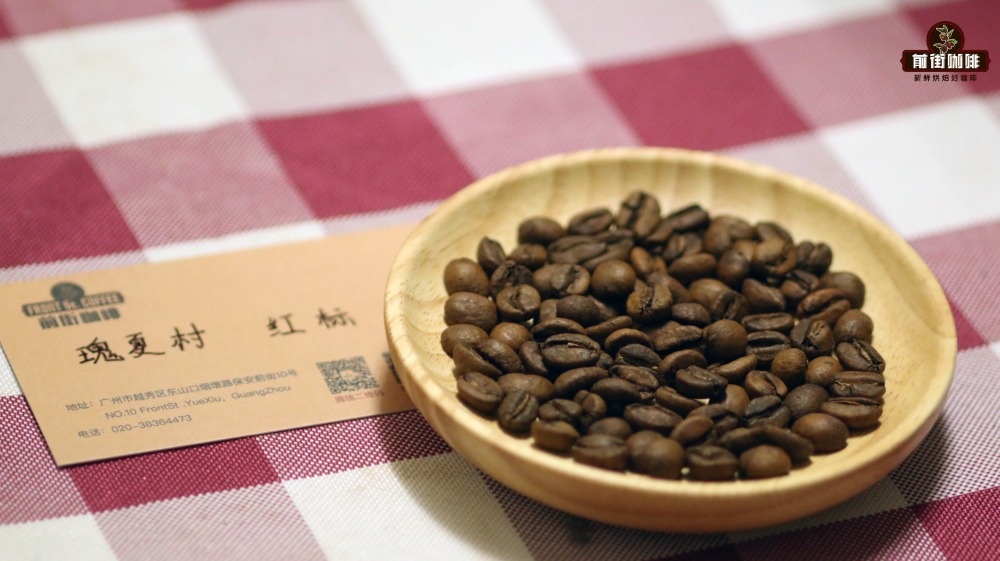
FrontStreet Coffee: Ethiopia Gesha Village Estate Chaka Geisha Coffee Beans
Region: Ethiopia, Bench Maji
Estate: Gesha Village Estate
Altitude: 1909-2069 meters
Variety: Gori Gesha
Processing: Natural
Flavor: Citrus, grapefruit, cream, chocolate caramel
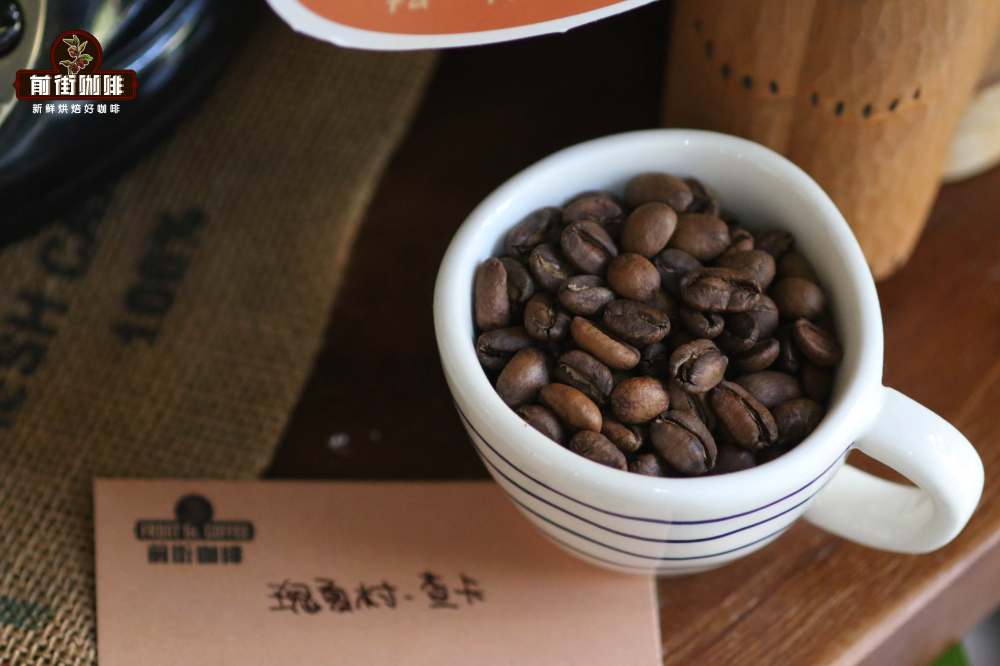
Gesha Village Processing Methods
All of FrontStreet Coffee's Gesha Village beans are naturally processed, so their aromatics are relatively intense and a gentle fermented sensation shows up in the cup.
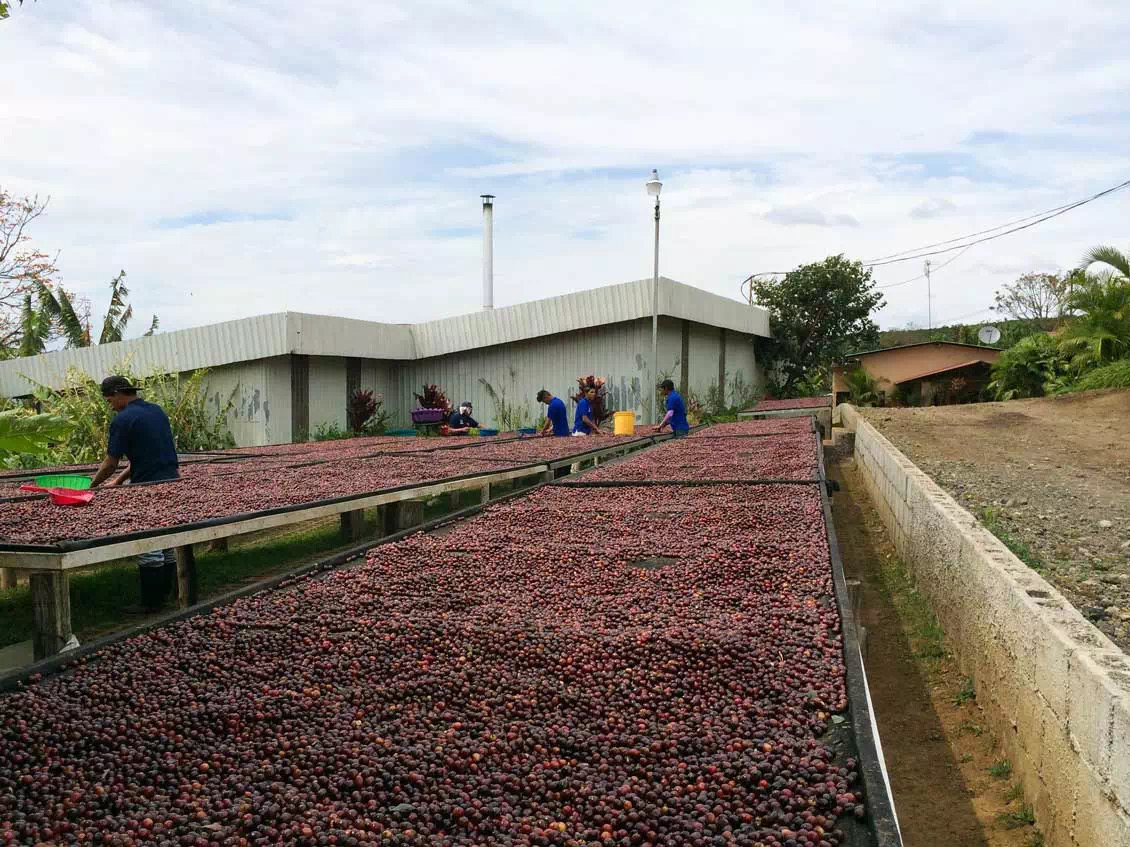
The Natural Process
Floating impurities are removed first, then the cherries are dried in thin layers—covered with plastic sheeting—on African raised beds. During bed drying, workers keep screening out insect-damaged and green-colored beans. Total drying time is 18-30 days. FrontStreet Coffee finds naturally processed coffee shows pronounced sweetness, soft acidity, and complex fruity notes.
FrontStreet Coffee Roasting Analysis
This roasting demonstration uses Gesha Village Red Label beans. Because the batch is from the 2022 new harvest and carries higher moisture, the dehydration phase is extended. The final roast is set at medium-light to highlight the fruity sweetness.
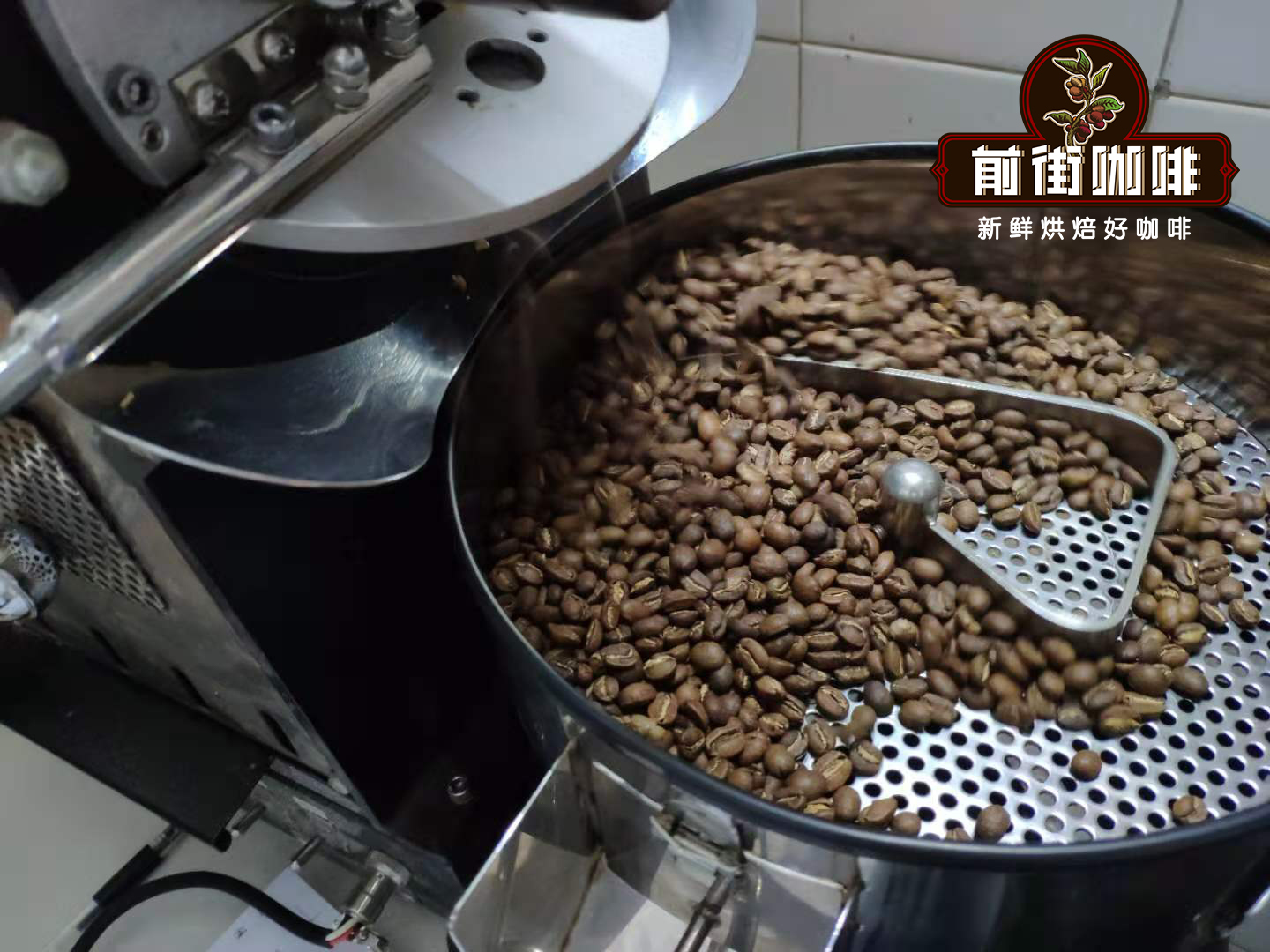
Yangjia 800N, 500g charge: drum temperature 175°C, heat 130, damper at 3; turning point at 1'36" with drum at 92.8°C; at 3 minutes open the damper to 4 and raise heat to 140; at drum temperature 152.6°C (6'26") the beans yellow, the grassy smell vanishes entirely—the dehydration stage ends, so drop heat to 100; at 8'20" ugly wrinkles and black markings appear on the bean surface and toast aroma clearly shifts into coffee aroma—the prelude to first crack. Listen carefully: first crack begins at 9'55", open the damper to 5, develop 1'30 after first crack, and drop the beans at 193.5°C.
FrontStreet Coffee Pour-Over Brewing
To taste the full flavor, FrontStreet Coffee suggests using freshly roasted beans, ground and brewed immediately. For light-roasted beans, resting 4-7 days after roasting yields richer flavors. Freshly ground coffee beats pre-ground every time: once ground, aroma and flavor volatilize by half within half an hour, leaving little behind. FrontStreet Coffee offers a grinding service, but if you own a grinder, whole bean is always best.
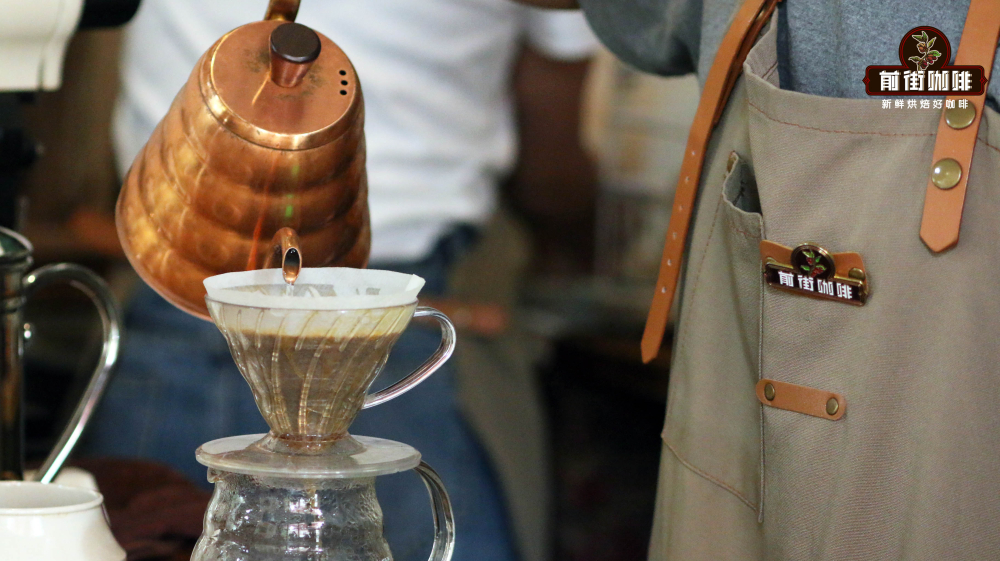
Brewing Parameters:
Coffee amount: 15 grams
Coffee-to-water ratio: 1:15
Grind size: Fine pour-over grind (78% retention on #20 standard sieve)
Water temperature: 90°C
Brewing Method:
Wet the filter paper and preheat the dripper and server. Bloom with 30g of water for 30 seconds, then continue pouring in stages to 125g. When the level drops and is about to expose the bed, pour on to 225g and stop. When the level drops again to just above the bed, remove the dripper (timing starts from the bloom). Total extraction time: exactly 2 minutes.

In the Cup: Rich jasmine fragrance, with peach, apricot, candied fruit, melon, and honey tangerine, all tied together by honeyed sweetness.
FrontStreet Coffee Recommendation
Gesha Village's grading ladder makes it easy to match budget to ambition. Gold Label comes from the Gesha 1931 variety and represents just 10% of the estate's total production—the estate's top coffee outside the auction, frequently chosen by baristas for international competitions. FrontStreet Coffee's Gold Label batch is a refined natural process whose complexity shines from the dry aroma through the finish. Red Label comes from the Gori Gesha variety—about 15% of production, scoring 88 points or above on the SCA 100-point scale—and belongs to the estate's single-terroir series, so every batch number carries full traceability, including farm block, variety, and processing date.
If you'd like to try an estate-level Ethiopian Geisha beyond Gesha Village, FrontStreet Coffee's Genlana Gesha is a superb pick. The Genlana processing station, founded in 2014 and run by Mr. Israel Degefa, sits at the border of the Kochere and Gedeb Abaya areas amid 700 hectares of mostly uncultivated, fertile, shade-drenched land. Fully ripe cherries are hand-picked and raised-bed dried for 14-20 days depending on weather. Roasted medium-light, it shows bright citrus acidity, elegant ginger-flower aroma, and full ripe-fruit sweetness with the signature refined Geisha finish.
Brewing tip: Geisha is a dense, medium-light-roast flower-and-fruit bean that tends to sink and clog the dripper, so grind to about 78% pass on a #20 sieve (fine-granulated sugar) and use 91°C water. Dose 15g in a small Hario V60 at 1:16, pour in three stages—bloom 30g for 30 seconds, then to 125g, then to 225g—for a total extraction of about 2:10-2:20.
Important Notice :
FrontStreet Coffee is a long-established specialty coffee roaster in Guangzhou China, selling freshly roasted beans from its own farm in Yunnan as well as dozens of carefully selected single-origin beans from around the world for both pour-over and espresso. The products deliver consistently excellent quality and great value, with shipping within 24 hours. Guangzhou's FrontStreet Coffee shop is recommended by many coffee lovers, and the beans are now available online at the Tmall 。
FrontStreet Coffee has moved to a new address:
FrontStreet Coffee Address: 315,Donghua East Road,GuangZhou
Tel:020 38364473
 Scan and follow the En Gafei WeChat official account. Please indicate that the reprint comes from "En Gafei".