How to Taste and Appreciate Espresso? What are the Characteristics, Taste, and Flavor Requirements of Standard Espresso?

Espresso's most distinctive trait is its concentration. Most espresso falls in the 7% to 12% range, meaning water makes up 88%-93% of the cup. Drip coffee, by comparison, typically sits at 1.2%-1.8% concentration, or 98.2%-98.8% water.
Understanding Espresso Coffee Concentration
FrontStreet Coffee believes a good espresso should present a rich, mellow flavor with a smooth mouthfeel, no graininess, and a perfect sweet finish, with noticeable sweetness on both the throat and the tongue.

The Impact of Coffee Concentration on Flavor Expression
Rich without being bitter or burnt is the basic standard for judging a good espresso. Coffee concentration works on our tasting experience in two main ways: the intensity of flavor, and the texture, meaning its consistency and richness.
Concentration also shapes how we perceive taste. As concentration rises, our ability to tell different flavors apart weakens noticeably, and the perceived intensity of the coffee flavor climbs quickly. The same coffee at different concentrations contains the same flavor compounds, yet the experience on your tongue can be quite different.
Lower concentration does not automatically mean tasteless or weak. Sometimes a lower concentration lets us enjoy subtler flavors that a stronger cup would mask. An espresso with lighter, more delicate notes may have lower flavor intensity, yet it can be more enjoyable to drink than one that hits hard.
The Importance of Mouthfeel in Coffee
Mouthfeel is the most important part of a good coffee. When tasting, everyone expects some degree of body, texture, or richness. This varies by region and cultural preference, but fair to say, espresso should generally be rich and textured enough for the taster to feel its fullness, and drip coffee should also carry some mouthfeel so it does not taste like weak water.

The Key to Delicious Espresso - Freshly Roasted Coffee Beans
To extract a delicious espresso, the most important requirement is freshly roasted beans ground immediately before extraction. After roasting, beans hold large amounts of carbon dioxide, which is essential for preserving flavor. That carbon dioxide keeps releasing over time, carrying flavor molecules away with it. The longer the beans sit, the weaker their aroma becomes.

A package of freshly roasted medium-dark beans has an optimal flavor window within 40 days of roasting, while light-to-medium roasts are best within 30-35 days. The four espresso blends sold by FrontStreet Coffee are all medium-dark roasted and guaranteed to ship within 5 days of roasting.
"Warm Sun Blend Coffee Beans": Ethiopian natural red cherry coffee beans (30%) + Honduras sherry barrel coffee beans (70%), featuring rich wine aroma, vanilla cream, sweet and tart berries, and roasted nut flavors.
"Specialty Blend Coffee Beans": Colombian washed coffee beans (30%) + Brazilian natural processed coffee beans (70%), featuring nut, dark chocolate, and caramel flavors.

"Commercial Blend Coffee Beans": Robusta washed coffee beans (10%) + Colombian washed coffee beans (30%) + Brazilian natural processed coffee (60%), featuring nut, cocoa, and caramel flavors.
"Basic Blend Coffee Beans": Yunnan washed small bean coffee (30%) + Brazilian natural processed coffee beans (70%), featuring gentle fruit acidity, caramel, and nut flavors.
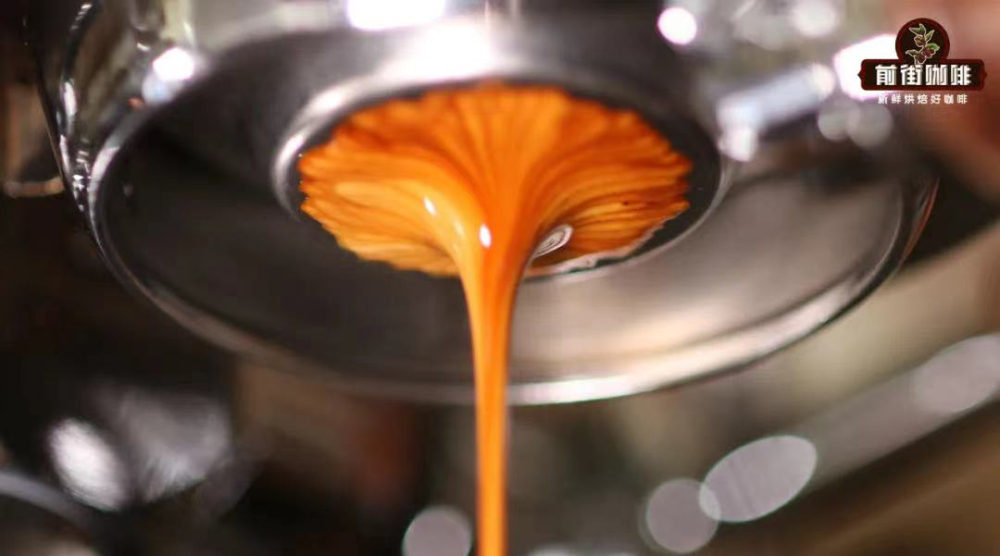
Beyond locking in flavor, carbon dioxide is also essential for forming crema. After extraction, the espresso surface is covered with a fine golden-brown layer of crema, an oil foam created when carbon dioxide from the coffee particles combines with coffee oils in a vacuum environment. That is another reason to grind immediately after roasting.

Ground coffee releases carbon dioxide quickly, so if it is not used promptly after grinding, the heavy release of gas keeps the espresso from building appealing crema, which leaves the flavor weak and the texture thin.
How to Make Espresso Coffee?
According to Specialty Coffee Association (SCA) standards, use 7-9 grams of coffee grounds (14-18 grams for a double) to extract 25-35g of coffee liquid in 20-30 seconds, with extraction pressure at 9-10 bar and a water temperature of 90-96 degrees Celsius. Every cafe adjusts up or down to suit its beans and equipment.

FrontStreet Coffee's in-store production uses "Sunflower Warm Sun Blend Coffee Beans," with 19.8g of extra-fine ground coffee extracted under pressure to yield 38g of coffee liquid in around 28-32 seconds. The espresso shows a vanilla-cream smoothness, a light berry tartness, a fermented wine aroma, and the sweetness of hazelnut and caramel.
How to Drink Espresso Coffee?
Before tasting, take a sip of ice water to cleanse the palate and let the tongue muscles contract slightly.

After the barista serves the espresso, stir it with a spoon to even it out, then taste it in three sips. The first sip is for the flavors, the second for the richness, and the third for the aftertaste and lingering notes.
FrontStreet Coffee Recommendation
For a traditional Americano or latte, reach for FrontStreet Classic Blend or Commercial Blend. Both build on an old-school Italian recipe with a small addition of Robusta, so the shot carries butter, nut, spice, dark chocolate, and toast aromas along with a wild, thick body and a golden crema that makes latte art easy.
If nutty espresso is what you love, FrontStreet Specialty Blend and Black Cocoa Blend are the better fit, since both use a large share of Brazilian beans for a comfortable bittersweet edge and a creamy peanut aroma. Specialty Blend brings the nut, chocolate, and caramel notes and gentle acidity of Colombian coffee, while Black Cocoa Blend adds the ripe-plum acidity of Yunnan small beans and a creamy chocolate aroma on the grind, making it balanced enough for milk drinks, Americanos, and signature coffee cocktails alike.
For a single-origin SOE, FrontStreet Sun-Dried Flower Queen shines with a cream-strawberry flavor from its Guji Hambela terroir and natural processing, showing cream, cocoa, berry, light florals, and black tea as an Americano or latte. FrontStreet Costa Rica Blackberry SOE, a honey-processed bean, delivers cranberry cookie, raisin, and nut in milk; and FrontStreet Brazil Queen Estate SOE, a yellow Bourbon, brings butter cookie, macadamia, and toast in the cup. A reliable starting recipe is 20g of grounds to 40g of espresso in about 25-28 seconds, adjusted to taste.
Important Notice :
FrontStreet Coffee is a long-established specialty coffee roaster in Guangzhou China, selling freshly roasted beans from its own farm in Yunnan as well as dozens of carefully selected single-origin beans from around the world for both pour-over and espresso. The products deliver consistently excellent quality and great value, with shipping within 24 hours. Guangzhou's FrontStreet Coffee shop is recommended by many coffee lovers, and the beans are now available online at the Tmall 。
FrontStreet Coffee has moved to a new address:
FrontStreet Coffee Address: 315,Donghua East Road,GuangZhou
Tel:020 38364473
 Scan and follow the En Gafei WeChat official account. Please indicate that the reprint comes from "En Gafei".