Costa Rica Genesis Estate Coffee Flavor Profile and Estate Introduction
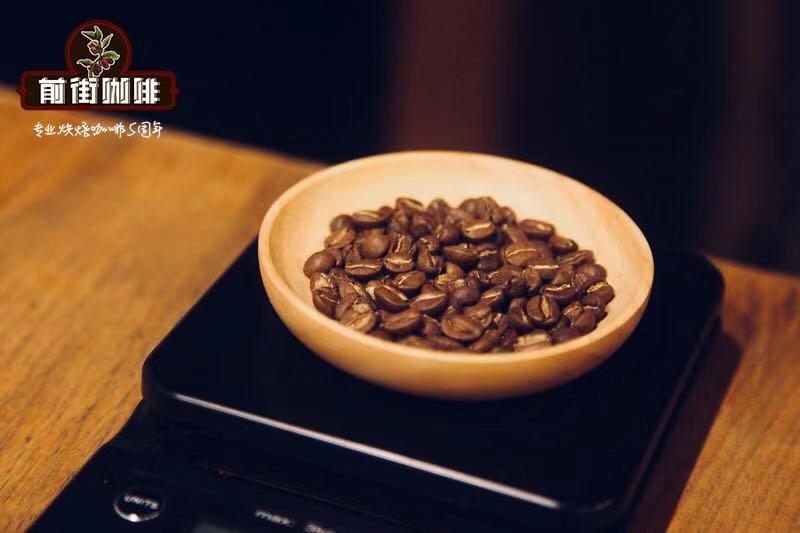
This natural (sun-dried) Costa Rican has been a long-running favorite at FrontStreet Coffee. You might wonder why we chose a natural when Costa Rica is famous for honey processing, the answer is in the cup. During testing, this bean showed extraordinarily complex, layered fruit aromas, high sweetness fused with bright, solid acidity. Without exaggeration, it drinks like pure juice, with an exceptionally persistent sweet aftertaste. Here is the full story of the bean.
Genesis Estate
FrontStreet Coffee has brought in coffee from Genesis Estate again this year. Genesis is the renowned farm that won the 2008 Costa Rica Cup of Excellence (COE). Located in Lourdes de Naranjo, it is a 100% organically grown estate. The name "Genesis" was a deliberate choice: owners Oscar and Olga Mendez describe it as a new beginning, growing, processing, and selling their own coffee entirely on their own terms.
There is something worth noticing about Genesis and estates like it: the pursuit of "natural" flavor starts with a "natural" growing environment, and that takes real sacrifice. More primary forest must be preserved, which means less land for planting and lower yields. No pesticides, no chemical fertilizers, certainly no herbicides, so far more human labor goes into weeding and pest control. What you get in return is coffee that genuinely tastes of nature.
The first impression of this coffee is simply "sweet", astonishing sweetness, perceptible from the dry aroma the moment the beans are ground: ripe fruit, honey, and strawberry cookies. Add hot water and the wet aroma takes on an elegant, tea-like refinement with notes of berries, grapes, and baked biscuits. Compared with traditional washed Costa Rican coffees, the cup is noticeably different: lower acidity, a rounder mouthfeel, and, remarkably for a dried-in-fruit process, exceptional cleanliness. Honey-lemon sweetness, ripe juicy fruits, sweet nuts, biscuits, raisins, and a whisper of fresh soil: an ultimate natural-processed coffee.
Processing
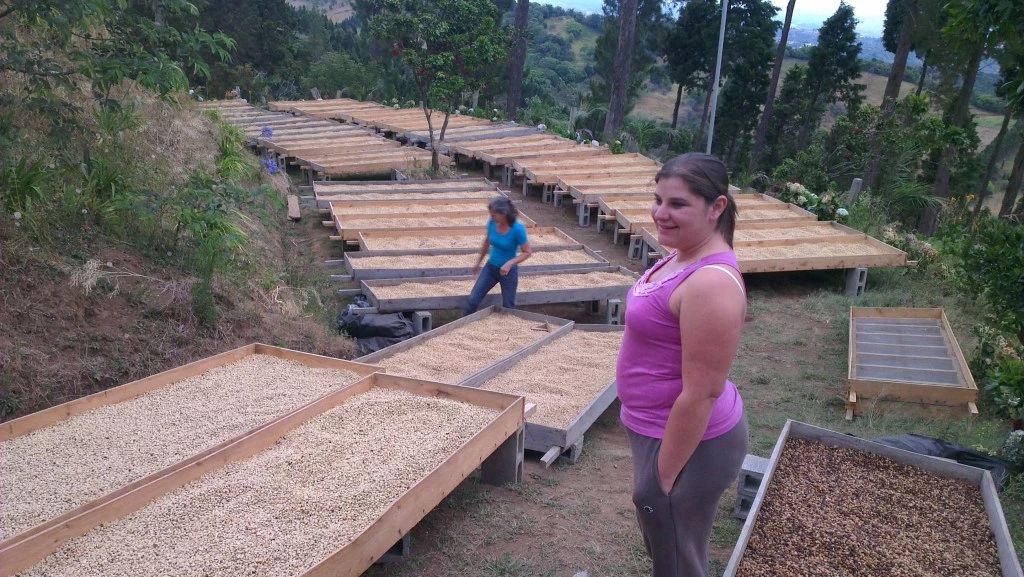
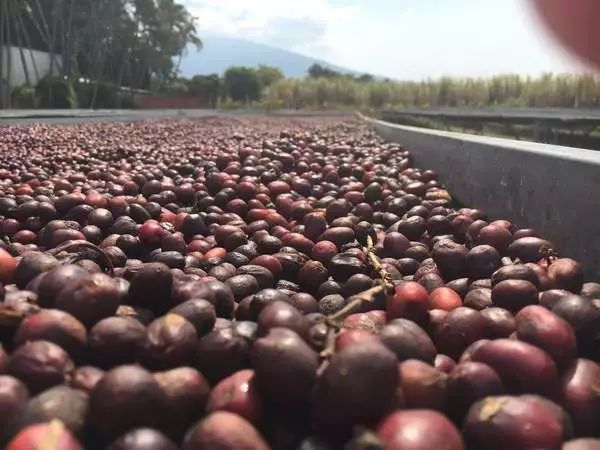
This lot was harvested from highlands at 1,700 meters. The Genesis micro-mill handled it to exacting standards: only cherries with intact skins were selected before going onto the drying beds. After sun-drying, the cherries were moved indoors to rest and finish down to roughly 10% moisture. Oscar dries washed coffees on the courtyard patio and uses raised beds for the honey and natural lots.
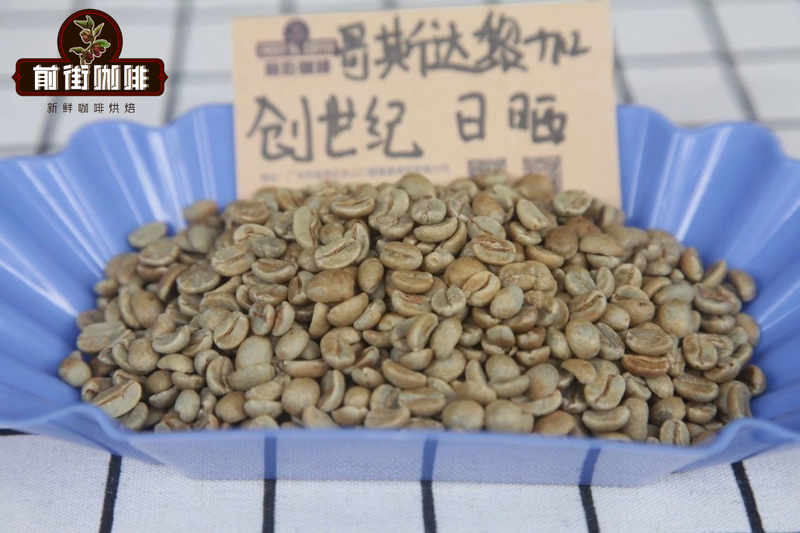
FrontStreet Coffee Green Bean Notes
The varieties here are Caturra and Catuai. Caturra is a natural Bourbon dwarf discovered in Brazil in 1937, more compact than Bourbon, with Bourbon's somewhat weak disease resistance but higher yields. Although it was found in Brazil, Caturra never suited Brazilian conditions at scale; instead it spread across Central and South America, in Colombia, Costa Rica, and Nicaragua. Catuai is a deliberate cross of Caturra and Mundo Novo, bred for better resilience against wind and rain. The trees are low-growing, and the cherries, which come in both red and yellow forms, cling firmly to the branch.

FrontStreet Coffee Roasting Notes
This is an SHB-grade, quite dense bean. Roast with relatively high charging heat: yellowing at around 5'30", then reduce heat and open the damper into the Maillard stage. At 168°C, cut heat again to extend the Maillard. First crack comes at about 182°C, for a natural like this, pull the heat back before crack so the roast doesn't run away into bitterness. Develop 1 minute 50 seconds and drop at 195°C.
Yangjia 600g Semi-Direct Fire Roaster
Preheat to 200°C with the damper at 3. Ignite after 30 seconds and set heat to 160. Turning point at 1'31"; hold heat. Yellowing at 5'30", grassy smell gone, into the drying phase. Reduce heat to 130 and open the damper to 4. At 168°C, cut to 100. Drying completes at 8', when wrinkles and black markings appear and toast aroma turns to coffee aroma, the prelude to first crack. Reduce heat to 80 and listen closely. First crack begins at 8'30"; open the damper fully to 5. Develop 2 minutes 20 seconds and drop at 195°C.
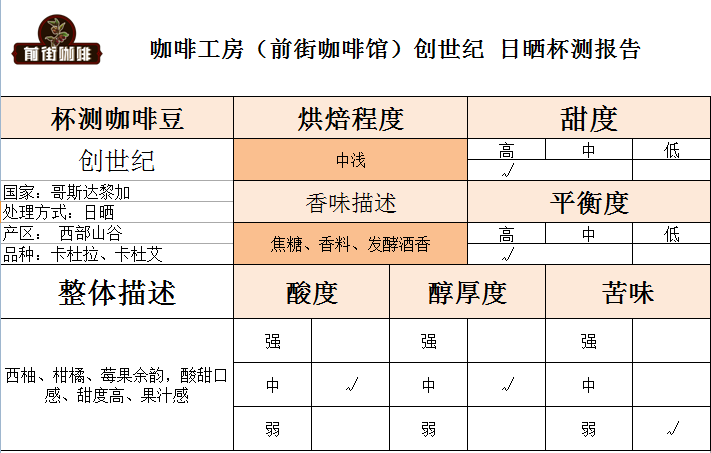
The beans are dried on African-style raised beds for precise process control. The cup shows high overall balance, good sweetness, and a very clean mouthfeel: fermented wine aroma, spices, and caramel, tasting acidity-first-then-sweet, with citrus and grapefruit, a juicy texture, and a refreshing berry aftertaste.
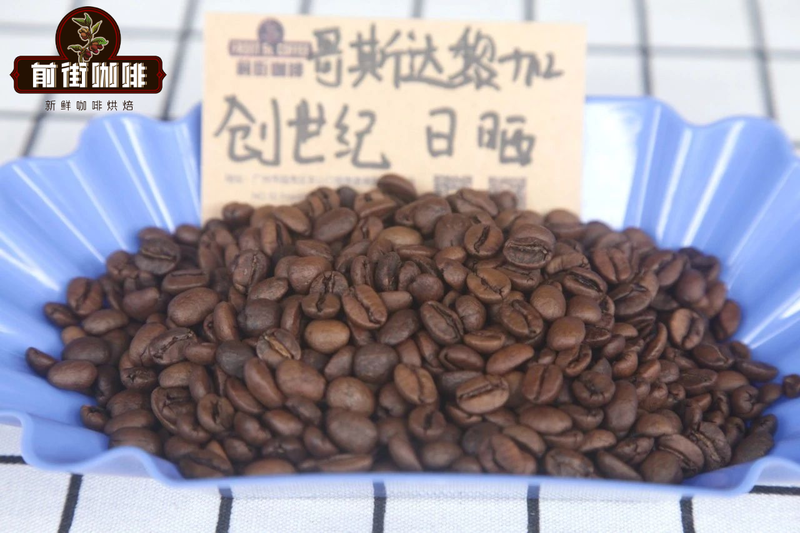
Costa Rica Genesis Micro-lot
Country: Costa Rica
Region: Western Valley
Mill: Finca Genesis micro-mill
Altitude: 1,700 meters
Varieties: Caturra / Catuai
Grade: SHB
Process: Natural (sun-dried)

FrontStreet Coffee Brewing Data
Grind size: 3.5 (Fuji Royal R440)
Water temperature: 90°C
Dripper: V60, 15 g of coffee
Coffee-to-water ratio: 1:15
FrontStreet Coffee Recommended Brewing Method
Pour-over: bloom with 30 ml of water for 30 seconds, then pour in segments, to 120 ml, pause, then slowly to 230 ml (the 30-120-80 pattern). Total extraction time: 2 minutes.
FrontStreet Coffee Recommendation
Honey processing grew out of Brazil's pulped natural method, depulp, then dry with some or all of the mucilage left on. It shortens the drying time and tames the off-flavors of careless fermentation; Brazil's success with the approach caught Costa Rica's attention, where producers refined it by controlling how much mucilage is retained and how long the drying lasts, splitting it into black, red, yellow, and white honey grades. If this article has you curious about what Costa Rica can do beyond naturals, here are three FrontStreet Coffee lots worth seeking out.
Costa Rica Blackberry: a black honey coffee, almost no mucilage is stripped, and the drying stretches to at least two weeks, often under shade covers so the sugars fully convert; the fruit must be turned regularly to prevent uneven heat and over-fermentation. It demands more care than any other honey grade. Roasted medium-light, it opens with fresh floral aromas and pours out grape, berry, and ripe blackberry flavors.
Strawberry Candy (Geisha blend): a blend of Panama Geisha and Costa Rican coffee, the Geisha contributes its classic orange-blossom honey character, while the Costa Rican component is raisin-honey processed: 100% mucilage retained with zero water. Harvested cherries are floated in a tank so underripe and overripe fruit rises and is skimmed off; sound cherries dry on raised beds for at least three days before depulping, with the mucilage left on for further drying and constant turning. The result carries Geisha's tea-like florals plus raisin and dried blueberry aromatics, gentle fruit acidity, an almond finish, and pronounced sweetness. It brews beautifully as pour-over and also suits a moka pot, espresso machine, or cold brew.
Costa Rica Mozart: for the most ambitious honey processing of all, look to raisin honey, an innovation beyond the traditional yellow-red-black spectrum. Cherries are pre-dried whole on raised beds for at least three days until raisined, then depulped and finished as honey. Keeping 100% of the mucilage makes timing absolutely critical, arguably harder than black honey, and it pays off with richer warm-fruit sweetness. FrontStreet Coffee's Mozart lot, whether pour-over, cold brew, or moka pot, delivers osmanthus, pineapple, and raisin aromatics.
Important Notice :
FrontStreet Coffee is a long-established specialty coffee roaster in Guangzhou China, selling freshly roasted beans from its own farm in Yunnan as well as dozens of carefully selected single-origin beans from around the world for both pour-over and espresso. The products deliver consistently excellent quality and great value, with shipping within 24 hours. Guangzhou's FrontStreet Coffee shop is recommended by many coffee lovers, and the beans are now available online at the Tmall 。
FrontStreet Coffee has moved to a new address:
FrontStreet Coffee Address: 315,Donghua East Road,GuangZhou
Tel:020 38364473
 Scan and follow the En Gafei WeChat official account. Please indicate that the reprint comes from "En Gafei".