What is the local indigenous coffee of Ethiopia? What coffee variety is Ethiopian Heirloom bean?

FrontStreet Coffee carries many beans from Ethiopia's growing regions, often labeled as Heirloom varieties, sometimes translated as "heirloom treasures." Whether in our physical store or on our Tmall platform, FrontStreet Coffee receives many questions from customers about Heirloom varieties. What exactly are Heirloom varieties? The term "Heirloom" is commonly used to describe Ethiopian coffees, but this is not entirely accurate. Today, let FrontStreet Coffee explore this topic in detail.
The True Meaning of Heirloom Varieties
Regular drinkers of Ethiopian coffee have likely encountered the term "Heirloom varieties." Most Ethiopian varieties are labeled with this name because Ethiopia simply has too many coffee varieties to classify individually. It is like a natural gene bank for Arabica coffee. On one hand, the sheer number of varieties makes classification difficult; on the other hand, the Ethiopian government, out of a protective instinct, is reluctant to disclose detailed information about these varieties, so they are collectively called "Heirloom varieties."

The term "heirloom" originally referred to ancient plant varieties that were first cultivated for food. Some define heirloom varieties as those over 100 years old, while others say 50 years. Some classify varieties existing before 1945 as heirlooms - around the time when hybrid varieties began to emerge - or before 1951, when hybrids became more widespread.
In the coffee world, the term "heirloom" applies to varieties introduced to South America and Asia over a century ago, as well as to many African coffee varieties, particularly those from Ethiopia. The term emerged after the specialty coffee movement began. At that time, specialty coffee buyers who could not tell Typica and Bourbon apart would collectively refer to these unknown varieties as "heirlooms."
Ethiopian coffee producers use different names to distinguish various coffee trees. They typically do not use globally recognized scientific names for these varieties, but instead use local terminology, sometimes borrowing from the characteristics of native coffee trees to name certain varieties. Specialty coffee buyers distinguish Ethiopian coffees by growing region, altitude and cupping scores rather than by variety.

Broadly speaking, Ethiopian coffee varieties can be divided into two categories: JARC varieties and regional local varieties. JARC varieties are those developed by the Jimma Agricultural Research Center, an institution under the Ethiopian Federal Agricultural Research Center, primarily established to research pest resistance and yield improvement. There are approximately 40 varieties within this system. Regional local varieties are wild varieties growing in Ethiopia's natural environment, with potentially over 10,000 such wild varieties.
This means when consumers buy a bag of Ethiopian coffee and see "Heirloom" on the bag, that coffee could potentially be a blend drawn from among these 10,000+ varieties.
Ethiopia Country Profile
Location: East Africa
Capital: Addis Ababa
Religion: Primarily Christian
Language: Amharic
Time Zone: GMT+3
Measurement: Metric System
Currency: Birr
Agricultural Products (Exports): Coffee, flowers and sesame as main economic export crops
Ports: Port of Djibouti (currently the main export port)
Average Annual Temperature: 15-20°C in highlands, 25-30°C in lowlands
Average Annual Rainfall: 1000-2000 mm
Soil: 50% volcanic soil, 25% sedimentary soil, 25% other

Ethiopia is a magical country where all the Arabica coffee varieties we have tasted, and those we have not yet tasted, originate. Coffee's documented history in Ethiopia can be traced back to the 4th-5th centuries AD. Due to inter-ethnic wars at that time, coffee spread with people's conquests and migrations to the Arabian Peninsula's Yemen. Later, with the rise of the Ottoman Empire and the spread of Islam, Europe developed coffeehouses and the gradually forming cafe culture that followed. Subsequently, Central America began growing coffee, and India and Indonesia in Asia started large-scale commercial coffee cultivation. After several hundred years, we have arrived at today's third wave of specialty coffee.
Why Are Ethiopian Coffee Beans Always of Different Sizes?
If you are particularly fond of African coffees, you have likely noticed that compared with Kenyan coffees, Ethiopian beans generally vary more in size with noticeably lower uniformity. Whether Yirgacheffe or Sidamo, whether washed or natural processed, when observing beans from the same batch you can often find significant differences in roasting color and bean size.

1. Bean Size Variation Stems from Numerous Varieties and Centralized Processing
First, let us understand how Ethiopian coffee is grown and harvested. Ethiopia has nearly 2,000 recorded coffee varieties, including 1,927 native varieties and 128 introduced foreign varieties. So purely judging by appearance, Ethiopian coffee varieties are like a "grand garden" containing everything - long, short, thin, fat.
Long-shaped beans: Found throughout Ethiopia's coffee-growing regions. Based on observed proportions, western areas like Jimma, including Limmu and Kaffa, have more long-shaped varieties, while Sidamo and Yirgacheffe have fewer.
Small-sized beans: More rounded in appearance with very small beans, mostly between 14-15 screen size. This variety should be most familiar to us, often seen in Sidamo and Yirgacheffe. I have also seen them in a Harrar sample and in green coffee sold locally in Jimma. Compared with other regions, Sidamo, Yirgacheffe and the surrounding Arsi and Guji areas have more plantings of these small-sized heirloom varieties.

2. Beyond Numerous Coffee Varieties, Cultivation Methods Also Affect the Mixed Varietal Situation in Ethiopian Coffee
Due to administrative boundary changes in Ethiopia around 1995, the biggest impact on coffee regions was that the original Sidamo province was divided into the new Sidama (occupying a smaller portion) and most of it was incorporated into the Oromia region. Additionally, Yirgacheffe, which originally belonged to Sidamo province, is now part of the new Gedeo zone.
Ethiopia's coffee cultivation is mainly concentrated in the western and southern regions, with smallholder families accounting for 90% of total cultivation. Nearly 1.2 million smallholder families rely on coffee cultivation for their livelihood. Each household's planting area is less than 4 hectares, with average cultivation altitude between 1,000-2,300 meters, planting density of 1,000-1,800 coffee trees per hectare, and output of nearly 600kg per hectare.
Ethiopia's coffee cultivation is divided by scale and model into:
Forest Coffee (8-10%): Coffee trees coexist with other crops in original forests without any artificial management. Farmers regularly harvest coffee cherries.
Semi-Forest Coffee (30-35%): Coffee tree planting areas lie between forests and farmers' living areas. The coffee trees are the same natural varieties as forest coffee, and farmers manage these areas while growing other cash crops.
Garden Coffee (50-55%): Coffee trees are planted around farmers' living areas, mostly self-cultivated by farmers.
Plantation Coffee (5-6%): Large private growers with more processing facilities and production capacity.
Most coffee cultivation in Sidamo and Yirgacheffe follows the garden coffee model, where coffee farmers plant trees near their living areas, harvest them themselves during the harvest season, and then send them to nearby water-source processing stations for centralized processing (or they are collected by middlemen). Except for a few capable plantations that independently plant, harvest and process green coffee beans, many beans from different regions and different varieties are processed together at processing stations, then sent to auction houses for official evaluation and grading. This is why many Ethiopian coffees are named and distinguished by processing station or cooperative, and it is also one reason why the same batch of beans contains multiple coffee varieties. Even beans from the same processing station may show significant flavor differences between batches.
Ethiopia's Green Bean Grading System
Before the establishment of the Ethiopia Commodity Exchange (ECX), Ethiopian coffee export grades were set by the CLU (Cupping and Liquoring Unit) under the Ministry of Agriculture, primarily grading green coffee beans based on the number of defective beans in 300g samples. Generally, washed coffees were graded G1-G2. Because of natural processing technical issues at that time, natural processed green beans had more defects and were generally graded G3-G5. With improvements in natural processing technology, natural processed beans can now also achieve G1-G2 grades.
Among these, specialty and commercial grades target the international export market. ECX divides green coffee beans into nine grades based on the total score of physical attributes and cupping flavor characteristics, with physical characteristics accounting for 40% and cupping quality for 60%.
Physical Characteristics (40%):
Washed processing: Defect count (20%), appearance size (10%), color (5%), odor (5%)
Non-washed processing: Defect count (30%), odor (10%)
Then G1-G3 grades undergo additional cupping according to SCAA standards for more detailed flavor attribute evaluation. G1 and G2 scoring no less than 85 points are graded as Q1; G1, G2 and G3 scoring between 80-85 points are graded as Q2; all G1, G2 and G3 scoring below 80 points are graded as G3.
Q1 and Q2 are classified as specialty grade exports. G4-G9 maintain their original grading unchanged and are classified along with G3 as commercial grade exports.
Are There Flavor Differences Between Large and Small Ethiopian Coffee Beans?
To verify this question, FrontStreet Coffee directly selected two batches for comparison. Using FrontStreet Coffee's natural processed Sidamo Arsi as an example, we selected beans with significantly different sizes, used the same brewing parameters and techniques, and conducted multiple blind tastings to determine whether there are flavor differences between large and small beans.
FrontStreet Coffee - Ethiopia Sidamo Natural Process Arsi
Country: Ethiopia
Region: Sidamo West Arsi Zone
Altitude: 1,900-2,200 meters
Variety: Heirloom
Processing Method: Natural
Brewing Parameters
Coffee Dose: 15g
Grind Size: Normal pour-over grind (78% pass-through rate on the #20 standard sieve)
Water Temperature: 90°C
Coffee-to-Water Ratio: 1:15
Brewing Method
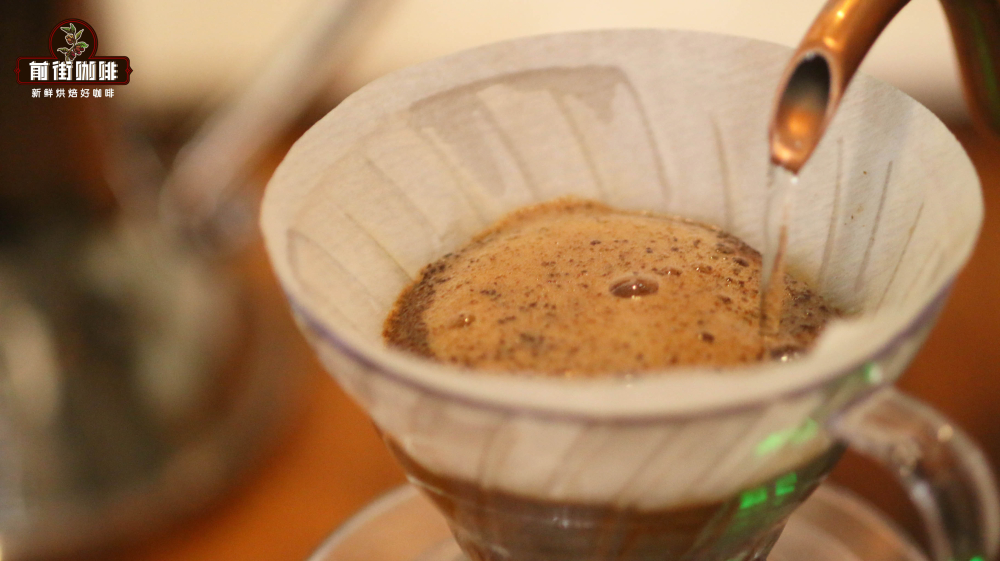
1. First pour 30g of water for a 30-second bloom.
2. After the bloom, pour the second water segment, pouring 100g in a circular motion from the center outward. This pour can be done slowly - heirloom beans like these are dense and slow to extract, so they need enough pouring time for the aromas to come through. Wait for the water level to drop to halfway.
3. When the coffee bed is about to be exposed, pour the third water segment of 95g, for a total water volume of 225g. Wait for the coffee to finish filtering, then remove the filter cone.
After flavor comparison, FrontStreet Coffee's blind tasting clearly perceived that the small-bean FrontStreet natural processed Arsi was sweeter in flavor, while the large-bean FrontStreet natural processed Arsi was noticeably more acidic. In terms of flavor layering and richness, both were noticeably thinner than the normal state (mixed). The acidity in large beans is likely due to lighter roasting compared to small beans.
Conclusion
Whether in Ethiopia, Brazil or Indonesia, these coffee-producing regions that use defect-based grading systems all show significant unevenness in bean size. Especially after roasting, different coffee varieties have different expansion rates, further increasing the size differences between beans. However, it is precisely this unevenness in bean size that creates slight differences in roasting degree, making the coffee's layering and richness more apparent. So do not get stuck on superficial differences - every loss has its gain. The mixed varieties and uneven bean sizes are precisely what form Ethiopian coffee's rich flavors and diverse aromas.
Finally, for those with a taste for uniformity, you can try other single-origin coffees with screen grading and uniform varieties, such as Kenyan and Colombian coffees.

Coffee Flavor Characteristics
Ethiopia has nine major coffee-growing regions, with specialty coffee regions including Sidamo, Yirgacheffe, Harrar and others mentioned above.
Ethiopia primarily uses natural processing methods, also called dry processing. Mature fruits are selected and spread flat for drying until the moisture content reaches about 12%, then the skin and pulp are removed. This processing method gives Ethiopian coffee beans captivating rich fruit aromas and fermentation notes, with clear berry and citrus acidity.

Regarding the flavor characteristics of Ethiopian coffee beans, the coffee industry generally distinguishes them by growing region, altitude and processing method rather than by variety. This is related to Ethiopia's lack of unified variety cultivation classification, so in terms of variety, they are all described as Heirloom varieties.
FrontStreet Coffee Recommendation
To get to know Ethiopia, the natural place to start is FrontStreet's washed Yirgacheffe. It delivers clear jasmine and bright citrus acidity with a tea-like body; Yirgacheffe is a small town in southern Ethiopia sitting around 1,700-2,100 meters, with trees planted above 1,800 meters in a cool, misty, spring-like climate that produces this signature floral-and-citrus cup.
For a single-village look at how heirloom varieties behave, FrontStreet Gedingding Cooperative sits in the Worka area at the southeastern edge of Yirgacheffe. It follows traditional washed processing, and because the pulp is removed before drying, its inherent aromas come through more clearly: citrus and lemon notes with elegant white florals and a bright, delicate overall profile.
If you want the natural side, FrontStreet Natural Red Cherry dries fully ripe cherries for about two weeks until the moisture drops to 12%, then removes the hardened fruit, mucilage and parchment and screens the beans by density and color. The result is clean and rich with peach, cocoa, honey and lemon notes, and the natural process keeps the aromas vivid from high to low temperatures.
Important Notice :
FrontStreet Coffee is a long-established specialty coffee roaster in Guangzhou China, selling freshly roasted beans from its own farm in Yunnan as well as dozens of carefully selected single-origin beans from around the world for both pour-over and espresso. The products deliver consistently excellent quality and great value, with shipping within 24 hours. Guangzhou's FrontStreet Coffee shop is recommended by many coffee lovers, and the beans are now available online at the Tmall 。
FrontStreet Coffee has moved to a new address:
FrontStreet Coffee Address: 315,Donghua East Road,GuangZhou
Tel:020 38364473
 Scan and follow the En Gafei WeChat official account. Please indicate that the reprint comes from "En Gafei".