Introduction to Costa Rica's Eight Major Coffee Growing Regions: Flavor Characteristics of Tarrazú Raisin Honey Process Coffee Beans

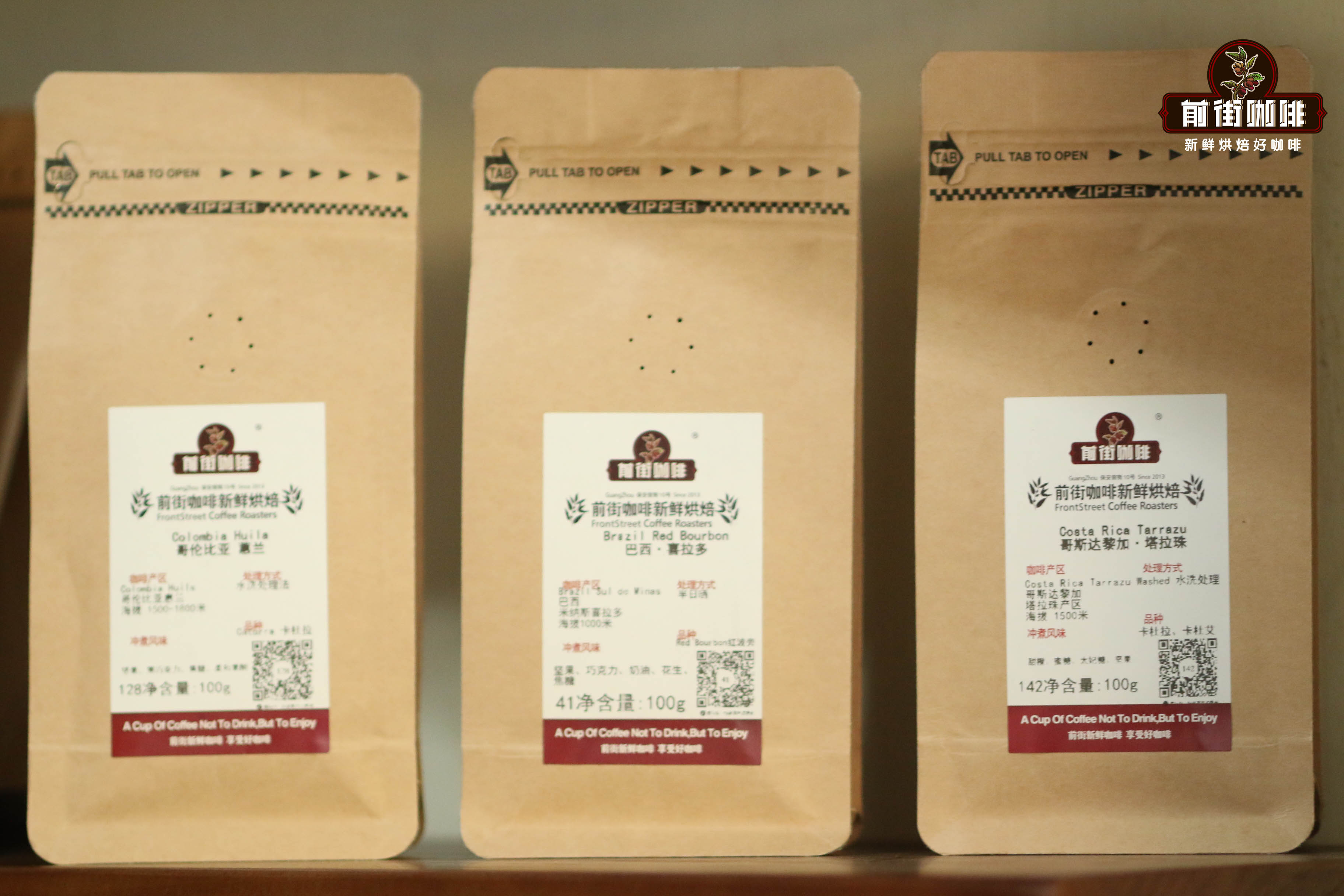
Coffee enthusiasts who enjoy beans from the Americas are surely familiar with FrontStreet Coffee's Costa Rican coffee beans. This Central American isthmus nation, sandwiched between North and South America, produces honey-processed coffees that captivate coffee lovers around the world. FrontStreet Coffee's own bean list alone features six Costa Rican coffees - a clear sign that the quality of Costa Rican coffee should not be underestimated.
Costa Rican Coffee Growing Regions
As any coffee lover with a grasp of geography knows, Costa Rica sits in Central America. According to FrontStreet Coffee, it was also one of the first countries to introduce coffee cultivation, with a long history behind it. The volcanic soil there is very fertile and drains well. In the Central Plateau especially, the fertile volcanic ash of the volcanic terrain, mild temperatures, and stable, abundant rainfall are essential ingredients for growing excellent coffee.

The main coffee-producing regions include West Valley, Central Valley, Tarrazu, Tres Rios, Orosi, Brunca, Turrialba, and Guanacaste - eight major regions. The most famous and highest of them is Tarrazu. FrontStreet Coffee is particularly fond of Costa Rican Tarrazu beans, believing that the washed coffees from Tarrazu best represent Costa Rica's regional character. That's why FrontStreet Coffee has chosen Tarrazu beans as its everyday Costa Rican coffee.
Next, FrontStreet Coffee will walk through the flavor characteristics of each of these eight regions.
West Valley
West Valley has rich volcanic soil, ample sunlight, an average annual relative humidity as high as 81%, abundant rainfall, and an average annual temperature of 21.5°C, so crops grow vigorously here and the conditions favor high-altitude specialty coffee. The region sits at 1,000-1,200 meters with a harvest season from November to March, making it one of the areas with a relatively long harvest period. Influenced by Pacific air currents, temperatures here are often cooler than in other mountain areas even at comparable altitudes, and the fruit and seeds it produces are of excellent quality.

Central Valley
The Central Valley is also the earliest area in Costa Rica where coffee was cultivated. Rainfall is moderate at 118 inches per year, with an average annual temperature of only 19°C. At 1,200-1,600 meters with a harvest season from November to March of the following year, the high altitude yields hard, dense beans with plenty of aroma, smoothness, high acidity, full body, and rich flavor. The region's rich volcanic soil sometimes carries chocolate aromas. The front stage of processing uses washing, while the later stage uses machine low-temperature drying.
Tarrazu
Tarrazu is one of the world's major coffee-producing regions. Located south of the capital, San Jose, it is one of the country's most prized coffee-growing areas. The coffee produced here is limited in quantity, grown on land known as "La Minita," and its flavor is light and pure with a pleasant aroma.

Tres Rios
Tres Rios is a famous small producing area within the greater Tarrazu region, located not far east of the capital, where the Irazu volcano and surrounding rivers create an excellent microclimate. At 1,200-1,650 meters with a harvest season from December to March, the area enjoys favorable climate, a distinct taste, and very good balance. The beans show bright, gentle fruit acidity that never turns sharp, charming nut, floral, and toffee sweetness, smooth high acidity, hard and full beans, and a rich fragrance.
Orosi
At 900-1,200 meters with a harvest season from September to February, Orosi lies in a valley 40 kilometers from San Jose. Its coffee tradition stretches back more than 100 years, and the local community has developed around this economic activity. The coffee is smooth, full-bodied, and fragrant, with well-balanced flavor.

Brunca
At 800-1,200 meters with a harvest season from August to January, this region offers moderate acidity, full body, and ordinary aroma. It is the newest producing region, suited to a wide range of consumers, and its taste is compatible with beans from the other regions.
Turrialba
At 600-900 meters with a harvest season from July to December, this region shows moderate acidity, relatively thin beans, and a fragrant aroma. Its harvest begins earlier than any other Costa Rican region, mainly due to the influence of abundant rainfall.

Guanacaste
At 900-1,200 meters, these coffee areas lie in the mountains of volcanoes and the Guanacaste mountain range. Roughly 85% of the plantations here are near forest areas, allowing coffee trees to grow naturally and supporting sustainable cultivation. The Guanacaste coffee areas grow on Andisol volcanic soil of high fertility and excellent structure. Caturra and Catuai are the main varieties, and the coffee has lower acidity.

That concludes FrontStreet Coffee's overview of Costa Rica's growing regions. Tarrazu is one of our favorite origins, so FrontStreet Coffee has brought in many beans from the region. Next, we'll introduce several Tarrazu coffees carried in our store.
FrontStreet Coffee stocks three coffees from the Musician Series produced by Black Gold Company: FrontStreet Coffee Bach, FrontStreet Coffee Mozart, and FrontStreet Coffee Beethoven, all from the Canet Estate in Tarrazu. The Musician Series once turned heads in the coffee world with its striking flavors. Although it also sparked some debate, the series has proven to be a great success.

FrontStreet Coffee Bach and FrontStreet Coffee Mozart both use raisin honey processing, a special honey technique. The cherries are first dried to a raisin-like state with skin and pulp intact, then the skin and pulp are removed, and finally the beans are dried to completion. Coffee processed this way carries very rich raisin, dark berry, and fermented wine flavors.
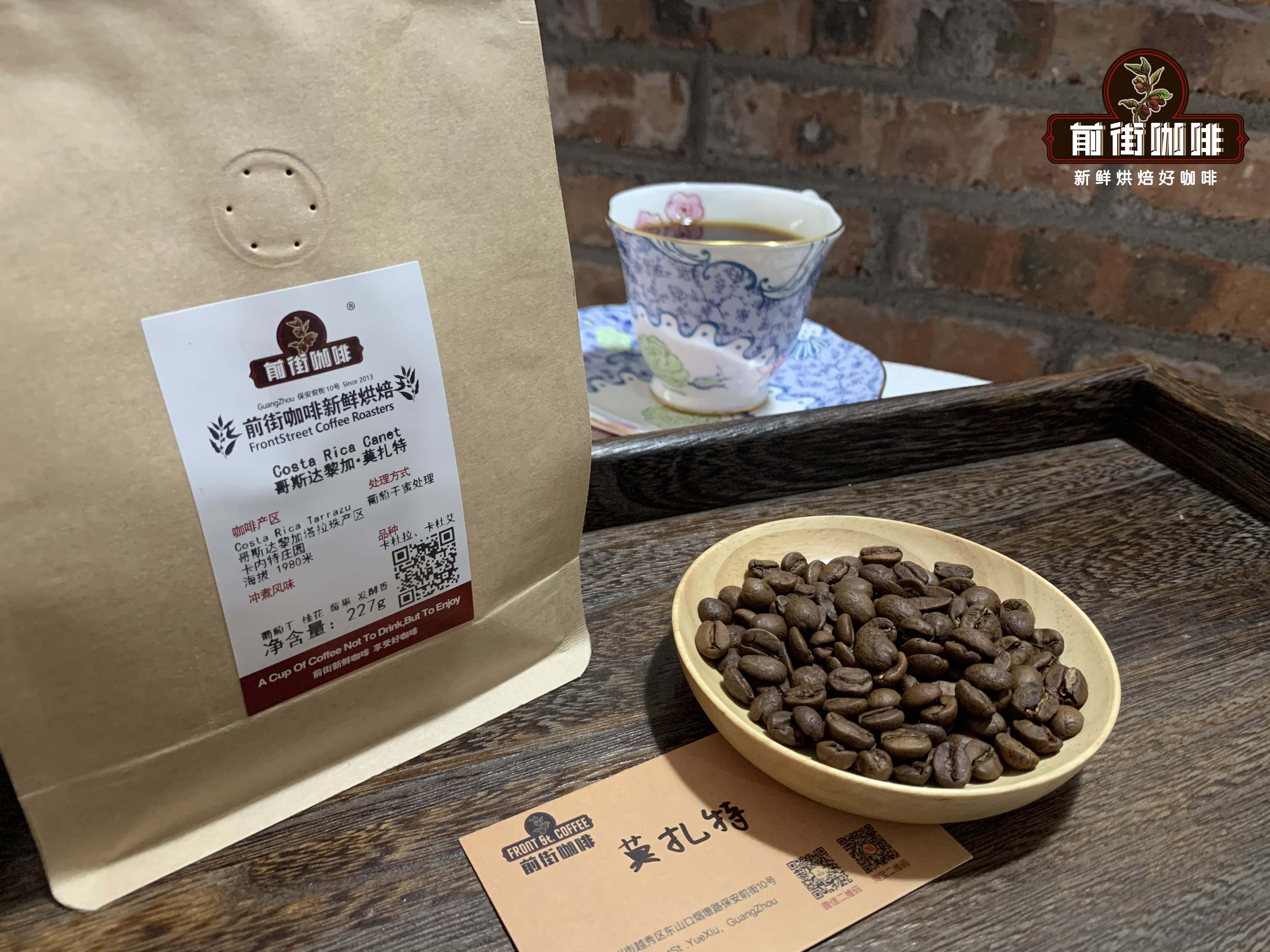
The biggest difference between Bach and Mozart is the degree of fermentation. FrontStreet Coffee Bach is fermented more deeply, giving it fermented wine aromas and air-dried beef notes, while Mozart is fermented slightly less, leaning toward dark fruit flavors.
There is also FrontStreet Coffee Beethoven, which uses the washed process and displays flavors of yellow-fleshed fruits such as mango, papaya, and wampee.
FrontStreet Coffee carries another Tarrazu bean as well: the FrontStreet Coffee Mirasu Geisha Blend Strawberry Sugar, from the Mirasu Estate. As the name suggests, this blend is built on 50% Geisha, alongside ET47, SL28, and MAICO. The Geisha contributes jasmine aroma, while the other varieties enrich the strawberry and berry notes. Combined with raisin honey processing, this boosts the coffee's sweetness, so the brew should highlight its floral and berry aromas along with grape and strawberry flavors.

How FrontStreet Coffee Brews Its Costa Rican Coffee Beans
For brewing parameters, FrontStreet Coffee selected 15g of coffee with a relatively fine grind - approximately a 78-80% pass rate on the #20 (850 micron) standard sieve. A 1:16 coffee-to-water ratio is used: expanding to 1:16 better suits the tasting concentration of this coffee and brings out more aroma in the cup. After many brewing comparisons, a water temperature of 90-91°C best reflects the coffee's aroma and sweetness, and a V60 dripper is used to enrich its layering.
Process: Put 15g of coffee into the dripper and pour 30g of water for a 30-second bloom. Raisin honey coffee absorbs water and expands more readily, releasing a fresh berry aroma as it blooms.
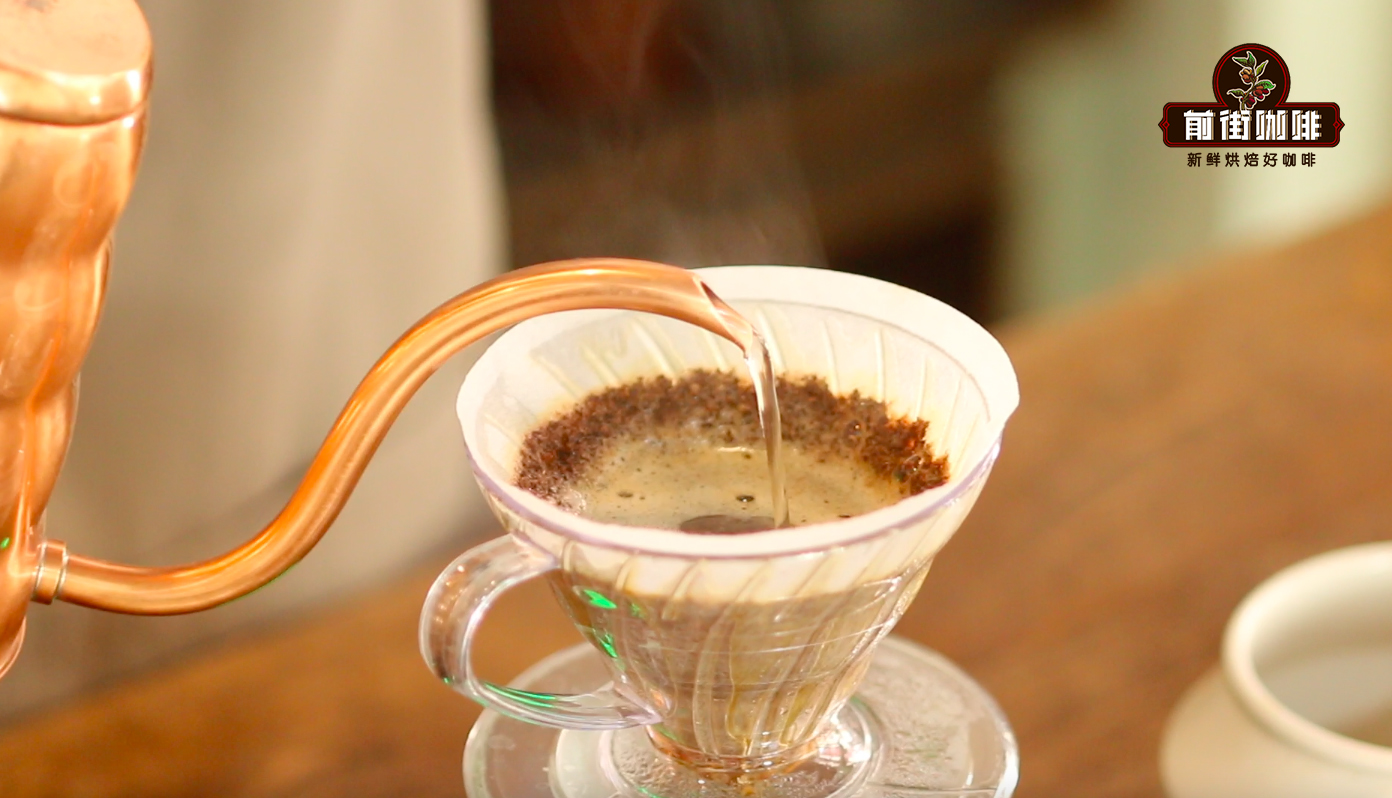
For the second pour, use a small, steady flow in concentric circles to add 120g of water, bringing the coffee bed up to roughly the depth of the V60's short ribs. When the bed begins to sink, start the final pour of 90g of water. End the extraction once all the coffee has dripped into the server, for a total time of 1 minute 50 seconds.
For professional coffee knowledge exchange and more coffee bean information, please follow Coffee Workshop (WeChat official account: cafe_style).
For more specialty coffee beans, feel free to add FrontStreet Coffee on private WeChat, ID: kaixinguoguo0925
FrontStreet Coffee Recommendation
Honey processing is Costa Rica's signature contribution to the coffee world, and it evolved from Brazil's pulped natural (semi-washed) method - a technique that removes the skin and dries the beans in their mucilage, shortening drying time while keeping off-flavors from improper fermentation at bay. Brazilian producers perfected it first (FrontStreet Coffee's Brazil Cerrado is a classic pulped natural, all cream, peanut, nuts, and chocolate), and Costa Rica borrowed the idea, refining it around how much mucilage is retained and how long the beans dry. That refinement gave rise to the spectrum we know today: black, red, yellow, and white honey.
For the fullest expression of that craft, try FrontStreet Coffee's Costa Rica Blackberry, a black honey coffee in which almost none of the mucilage is removed. Drying takes at least two weeks, often under shade covers to keep the harsh sun from drying the beans too quickly, with regular turning to prevent uneven heat and over-fermentation. Roasted light-medium, it opens with an intense fresh-floral fragrance and offers distinctive flavors of grape, berry, and ripe blackberry in the cup.
If the raisin honey process intrigued you, FrontStreet Coffee's Mozart is the pick: the cherries dry on raised beds for at least three days before the skin and pulp are removed, and 100% of the mucilage is retained throughout - a demanding process that, by FrontStreet Coffee's analysis, requires even stricter timing control than black honey. The reward is a richer hot-fruit sweetness: whether you brew it as pour-over, cold brew, or moka pot, you'll find the unique aromas of osmanthus, pineapple, and raisins. And for a blend that showcases the best of both Panama and Costa Rica, the Strawberry Sugar mentioned above pairs Geisha's classic orange-blossom honey character with raisin honey processing (100% mucilage, zero water) for grape and dried blueberry fragrance, soft acidity, an almond finish, and unmistakable sweetness.
Important Notice :
FrontStreet Coffee is a long-established specialty coffee roaster in Guangzhou China, selling freshly roasted beans from its own farm in Yunnan as well as dozens of carefully selected single-origin beans from around the world for both pour-over and espresso. The products deliver consistently excellent quality and great value, with shipping within 24 hours. Guangzhou's FrontStreet Coffee shop is recommended by many coffee lovers, and the beans are now available online at the Tmall 。
FrontStreet Coffee has moved to a new address:
FrontStreet Coffee Address: 315,Donghua East Road,GuangZhou
Tel:020 38364473
 Scan and follow the En Gafei WeChat official account. Please indicate that the reprint comes from "En Gafei".