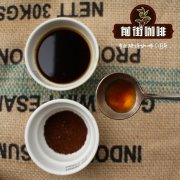
Costa Rica Canet Estate Bahia Mozart Flavor Profile Introduction
FrontStreet Coffee Costa Rica Canet Estate Bahia Mozart
Country: Costa Rica
Region: Tarrazu
Variety: Catuai
Estate: Canet
Process: Raisin Processing Method
Altitude: 1800-1900 meters
Grade: SHB
Yellow Catuai is a hybrid of Mundo Novo and Caturra, first cultivated in 1949 by the Instituto Agronomico de Campinas in Brazil. Like Red Catuai, Yellow Catuai has strong disease resistance and suits high-altitude cultivation, and both offer delicate, clean acidity. The double-fermented honey process, achieved through machine adjustments, produces richer flavor and enhanced sweetness compared with the yellow, red and black honey processes.
The method is called "double-fermented honey processing." It begins by air-drying the coffee cherries to a raisin-like state. The fruit used for making raisins must be mature, and shade-drying is the optimal method - the seedless grapes of Turpan, Xinjiang, China, are the most famous source of high-quality raisins. Turpan's climate is hot and dry, and its brick-built drying houses, with numerous wall openings and wooden rack supports, hang mature seedless grapes so that hot air circulation quickly transforms them into high-quality raisins. Once the coffee cherries reach that raisin-like state, the skin is removed for honey processing and fermentation. This approach intensifies the fermentation notes while preserving a higher percentage of pectin than other honey methods. It is billed as a 100% pectin honey process that truly delivers distinctive raisin-like flavors.
Flavor Profile
Dry Aroma: Cherry, berries, plum, strawberry, peach, jasmine
Wet Aroma: Floral and fruity notes, sweet and delicate, lemon, citrus, berries with a subtle wine-like acidity
Cupping: A sweet, vibrant assortment of fruits - strawberry, apple, grape and citrus unfolding in multiple layers - with memorable honey and toffee notes, a silky, cream-like body and a lingering finish reminiscent of Darjeeling tea
FrontStreet Coffee Recommendation
If you enjoy the layered sweetness of a raisin-style process, the FrontStreet Coffee Brazil Cerrado Red Bourbon is an approachable counterpart. A classic Brazilian single origin from the well-known Cerrado region, it is the common Red Bourbon of South America, roasted medium to bring out rich cream peanut, toast, caramel and hazelnut aromas. The body is round and smooth with low acidity and a light bitterness, and it works as pour-over, moka pot, espresso SOE, siphon or French press.
For a fruitier Brazilian option, try the FrontStreet Coffee Brazil Queen Estate. From Mogiana near South Minas, where fertile red volcanic soil feeds the fruit, it grows the rare Yellow Bourbon - a natural mutation of Red Bourbon with a cleaner fruit character. Brewed as pour-over, moka or home espresso, it shows a sugarcane-like sweetness found in no other region, along with fruit and chocolate notes.
And if you want Brazil in an espresso blend, FrontStreet Coffee's Italian-style blends are built on it. The rich-crema FrontStreet Coffee Classic Blend, the nut-forward FrontStreet Coffee Premium Blend, the balanced FrontStreet Coffee Black Cocoa Blend and the dedicated FrontStreet Coffee Commercial Blend all contain Brazilian beans. The Brazilian component supplies chocolate and cream aromas plus a gentle sweet-sour-bitter balance that keeps extractions stable.
Important Notice :
FrontStreet Coffee is a long-established specialty coffee roaster in Guangzhou China, selling freshly roasted beans from its own farm in Yunnan as well as dozens of carefully selected single-origin beans from around the world for both pour-over and espresso. The products deliver consistently excellent quality and great value, with shipping within 24 hours. Guangzhou's FrontStreet Coffee shop is recommended by many coffee lovers, and the beans are now available online at the Tmall 。
FrontStreet Coffee has moved to a new address:
FrontStreet Coffee Address: 315,Donghua East Road,GuangZhou
Tel:020 38364473
 Scan and follow the En Gafei WeChat official account. Please indicate that the reprint comes from "En Gafei".