Flavor Profile Introduction: Colombia Luckin Black Cup SOE El Paraiso Anaerobic Natural Process Coffee Beans

When Colombian El Paraiso coffee beans come up, people immediately think of beans with wildly distinctive names and flavors - Strawberry Yogurt, Cherry Blossom, Tropical Passion, and more. FrontStreet Coffee has bought and tasted them all, and it is fair to say El Paraiso's coffees are truly unforgettable from the very first sip. The three lots above are all processed with double anaerobic enzyme washed processing, currently one of the farm's signature methods. In this article, FrontStreet Coffee will look at El Paraiso's anaerobic natural beans, and explore how anaerobic natural differs from double anaerobic washed processing.

FrontStreet Coffee - Colombian El Paraiso Anaerobic Natural Coffee Beans
Origin: Colombia, Cauca
Altitude: 2050 meters
Processing: Anaerobic Natural
Grade: SUPREMO
Variety: Bourbon
Cauca Coffee Region
Cauca Province is a certified Colombian coffee origin with an average altitude of 1,758m, rising to as high as 2,100m at its peaks. The region's topography, rainfall, temperatures, and volcanic soil create ideal conditions for coffee. Roughly 80% of the area is mountainous, with parallel ranges running through the east and center as part of the Andes; the central range holds two main volcanoes, Sotara and Petacas. Like other southwestern growing regions, Cauca shows a distinctly monomodal rainfall pattern.
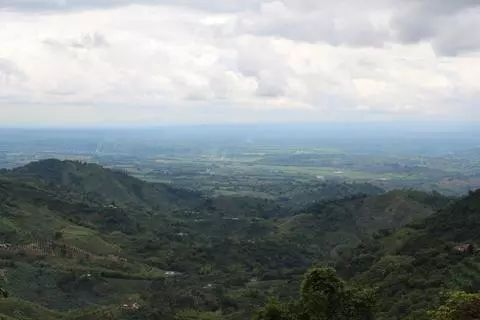
The dry season falls mainly in August and September each year, and the rainy season that follows brings a concentrated coffee flowering period - which in turn produces a concentrated harvest the following year. Through cupping, FrontStreet Coffee has found that Cauca beans consistently show a soft berry-like acidity and a stone-fruit aftertaste in their flavor profiles.
Colombian El Paraiso
El Paraiso is the farm Mr. Diego Samuel began running in 2008. What started as a small 2.5-hectare family farm grew on the strength of reinvesting each harvest's surplus into coffee agricultural research, constantly studying how to produce specialty flavors better. In 2015 he entered a local regional competition for the first time and took first place. Suddenly famous, he earned recognition across the industry, which pushed him further into advancing specialty coffee cultivation.
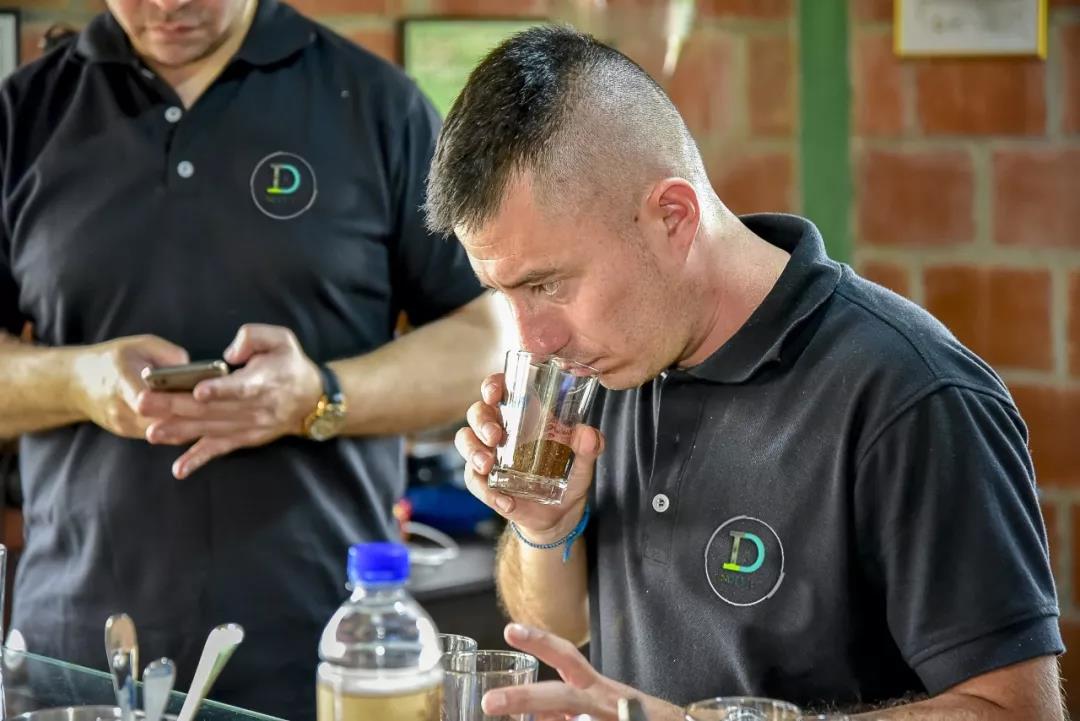
Through his company Indestec (Innovacion y Desarrollo Tecnologico para la Caficultura), Diego developed new, innovative technologies to improve and stabilize coffee quality. He likes to say he enjoys stepping outside his comfort zone, because it keeps him improving. El Paraiso currently grows mainly Bourbon, Castillo, and Geisha, with plans to trial more varieties.
Anaerobic Natural Processing
Anaerobic fermentation has been one of the most popular post-harvest processing methods in recent years. Typically, coffee cherries are placed in airtight containers or fermentation tanks for water fermentation, with different microorganisms driving the process to create distinctive flavors. Once fermentation is complete, the cherries are laid out to sun-dry - that is the anaerobic natural process, yielding beans with pronounced fermented notes and relatively high sweetness.
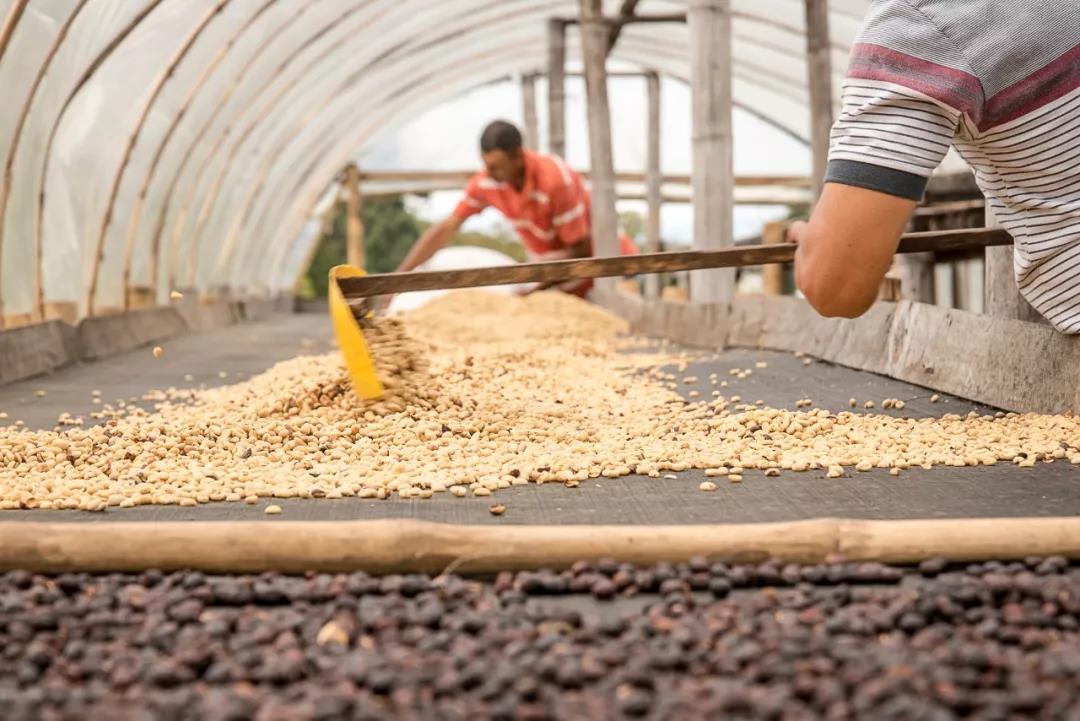
Anaerobic double enzyme washed processing is considerably more involved. After the cherries come out of the anaerobic environment, the skin and pulp are removed by machine, and the beans - mucilage still attached - go into plastic bags or other airtight containers for a second anaerobic fermentation. Hence the name: two rounds of anaerobic fermentation. Afterward the beans are removed and washed to strip the mucilage before sun-drying. Processed this way, the coffee shows unique flavors, strong aromatics, and noticeably more pronounced acidity than anaerobic natural.
Coffee Bean Variety
The anaerobic natural beans FrontStreet Coffee purchased are Bourbon. Bourbon is a subspecies derived from a Typica mutation and, together with Typica, belongs to the oldest coffee varieties still in cultivation. Green cherries ripen to a bright red. Compared with Typica, Bourbon has broader leaves and denser growth. Although it out-yields Typica, its harvest cycle is still 2 years, making it a relatively low-yield variety.
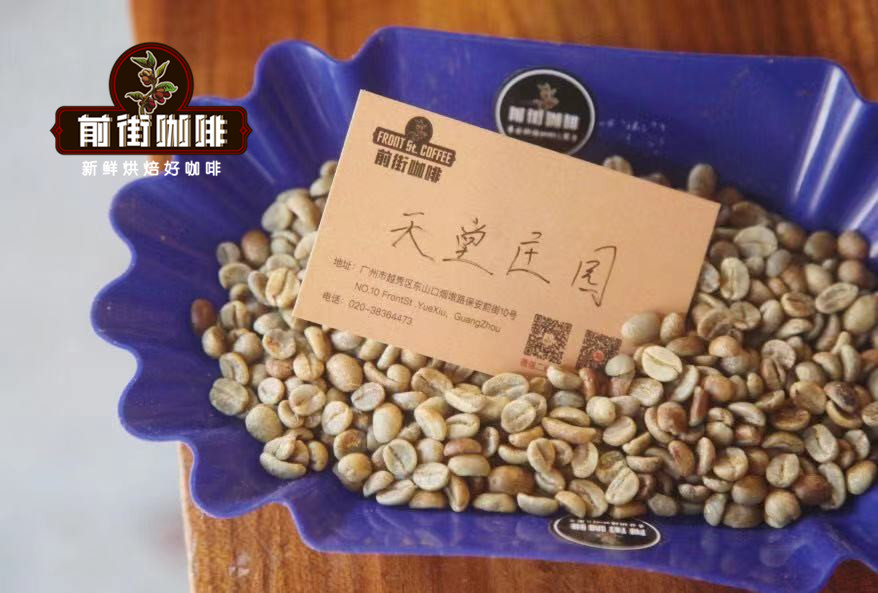
The beans themselves are fairly large, uniform in size and even in color with a healthy luster - excellent quality, with wine-like acidity and a sweet finish. When FrontStreet Coffee's roaster received this lot, they noted the green bean color was visibly uneven, with a faint fermented and grassy scent.
How Does FrontStreet Coffee Roast El Paraiso Anaerobic Natural Coffee Beans?
Yangjia 800N roaster, batch size: 480g. Charge at 170°C, damper open to 3, heat at 100%; turning point at 1'46"; when the temperature reaches 133°C, open the damper to 4; at 146.6°C the yellowing point arrives at 5'10" - the bean surface turns yellow and the grassiness disappears completely, entering the drying stage; when drum temperature reaches 155°C, cut the heat to 80.
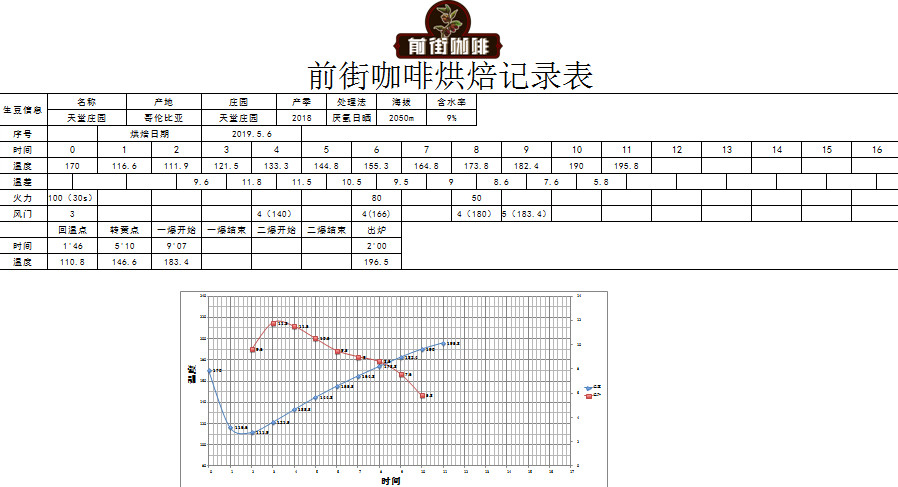
At 8'17", pronounced wrinkles and black spots appear on the bean surface and the toast aroma clearly shifts into coffee aroma - the prelude to first crack. Listen carefully from here. At 9'07", first crack begins; open the damper fully and develop for 2'00" after first crack, dropping at 196.5°C.
FrontStreet Coffee El Paraiso Anaerobic Natural Coffee Beans Cupping Report
Dry Aroma: Fermented aroma
Wet Aroma: Osmanthus
Flavor: Citrus, Plum, Pineapple, Lemon, Cream, Sugarcane, Oolong Tea

FrontStreet Coffee El Paraiso Anaerobic Natural Coffee Beans Brewing Experience
Dripper: V60 #01
Water Temperature: 90°C
Coffee Amount: 15g
Coffee-to-Water Ratio: 1:15
Grind Size: Medium-fine / fine sugar (80% passing a #20 sieve)

FrontStreet Coffee Brewing Method: First wet the filter paper and preheat the dripper and server. Bloom with 30g of water for 30 seconds. Pour in small circles up to 125g, then pause. When the water level drops to just above the coffee bed, pour up to 225g and stop. When the level drops to just above the bed again, remove the dripper (timing starts at the bloom). Total extraction time: 2 minutes.
Brewing Flavor: Osmanthus aroma with a faint fermented note. On the slurp: pear, citrus, lemon, sugarcane, cream, and oolong tea.
Many coffee enthusiasts, once they find a favorite bean, are never satisfied with a single extraction method - they want to run it through every tool they own. SOE (Single Origin Espresso) is one of the most popular of these personal projects. Below, FrontStreet Coffee demonstrates how to pull SOE shots with El Paraiso beans.
El Paraiso Anaerobic Natural SOE Extraction Parameters
Coffee Beans: Colombia · El Paraiso
Coffee Amount: 20g
Espresso Amount: 40g
Coffee-to-Espresso Ratio: 1:2
Extraction Time: 26-32 seconds
Grind Setting: Galileo 2.0
FrontStreet Coffee uses a double-shot basket, dosing 20g of ground coffee each time with a 1:2 ratio - meaning 40g of espresso extracted within a reasonable window. Extraction time depends on the flow rate through the coffee puck. Generally, a single shot should run 20-35 seconds: under 20 seconds and the shot tastes thin and weak; past 35 seconds, over-extraction creeps in and brings burnt bitterness. That is why FrontStreet Coffee keeps extraction between 26 and 32 seconds.

Before extraction, wipe the portafilter dry, switch on the grinder, and grind a double dose onto an electronic scale, adjusting until it weighs exactly 20g. Level the grounds with a distributor, then tamp straight down to compact the puck evenly - this keeps extraction more stable.
Then switch on the pump and let water run for 1-2 seconds to wet the brew head and flush out any residual grounds. Place an electronic scale under the cup, tare it, and keep both under the brew head during extraction.

Lock the portafilter gently into the brew head and start the shot. Watch the flow as it develops; when the scale reads 40g - after roughly 30 seconds - switch off. Brewing parameters shift subtly with daily humidity and the state of the beans, so you may need to adjust dose, grind, and yield accordingly.
The finished SOE is lovely straight, ideally with a glass of water to cleanse the palate so you can savor the dense crema and the spice and berry aromas beneath. If straight espresso is too intense, add ice water or warm water at a 1:4 ratio for a refreshing SOE Americano, or add steamed fresh milk at 1:6 to soften the texture into a delicious SOE latte.
FrontStreet Coffee Recommendation
Colombian coffee covers a remarkably wide spectrum - espresso blends, pour-over single origins, fruity and full-bodied profiles alike - which is exactly why it suits so many palates. If you want to explore the origin itself, start with FrontStreet Coffee's washed Huila (Uila) beans. Huila, in the southern part of Colombia's central mountain range, is the country's most famous specialty coffee region: rolling hills planted above 1,500 meters, watered by the confluence of the country's major rivers. Medium-dark roasted, it brings out dark chocolate and nutty sweetness, moderate body, and smooth richness - comfortable as pour-over or French press, and equally at home in a moka pot or espresso machine for Americanos and lattes.
If El Paraiso's experimental side excites you, FrontStreet's Boundary (Fenjie) Estate Xicuai (Sidra) from Colombia follows the same innovative spirit with anaerobic natural processing. In a low- or no-oxygen environment - typically a pressure-rated stainless tank where temperature, time, and pH are all controlled - the coffee develops extra tropical fruit character. At a medium-light roast it pours flavors of passion fruit, grape, apricot, and dried fruit through pour-over, cold brew, drip bags, or a moka pot. And for home espresso machines or moka pot owners, baristas strongly recommend FrontStreet's Premium Espresso Blend: Brazilian creamy nuttiness meets Colombian dark chocolate bitterness, pulling a shot with fine golden crema - perfect as a latte base, and friendly to newcomers.
Important Notice :
FrontStreet Coffee is a long-established specialty coffee roaster in Guangzhou China, selling freshly roasted beans from its own farm in Yunnan as well as dozens of carefully selected single-origin beans from around the world for both pour-over and espresso. The products deliver consistently excellent quality and great value, with shipping within 24 hours. Guangzhou's FrontStreet Coffee shop is recommended by many coffee lovers, and the beans are now available online at the Tmall 。
FrontStreet Coffee has moved to a new address:
FrontStreet Coffee Address: 315,Donghua East Road,GuangZhou
Tel:020 38364473
 Scan and follow the En Gafei WeChat official account. Please indicate that the reprint comes from "En Gafei".