Innovative Coffee Processing Method: Enzyme Washed - Enzyme Washed Processing Process, Coffee Bean Flavor Profile

Innovative coffee processing methods have been emerging one after another in recent years, with techniques such as anaerobic processing, enzyme processing, and carbon dioxide maceration all making their mark. This article focuses on the enzyme-washed method, which drew mixed reviews when it first appeared. Years on, FrontStreet Coffee walks you through what makes it special.
An Innovative Method: Anaerobic Enzyme Wash
The method differs from traditional washed processing in one fundamental way: traditional washed processing relies on natural fermentation, while anaerobic enzyme wash uses an oxygen-free environment plus added enzymes to steer fermentation toward a desired flavour profile.

The most famous example of this method is Colombia's Granja La Esperanza, whose "Rose Valley" burst onto the scene and won immediate acclaim. The estate's owner, Vargas, has been cultivating coffee there for 20 years. At Granja La Esperanza, only fully ripe, bright red cherries are selected for harvest. After washed processing removes the defective floating beans, the coffee undergoes two rounds of anaerobic fermentation with a special enzyme culture. Great care is also taken with drying: excessive temperatures are avoided and a slow drying method is used.
The Anaerobic Enzyme Wash Process
Anaerobic enzyme wash first removes defective beans through washed processing, then places the cleaned beans in a sealed container. Carbon dioxide is injected to displace the oxygen, creating an anaerobic environment that slows the breakdown of sugars in the coffee mucilage. The pH also drops more slowly, extending fermentation time and developing better sweetness and more balanced flavours in the cup.

FrontStreet Coffee's Rose Valley comes from Granja La Esperanza. The anaerobic enzyme wash gives these beans a peach-like aroma and subtle rose floral notes.

FrontStreet Coffee: Colombia Rose Valley Coffee Beans
Origin: Colombia, Santander region
Estate: Granja La Esperanza, Colombia
Processing: Anaerobic double enzyme wash
Altitude: 1700 meters
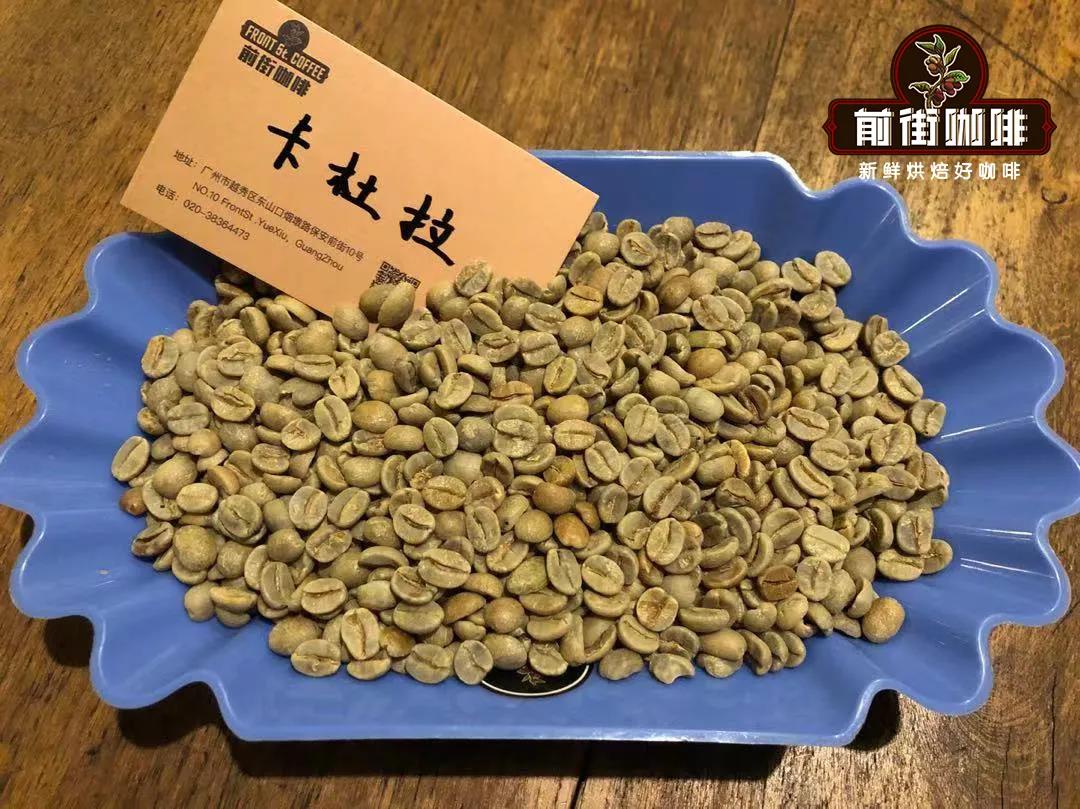
Variety: Caturra
The Coffee Variety
Caturra is a natural mutation of the Bourbon variety. It was discovered between 1915 and 1918 on a plantation in Minas Gerais, Brazil, where a group of genes in the cultivated Bourbon plants mutated and caused the plants to grow smaller, similar to dwarfism. This new coffee variety, expressed in a new biological form, was named "Caturra" by the locals in the Guaraní language, meaning "small." It is sometimes also called "Nanico."

Caturra's compact size allows for denser planting, and its secondary branches are closely spaced, so it can produce more fruit in the same space. That significantly raises yield per unit area, and the small size also makes harvesting more convenient. In Colombia, Caturra is thought to account for almost half of national production. It combines excellent acidity with fine aroma, and shows both brightness and good sweetness.
FrontStreet Coffee Roasting Analysis
Because Colombia Rose Valley undergoes a double anaerobic wash, FrontStreet Coffee's roaster uses a medium roast to preserve the fruit notes and rich acidity while showcasing a clean mouthfeel and a sweet-sour balance of flavours.
On a Yangjia 800N with a 480g charge, beans go in at 180 degrees C with the damper at 3 and heat at 130. Turnaround comes at 1'36". When the roaster reaches 140 degrees C the damper opens to 4. Yellowing arrives at 151.6 degrees C at 6'00", when the bean surface turns yellow and the grassy aroma disappears completely, marking the start of the dehydration stage. At 8'17", ugly wrinkles and dark patterns appear on the surface and the toast aroma clearly shifts to a coffee aroma, which can be defined as the prelude to first crack; listen carefully for the crack from this point. First crack begins at 9'48" with the damper fully open. At 188 degrees C the heat is reduced to 80, and at 192 degrees C it is reduced to 50. After 2'10" of development past first crack, the beans are discharged at 197 degrees C.

FrontStreet Coffee Brewing Guide
Dripper: Hario V60 #01
Water temperature: 91 degrees C
Dose: 15g
Ratio: 1:15
Grind: Medium-fine (80% pass-through on a #20 sieve)

FrontStreet Coffee's segmented extraction technique: first, use 30g of water to wet the grounds fully into a "hamburger" shape and bloom for 30 seconds (if you don't see that shape, check whether the beans are stale or the grind is too coarse). For the second pour, at 50 seconds on the timer, pour to 125g, then stop and wait for the water level to drop to two-thirds of the coffee bed before the third pour. For the third pour, at 1'40" on the timer, pour to 225g and let the coffee finish dripping, for a total extraction time of 1'50". Once extraction is complete, give the brewer a gentle swirl so the liquid mixes evenly before you taste it.

Flavour Description
In terms of processing, Rose Valley uses a double anaerobic enzyme wash, which produces a more pronounced acidity. Overall it drinks more like a glass of juice, with grape and strawberry sensations mixed with floral notes. Huayueye is more balanced, with floral strawberry notes accompanied by a black cocoa aftertaste, creaminess, and fermentation characteristics.
FrontStreet Coffee Recommendation
If the enzyme-washed Rose Valley has you curious about Colombia's more experimental side, FrontStreet Coffee's Colombia Frontera Sidra is a wonderful next stop. Grown at the Frontera estate and given an anaerobic natural process, it is medium-light roasted and pours with layered tropical fruit, grape, dried fruit, and passion fruit flavours and a juicy, fruit-juice-like body.
For a more classic Colombian experience, FrontStreet Coffee's washed Colombia Huila is a benchmark of the Huila department, the country's best-known specialty region, where coffee grows above 1,500 meters amid abundant water and mist. Medium-dark roasted, it highlights black chocolate, the sweetness of nuts, and a full, smooth body, and it works just as well in a pour-over or French press as it does in a moka pot or espresso machine.
Important Notice :
FrontStreet Coffee is a long-established specialty coffee roaster in Guangzhou China, selling freshly roasted beans from its own farm in Yunnan as well as dozens of carefully selected single-origin beans from around the world for both pour-over and espresso. The products deliver consistently excellent quality and great value, with shipping within 24 hours. Guangzhou's FrontStreet Coffee shop is recommended by many coffee lovers, and the beans are now available online at the Tmall 。
FrontStreet Coffee has moved to a new address:
FrontStreet Coffee Address: 315,Donghua East Road,GuangZhou
Tel:020 38364473
 Scan and follow the En Gafei WeChat official account. Please indicate that the reprint comes from "En Gafei".