What is Brazilian Coffee? What are the Flavor Characteristics of Brazilian Coffee? Is Brazilian Coffee Delicious?
Brazilian Coffee: The World's Leading Producer
When it comes to Brazil, coffee lovers will know it is the world's number one coffee-producing country - roughly one-third of the world's coffee comes from Brazil. In this article, FrontStreet Coffee takes a deep dive into Brazilian coffee.
Brazilian Coffee Growing Conditions
Brazil's dominance owes much to its growing environment and sheer planting area. In terms of natural conditions, Brazil lies in the tropics, with a hot, humid tropical rainforest climate in the north - ideal for sun-loving coffee plants.
History of Brazilian Coffee
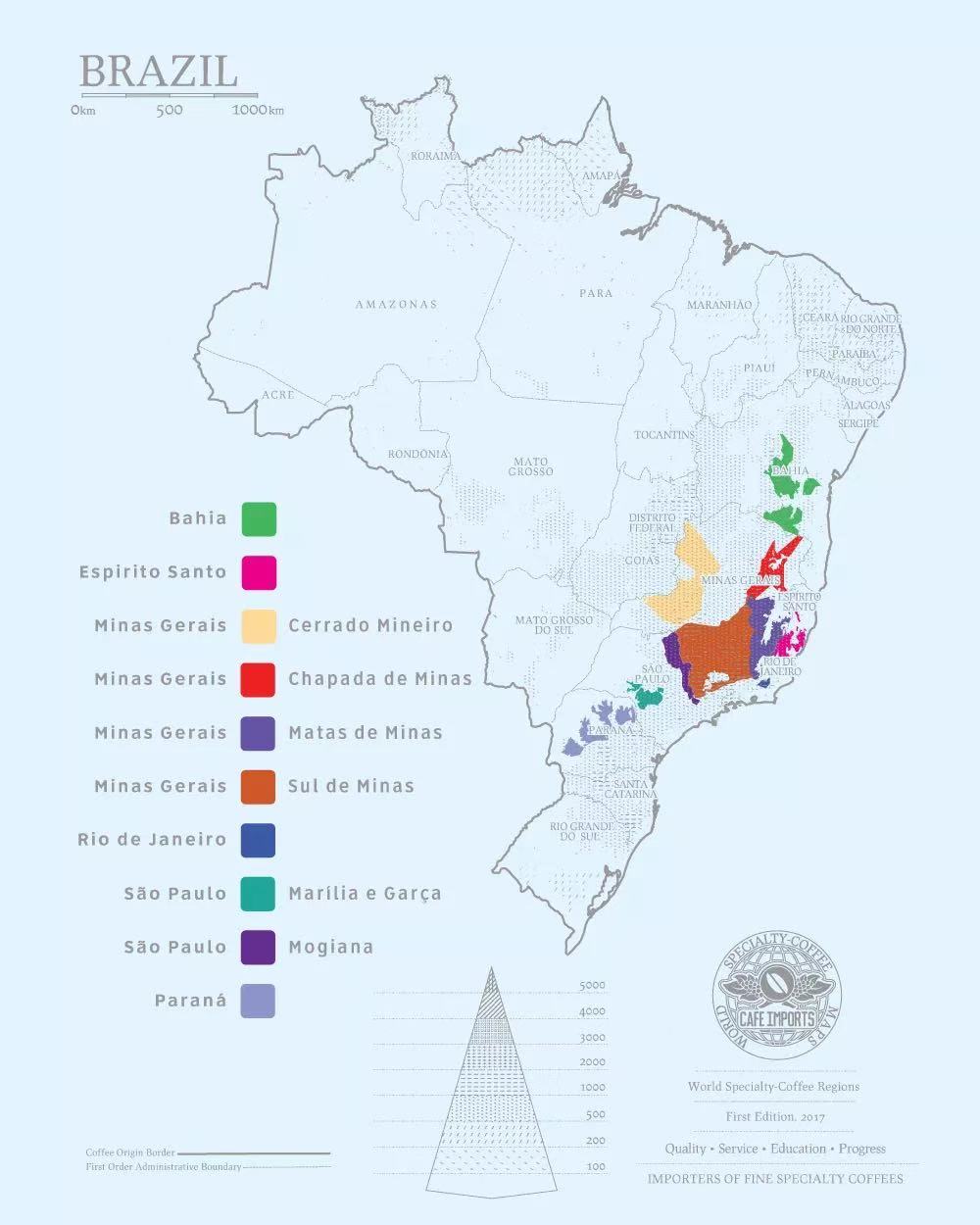
Coffee arrived in Brazil in the 18th century. In 1727, coffee was brought from Guiana to Belém, and from there it took root across the country, concentrated mainly in the southeastern coastal states of São Paulo, Paraná, Espírito Santo, and Minas Gerais.
From the late 18th century through the 1920s, under Portuguese colonial rule, Brazil engaged in long-term single-crop cultivation to supply Western European demand - and that crop was coffee. Coffee was the pillar of the Brazilian economy for a long stretch, and this was the golden age of Brazilian production: at its peak, Brazil's output once accounted for 75% of world production, and for a long period coffee exports made up 2/3 of Brazil's total export income, making it the undisputed "Coffee Kingdom." In 1929, however, the global economic crisis crushed world coffee consumption and hit Brazil's coffee economy hard.
Since then, coffee's share of Brazil's export income has fallen steeply. Over the past 30 years, as modern industry developed - steel, shipbuilding, automobiles, aircraft manufacturing - coffee's position in the national economy has declined year by year. Even so, it remains one of Brazil's economic pillars, and Brazil is still the world's largest coffee producer and exporter.
Brazilian Coffee Growing Regions
Brazil has 21 states, of which 17 produce coffee - clear evidence of how seriously the country takes it. That breadth of production is also what shapes the diversity of Brazilian coffee flavors, allowing it to suit such a wide range of palates.
As noted above, 17 states grow coffee, but most of the volume actually comes from four: Paraná, São Paulo, Minas Gerais, and Espírito Santo, which together account for 98% of national production. Paraná in the south is the most remarkable of all - a single state producing 50% of the total.
Paraná State
Paraná was formerly Brazil's largest producing area and retains its own production technology. When yields from coffee forests began to decline, producers there created a new "closed planting system," densifying the number of trees per hectare to better resist cold winds while keeping output more regular.
São Paulo State
This area sits very close to southern Minas. Coffee is planted among shrubs, grasslands, and other vegetation, and many planting families work here - some running traditional large-scale farms, others small modern operations. The blend of modern technology and mountain coffee culture produces some of the highest-quality Brazilian beans.
Minas Gerais
Characterized by small estates, Minas Gerais produces about 8-10 million bags of coffee grown along the mountainsides. The altitude is suitable, the terrain undulating, and the climate cooperative: rainfall concentrates in the months when the fruit is developing, and stays dry through harvest.
Espírito Santo State
Espírito Santo divides into two regions. In the north, both large and small estates grow Robusta; in the south, typical mountain-grown coffee is produced, generally in smaller quantities, using both washed and natural processing.
Brazilian Coffee Classification
Among Central and South American coffee countries, Brazil's altitude is comparatively low. So unlike Colombia and others, Brazil does not grade by high-altitude "hard bean" classifications. Instead, Brazilian coffee is classified by four criteria: bean size, defect rate, cupping quality, and flavor.
Flavor classification (highest to lowest): Strictly Soft, Soft, Softish, Hardish, Rioy (iodine taste).
Defect classification: counted by defective beans per 300g sample - 6 defects per 300g equals NY.2. Only completely defect-free lots can be graded NY.1, but such beans are so rare that supply cannot be sustained, so the best commercially available Brazilian greens are NY.2.
Cupping classification (highest to lowest): Fine Cup, Fine, Good Cup, Fair Cup, Poor Cup, Bad Cup. FC (Fine Cup) and GC (Good Cup) are the most common.
Bean size classification: the largest screen size for Brazilian beans is 19, but production is limited, so screen sizes 17 and 18 are considered the top grade.
Brazilian Coffee Processing Methods
Coffee flavor is determined not only by region, variety, and cultivation, but also by processing. Brazil's beans are mainly processed four ways: natural, pulped natural, washed, and semi-washed. Water-based methods arrived relatively late in Brazil, so they enjoy less recognition there.
Here is FrontStreet Coffee's summary of these four processes:
Natural process: Ripe cherries are laid out to dry directly in the sun, turned occasionally for even drying, until moisture reaches 12%; the skin and pulp are then removed.
Pulped natural process: After selecting suitable cherries, the skin, pulp, and part of the mucilage are removed; the beans are dried with a thin layer of mucilage still attached until moisture reaches 12%.
Semi-washed process: The same as pulped natural except that the mucilage is completely removed before drying, again down to 12% moisture.
Washed process: After selecting cherries and removing skin and pulp, the beans are fermented in water to break down the mucilage - a step that contributes acidity - then dried to 12% moisture.
Both the pulped natural and semi-washed methods remove mucilage mechanically, which sets them apart from the traditional natural and washed methods.
Characteristics of Brazilian Coffee Beans
Brazilian coffee has relatively low acidity that never overpowers the bean's natural sweetness and bitterness. It is extremely smooth to drink, with a long, lingering finish.
Here are the Brazilian coffees currently available from FrontStreet Coffee.
FrontStreet Coffee Brazilian Queen Estate Coffee Beans
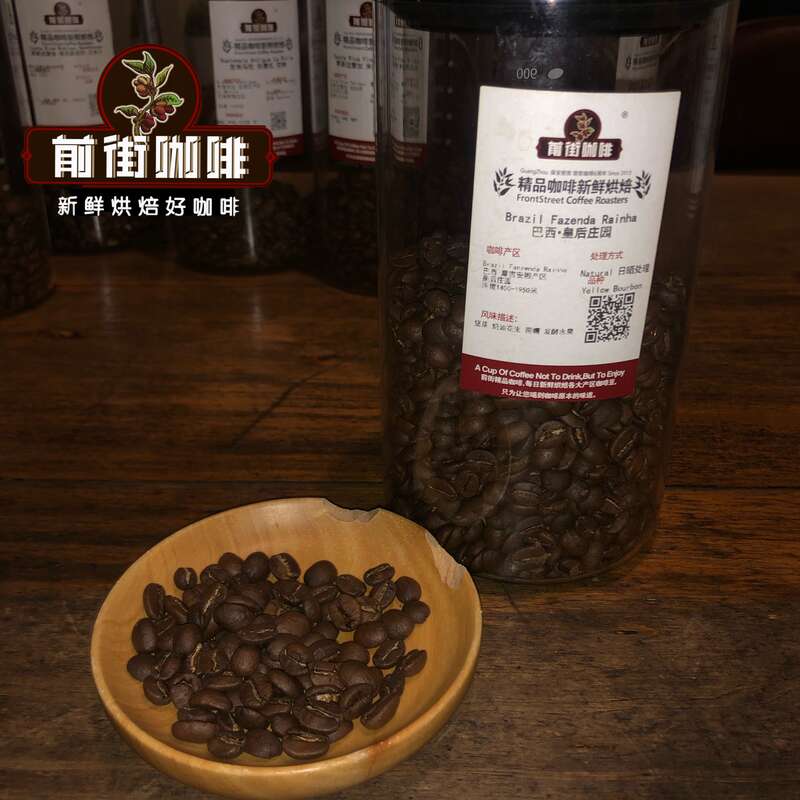
Country: Brazil
Region: São Paulo State (Queen's Estate)
Altitude: 1400-1950m
Variety: Yellow Bourbon
Processing Method: Pulped Natural/Natural
Flavor: Nuts, cream, peanuts, fermented fruits, cane sugar
Coffee veterans need no introduction to Queen's Estate, which belongs to the renowned Carvalho Dias family. The family's four estates have won awards at every Brazil COE competition since the first one in 1999 - more than 12 awards in 7 years - and in 2004 they swept the competition, taking the championship along with 9th and 11th place. Countless estates have hoped to even make the shortlist, yet this family's farms win year after year. Queen's Estate - Fazenda Rainha - has its own brilliant record: runner-up in 2000, third place in 2001, 29th place in 2005. To date, Queen's Estate has taken awards 3 times.
The Carvalho Dias family is also a founding member of the Brazil Specialty Coffee Association, and its commitment to quality and environmental stewardship is plain to see. On the family farms, natural waterfalls generate pollution-free hydropower that covers all their electricity needs. They have built churches, classrooms, nurseries, and medical stations; they preserve the original forests of native flora and fauna and continue replanting. At Queen's Estate, environmental protection runs deep: the high altitude and uneven terrain rule out machine harvesting, so every cherry is picked by hand. The estate also plants low-yield, high-quality Bourbon varieties - making it a flagship representative of Brazilian specialty coffee.
Queen's Pulped Natural Process
Queen's Estate's processing differs from the ordinary pulped natural method: the estate uses a pulp-removal technique it developed itself. This natural method, something like honey processing, rounds out the coffee's flavor to a point between washed and full natural.
During processing, a small amount of water first removes the pulp and skin; the coffee then goes straight onto drying racks and is turned constantly so every bean sees sunlight. After several days on the racks, mechanical drying brings it to the target moisture. Coffee processed this way is stable and keeps well: the beans have lower moisture content and larger size, with 98% of beans at screen size 16 or above and half at screen size 18.
Through this process, it is easy to see why Queen's Estate coffee tastes so good.
FrontStreet Coffee Brazilian Red Bourbon Coffee Beans
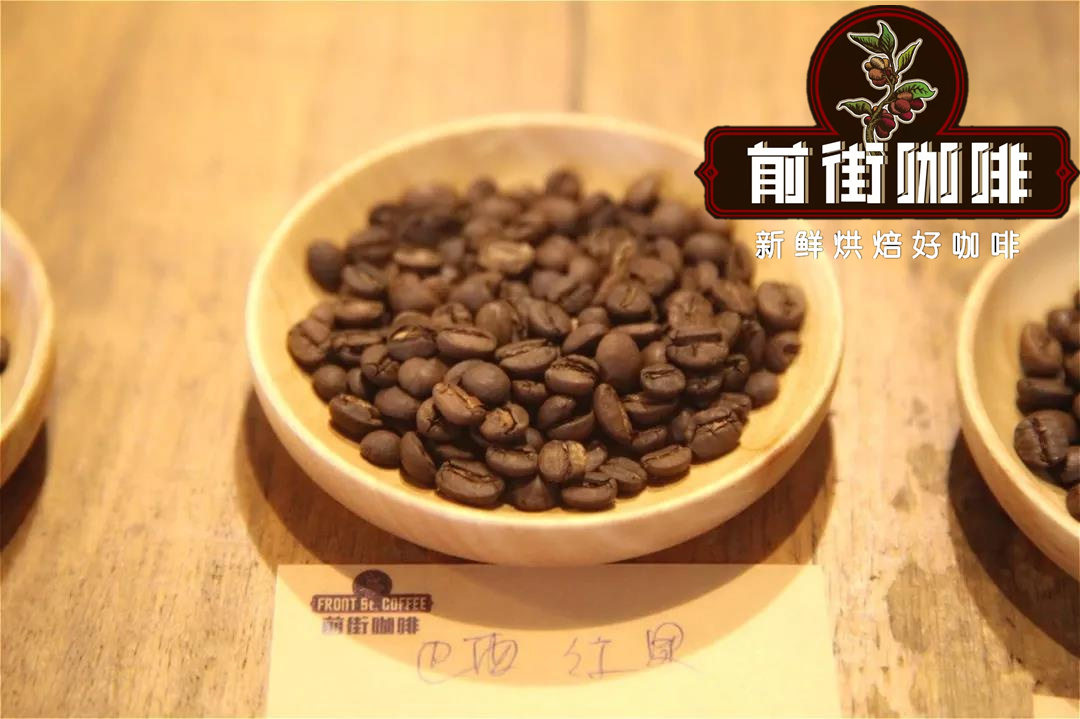
Country: Brazil
Region: Southern Minas
Altitude: 700-1200m
Variety: Red Bourbon
Processing Method: Semi-washed
Flavor: Nuts, chocolate, cream, peanuts, caramel, fruit acidity, cane sugar
Semi-Washed Processing
FrontStreet Coffee's Red Bourbon from southern Minas differs from Queen's Estate in processing: it is semi-washed, a method used mostly when climate conditions are less than ideal. In high humidity, or when warm weather brings rain, cherries are prone to mold and rot while drying. That is why most Brazilian beans destined for commercial trade are semi-washed.
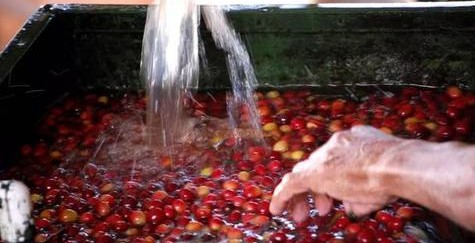
The workflow: after picking, water tanks float off unripe fruit and foreign matter; the skin and part of the pulp are removed; then mechanical mucilage removers strip the remaining mucilage. This shortens the sun-drying time and lowers the risk of fermentation defects.
FrontStreet Coffee Brazilian Red Bourbon (Daily Coffee)
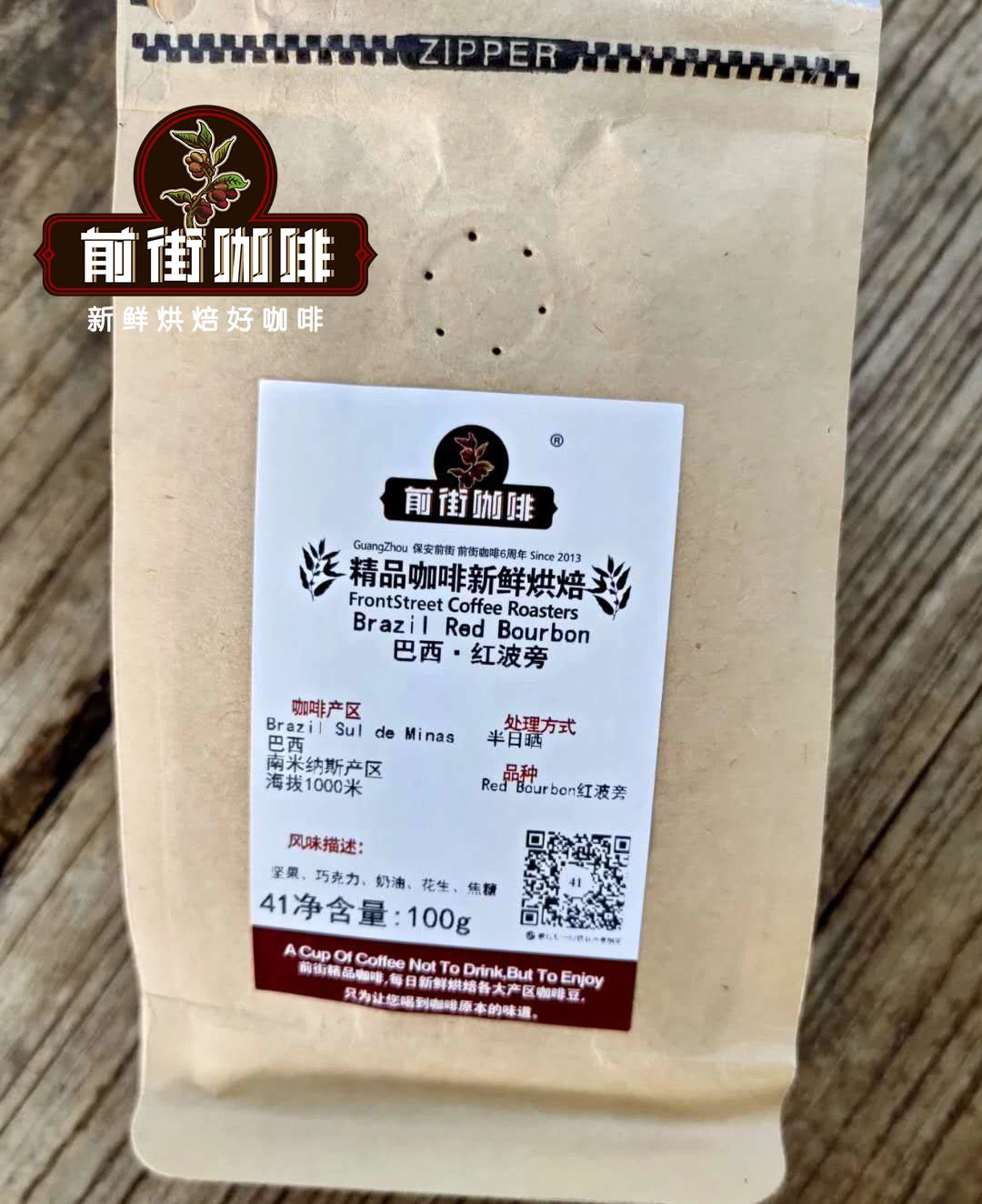
Country: Brazil
Region: Southern Minas
Altitude: 1000m
Variety: Red Bourbon
Processing Method: Pulped Natural
Flavor: Nuts, chocolate, cream, peanuts, caramel
Unlike the semi-washed Red Bourbon above, this daily-drinker lot is pulped natural, which makes its flavor more aromatic and full.
Attentive readers will have noticed that all three Brazilian beans above are either Red Bourbon or Yellow Bourbon. So what is the difference?
What Is Bourbon - and What Are Red and Yellow Bourbon?
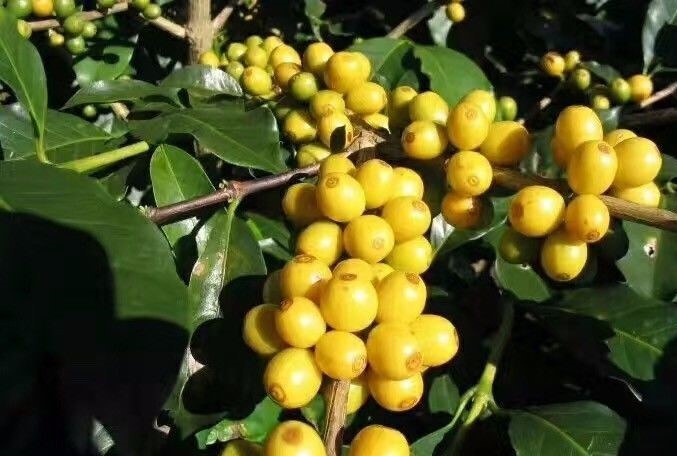
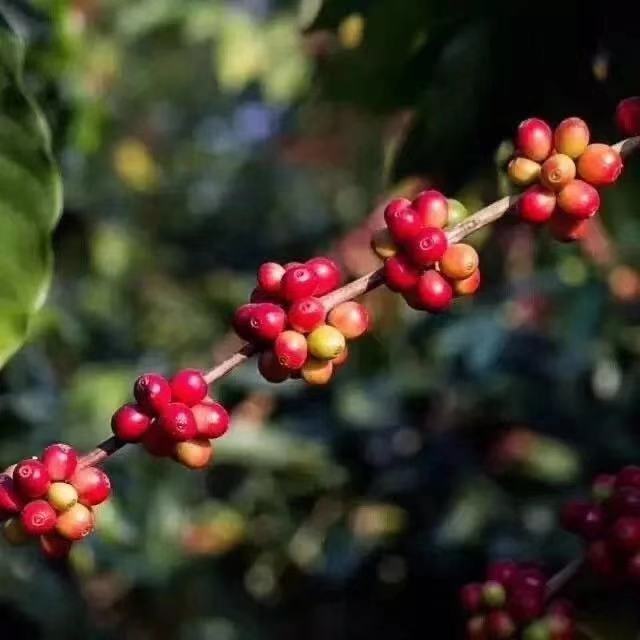
Simply put, Bourbon is a variety within the Arabica species. It typically bears red fruit - Red Bourbon - but there are also Yellow Bourbon and Orange Bourbon, with Yellow Bourbon yielding less but grading higher in quality. Bourbon arose from the natural mutation of Typica and is a heritage variety; both belong to Arabica. Bourbon cherries generally shift from green to bright mature red - the "Red Bourbon" we know. The fruit is short and round (hence the nickname "Round Bourbon"), with dense pulp and seed, high sweetness, and bright acidity. Beyond Red Bourbon there are Yellow Bourbon, the rare Orange Bourbon, and the precious Pink Bourbon.
Yellow Bourbon, meanwhile, is a Bourbon variant unique to São Paulo State. It takes its name from the fruit's ripening color: rather than turning red, it presents an orange-yellow hue. Planted at high altitude, Yellow Bourbon performs brilliantly - it once swept the Brazil Cup of Excellence two years running, with nearly all the top three prizes going to Yellow Bourbon, a genuine sensation in specialty coffee. Its cup typically shows nut and chocolate notes, balanced smooth acidity, and a faint, clean bitterness - an overall bright, refreshing experience.
Red Bourbon is the standard color progression taken to full ripeness: green, then slightly yellow, then slightly orange, then mature red, and finally a darker red when fully ripe. Its aroma is more pronounced, its acidity brighter, and it can even show wine-like flavors in the cup.
That wraps up FrontStreet Coffee's overview of Brazilian coffee - we hope you now have a clearer picture of its regional characteristics and flavors.
FrontStreet Coffee Recommendation
To taste what Brazil does best, start with FrontStreet Coffee's Queen Estate Yellow Bourbon. Grown at 1400-1950m by the award-winning Carvalho Dias family and dried with the estate's own pulped natural technique, it offers nuts, cream, peanuts, and cane-sugar sweetness with barely any acidity - delicious as pour-over, espresso, or moka pot coffee. For an everyday budget option, the FrontStreet Southern Minas Red Bourbon delivers classic nut, chocolate, and caramel flavors, while FrontStreet's espresso blends built on Brazilian beans provide the low acidity, rich crema, and stable extraction that make Brazil the backbone of so many great espresso recipes.
Important Notice :
FrontStreet Coffee is a long-established specialty coffee roaster in Guangzhou China, selling freshly roasted beans from its own farm in Yunnan as well as dozens of carefully selected single-origin beans from around the world for both pour-over and espresso. The products deliver consistently excellent quality and great value, with shipping within 24 hours. Guangzhou's FrontStreet Coffee shop is recommended by many coffee lovers, and the beans are now available online at the Tmall 。
FrontStreet Coffee has moved to a new address:
FrontStreet Coffee Address: 315,Donghua East Road,GuangZhou
Tel:020 38364473
 Scan and follow the En Gafei WeChat official account. Please indicate that the reprint comes from "En Gafei".