[FrontStreet Coffee Roaster's Notes] Different Flavor Expressions of Costa Rica Black Soul at Various First Crack Times
Understanding the "First Crack" in Coffee Roasting
Today, let's discuss the timing of "first crack" in coffee roasting. What exactly is first crack? As beans pass through the dehydration phase, water and other substances produce carbon dioxide when heated. This causes the beans to expand continuously until they break through the cell walls, creating a distinctive cracking sound.
For this demonstration, I'll use FrontStreet Coffee's Costa Rica Alma Negra to compare different roasting profiles.
Finca Las Lajas Alma Negra
Costa Rica · Alma Negra
Coffee Details:
Name: FrontStreet Coffee Costa Rica Natural Alma Negra
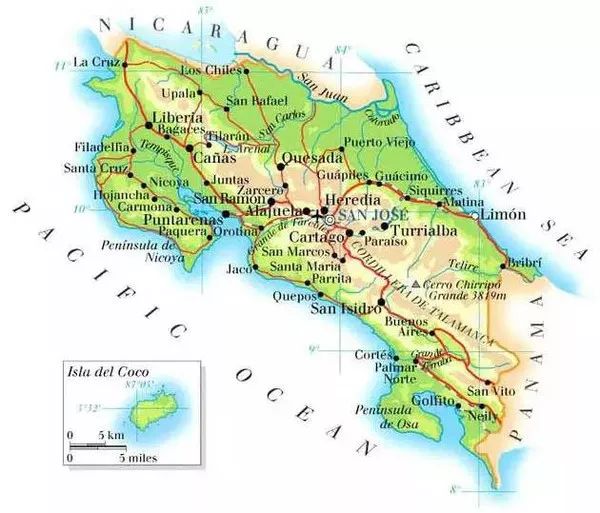
Country: Costa Rica
Region: Central Valley
Altitude: 1300-1500m
Processing: Natural Process
Grade: SHB
Variety: Caturra, Catuai
Green Bean Analysis
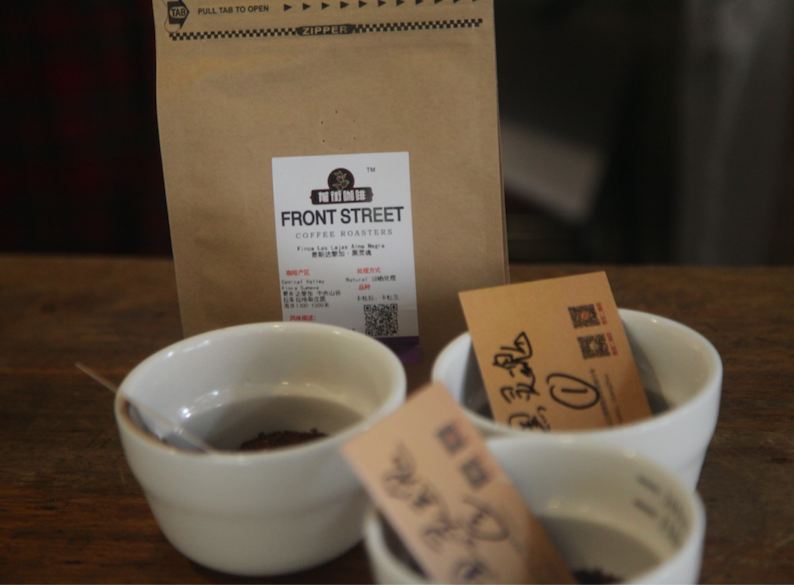
The green beans of FrontStreet Coffee's Costa Rica Natural Alma Negra show the typical yellow-green color of natural-processed coffee, with a subtle hawthorn-like acidity in the aroma. The beans feel relatively hard and have a higher moisture content.
Roasting Profile Comparison
FrontStreet Coffee Costa Rica Alma Negra Roasting Profile #1
FrontStreet Coffee uses a Yangjia 800N semi-direct-flame roaster (300g batch size).
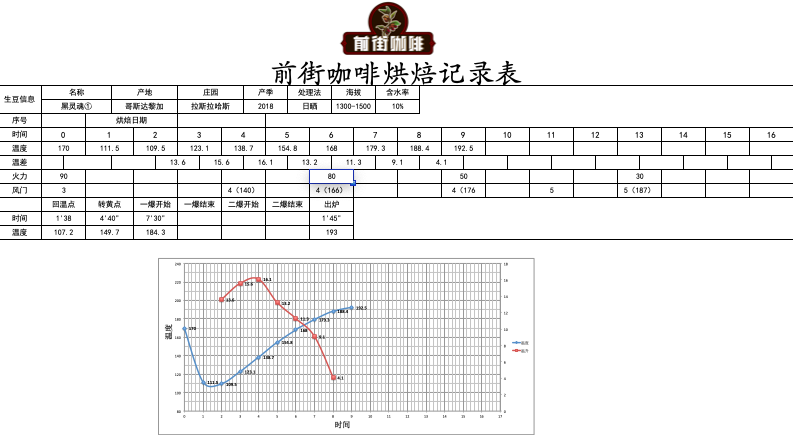
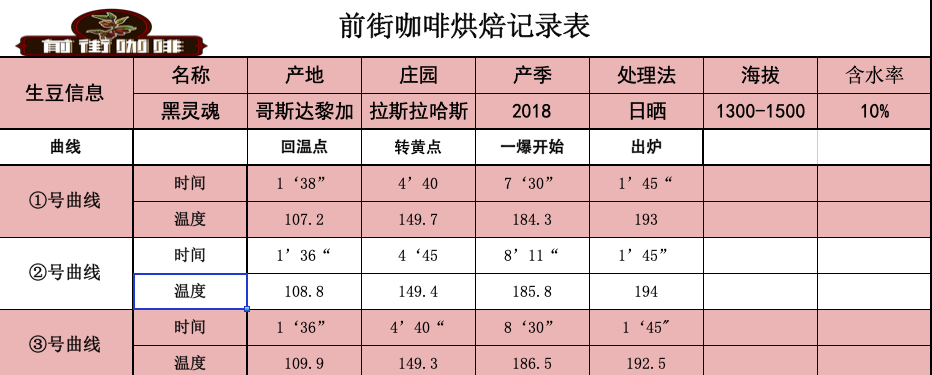
Preheat the roaster to 170°C before loading the beans, with the damper at 3. After 30 seconds, increase heat to 90. The turning point occurs at 1'38" at 107.2°C. At 140°C, maintain the heat and open the damper to 4. At 166°C, reduce heat to 80, and at 176°C further reduce to 50. At 4'40", the beans turn yellow as the grassy aroma disappears, entering the dehydration phase. Maintain heat and keep the damper at 4.
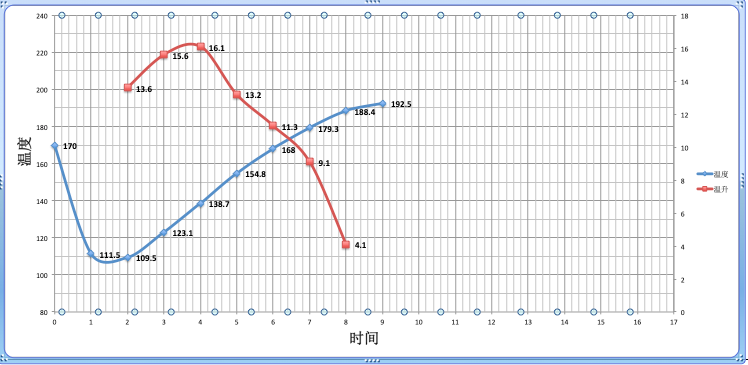
At 7'17", dehydration completes as wrinkles and dark spots appear on the bean surface, and the aroma shifts from toast to coffee — a sign of first crack approaching. Pay close attention for the cracking sound. At 7'30", first crack begins. Open the damper fully to 5 while maintaining heat. At 187°C, reduce heat to 30. The development time after first crack is 1'45", with beans dropped at 193°C.
FrontStreet Coffee Costa Rica Alma Negra Roasting Profile #2
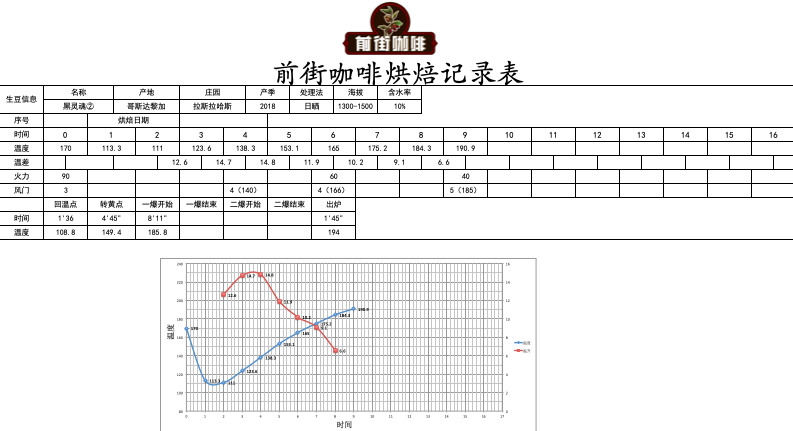
Preheat the roaster to 170°C before loading the beans, with the damper at 3. After 30 seconds, increase heat to 90. The turning point occurs at 1'36" at 108.8°C. At 140°C, maintain the heat and open the damper to 4. At 166°C, reduce heat to 60. At 4'45", the beans turn yellow as the grassy aroma disappears, entering the dehydration phase. Maintain heat and keep the damper at 4.
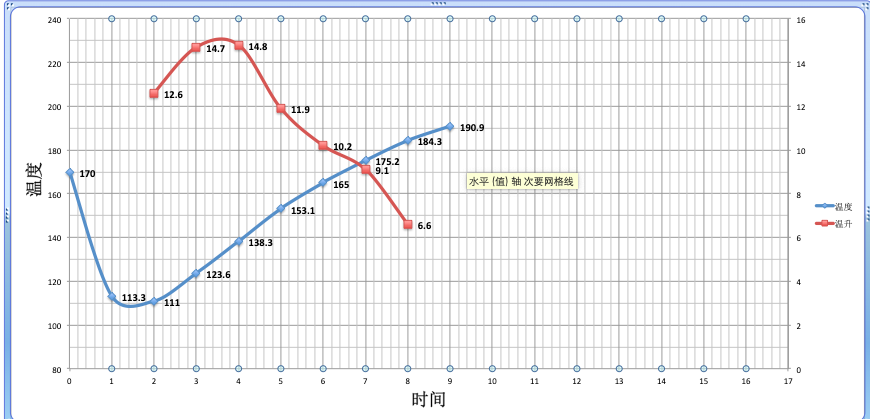
At 7'58", dehydration completes as wrinkles and dark spots appear on the bean surface, and the aroma shifts from toast to coffee — a sign of first crack approaching. Pay close attention for the cracking sound. At 8'11", first crack begins. Open the damper fully to 5 while adjusting heat to 40. The development time after first crack is 1'45", with beans dropped at 194°C.
FrontStreet Coffee Costa Rica Alma Negra Roasting Profile #3
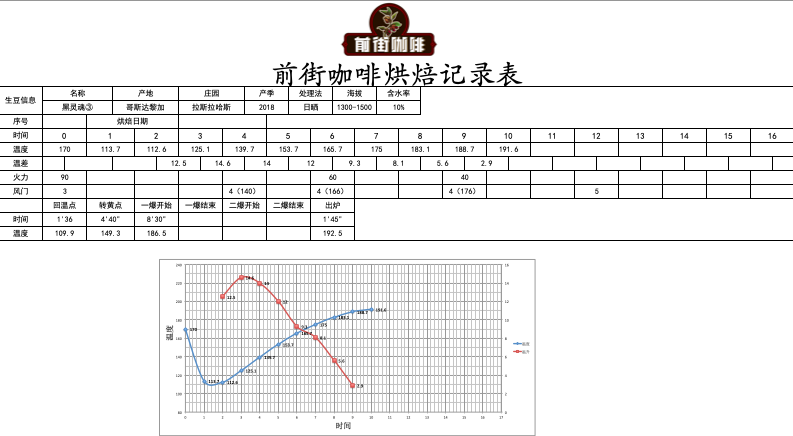
Preheat the roaster to 170°C before loading the beans, with the damper at 3. After 30 seconds, increase heat to 90. The turning point occurs at 1'36" at 109.9°C. At 140°C, maintain the heat and open the damper to 4. At 166°C, reduce heat to 60, and at 176°C further reduce to 40. At 4'45", the beans turn yellow as the grassy aroma disappears, entering the dehydration phase. Maintain heat and keep the damper at 4.
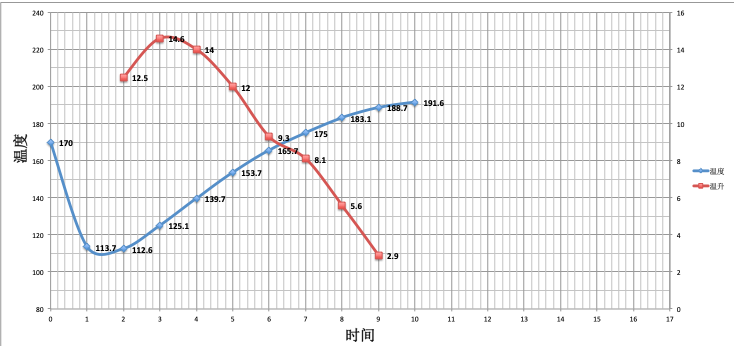
At 8'14", dehydration completes as wrinkles and dark spots appear on the bean surface, and the aroma shifts from toast to coffee — a sign of first crack approaching. Pay close attention for the cracking sound. At 8'30", first crack begins. Open the damper fully to 5 while maintaining heat. The development time after first crack is 1'45", with beans dropped at 192.5°C.
Cupping Comparison
Alma Negra Roasting Profile #1
FrontStreet Coffee cupping notes: Floral, citrus, fermented, grapefruit, toast, melon, cream
Alma Negra Roasting Profile #2
FrontStreet Coffee cupping notes: Floral, orange, fermented, maple, nuts, oolong tea, cocoa, passion fruit
Alma Negra Roasting Profile #3
FrontStreet Coffee cupping notes: Floral, orange, almond, black tea, woody, leather
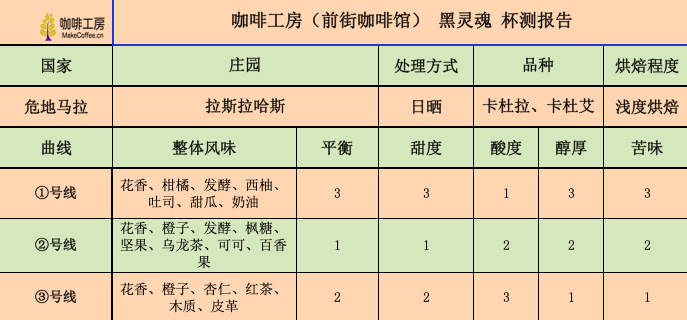
(Numbers 1-3 indicate ranking.)
Clever Brewer Comparison
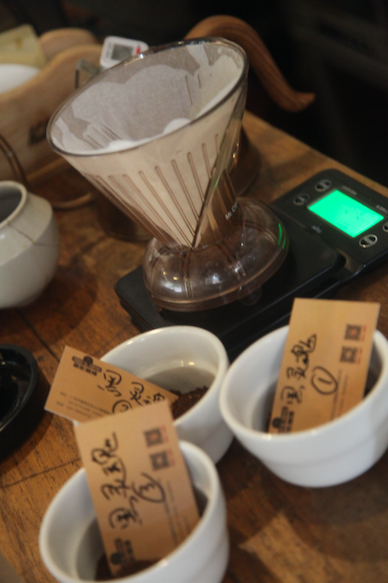
FrontStreet Coffee brewing parameters: 90°C / 1:15 ratio / 15g coffee / 227g water / grind size BG-5R
Alma Negra Roasting Profile #1
Method: Pour water to 227g, steep for 4 minutes, then begin filtering. Remove the brewer once the coffee bed is visible. Total time: 4'31".
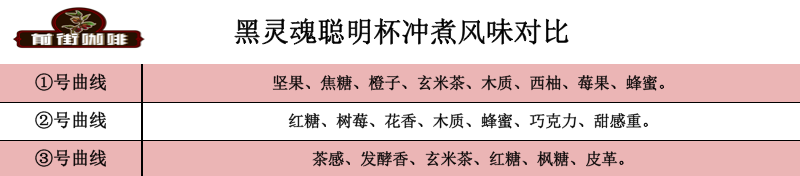
Flavor profile: Nuts, caramel, orange, genmaicha, woody, grapefruit, berries, honey
Alma Negra Roasting Profile #2
Method: Pour water to 227g, steep for 4 minutes, then begin filtering. Remove the brewer once the coffee bed is visible. Total time: 4'30".
Flavor profile: Brown sugar, raspberry, floral, woody, honey, chocolate, prominent sweetness
Alma Negra Roasting Profile #3
Method: Pour water to 227g, steep for 4 minutes, then begin filtering. Remove the brewer once the coffee bed is visible. Total time: 4'37".
Flavor profile: Tea-like, fermented aroma, genmaicha, brown sugar, maple, leather
Analysis and Conclusion
Across these three roasting profiles of FrontStreet Coffee's Costa Rica Alma Negra — with consistent development time after first crack and similar drop temperatures — FrontStreet Coffee's roasters adjusted the timing of first crack, commonly known as the "dehydration period." During this time the Maillard reaction is the primary driver.
In Profile #1, first crack occurs at 7'30", with rapid temperature increase during roasting and consistently high heat levels. The resulting beans show more wrinkles, appear less plump, and have somewhat uneven coloration, reflecting insufficient Maillard reaction time in some beans. In cupping and Clever Brewer brewing, the flavors lean toward fruit acidity with some woody off-notes and a slightly thinner mouthfeel. This likely results from the early first crack timing: the beans haven't absorbed sufficient heat to expand properly before entering the first crack stage, leaving some off-notes insufficiently decomposed.
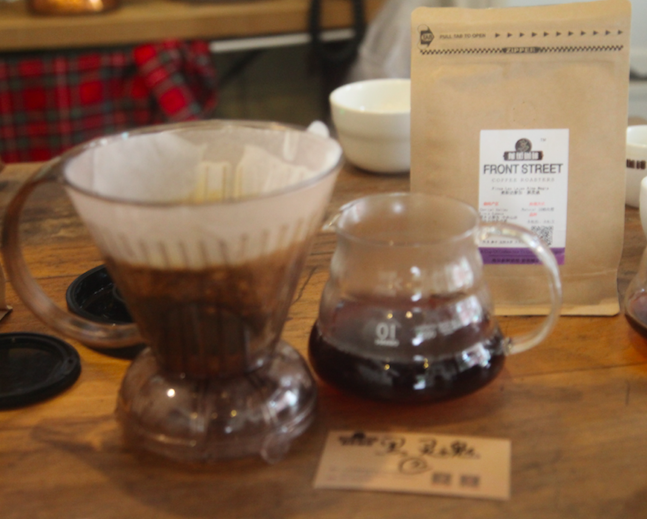
In Profile #2, first crack occurs at 8'11", with a slightly slower temperature increase than Profile #1. The beans appear plumper with more uniform coloration, reflecting consistent Maillard reaction across all beans. In cupping and Clever Brewer brewing, the flavors show more complexity with prominent sweetness and minimal off-notes.
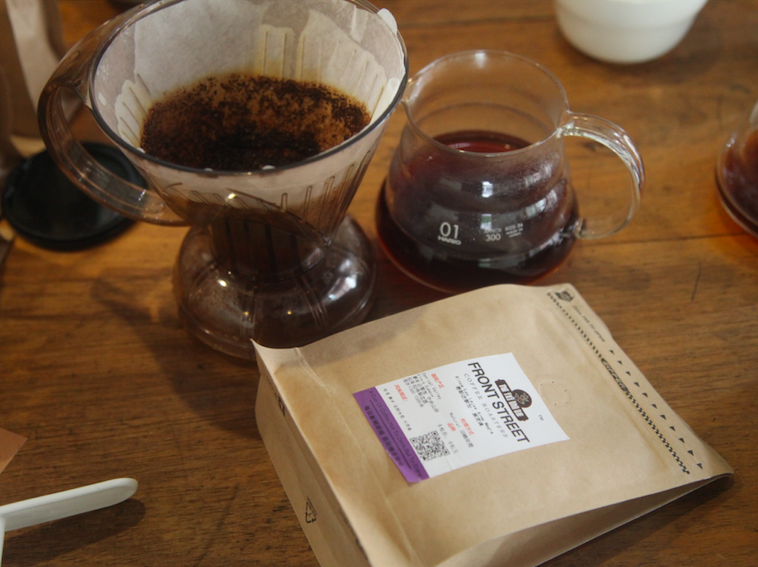
In Profile #3, first crack occurs at 8'30", with the slowest temperature increase among the three. The beans from this profile are very plump thanks to the extended time before first crack, allowing proper expansion, and the bean color is also quite uniform. In cupping and Clever Brewer brewing, the flavors are more balanced with a slightly fuller body but less complexity, leaning toward nutty, caramel, and tea-like notes while fruit and floral characteristics are relatively weaker. This profile produces coffee with more singular flavor because the longer time before first crack causes some sugars to convert to caramel while a larger portion decomposes, resulting in more balanced brewed flavors.
After comparing all three profiles, FrontStreet Coffee's roasters concluded that Profile #2 offers the best flavor and complexity. This also shows that the timing of first crack significantly affects flavor and mouthfeel. Shorter timing tends to produce off-notes and a thinner mouthfeel, while longer timing may cause some desirable flavors to decompose, resulting in a fuller body but a more singular profile. Controlling the timing of first crack is therefore a crucial part of coffee roasting.
FrontStreet Coffee Recommendation
As this roast comparison shows, natural-processed coffees reward careful roasting — the longer the fruit stays on the bean, the more sweetness and complexity there is to protect. If that style appeals to you, FrontStreet Coffee's natural lineup is a natural next stop. The FrontStreet Sun-Dried Huakui from Ethiopia's Guji Hambella region is a prime example: grown at high altitude, sun-dried on raised beds, and medium-light roasted to bring out a light fermented aroma, florals, citrus, mango, honey sweetness, cocoa, and a lingering finish.
For a more fruit-forward natural, the FrontStreet Yirgacheffe Natural Red Cherry keeps the whole pulp and skin drying on raised beds for weeks, giving it elegant florals and bright acidity layered with pronounced tropical fruit, full fermentation sweetness, and body. Both are brewed at 90-91°C with a 1:15 ratio, and both show why a well-managed natural process can be every bit as clean as a washed coffee while offering far more fruit.
Important Notice :
FrontStreet Coffee is a long-established specialty coffee roaster in Guangzhou China, selling freshly roasted beans from its own farm in Yunnan as well as dozens of carefully selected single-origin beans from around the world for both pour-over and espresso. The products deliver consistently excellent quality and great value, with shipping within 24 hours. Guangzhou's FrontStreet Coffee shop is recommended by many coffee lovers, and the beans are now available online at the Tmall 。
FrontStreet Coffee has moved to a new address:
FrontStreet Coffee Address: 315,Donghua East Road,GuangZhou
Tel:020 38364473
 Scan and follow the En Gafei WeChat official account. Please indicate that the reprint comes from "En Gafei".