What Do G1 and G2 Mean in Coffee and How to Differentiate Them - Ethiopian Coffee Bean Grade Classification
Professional coffee knowledge exchange. For more coffee bean information, please follow Coffee Workshop (WeChat public account: cafe_style).
As the idea of specialty coffee spreads, more people are learning to buy beans, grind them, and brew pour-over at home. Have you noticed the mysterious letters on coffee bags — AA, G1, and so on? What do they actually mean? In this article, FrontStreet Coffee explains the letter codes on coffee packaging.
Ethiopia (Graded by Defective Bean Ratio)
Before the Ethiopia Commodity Exchange (ECX) was established, Ethiopia's export grades were set by the CLU (Cupping and Liquoring Unit) under the Ministry of Agriculture, which graded green beans mainly by the number of defective beans in a 300g sample. The standards were as follows.
| Grade | Defective Bean Count (per 300g) |
|---|---|
| Grade 1 | ≤3 |
| Grade 2 | 4-12 |
| Grade 3 | 13-25 |
| Grade 4 | 26-45 |
| Grade 5 | 46-90 |
Generally, washed beans are G1-G2. Because natural processing was technically limited at the time, natural-processed green beans had more defects and usually landed at G3-G5. As natural processing has improved, today's natural beans can also reach G1-G2.
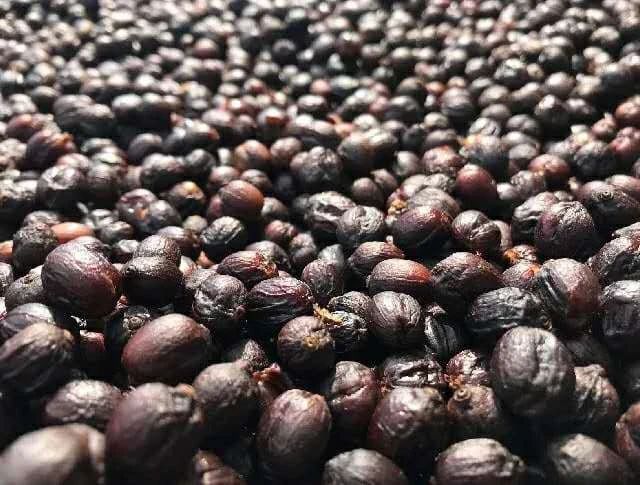
After ECX was established in 2008, grading combined the physical attributes of the green beans with their cupping flavor characteristics.
ECX sorts all coffee into three types based on processing method (washed and unwashed):
a. Specialty: few defects, high cupping quality
b. Commercial: does not meet specialty grade but is above local/domestic consumption grade
c. Local/Domestic: coffee with many defective beans (unripe), off-season, and relatively poor flavor from poor storage
Specialty and Commercial are destined for international export. ECX divides green beans into nine grades based on the combined physical attribute and cupping scores, with physical characteristics accounting for 40% and cupping quality for 60%.
Physical Characteristics (40%):
Washed processing: defect count (20%), appearance and size (10%), color (5%), odor (5%)
Unwashed processing: defect count (30%), odor (10%)
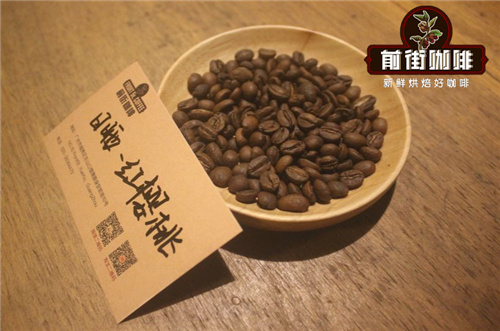
Cupping Quality (60%)
| Grade | Score | Washed | Non-washed |
|---|---|---|---|
| Grade 1 | 91-100 | 91-100 | |
| Grade 2 | 81-90 | 81-90 | |
| Grade 3 | 71-80 | 71-80 | |
| Grade 4 | 63-70 | 63-70 | |
| Grade 5 | 58-62 | 58-62 | |
| Grade 6 | 50-70 | 50-70 | |
| Grade 7 | 40-49 | 40-49 | |
| Grade 8 | 31-39 | 31-39 | |
| Grade 9 | 20-30 | 20-30 |
G1-G3 are then cupped again according to SCAA standards for a closer look at their flavor attributes. G1 and G2 scoring no lower than 85 are graded Q1; G1, G2, and G3 scoring between 80 and 85 are graded Q2; and all G1, G2, and G3 below 80 are graded G3.
Q1 and Q2 are classified as specialty grades for export. G4-G9 keep their original grade and are classified as commercial grades for export, along with G3.
Kenya (Graded by Bean Size)
Kenyan coffee is graded mainly by bean size and is usually divided into eight grades.
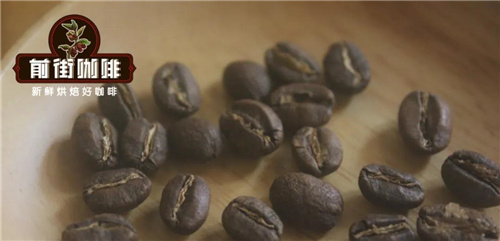
E (Elephant Bean): Here "E" stands for Elephant, but it is not the Elephant Bean (Maragogype) variety. It is a defect caused by abnormal development, where two seeds fuse into what looks like a single bean. Normally one fruit contains two seeds facing each other, which gives one flat side, so they are called flat beans or female beans. Grade E beans are two seeds that grew together into an oversized bean. E-grade beans are about 18 screen or larger (one screen is 1/64 inch) and are rare.
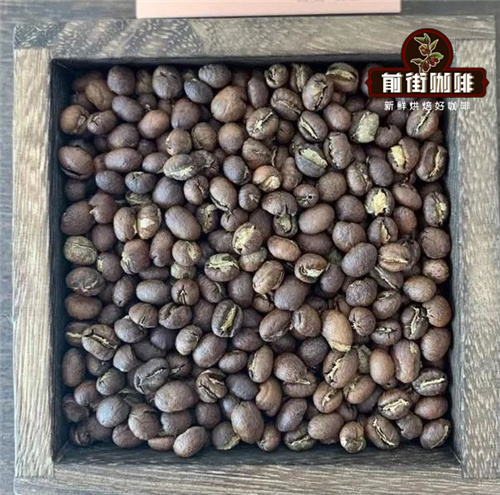
AA: This grade falls between 17 and 18 screen (roughly 6.7-7.1mm) and is the most commonly heard Kenyan grade. In specialty coffee it is usually called AA TOP, and it is the bean many cafés promote. But AA does not necessarily mean best — it describes size only, and should not be confused with flavor.
AB: Most coffee beans fall into this grade. It is called AB mainly because A size is 6.80mm and B is 6.20mm, and these two sizes (Grade A and Grade B) are mixed and sold together, hence AB. The size is about 15-16 screen (roughly 6.0-6.4mm).
C: Beans between 14 and 15 screen (roughly 5.6-6.0mm), smaller than Grade B.
PB: Short for Peaberry, also called small round beans or male beans. Compared with ordinary flat beans they are rare, making up about 10% of all coffee beans. This is mainly because only one seed develops inside the fruit, producing a small, round bean. Some drinkers love PB's flavor, so PB beans are selected and sold separately.
TT: Beans screened out of AA and AB by air separators. They are usually light in weight, do not meet hardness standards, and include broken and defective beans.
T: Lighter beans screened from Grade C, mixed with broken beans and even fragments of cracked beans.
MH/ML: This category is not exported. These are usually overripe beans that have fallen to the ground, of poor quality, making up about 7% of all coffee beans, and they are sold only in the Kenyan domestic market.
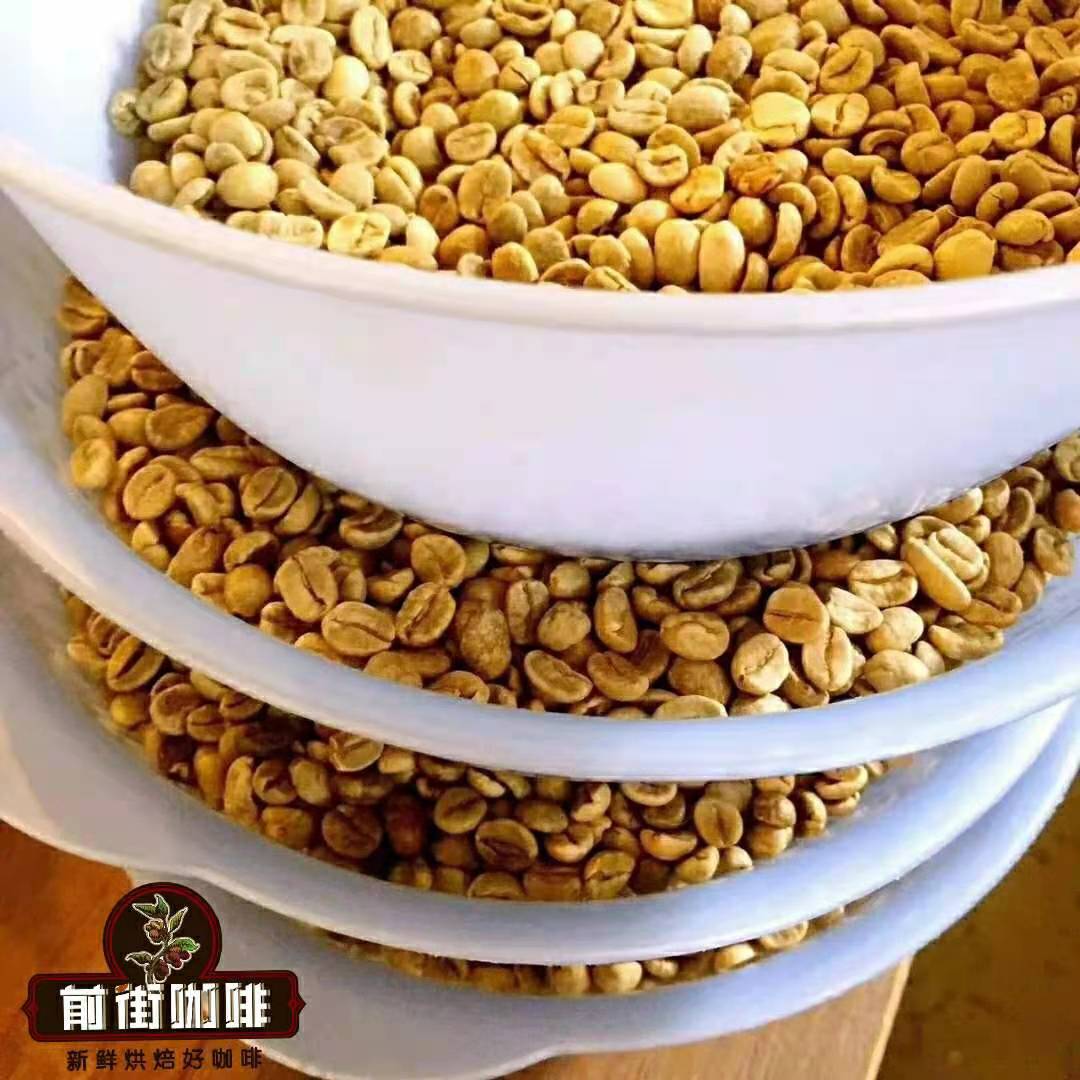
Many other countries also grade by green bean size, including Tanzania, Rwanda, Colombia, and Jamaica.
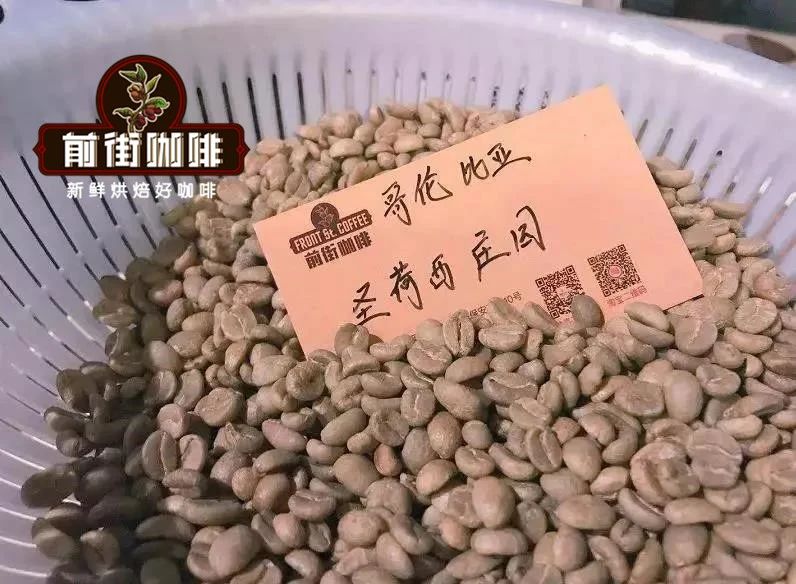
Colombia
| Grade | Size Standard |
|---|---|
| Supreme Screen 18+ | 95% 18 screen or larger |
| Supreme | 95% 17 screen or larger |
| Excelso Extra | 95% 16 screen or larger |
| Excelso EP | 14-16 screen |
| U.G.Q | 14 screen or larger |
Jamaica
| Grade | Size Standard (Defect rate below 3%) |
|---|---|
| NO.1 | 17 screen or larger |
| NO.2 | 16 screen or larger |
| NO.3 | 15 screen or larger |
| PB | Approximately 14 screen or larger |
Costa Rica, Panama, Guatemala (Graded by Green Bean Hardness)
At the same latitude and on the same plot, higher altitude means a greater day-night temperature swing, a longer growing period, harder beans, more nutrients absorbed, and more pronounced flavor compounds.
| Grade | Altitude |
|---|---|
| SHB (Strictly Hard Bean) | ≥1400m |
| HB (Hard Bean) | 1200-1400m |
| SH (Semi Hard Bean) | 1100-1200m |
| EPW (Extra Prime Washed) | 900-1100m |
| PW (Prime Washed) | 800-900m |
| EGW (Extra Good Washed) | 600-800m |
| GW (Good Washed) | ≤600m |
El Salvador, Honduras (Graded by Altitude)
| Grade | Altitude (El Salvador) | Altitude (Honduras) |
|---|---|---|
| SHB (Strictly High Grown) | ≥1200m | ≥1221m |
| HG (High Grown) | 900-1200m | 915-1220m |
| S (Standard) | —— | 610-915m |
| CS (Central Standard) | 500-900m | —— |
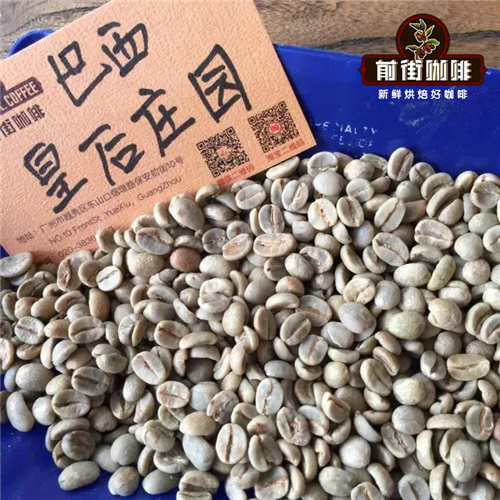
Brazil (Graded by Bean Size, Defect Rate, Cupping Score)
Brazil holds that only completely defect-free beans can be called NY.1, but completely defect-free beans do not exist. So among Brazilian green beans, the best is NY.2.
By Coffee Bean Size (NY Grading Method)
| Type | Quality |
|---|---|
| NY.2 | 17-18 screen FC |
| NY.2/3 | 14-16 screen FC |
| NY.3/4 | DD Quality |
| NY.4/5 | 14-16 screen GC |
By Defective Bean Count
| Type | Defective Bean Count (per 300g) |
|---|---|
| NY.2 | 6 |
| NY.2/3 | 9 |
| NY.3 | 13 |
| NY.3/4 | 21 |
| NY.4 | 30 |
| NY.4/5 | 45 |
| NY.5 | 60 |
| NY.5/6 | >60 |
By cupping level:
Fine Cup (FC), Fine, Good Cup (GC), Fair Cup, Poor Cup, Bad Cup
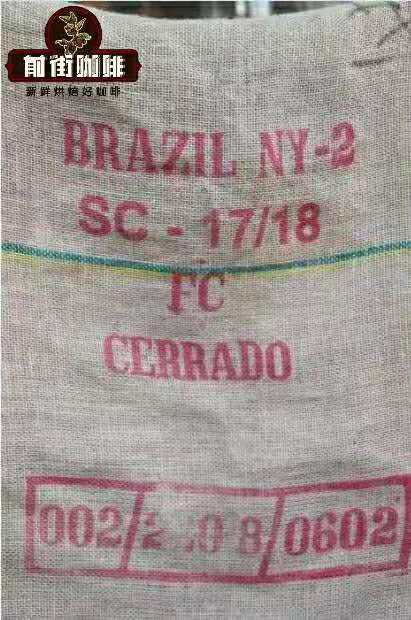
For example: Brazil Cerrado NY-2 SC-17/18 FC
This means the Brazil Cerrado region, NY grade 2, bean size 17-18 screen, and flavor quality Fine Cup (excellent flavor).
For more specialty coffee beans, please add private WeChat FrontStreet Coffee, WeChat ID: kaixinguoguo0925
FrontStreet Coffee Recommendation
Understanding the grades is one thing; tasting the difference is another. Ethiopia's G1 and G2 washed beans are the clearest place to start, and FrontStreet Coffee's washed Yirgacheffe is the classic introduction: white jasmine, bright citrus and lemon acidity, and a clean tea-like body for a very reasonable price. The washed Gotiti Cooperative coffee from Gedeb, which represents the village-level traceability that the ECX system is built to recognize, takes that further with a distinct black tea note and a more focused floral core.
For the same origin expressed through a different process, the sun-dried Red Cherry is picked from fully ripe fruit and lands on berry juice, honey sweetness, and a creamy texture, while the sun-dried Huakui brings a more tropical, fermented-fruit profile. If you prefer a lighter, tea-like cup, the Hamashu 74158 is a JARC-developed variety with strawberry, star fruit, and green grape sweetness, and the Kafa Forest coffee, grown between 1,400 and 2,100 meters in shade, offers a bright lemon acidity with orange and bergamot and a green-tea finish. Each of these shows how much flavor sits behind a simple grade letter.
Important Notice :
FrontStreet Coffee is a long-established specialty coffee roaster in Guangzhou China, selling freshly roasted beans from its own farm in Yunnan as well as dozens of carefully selected single-origin beans from around the world for both pour-over and espresso. The products deliver consistently excellent quality and great value, with shipping within 24 hours. Guangzhou's FrontStreet Coffee shop is recommended by many coffee lovers, and the beans are now available online at the Tmall 。
FrontStreet Coffee has moved to a new address:
FrontStreet Coffee Address: 315,Donghua East Road,GuangZhou
Tel:020 38364473
 Scan and follow the En Gafei WeChat official account. Please indicate that the reprint comes from "En Gafei".