Espresso Coffee Will Exhibit Many Flavor Changes Simply by Adjusting the Amount of Coffee Grounds
How Changing the Dose Changes Your Espresso
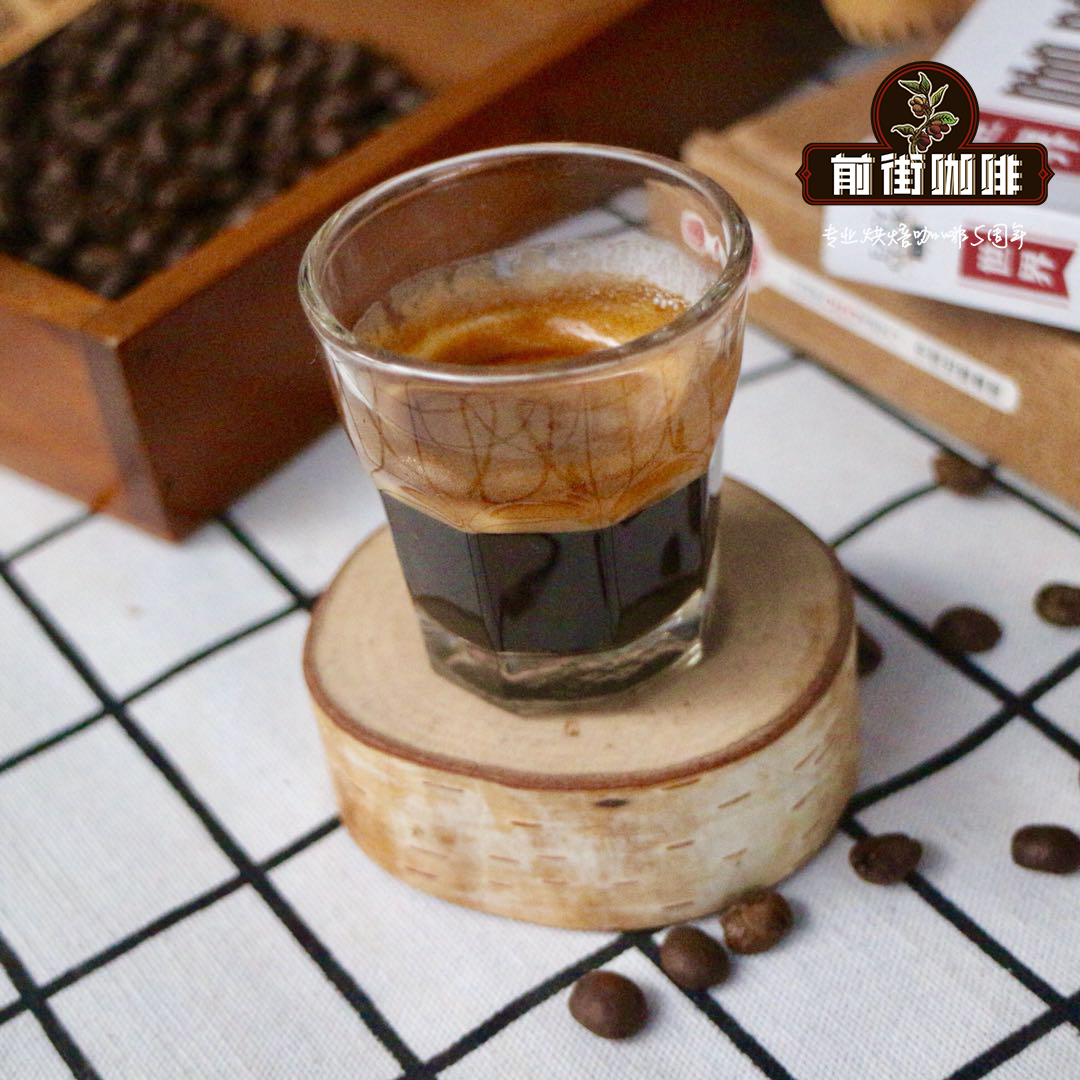
While dialing in grind size, we constantly adjust the coffee dose as well. So what actually happens to the extraction when you increase or decrease the dose while holding the liquid volume and grind size constant?
The test beans were FrontStreet Coffee's Premium Blend we use daily, a 6:4 Brazil-to-Colombia mix, ground on a Feima 900N set at 1.7.
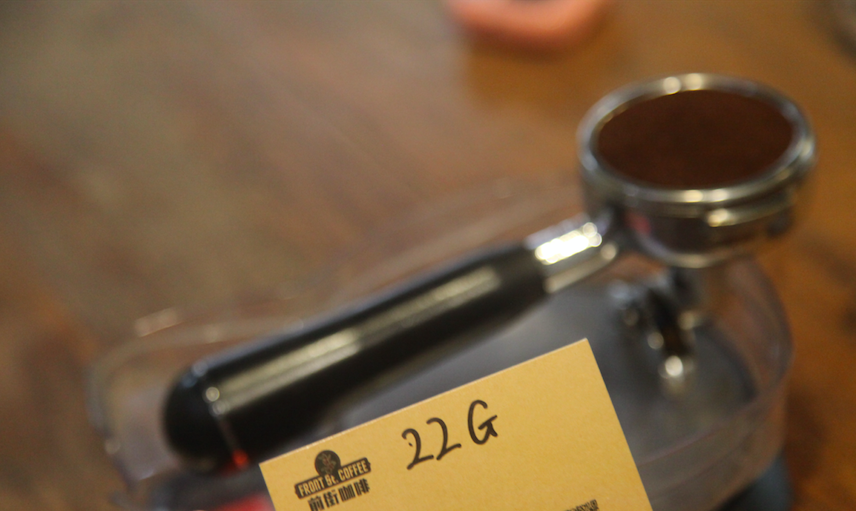
Let's get straight to the experiment.
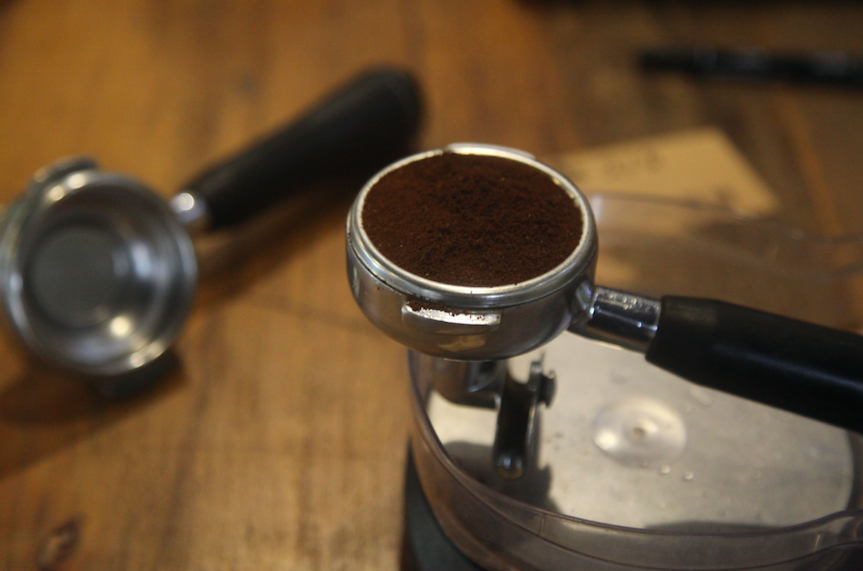
21g Dose — The Baseline
Parameters for the reference shot:
- Dose: 21 grams
- Liquid volume: 40 grams
- Extraction time: 22 seconds
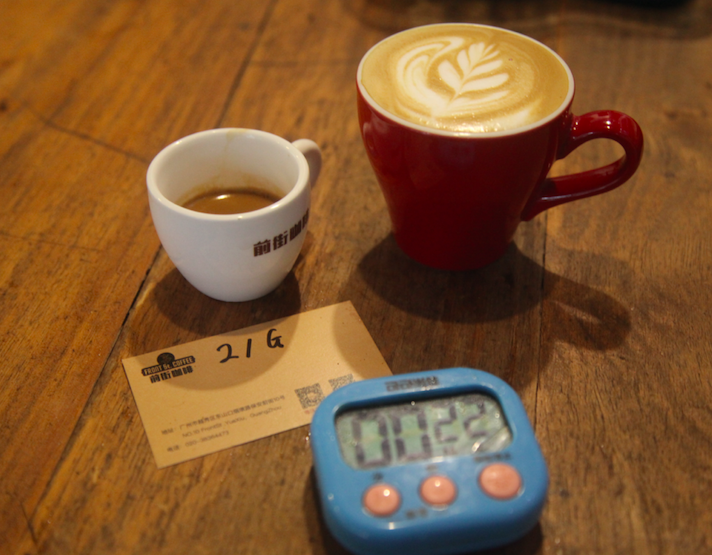
Espresso flavor: Caramel, hazelnut, almond, berries, lemon — acidity fairly prominent overall, finishing with dark chocolate.
With this baseline established, we first reduce the dose.
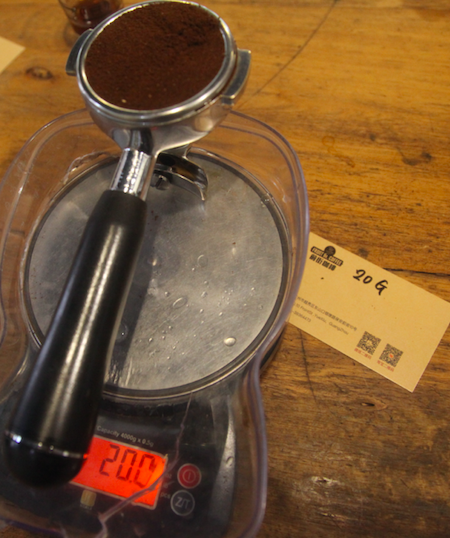
20g Dose
- Dose: 20 grams
- Liquid volume: 40 grams
- Extraction time: 19 seconds
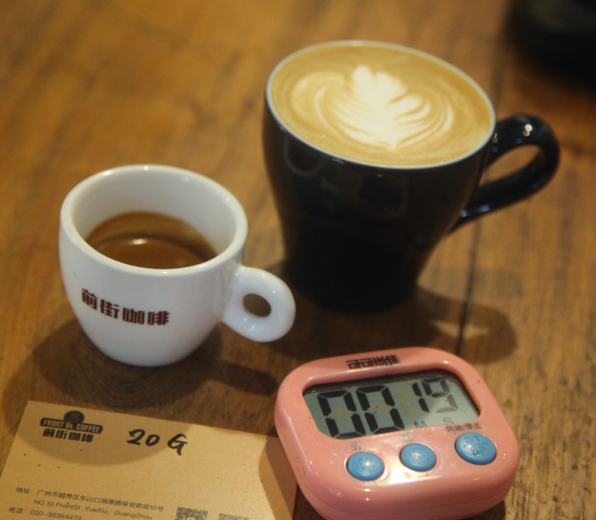
Espresso flavor: Caramel, citric acid, nuts, grapefruit — a somewhat sharp acidity in the mouthfeel, with a persistent finish.
Next, we increase the dose.
22g Dose
- Dose: 22 grams
- Liquid volume: 40 grams
- Extraction time: 23 seconds
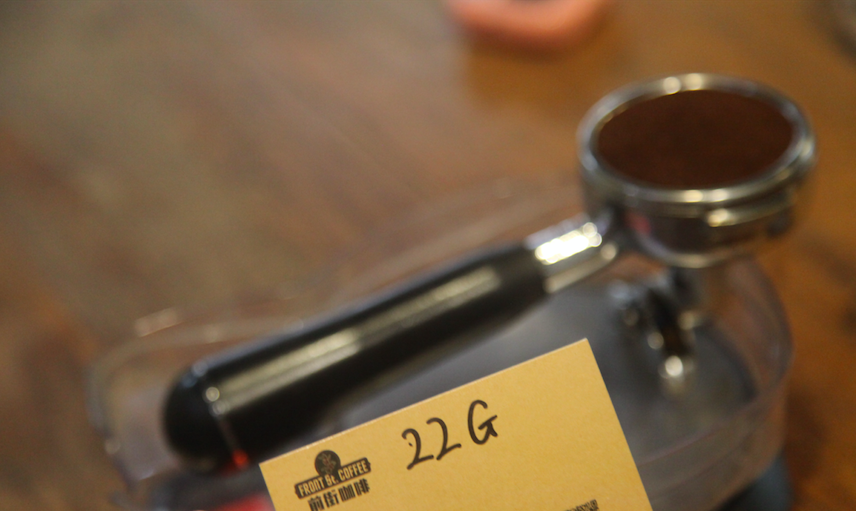
Espresso flavor: Sunflower seeds, roasted almonds, caramel, smoke, berries — bitterness fairly prominent, acidity weaker, and a finish that falls apart.
Reading the three shots: the 21g espresso leaned acidic with heavy berry notes and a smooth body. Cut to 20g, the shot ran faster — 19 seconds — leaving the puck less saturated early on, so bright fruit acids charged out of the gate; with less coffee in the basket, the later extraction consisted mostly of finish notes. The result was a shot whose front and back never quite agree — unbalanced. The 22g shot, meanwhile, packed so much coffee into the basket that the early extraction was concentrated and intense, but the tail end of the flavor never made it into the cup — only the early notes came through, giving a more direct, one-dimensional shot with an inconsistent finish.
Once we had mapped the three espressos, we steamed milk and built a cappuccino with each.
21g Cappuccino
Flavor: Cream, milky sweetness, milk chocolate, hazelnut, toffee — sweet and balanced overall.
20g Cappuccino
Flavor: Hazelnut, caramel, chocolate — harmonious, with a rich, persistent finish.
22g Cappuccino
Flavor: Almond, nuts, cream, dark chocolate — rich overall, with the coffee aroma standing tall.
Through the milk, all three revealed their personalities. Sweet tooths should go for the 21g version; anyone chasing coffee punch should pick the 22g. The 20g cappuccino was actually the most balanced of the three: its sharp early fruit acids and late nuttiness reflect a more complete extraction overall, and that completeness carried through the milk beautifully.
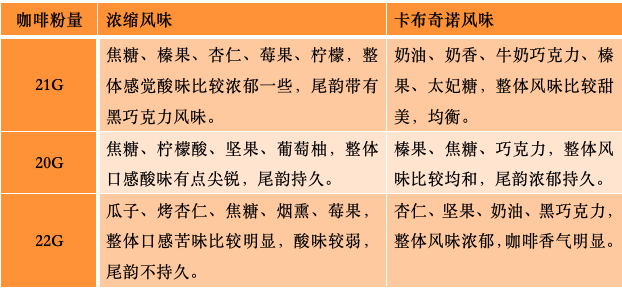
The takeaway: raise the dose and the espresso grows more intense and full-bodied with more pronounced bitterness — and its coffee flavor survives the milk; lower the dose and the shot turns noticeably acidic, with bitterness showing too, but its higher extraction yield makes it the better candidate for milk drinks. Which dose you choose should come down to the flavor you want to express.
One final note: espresso's defining trait is pulling a rich cup under high pressure in a very short time, and the parameters are correspondingly sensitive — a dose change of just 0.5 grams already shifts the flavor. We deliberately used 1-gram steps here to make the differences obvious, but for daily dialing-in, we recommend adjusting in 0.5-gram increments.
FrontStreet Coffee Recommendation
The Brazil-forward blend in this experiment is no accident — Brazil is the world's largest coffee producer, and its beans bring moderate acidity and a beautifully balanced sweetness, bitterness, and body that suit medium roasts perfectly: toasted nuts on the nose, a mellow mouthfeel with a faint acidity, equally at home as a single origin or in a blend. If you want a classic Brazilian single origin, try FrontStreet Coffee's pulped-natural Cerrado Red Bourbon from the famed Cerrado region. Roasted medium, it pours out creamed-peanut, toast, caramel, and hazelnut aromatics in a round, non-acidic cup with just a whisper of bitterness — good for pour-over, moka pot, siphon, French press, or as a single-origin espresso.
For something rarer, FrontStreet Coffee's Fazenda Rainha Yellow Bourbon comes from Mogiana, near southern Minas, where fertile red volcanic soil feeds exceptionally aromatic fruit. Yellow Bourbon is a mutation of Red Bourbon with a cleaner fruit character, and through pour-over, moka pot, or home espresso it reveals a sugarcane sweetness you won't find from other origins, alongside fruit and chocolate notes. Brazilian beans also anchor FrontStreet Coffee's espresso blend series — the crema-rich Classic Blend, the nutty Premium Blend, the balanced Black Cocoa blend, and the cafe-oriented Commercial Blend all include Brazil — because its chocolate and cream notes plus its soft acidity, sweetness, and bitterness keep extraction stable and forgiving, shot after shot.
Important Notice :
FrontStreet Coffee is a long-established specialty coffee roaster in Guangzhou China, selling freshly roasted beans from its own farm in Yunnan as well as dozens of carefully selected single-origin beans from around the world for both pour-over and espresso. The products deliver consistently excellent quality and great value, with shipping within 24 hours. Guangzhou's FrontStreet Coffee shop is recommended by many coffee lovers, and the beans are now available online at the Tmall 。
FrontStreet Coffee has moved to a new address:
FrontStreet Coffee Address: 315,Donghua East Road,GuangZhou
Tel:020 38364473
 Scan and follow the En Gafei WeChat official account. Please indicate that the reprint comes from "En Gafei".