Characteristics, Pros and Cons of Decaf Coffee Beans: What is Decaf Coffee? Differences Between Decaf and Regular Coffee

As people chase healthier lifestyles, drinks marketed as sugar-free and low-fat have become part of daily life. Coffee, one of the world's three major beverages, is no exception: low-caffeine coffee, better known as decaf, now appears on café menus everywhere. So what exactly is decaf, and how is it made? In this article, FrontStreet Coffee shares what you need to know about decaf coffee.
The Origin Story of Decaf Coffee
According to FrontStreet Coffee's research, the story of decaf begins with the German writer Goethe. He was a devoted coffee drinker who could not sleep after drinking it. Goethe asked his friend Runge to analyze the components of coffee beans and find out why coffee interferes with sleep. Around 1820, Runge identified caffeine as the culprit and developed a way to separate it from the beans, making him the pioneer of low-caffeine coffee.
Identifying the problem was one thing; producing low-caffeine coffee at scale was another. It was not until 1903 that Ludwig Roselius, a German coffee importer, noticed that beans soaked in seawater came out with markedly less caffeine. He commissioned a group of chemists to develop an extraction technology, and the breakthrough that followed allowed decaf coffee to be mass-produced.
What is Decaf Coffee?
How little caffeine does a coffee need before it counts as decaf? According to FrontStreet Coffee's research, decaf coffee beans have had at least 97% of their caffeine removed. That is why the category is called "Decaf," short for decaffeinated. In practice a small amount of caffeine remains, so decaf is not 100% caffeine-free.
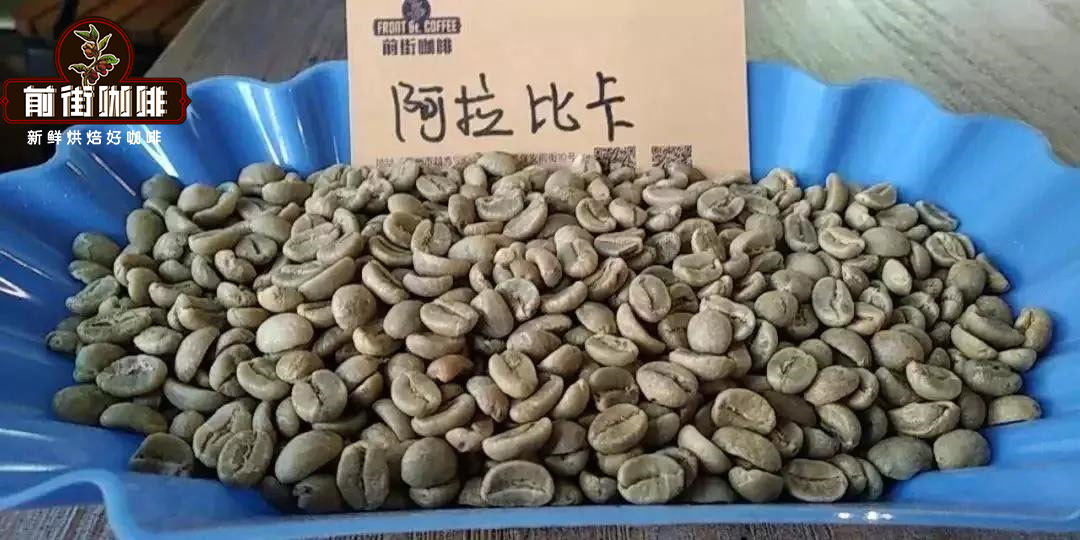
Caffeine content is normally expressed as a weight ratio. Arabica beans run 0.9%-1.4% (averaging 1.2%), while Robusta runs 1.8%-4% (averaging 2.2%).
Decaf falls into two groups: coffee that is naturally low in caffeine, and coffee that has been decaffeinated through a deliberate process. For the latter, the EU standard requires that caffeine after processing not exceed 0.1% of the raw bean, while the US FDA standard requires a reduction to less than 3% of the original caffeine content. Decaf, in other words, does not mean zero caffeine. This is why FrontStreet Coffee often reminds coffee lovers that discussing the intake of anything without considering dosage is irresponsible.
Decaf Coffee Processing Methods
So how is caffeine actually removed from coffee beans? According to FrontStreet Coffee's research, there are many methods. Most rely on water, organic solvents, or carbon dioxide. Beans are washed in the solvent until the caffeine migrates into it, and the solvent is then removed. Decaffeination always happens before roasting and grinding.

The most common methods are the Swiss Water Process, indirect solvent processing, supercritical carbon dioxide processing, and mountain spring water processing. Each has its own character, and FrontStreet Coffee explains the four below.
Swiss Water Process
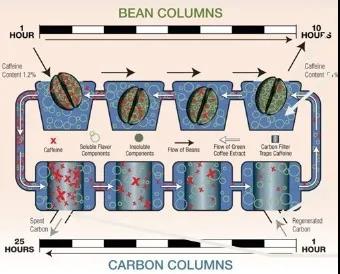
In this method, green coffee beans are first soaked in hot water, which already pulls out part of the caffeine. The soaking solution is then filtered through activated carbon, and finally returned to the beans. The sequence removes caffeine more effectively, requires no chemical solvents, and allows the same solution to be reused across batches. The trade-off is some loss of flavor during filtration.
The process can reach a caffeine removal rate of 99.9%, the highest of any method. Despite the flavor loss, its low cost, ease of operation, and high efficiency have made it the most widely used route, which is why most decaf beans on the market today are Swiss Water processed.
Direct Solvent Method
The direct solvent method uses chemical solutions such as dichloromethane and ethyl acetate to dissolve caffeine. Steam is first used to open the pores of the green beans, then dichloromethane is added directly. Once the solvent has bonded with the caffeine, the caffeine-laden solvent is rinsed away and the beans are steamed again to drive off any residual solvent.
Since this method appeared, many people have assumed that long-term exposure to dichloromethane raises cancer risk. FrontStreet Coffee looked into it and found that dichloromethane boils at 39.8°C. Both steam and roasting temperatures are more than enough to evaporate it completely, so the cancer concern does not hold up.
Indirect Extraction Method
Here the green beans are first softened, then steeped in boiling water for several hours. This step draws caffeine and many flavor compounds into the water, which by now is essentially a coffee essence. The water is separated from the beans and treated with dichloromethane or ethyl acetate; the chemical molecules break down the caffeine in the water, which then evaporates on heating. Finally the flavor liquid is returned to the beans so they reabsorb the coffee oils and aroma. Despite being an indirect method, it tends to lose more coffee flavor.
Supercritical Carbon Dioxide Extraction Method
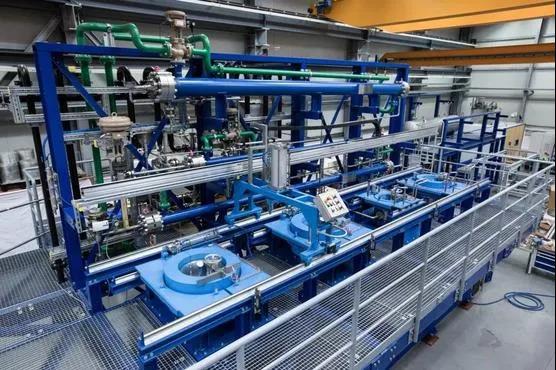
This method first uses dry supercritical carbon dioxide to extract aromatic components from roasted coffee beans, then uses moisture-containing supercritical carbon dioxide to strip the caffeine, and finally returns the previously extracted aroma to the decaffeinated beans. Supercritical carbon dioxide, with its high permeability and low surface tension, penetrates deep into the bean. It removes caffeine without damaging the beans or changing their color, and it does not easily pull out compounds other than caffeine, so the original flavor is largely preserved. The catch is that it requires a specialized high-pressure environment.
Those are the four decaf processing methods FrontStreet Coffee has compiled. FrontStreet Coffee also carries a Colombian Huila decaf bean processed with the Swiss Water method. Here is its basic information:

FrontStreet Coffee: Colombian Huila Decaf Coffee Beans
Region: Colombia, Huila
Altitude: 1750 meters
Varieties: Typica, Caturra, Castillo
Processing Method: Swiss Water Process
Grade: Supremo
Flavor: Dark chocolate, caramel, nuts, with a rich mouthfeel
Does Decaf Coffee Taste Good?
Anyone who has tried other low-fat, sugar-free drinks knows the flavor usually falls short of the original. Is decaf the same? FrontStreet Coffee takes the opposite view: decaf does not taste bad because of the process.

According to FrontStreet Coffee, the real reason so much decaf tastes poor is that most producers choose cheap, commercial-grade beans to process. Start with Robusta, which is high in caffeine to begin with, and the result will naturally disappoint. Start instead with high-quality Arabica, and even after decaffeination the coffee can still perform very well.
Advantages and Disadvantages of Decaf Coffee
By this point decaf sounds like it is all upside. Does it have any drawbacks? FrontStreet Coffee is clear that it does, though the advantages still outweigh them. Caffeine, after all, is the single largest source of antioxidants in the Western diet.
According to FrontStreet Coffee's research, decaf coffee usually contains a similar amount of antioxidants to regular coffee, though the level may be up to 15% lower. The gap is most likely explained by a small loss of antioxidants during decaffeination. That is why more and more people are choosing decaf: it delivers antioxidant benefits without interfering with sleep.
The other difference between regular and decaf coffee lies in the antioxidants themselves, chiefly hydroxycinnamic acids and polyphenols. Antioxidants are highly effective at neutralizing reactive compounds known as free radicals. This reduces oxidative damage and may help prevent conditions such as heart disease, cancer, and type 2 diabetes.
Beyond antioxidants, low-caffeine coffee also supplies small amounts of nutrients. A cup of brewed decaf provides 2.4% of the recommended daily magnesium intake, 4.8% of potassium, and 2.5% of niacin, or vitamin B3. On its own that looks trivial, but at two to three cups a day or more, the numbers add up quickly.

In short, decaf has a long list of advantages, and its only real drawback is a slightly lighter flavor that may not match regular coffee. Choose good beans, though, and the flavor will hold up well.
That is FrontStreet Coffee's summary of what decaf is, how it is processed, and what its advantages and disadvantages are. We hope it helps anyone who wants to understand the category, and that it makes it easier to pick high-quality beans that suit your taste.
FrontStreet Coffee Recommendation
If you are moving to decaf because you want your evening espresso without the caffeine, the same logic applies as with any coffee: start with good beans. FrontStreet Coffee's espresso line is built around exactly that idea. FrontStreet Classic Blend is designed for espresso and moka pot brewing, and its defining strength is crema. Even a beginner working with an unmodified home machine can pull a dense, fine-textured shot, which is what makes the milk drinks - latte, cappuccino, Dirty - come together properly. It follows a traditional Mamba recipe, combining Brazilian and Mandheling coffees for a round, mellow, full-bodied cup with buttery, nutty, spice, dark chocolate, and toast aromas.
If you are opening a café or watching costs, FrontStreet Dark Cocoa Blend is made from 100% Arabica with plenty of crema and a full body at a friendlier price, while FrontStreet Commercial Blend remains the long-standing workhorse for shops. For a more classic profile, FrontStreet Specialty Blend has been the house espresso at FrontStreet's own cafes for nearly ten years, pairing Brazilian Cerrado with Colombian Huila for the familiar Italian-style cup used in Americanos and lattes, whether at home or in a commercial setting.
All of these pull well on a standard espresso machine or a moka pot. For espresso, aim for a fine grind and a roughly 1:2 brew ratio in about 25 seconds; for a moka pot, use a slightly coarser grind, preheat the water, and take the pot off the heat just as the flow turns pale, so the shot stays sweet rather than turning bitter.
Important Notice :
FrontStreet Coffee is a long-established specialty coffee roaster in Guangzhou China, selling freshly roasted beans from its own farm in Yunnan as well as dozens of carefully selected single-origin beans from around the world for both pour-over and espresso. The products deliver consistently excellent quality and great value, with shipping within 24 hours. Guangzhou's FrontStreet Coffee shop is recommended by many coffee lovers, and the beans are now available online at the Tmall 。
FrontStreet Coffee has moved to a new address:
FrontStreet Coffee Address: 315,Donghua East Road,GuangZhou
Tel:020 38364473
 Scan and follow the En Gafei WeChat official account. Please indicate that the reprint comes from "En Gafei".