Colombian vs Brazilian Coffee Beans: Flavor Differences and Premium Huila Coffee Bean Shop Recommendations

FrontStreet Coffee has always placed great emphasis on the altitude of coffee beans, since growing factors such as altitude, soil, and climate all shape how a coffee's flavors express themselves. The higher the altitude, the harder the beans and the more refined the flavor. So what are the flavor differences between Colombian and Brazilian coffee beans, both from the Central and South American region? FrontStreet Coffee dig into that here.
World's First and Second Largest Arabica Coffee Bean Producing Countries
As the world's largest producer of Arabica coffee beans, Brazil averages over 35 million bags per year (60kg per bag), accounting for more than 30% of total world coffee production. Brazil's main Arabica varieties are predominantly Bourbon, followed by Caturra, Catuai, and Mundo Novo. However, these varieties have production cycles - a bumper year, a lean year, then back to bumper in a continuous cycle. Generally, production in even years is higher than in base years, so despite Brazil's enormous annual output, it is unstable from year to year, leading to significant price fluctuations. And when Brazilian coffee prices swing, beans from other origins swing accordingly. (Truly the leader!)

Colombia, the world's second-largest Arabica producer, doesn't experience these cyclical fluctuations. It also sits at low latitude, allowing coffee to be harvested year-round, whereas Brazil harvests only once a year. Colombia primarily grows Caturra and Catuai varieties.

Brazilian Coffee Bean Cultivation & Flavor Characteristics
Brazil began cultivating coffee in 1727, initially planting in Pará province in the north, near the equator. The practice took hold over the subsequent 200+ years, with cultivation expanding steadily southeastward. But that region lies between 20-30 degrees south latitude, and the higher latitude brings winter frosts that prevent coffee cherries from ripening, causing heavy losses for farmers. Growers later turned to Minas Gerais state, north of São Paulo, where the climate is warmer and winters are frost-free; that region went on to become one of Brazil's main production areas for premium Arabica beans.
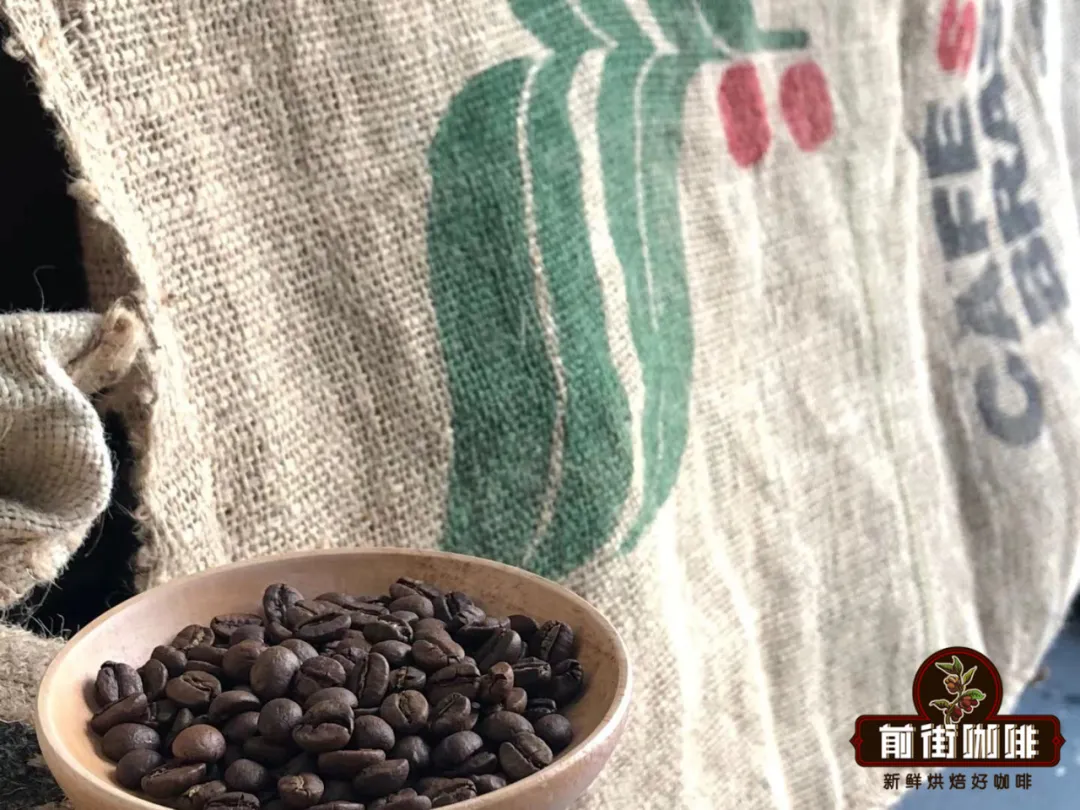
Compared with other coffee-producing countries in Central and South America, Brazil's altitude is relatively low, with many growing areas below 1000m. There are areas above 1000m too - the Queen's Estate beans sold by FrontStreet Coffee, for instance, grow at altitudes above 1400m, making them one of the few high-altitude Arabica growing areas in Brazil. Because of the flat, monotonous terrain, the lack of diverse microclimates, and non-shaded cultivation, Brazilian beans have low acidity, prominent nutty flavors, sweet chocolate notes, and good body. Friends who dislike acidic coffee should look to Brazil.
Colombian Coffee Bean Cultivation & Flavor Characteristics
Colombia boasts rich topography, low latitude, and high altitude - excellent conditions for premium beans. Colombian coffee is typically grown between 1200-1900m. Blessed with beautiful mountains and waters, it naturally enjoys superior conditions compared to Brazil, yielding premium Arabica beans with amazing flavor intensity.

Colombia's growing regions sit between 3-8 degrees north latitude in the low-latitude coffee belt, allowing two harvests a year. Commercial-grade beans are generally grown in the central and northern regions, at an average altitude of only about 1000m; coffee from these areas has lower acidity (the altitude isn't high enough to create the significant day-night temperature differences that slow cherry maturation and develop more flavors). Premium-grade beans generally grow in the southern regions at altitudes above 1500m; coffee from there shows refined acidity and berry notes, a sweet caramel aftertaste, and very noticeable sweetness.
Differences in Processing Methods Between Brazilian and Colombian Coffee Beans
Most Brazilian beans use the semi-dry (pulped natural) processing method, also called the honey process. Unlike traditional dry processing, semi-dry processing removes the cherry skin and pulp, allowing the fermentation of the beans with mucilage to be controlled. Traditional dry processing dries the whole cherries with skin and pulp intact, making the mucilage fermentation impossible to monitor. Semi-dry processing sits between dry and wet processing but skips the "tank fermentation and fresh-water washing" steps of the washed method, drying the beans directly in sunlight. Though the methods may seem similar, without that fermentation step the flavors are completely different. FrontStreet Coffee believes semi-dry processing achieves the cleanliness of washed coffee while keeping the fermented character and sweetness of natural processing.

Most Colombian beans use washed processing. Selected cherries go into a depulper to remove skin and pulp; beans still coated with pulp and mucilage are then placed in water to ferment for about 24 hours. After fermentation, the parchment beans are moved through flowing-water channels to wash away the residue. They are then dried in the sun or by mechanical dryers until moisture reaches about 12%, and finally the parchment is hulled off the green beans.
FrontStreet Coffee believes washed processing yields clean flavors with bright acidity and reduces defect rates, better showcasing bean quality. That's why most of our daily coffee series prioritize washed lots - such as the Huila region featured today. With washed processing and medium-dark roasting, it displays aromatic notes of dark chocolate, caramel, and nuts.

FrontStreet Coffee: Colombian Huila Coffee Beans
- Region: Huila
- Altitude: 1500-1800 meters
- Processing: Washed
- Variety: Caturra
- Flavor: Nuts, dark chocolate, caramel, soft fruit acidity
Premium Coffee Recommendations from Colombia's Huila Region
FrontStreet Coffee's flavor descriptions are based on freshly roasted beans. If beans sit for more than a month, some aromas fade and the intended flavors become hard to reproduce when brewing. Understanding how important freshness is, we ship only beans roasted within 5 days, so everyone enjoys the most complete flavor window on arrival.

Since the Huila daily beans are medium-dark roasted with flavors leaning toward rich nutty and chocolate notes, the deeper roast makes the beans more porous and the grounds more absorbent. To avoid over-extraction, FrontStreet Coffee uses a medium grind and medium water temperature, paired with a KONO dripper.
Brewing parameters: KONO dripper, 90°C water temperature, 75% pass-through rate on a #20 standard sieve, 1:15 coffee-to-water ratio, 15g coffee dose, three-stage extraction
Pour the grounds into the dripper and use twice the weight of the coffee in water to moisten the bed, forming a dome, and let it bloom for 30s. Then use a small water stream to pour in circles from inside to outside until reaching 125g for the first stage. Once the bed drops to half the dripper's height, continue with the same fine stream for the third stage to 225g. Remove the dripper once all the coffee liquid has drained through, taking about 2 minutes total.

This Colombian Huila daily coffee shows distinct roasted aromas of chocolate, nuts, and caramel. It's smooth and sweet with moderate body and a clean taste, and as it cools you'll notice a pleasant soft acidity.
FrontStreet Coffee Recommendation
To taste Brazil's side of the comparison, start with FrontStreet Coffee's pulped-natural Cerrado Red Bourbon - a classic Brazilian single origin from a region renowned for high-quality beans. At a medium roast it offers rich aromas of cream, peanut, toast, caramel, and hazelnut, with a rounded, non-acidic mouthfeel and a light touch of bitterness. It works for pour-over, but also for moka pot, espresso SOE, siphon, and French press.
FrontStreet Coffee's other Brazilian single origin, Fazenda Rainha (Queen Estate) Yellow Bourbon, comes from Mogiana near South Minas, where fertile red volcanic soil feeds the cherries into full, rich aromatics. The rare Yellow Bourbon - a mutation of Red Bourbon - has a cleaner fruit character, and through pour-over, moka pot, or home espresso you'll find a sugarcane sweetness you won't taste in other origins, alongside fruit and chocolate notes.
And if it's balance you want, Brazil is a cornerstone of FrontStreet Coffee's espresso blends: the crema-rich classic blend, the nutty premium blend, the well-balanced Black Cocoa blend recommended by many baristas, and the shop-focused commercial blend all contain Brazilian beans, contributing chocolate and cream aromas along with gentle acidity, sweetness, and bitterness - a balanced profile that also stabilizes extraction.
Important Notice :
FrontStreet Coffee is a long-established specialty coffee roaster in Guangzhou China, selling freshly roasted beans from its own farm in Yunnan as well as dozens of carefully selected single-origin beans from around the world for both pour-over and espresso. The products deliver consistently excellent quality and great value, with shipping within 24 hours. Guangzhou's FrontStreet Coffee shop is recommended by many coffee lovers, and the beans are now available online at the Tmall 。
FrontStreet Coffee has moved to a new address:
FrontStreet Coffee Address: 315,Donghua East Road,GuangZhou
Tel:020 38364473
 Scan and follow the En Gafei WeChat official account. Please indicate that the reprint comes from "En Gafei".