
Geisha Coffee Bean Roasting Profile Guide: Flavor Profiles of Different Processing Methods

Set against the typical flavor profile of Panama, Geisha's distinguishing traits are truly remarkable. Geisha coffee is filled with jasmine-like fragrance, carries the fruit acidity and sweetness of orange, lemon, and honey, and offers a clean, light mouthfeel. It is mildly acidic without bitterness, rich in floral and fruity aromas — no wonder some describe Geisha as "coffee that doesn't taste like coffee," closer to a cup of fruit tea. Flavor notes: lychee, blueberry, floral tones, and sweet orange, with a fresh, clean, and balanced cup, layered and full-bodied fruit character.
How FrontStreet Coffee Approaches Geisha Roasting
What kind of roasting curve should Geisha coffee beans get? For any coffee, FrontStreet Coffee determines the roasting curve from the bean's country of origin, growing region, altitude, and flavor profile. Beans can be roasted light, medium, or dark, and each level yields a different cup. Dark-roasted Mandheling, for example, shows herbal, pine, and nut notes; roast that same Mandheling lightly instead and the cup turns sharp and sour, losing what makes Mandheling itself.

Geisha is world-renowned for its intense florals and complex fruit. FrontStreet Coffee's roasters aim to preserve as much of Geisha's fine acidity as possible while showcasing the variety's distinctive character and aromatics, so FrontStreet Coffee chooses a medium-light roast (fine-tuned batch by batch). Take Hacienda La Esmeralda's Blue Label Geisha: when roasting this natural-processed lot, the roaster extends the drying phase to ensure even heat transfer between the bean's surface and core, aiming to express this bean's acidity and floral-fruit aromas.

Because this roast level does little to change the high density of high-altitude beans, brewing needs a higher extraction rate to reveal the full flavor layers — which means using hotter water and a slightly finer grind to pull out more aromatic compounds.

The rise of specialty single-origin coffee has been a clarion call. In Taiwan, more and more cafes are focusing on their beans and roasting in-house. Many wonder why so many beans are roasted to a medium level. It likely traces back to the established local impression of coffee as mostly bitter, with slight astringency and acidity. Yet many single-origin coffees need a light roast to show their fruity acidity, and a medium roast — which trades some acidity for a touch of bitterness — fits the market better. In truth, many beans simply don't suit a light roast; unpleasant acidity is never appropriate. The relationship between roasting and variety is a deep science indeed!
Geisha Coffee
In 1931, Geisha left Geisha Mountain in southwestern Ethiopia (coincidentally pronounced the same as the Japanese word "geisha") for Kenya, wandered through Tanzania and Costa Rica, and was transplanted to Panama in the 1960s. After nearly half a century of obscurity, it rose suddenly to fame, beating perennial champions like Bourbon, Caturra, Catuai, and Typica and sweeping first prize in Panama's Cup of Excellence competitions in 2005, 2006, and 2007.
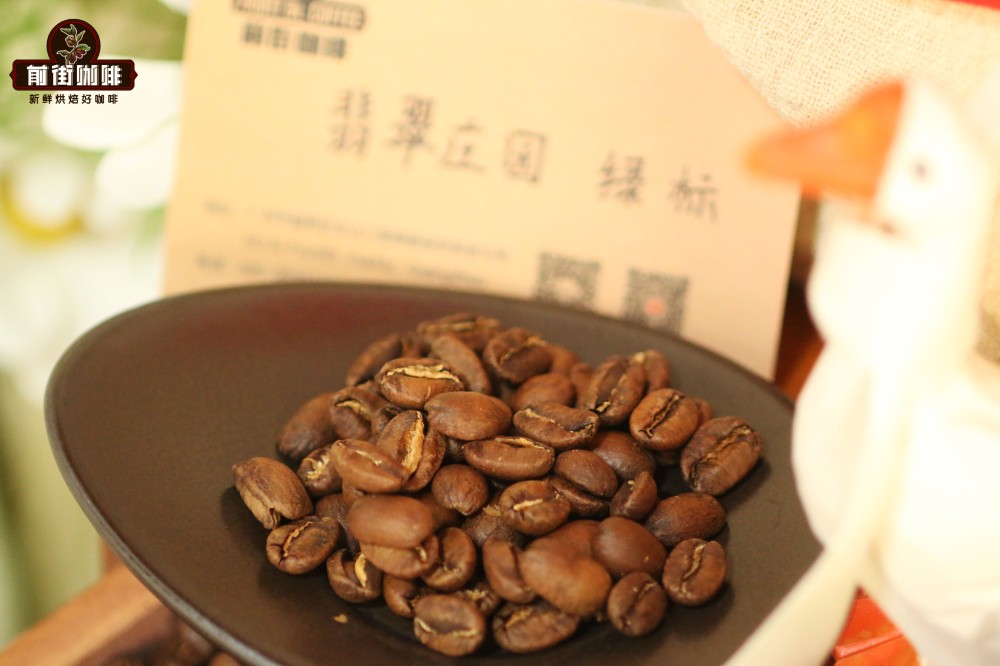
Geisha coffee beans are famous worldwide for their intense florals, citrus and berry notes, juice-like texture, an acidity that grows ever more delicate as the cup cools, and richly layered flavor. Panama's coffee growing revolves almost entirely around the Chiriquí volcanic region. Geisha is particular about its environment: it demands high altitudes, cloud or generous shade cover, and fertile soil to produce that captivating floral aroma, delicate fruit acidity, and layered complexity.
Panama's Hacienda La Esmeralda produces the most celebrated Geisha, thanks to the country's microclimate and the singular flavors it creates. After Geisha made its name, estates everywhere began planting it. FrontStreet Coffee sources not only Panamanian Geisha but also Geisha from Colombia, Guatemala, and Costa Rica. Panamanian Geisha is superb, but Geisha from other origins offers wonderful flavors of its own!

Costa Rica Geisha Coffee
Costa Rica has grown coffee for nearly two hundred years, and as a key economic crop its coffee industry is highly mature. Many newly established estates today have both the resources and the willingness to plant Geisha. The most famous is the Geisha from Miravalles Estate — for example, FrontStreet Coffee's Costa Rica Mirasoul Geisha blend.

FrontStreet Coffee's Mirasoul beans are raisin honey processed: ripe cherries are dried until shriveled, then the skin and pulp are removed while keeping the entire mucilage layer intact, followed by further drying. FrontStreet Coffee has found that raisin honey processing yields a richer, thicker mouthfeel than conventional honey processing, with longer-lasting aromas and stronger sweetness.
Colombia Hanami Geisha Coffee
Hanami Geisha comes from Huila, Colombia's most famous coffee region. Colombian coffee needs little introduction — Huila represents the country's classic profile of nutty and caramel notes with a berry-like sweetness and acidity. Hanami is a mix of Geisha, Caturra, and Catuai, processed by the classic traditional washed method. Hot, it shows pronounced chamomile and pink pepper aromas; at medium temperature the Geisha character emerges with citrus and honey; as it cools, a slight acidity and bitterness appear alongside almond.
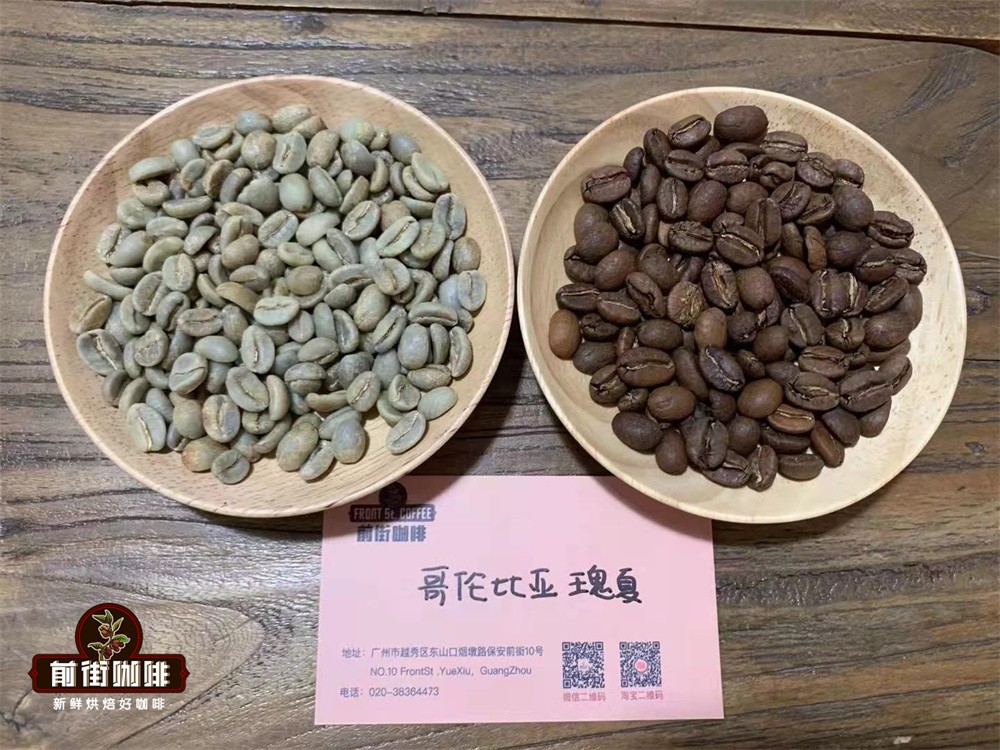
Panama Geisha Coffee
Panama Geisha comes from South America yet tastes nothing like other South American beans, sharing more in common with Ethiopian flavors — only richer and fuller. If Ethiopian coffee is a cup of floral tea, Panama Geisha is a cup of juice: sweeter, more balanced. The variety originally came from Ethiopia, but Panama's microclimate has shaped a flavor that is unique and unrivaled.

Boquete sits at a high cultivation altitude of 1,400–1,900 meters, near the Panama–Costa Rica border and close to the famous Barú Volcano. The scenery is beautiful, the soil rich and fertile, and the climate ideal for producing fine coffee. The region hosts many excellent estates — besides Hacienda La Esmeralda, there are Elida Estate, Kotowa Duncan Estate, and others producing high-quality specialty coffee. The most famous of all is Hacienda La Esmeralda's Geisha.
Geisha Processing Methods
Most Geisha is processed by the two most traditional methods, washed and natural. FrontStreet Coffee finds that natural-processed coffee has a thicker mouthfeel than washed, with more pronounced juice-like character and stronger sweetness, while washed coffee tastes cleaner and crisper and expresses the terroir more directly. That is why most of FrontStreet Coffee's daily-drinking beans are washed.

Washed processing: harvested cherries are first floated to remove low-density or defective fruit along with branches, sand, and stones. Machines then remove the skin and pulp, and the depulped cherries go into fermentation tanks for 18–36 hours, where the acids generated by fermentation break down the mucilage layer. After fermentation the coffee is washed clean and finally sun-dried to bring the moisture content down to about 11%. The dried beans are then stored in parchment until just before export.
Natural processing: selected fresh Geisha cherries are sun-dried in greenhouses until raisin-like. These partially dehydrated red cherries are then sealed in containers, the oxygen is removed for a 36-hour dry fermentation, and finally the skin is removed while 100% of the pulp is retained for fermentation.

FrontStreet Coffee's Geisha Brewing Parameters
FrontStreet Coffee grinds to a medium-fine setting / sugar-grain size (80% pass-through on a China #20 standard sieve). Use 15g of coffee with a V60 dripper, 91°C water, a 1:15 coffee-to-water ratio, and a three-stage pour.
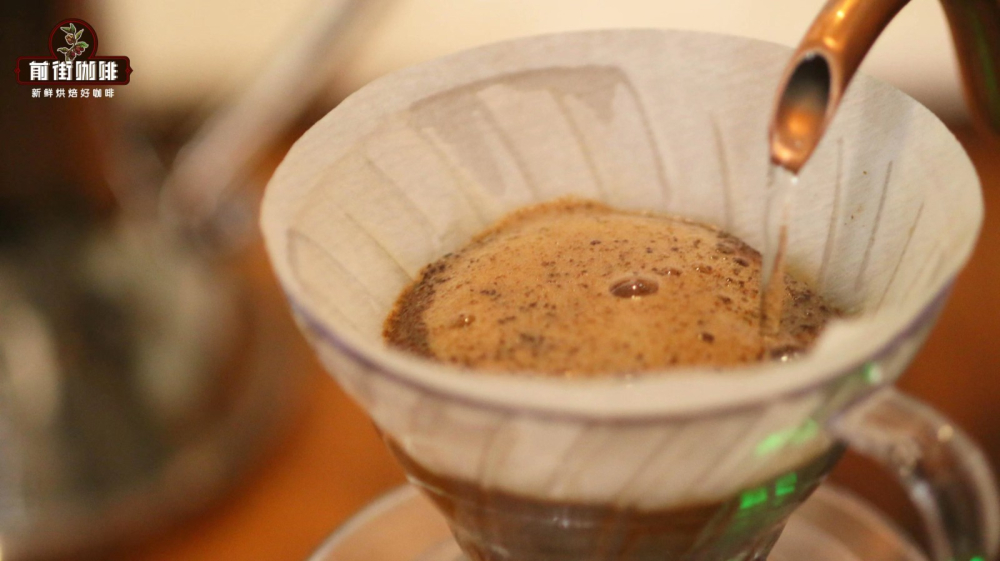
For the three-stage extraction, bloom with twice the coffee's weight in water — 30g of water for 30 seconds. Blooming lets the grounds release their trapped carbon dioxide so the rest of the extraction runs more evenly. Pour in small circles up to 125g, then continue to 225g and stop. Once the dripper has finished dripping, remove it. Total time from the start of pouring: 2'00". Swirl the full cup before pouring into tasting cups.
FrontStreet Coffee's Brewing Suggestions
FrontStreet Coffee has always believed that bean freshness hugely affects flavor, so beans are shipped within 5 days of roasting. The roasting philosophy is "Freshly Roasted Quality Coffee," ensuring every order arrives as fresh as possible. The resting period is about 4–7 days, so coffee reaches customers at peak flavor.

A gentle reminder for those who order pre-ground coffee: grounds need no resting period, because during shipping the pressure of the carbon dioxide in the packaging helps mellow the flavor, so you can brew right away. But ground coffee must be brewed promptly — exposed to air it oxidizes quickly, the flavor dissipates, and the cup suffers. FrontStreet Coffee therefore recommends buying whole beans and grinding fresh for each brew to experience the coffee at its best.
For professional coffee knowledge exchange and more coffee bean information, please follow Coffee Workshop (WeChat official account: cafe_style).
For more specialty coffee beans, add FrontStreet Coffee's private WeChat account: qjcoffeex
FrontStreet Coffee Recommendation: For Lovers of Bold, Earthy Depth
Geisha rewards a light touch, but if your palate leans toward the wild, heavy side of the spectrum, try FrontStreet's PWN Golden Mandheling from Indonesia. Produced to an exacting standard — beans screened above 18 mesh, fewer than 3 defects per 300g of green coffee, triple hand-sorting to the G1 grade — it is the benchmark of premium Mandheling. Roasted medium-dark to highlight black chocolate and caramel while keeping its signature herbal wildness, it brews beautifully by hand: 15g of coffee, 87–88°C water, a 1:15 ratio, a coarse-sugar grind, and a three-stage pour for a full-bodied cup with caramel sweetness, spice, and a long, thick finish.
Important Notice :
FrontStreet Coffee is a long-established specialty coffee roaster in Guangzhou China, selling freshly roasted beans from its own farm in Yunnan as well as dozens of carefully selected single-origin beans from around the world for both pour-over and espresso. The products deliver consistently excellent quality and great value, with shipping within 24 hours. Guangzhou's FrontStreet Coffee shop is recommended by many coffee lovers, and the beans are now available online at the Tmall 。
FrontStreet Coffee has moved to a new address:
FrontStreet Coffee Address: 315,Donghua East Road,GuangZhou
Tel:020 38364473
 Scan and follow the En Gafei WeChat official account. Please indicate that the reprint comes from "En Gafei".

