Kenya Coffee Knowledge | How Much Does Kenya Starbucks Reserve Coffee Cost and Flavor Description
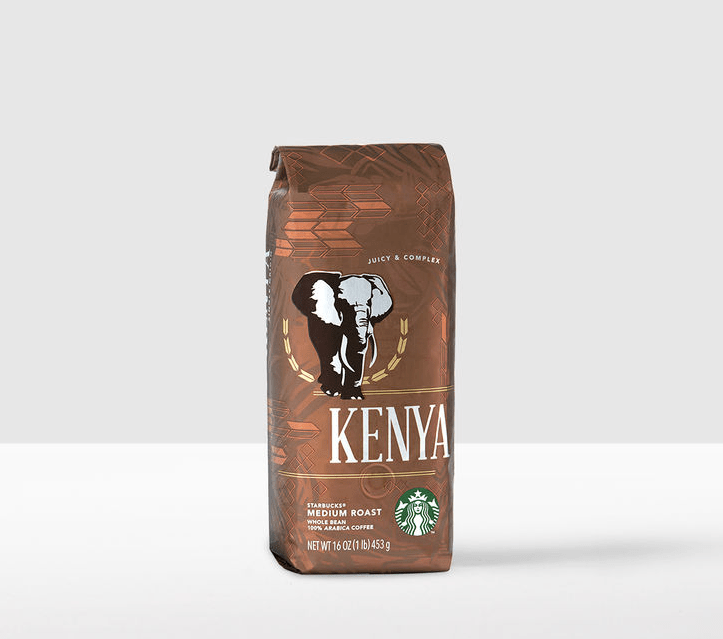
Are you familiar with Starbucks' Kenya coffee? This coffee originates from Kenya in Africa and uses the double-washed processing method. Generally these coffees are grown in regions at altitudes around 1,500 metres, roasted to a medium degree, and priced at approximately 85 yuan for 250g.
Coffee lovers tasting Kenyan coffee for the first time are undoubtedly moved by its distinctive flavour. Its unique cherry tomato and plum acidity is quite exceptional, and the quality is absolutely superior. Starbucks also offers a Kenya coffee bean from Kenya. So what makes Kenya coffee special? In this article, FrontStreet Coffee will take you through a detailed exploration.
Starbucks Kenya Coffee Story
Everyone knows that Kenya is located in Africa, and the first impression Africa often brings is of vast savannas where many elephants roam. The packaging of Starbucks Kenya coffee therefore features an elephant, an image highly representative of Africa. Starbucks' Kenya coffee also has a long history, having been launched in 1971, and the elephant on the packaging has long since become an iconic symbol of Kenyan coffee.

Many people therefore describe the flavour of Kenyan beans in terms of the African elephant, because Kenyan beans are characterised by a strong, full acidity entirely different from the citrus and lemon acidity of Ethiopian coffee. This is also one reason why Kenyan coffee shares the title of African coffee representative with Ethiopian Yirgacheffe. Next, FrontStreet Coffee will share the factors that make Kenyan coffee flavour so excellent.
Kenyan Coffee Growing Region Conditions
As FrontStreet Coffee has often mentioned, the flavour profile of beans depends mainly on growing region conditions, coffee varieties and processing methods. Region and variety are the innate conditions that determine how a bean presents its flavour, while processing is a means of enhancing that flavour. FrontStreet Coffee will therefore explore the formation of Kenyan coffee's character through these three aspects.
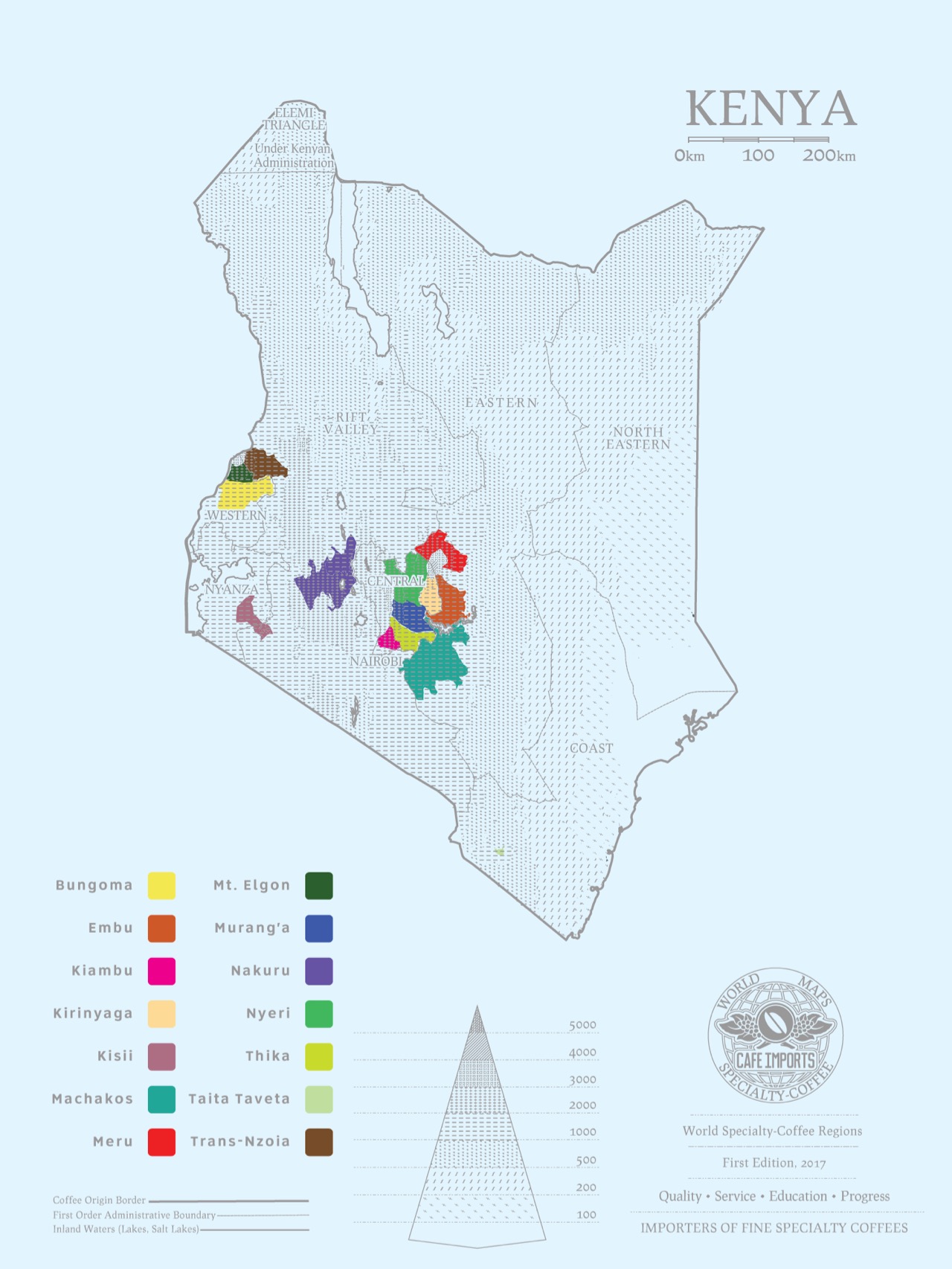
Kenya lies in eastern Africa, with the equator crossing its centre and the East African Rift Valley running north to south. It borders Somalia to the east, Tanzania to the south, Uganda to the west, and Ethiopia and Sudan to the north, with the Indian Ocean to the south-east. The country is mostly plateau, with an average altitude of 1,500 metres. Mount Kirinyaga, or Mount Kenya, in the centre reaches 5,199 metres, with snow on its summit, making it the second highest peak in Africa. The equator runs through Kenya and the country lies within ten degrees north and south latitude, placing it in tropical growing regions. It has two rainy seasons a year, allowing two harvests: 60% concentrated from October to December and the remaining 40% from June to August.
According to FrontStreet Coffee's research, most Kenyan coffee grows in the fertile, loose, acidic volcanic red soil of the highlands north and east of Nairobi. The area has plenty of sunshine and good drainage, with altitudes between 1,400 and 2,000 metres. Because the temperature difference between day and night is greater at higher altitudes, Kenyan coffee has a longer maturation period than coffee from lower regions, giving higher density and a richer flavour.

As this description shows, the Kenyan growing region is indeed very well suited to coffee. With natural conditions like these, the beans produced are naturally of high quality. Kenya also mainly produces Arabica, which is considered one of the highest quality coffee varieties in the world. One characteristic of Arabica is that the higher it grows, the richer the acidity, which is one reason Kenyan beans have such a pleasant acidity.
Kenyan Coffee Varieties
In Kenya the common varieties include SL28, SL34, Batian and Ruiru 11. All of them were developed by Kenya's own coffee laboratories, which shows how much weight the Kenyan government places on coffee cultivation. This is also why Kenyan coffee has acidity characteristics different from the coffees of neighbouring countries.
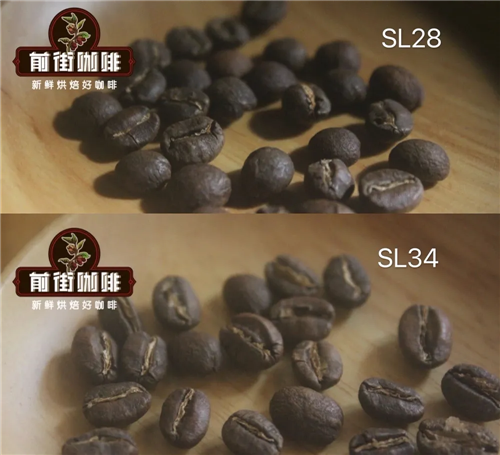
SL28
According to historical records, a senior coffee officer from Scott Laboratories, A.D. Trench, noticed a variety growing in the Modi region of Tanzania that appeared to tolerate drought, disease and pests. The seeds were collected and taken back to Scott Laboratories, where their drought resistance was confirmed.
Recent genetic tests have confirmed that SL28 belongs to the Bourbon genetic group, so SL28 beans look similar to Bourbon varieties, round and full-bodied. FrontStreet Coffee has found that SL28 shows complex and varied acidity with excellent sweetness.
SL34
SL34 was first selected from the Kabati Loresho estate as a "French Mission" Bourbon variety. According to FrontStreet Coffee's research, however, current genetic testing has confirmed that it belongs to the Typica genetic group, and its plant characteristics are likewise similar to Typica. It is therefore believed that SL34 was selected from Typica. Because it is close to Typica, its beans are elongated and oval and appear flatter from the side.
Ruiru 11
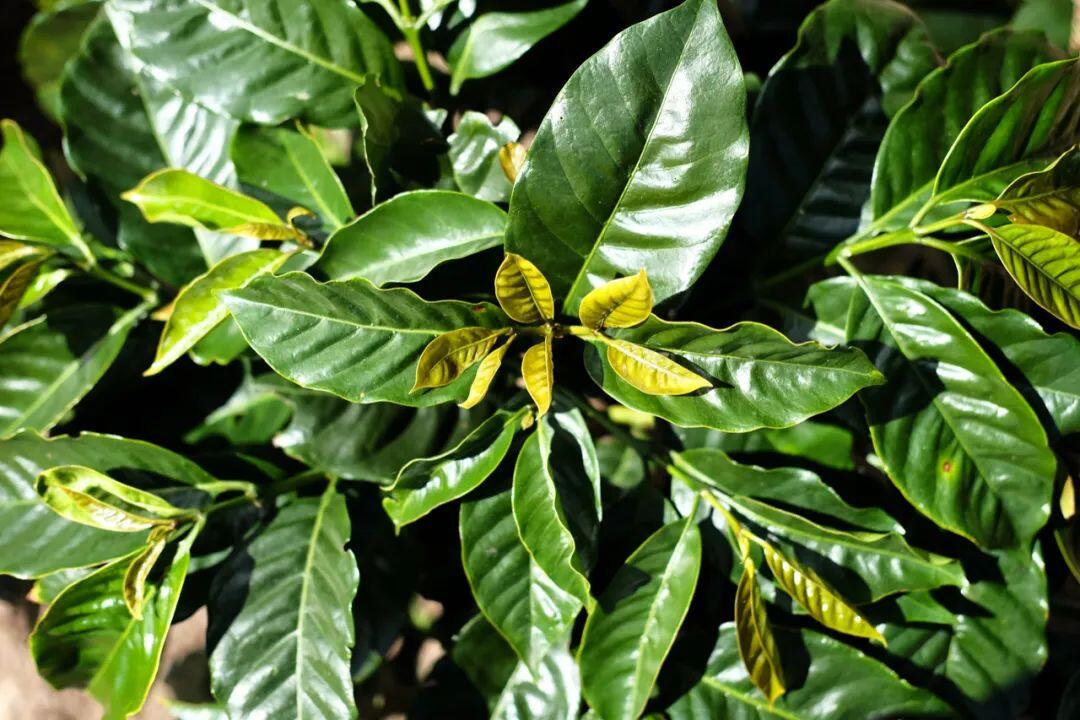
Ruiru appeared after SL28 and SL34. According to FrontStreet Coffee's understanding, in the 1970s the Ruiru station began experimenting with cultivating different CBD and rust-resistant varieties, and the result was Ruiru 11, released in the 1980s. With high yield and both CBD and rust resistance, it seemed to solve all of Kenya's coffee production problems.
Batian
The Batian variety was launched by the Coffee Research Institute, CRI, on 8 September 2010, and is the latest variety Kenya has offered. It was developed on the lessons learned from Ruiru 11 through further experimentation. Genetically it was essentially selected from backcrosses of SL28 and SL34, making it closer to SL28 than Ruiru 11. This eliminated the problematic Robusta elements and thereby improved cup quality.
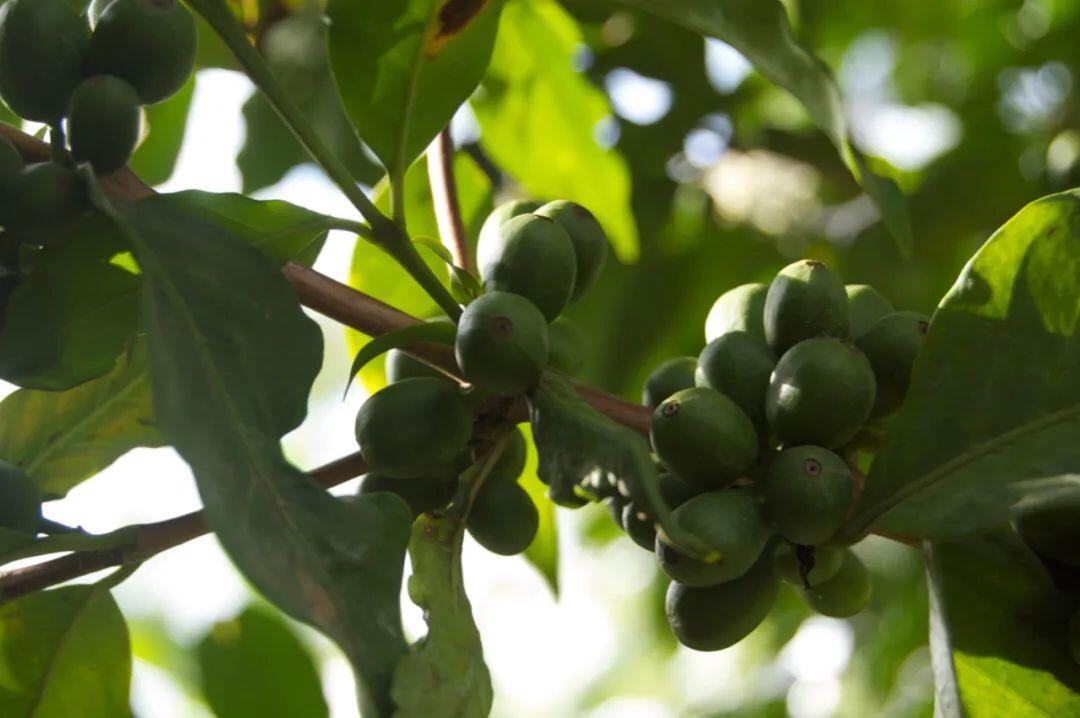
Kenyan Coffee Processing Method - K72 Washed Processing
Kenya also takes a distinctive approach to processing green beans, using its own developed K72 washed method. The flow involves washing the ripe cherries, removing the pulp, dry fermenting for 24 hours, washing, dry fermenting again for 24 hours, washing again, and dry fermenting once more for 24 hours. This cycle continues for 72 hours of strong fermentation. After washing, the beans are soaked in clean water tanks overnight, and drying begins on the sun-drying field the next morning. Because the fermentation lasts 72 hours, it is called K72.

Kenyan Coffee Bean Grading System
From the description above, coffee lovers can appreciate Kenya's emphasis on coffee. It is precisely this emphasis that drives Kenya to pursue high quality, and so it has implemented a bean grading system. AA grade beans, for instance, are of the highest quality. Yet although it is called grading, does AA necessarily taste better than AB? What standards does the system actually follow?
According to FrontStreet Coffee's understanding, Kenya's grading standards are primarily based on size. The difference between AA and AB is only size. As for taste, FrontStreet Coffee has concluded through cupping that both AA and AB Kenyan beans are very delicious. Flavour differences between growing regions may come mainly from region, altitude and growing conditions. AA and AB grade Kenyan coffee, though, are certainly among the most quality-guaranteed coffees.

As described, these grades are only distinctions in bean size. The most famous processing method for Kenyan beans is undoubtedly the K72 washed method, so Kenya's highest quality beans are mainly washed. Washed processed coffee is generally divided into eight grades:
E: Elephant Bean, also called elephant ear beans, flat beans with a particle size above 19 screen.
AA: Particle size 17 to 18 screen

AB: Particle size 15 to 16 screen, accounting for the majority of production
TT: Lighter beans blown out by air screeners from AA and AB grade beans
C: Smaller than AB, 14 screen and below, too small to be classified as specialty grade on size.
T: Lighter beans blown out by air screeners from C grade beans, 14 screen and below, meaning both size and density are too small to be classified as specialty grade.

PB: Peaberry, meaning round beans, classified by shape rather than size, unrelated to flavour or weight, accounting for about 10% of total production
UG: Those that do not meet the above standards
There are also lower quality natural coffee grades that, because of their poorer quality, do not undergo Kenyan-style washed processing and are generally supplied to the domestic Kenyan market. These beans are called M'buni. FrontStreet Coffee also wants to stress that this green bean grading system, still in use today, was issued by government units in 1938, even 40 years earlier than the birth of the concept of specialty coffee. Kenya now has new grading standard concepts, but the size-based standard is still the more common.
Below are Kenya's current new coffee grading standards:
According to FrontStreet Coffee's understanding, the Kenyan Coffee Research Institute and local industry commonly use a set of procedures developed by the institute to identify coffee quality: the Coffee Bean Quality Grading Procedure, which comprehensively grades coffee on three aspects, green bean quality, roasted bean quality and cupping quality.
Green bean quality: Judgement items are subdivided into green bean appearance size, green bean colour and defects.
Roasted bean quality: Subdivided into centre crack condition, roasted bean condition and defective beans.
Cupping quality: Scored on acidity, body and texture, flavour, and negative defects.

Combining the scores from these three aspects, beans are divided into grades 1 to 10, with grade 1 the best and grade 10 the worst.
As can be seen, the difference between AA beans and AB or PB beans is only size, but generally speaking larger screen size beans also have lower defect rates, so their flavour is naturally cleaner and their price higher.
The above is the relevant information about Kenyan beans compiled by FrontStreet Coffee. FrontStreet Coffee has also introduced an AA grade FrontStreet Kenya Small Tomato bean and PB grade beans. Now let us share them.

FrontStreet Coffee Kenya Small Tomato Coffee Beans
Country: Kenya
Region: Asali (Honey Processing Station)
Altitude: 1550-1750m
Varieties: SL28, SL34
Processing Method: 72-hour washed processing
Flavor: Snow pear, plum, brown sugar, cherry tomato, prune
FrontStreet Coffee Roasting Parameters Sharing
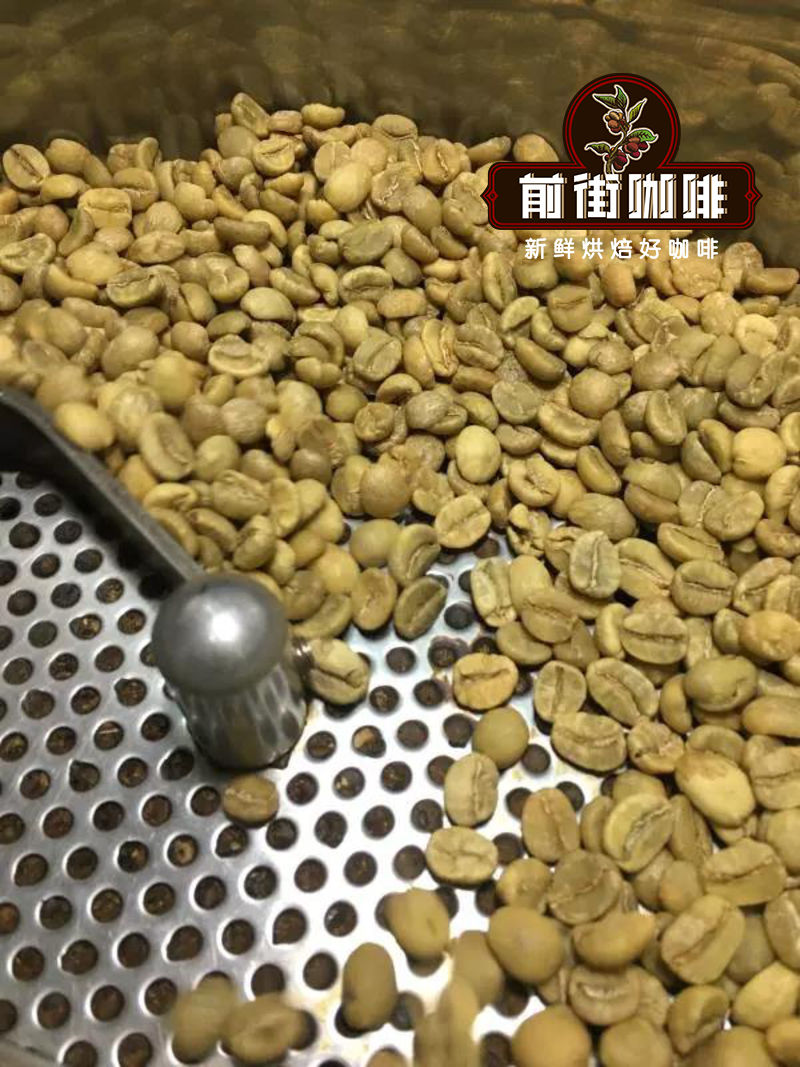
Kenya Assalia beans are full and round. To express their bright, rich acidity fully, FrontStreet Coffee uses a light roast.
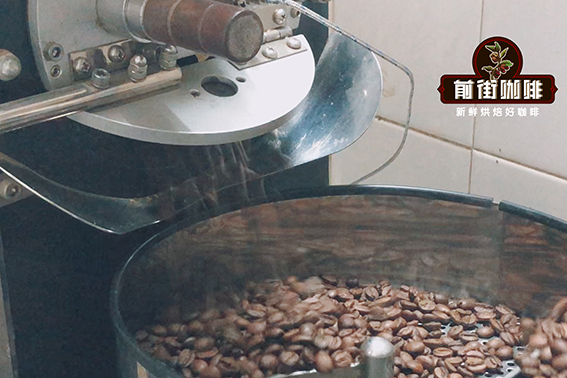
On a Yangjia 800N semi-direct fire roaster with a 480g bean charge: heat to 160 degrees Celsius and add the beans, damper opened to 3, heat at 120. The return temperature point is at 1 minute 28 seconds. When the temperature rises to 130 degrees Celsius, open the damper to 4. Roast to 6 minutes 00 seconds and a temperature of 154.6 degrees Celsius, at which point the bean surface turns yellow, the grassy smell disappears completely and dehydration is complete. When ugly wrinkles and black spots appear on the bean surface and the toast aroma clearly turns to coffee aroma, this can be defined as the prelude to first crack. Listen carefully for the sound of first crack. First crack begins at 9 minutes 28 seconds, the damper is unchanged, first crack development time is 2 minutes 20 seconds, and the beans are dropped at 193.8 degrees Celsius.
FrontStreet Coffee Brewing Suggestions
Dripper: V60 or cake cup
Water temperature: 91-92 degrees Celsius
Coffee-to-water ratio: 1:15
Grind size: Fine grind (80% pass rate through Chinese standard #20 sieve)

Brewing method: Segmented extraction. Use 30g of water for a 30-second bloom. When pouring water to 124g with a small water flow in a circular motion, pause. When the water level drops and is about to expose the coffee bed, continue pouring to 228g and stop. When the water level drops and is about to expose the coffee bed, remove the dripper, timing from the bloom. Extraction time is 1 minute 55 seconds.
Assalia Coffee Bean Flavor:
The wet aroma has ripe tomato and floral notes. The entry reveals cherry tomato and plum flavours with a bright acidity and a clean, rich mouthfeel. Prominent sweetness in the middle section with a juice-like sensation. The aftertaste has berry aroma and brown sugar sweetness with a green tea fragrance.
Saxini Coffee Bean Flavor:
It smells floral. The entry has cherry tomato, citrus and nut acidity notes. The middle section has cream aroma and brown sugar sweetness. The aftertaste has cocoa and oolong tea sensations. Rich flavour layers with obvious floral notes.

The above are the flavour characteristics of these two coffee beans at FrontStreet Coffee. We hope this helps everyone gain a deeper understanding of Kenyan coffee, so you can avoid pitfalls when selecting beans from different growing regions in future.
FrontStreet Coffee Recommendation
If the K72 process and that cherry tomato and plum acidity are what drew you in, FrontStreet Coffee's own Kenyan single origin is a natural first purchase. The FrontStreet Kenya Small Tomato is an AA grade bean from the Asali honey processing station, grown between 1,550 and 1,750 metres on the classic SL28 and SL34 varieties and given the full 72-hour washed fermentation; the result is a fine cup with snow pear, plum, brown sugar, cherry tomato and prune notes, and because it is roasted light, the bright acidity and layered fruit stay intact. FrontStreet suggests brewing it in a V60 or a cake cup with water at 91 to 92 degrees Celsius, a 1:15 ratio and a fine grind of 80% through a Chinese standard No. 20 sieve, pouring 30g for a 30-second bloom, then to 124g and finally to 228g for a total extraction of about 1 minute 55 seconds.
For drinkers who want to compare Kenya with its African neighbours, the FrontStreet washed Yirgacheffe from Ethiopia makes an instructive contrast. Where Kenya brings a strong, full berry and tomato acidity, Yirgacheffe offers white jasmine, bright citrus and lemon acidity with a tea-like body, and its modest price has made it a first specialty bean for many. Brew it in a V60 with 15g at a 1:15 ratio and water at 90 to 91 degrees Celsius, grinding to EK43s setting 10, about 80% through a No. 20 sieve, blooming 30g for 30 seconds and pouring to about 125g and then 225g for a total of 2 to 2 minutes 10 seconds.
Important Notice :
FrontStreet Coffee is a long-established specialty coffee roaster in Guangzhou China, selling freshly roasted beans from its own farm in Yunnan as well as dozens of carefully selected single-origin beans from around the world for both pour-over and espresso. The products deliver consistently excellent quality and great value, with shipping within 24 hours. Guangzhou's FrontStreet Coffee shop is recommended by many coffee lovers, and the beans are now available online at the Tmall 。
FrontStreet Coffee has moved to a new address:
FrontStreet Coffee Address: 315,Donghua East Road,GuangZhou
Tel:020 38364473
 Scan and follow the En Gafei WeChat official account. Please indicate that the reprint comes from "En Gafei".