What Does Geisha/Gesha Coffee Taste Like? How Should You Brew It for the Best Flavor?
Professional coffee knowledge exchange and more coffee bean information, please follow Coffee Workshop (WeChat public account: cafe_style)
What is Geisha Coffee? Is it related to Japan?
Actually, it has nothing to do with traditional Japanese geisha performers. Geisha/Gesha is a special coffee variety, comparable to Bourbon, Pacamara, or other typical coffee varieties. It is an original variety discovered in the 1930s in the southwestern Ethiopian town of Gesha.
Geisha gained global recognition in 2004 when it won the "Best of Panama" (BOP) competition. Daniel Peterson of Hacienda La Esmeralda introduced it to the international panel, astonishing coffee professionals who declared it the "divine cup." Since then, the price of Geisha coffee has climbed continuously, year after year.
Geisha is an extremely aromatic coffee, in which you can find sweet floral aromas, citrus blossom, jasmine, and other sweet fragrances.
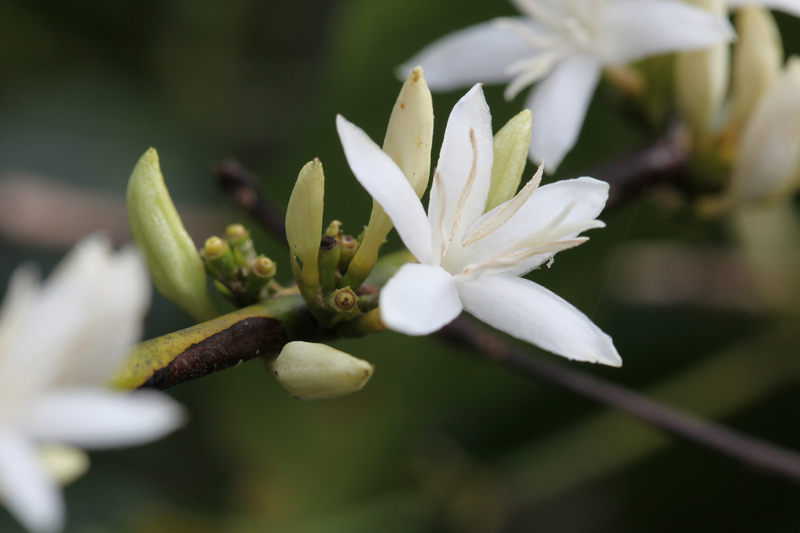
As Gesha has dominated conversations, coffee professionals regard it as nothing less than the goddess of coffee. Many are captivated by its bright and complex floral and fruity aromas, its multi-layered high-sweetness fruit notes, and its delicate, soft acidity.
Gesha's extremely low yield is merely an excuse for its high price. What truly fascinates people is Gesha's uniquely alluring flavor, which is the most important reason for its exceptional value.
Gesha first took first place at Best of Panama in 2004, produced by the renowned Hacienda La Esmeralda. Many baristas were amazed after tasting Gesha for the first time, feeling as if they were witnessing a Cinderella story in which an unremarkable shade tree transformed into a star coffee tree. In the decade that followed, and continuing today, Gesha has remained the top choice in major cupping competitions and coffee contests, surpassing star beans such as Blue Mountain and Kona to become the mainstream specialty coffee of the market.
FrontStreet Coffee's Geisha Coffee Roasting Recommendations
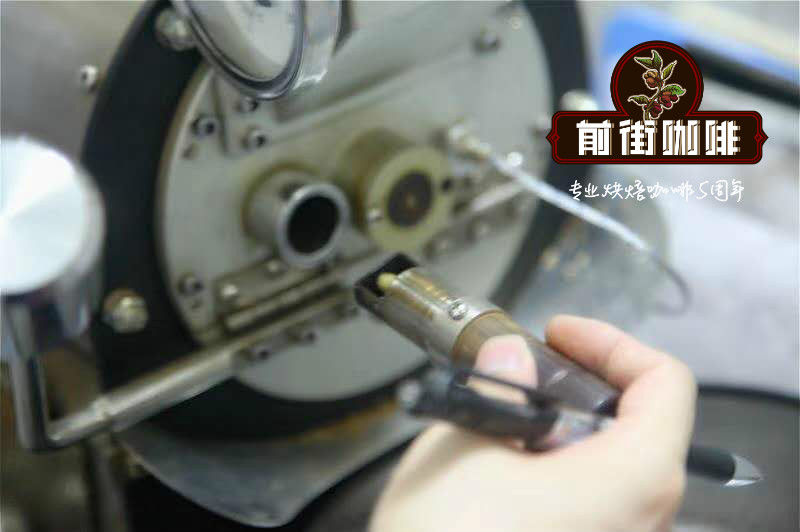
On September 30th, a sunny day, with a roasting room temperature of 27°C and humidity of 40%, we roasted green label Gesha. We received the 2018 harvest green label Gesha, grown at 1,600-1,800 meters, with high-density, hard beans. The beans are full-bodied, thick and long, with pointed ends. We chose 170°C as the drop-in temperature, first crack began at 8'00", then reduced the heat to 80°C, adjusted the airflow to 3.5, developed for 1'30" after first crack, and dropped at 193.5°C. When dropped, the coffee showed oolong tea aroma, with a roast level of concentrated first crack development.
Cupping results: delicate and soft acidity on entry. Panama Hacienda La Esmeralda's Green Label Gesha offers rich, layered flavor, with an instant explosion of floral and fruity aromas on entry! The flavors change with temperature: from jasmine and citrus to berries and honeysuckle, then transforming into fruit candy and oolong tea aroma, and finally leaving a cantaloupe aftertaste.
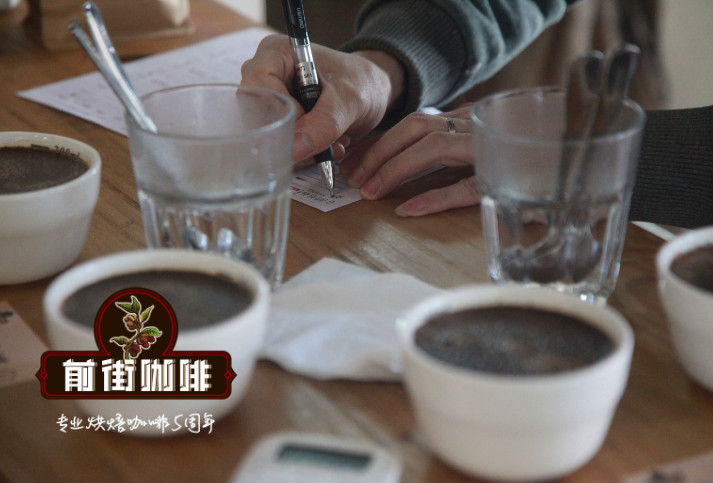
Peach sweetness with honey aroma, fresh and comfortable, bright yet balanced, with extremely strong aromatic layers. The fruit sweetness and aftertaste are intense, and on entry it carries strawberry fruit aroma with strong yet gentle citrus and lemon acidity. Drinking it feels nothing like the coffee you have in mind.
FrontStreet Coffee's Recommended Gesha Coffee Brewing Methods
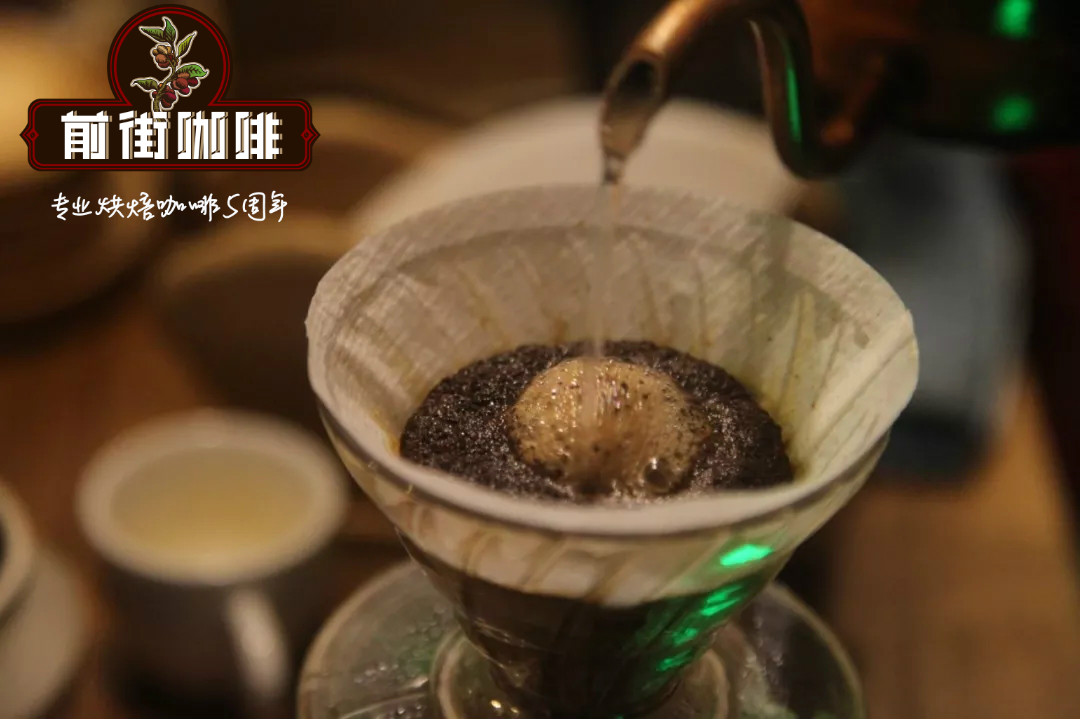
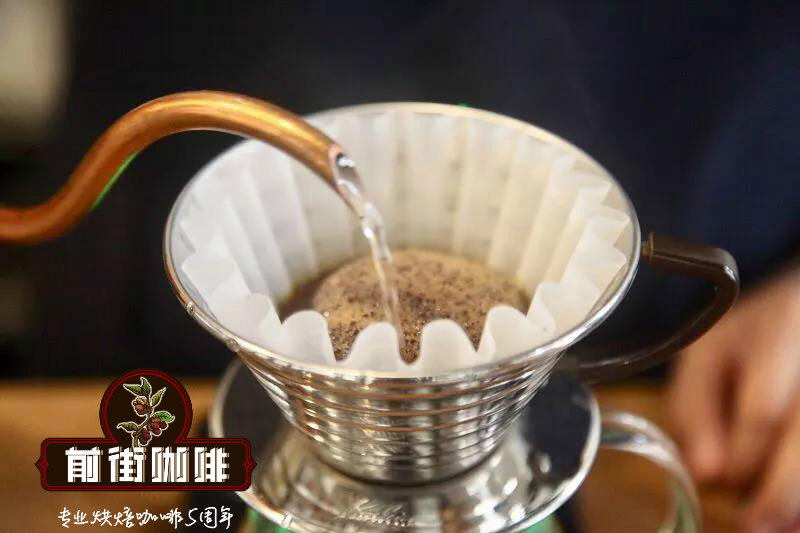
Pour-over
Grind size: Japanese Fuji R440 setting 3.5, raw sugar size
Water temperature: 91-92°C
V60 dripper, 15 g of coffee grounds, water temperature 91°C, grind size BG5M (small Fuji 3.5), water-to-coffee ratio close to 1:15
35 g of water for the bloom, bloom time 30s
Segmented pour: pour water to 120ml, then pause, then slowly pour to 225ml
That is: 30-120-225
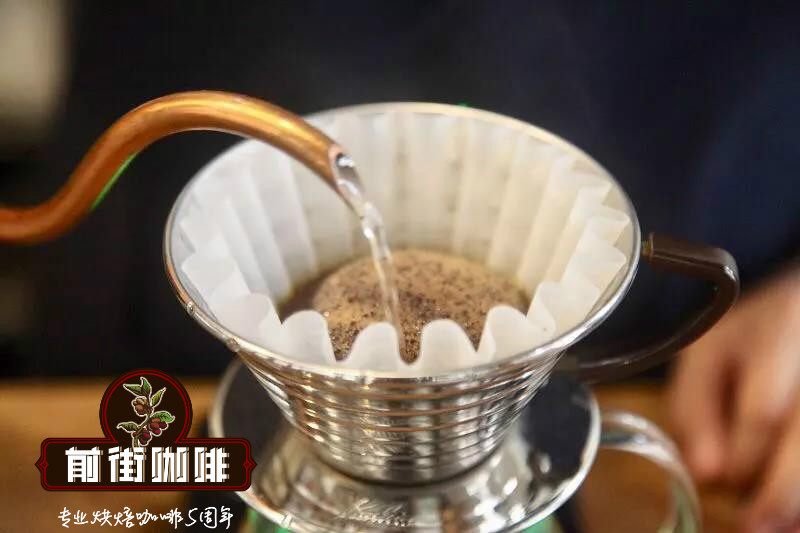
Cake Dripper
The cake dripper, also called the wave dripper, has three holes at the bottom. Its flat design allows for even water flow and is not as fast as cone-shaped drippers, making it more suitable for coffees that can withstand a longer extraction. The cake dripper uses the creases in the filter paper in place of flow grooves, so the paper does not adhere directly to the dripper; this reduces the contact area between paper and dripper while creating the maximum extraction area. On one hand, this helps concentrate the extraction, letting hot water filter down evenly and smoothly for a more successful brew; on the other hand, it also slows the cooling rate.
Parameters & technique: grind size BG 5R (China standard 20-mesh screen, 58% pass rate), water temperature 90°C, coffee-to-water ratio 1:15. 38 g of water for a 30-second bloom; when the pour reaches 130 g, pause and wait for the water level to drop until just before it exposes the coffee bed, then continue pouring to 226 g; when the water level again drops until just before exposing the bed, remove the dripper (timing starts from the bloom). Extraction time is 2:08.
Flavor: the entry has grapefruit, cherry tomato, and orange flavors, with toffee sweetness in the aftertaste, and is overall quite balanced.
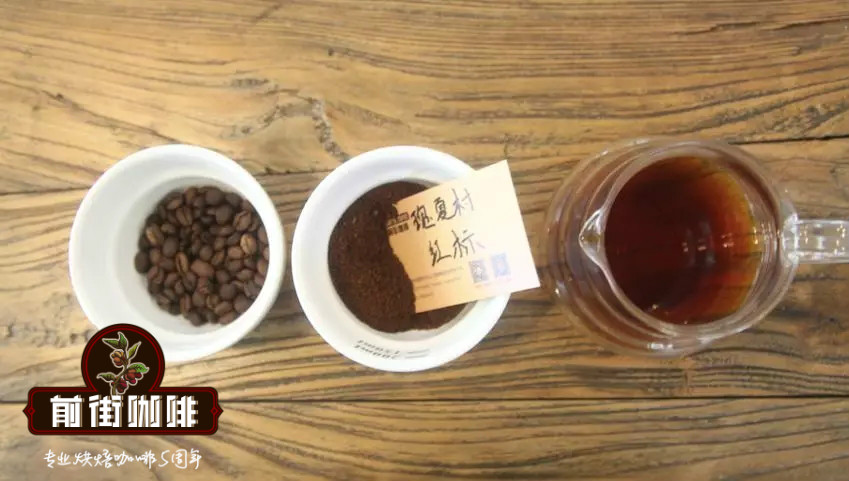
After comparing Gesha coffees from Panama, Costa Rica, Colombia, and Ethiopia, FrontStreet Coffee found that most Gesha coffees share rich floral aromas, delicate citrus and berry acidity on entry, a round oolong tea fragrance, and very rich, layered flavor. Ethiopian Gesha leans more toward berry flavors with typical African characteristics, giving an overall softer impression; Central American Gesha coffees have more prominent citrus acidity and are overall better balanced.
FrontStreet Coffee Recommendation
If you want to taste Gesha at its most celebrated, FrontStreet Coffee's Emerald estate line is the place to look. The Emerald Red Label (Esmeralda Special) is grown between 1,600 and 1,800 meters, cups above 90 points, and comes from a single plot, so each batch carries its own lot number and traceability. The Emerald Green Label (Private Collection) blends several plots instead of highlighting one, expressing the estate's signature high-altitude Gesha profile at a friendlier price. Readers new to the variety can start with the FrontStreet Boquete Geisha, an entry-level Panama coffee that delivers the classic orange-blossom honey character, an oolong-tea body, and delicate fruit acidity.
Ethiopia, the birthplace of Gesha, shows a brighter, more fruit-driven side. The FrontStreet Granada Estate Geisha comes from a single-variety farm at the border of Ethiopia's Kochere and Genlana Abaya producing areas; it is naturally processed, dried on raised beds for 14-20 days depending on the weather, and roasted medium-light to bring out bright citrus acidity, elegant ginger-flower aromas, and ripe-fruit sweetness with a fine, silky finish. For a more premium experience, the FrontStreet Gesha Village Gold Label (the Gesha 1931 variety, naturally processed) and Gesha Village Red Label (Gori Gesha, a single-terroir lot with full traceability) come from one of Ethiopia's rare large estates.
FrontStreet also offers the Strawberry Candy blend, pairing a Costa Rican honey-process coffee with Panama Geisha for delicate florals and sweet fruit — it suits pour-over, moka pot, espresso machine, and cold brew. Gesha is a medium-light, floral-fruity coffee with dense, hard beans, so FrontStreet suggests grinding to about 78% passing a China standard #20 sieve (roughly fine caster sugar) and brewing at 91°C with 15 g of coffee and a 1:16 ratio in a small Hario V60 using a three-pour method. For a single-origin espresso, pull 20 g of coffee at a 1:2 ratio for a 25-second shot yielding 40 g; add 200 g of hot water for an Americano with orange, nut, and blueberry notes, or 200 g of milk for a latte with a creamy, cookie-like smoothness. To make cold brew, use 30 g ground to fine caster sugar (EK43s setting 9, or C40 setting 24), add 360 g of room-temperature water at a 1:12 ratio, refrigerate for 8 hours, filter, then seal and age for another 3 hours for notes of grape juice, rose, sweet orange, and fruit wine.
Important Notice :
FrontStreet Coffee is a long-established specialty coffee roaster in Guangzhou China, selling freshly roasted beans from its own farm in Yunnan as well as dozens of carefully selected single-origin beans from around the world for both pour-over and espresso. The products deliver consistently excellent quality and great value, with shipping within 24 hours. Guangzhou's FrontStreet Coffee shop is recommended by many coffee lovers, and the beans are now available online at the Tmall 。
FrontStreet Coffee has moved to a new address:
FrontStreet Coffee Address: 315,Donghua East Road,GuangZhou
Tel:020 38364473
 Scan and follow the En Gafei WeChat official account. Please indicate that the reprint comes from "En Gafei".