What Variety is Geisha Coffee Bean? Does Geisha Belong to Arabica? Geisha Story and Characteristics
As most coffee lovers know, there are three main coffee species in the world, and they are the ones grown most widely. Arabica is the most famous of them. It originated in Ethiopia, and because its flavor and aroma are so good it has been transplanted to coffee-producing countries around the globe, each developing its own distinct character.
Arabica was the first species discovered and is regarded as the finest, and it remains the world's primary coffee today. It is grown across Central and South America, in Brazil, Colombia, Ethiopia and Tanzania in Africa, in Yemen, Indonesia and elsewhere. Arabica plants typically stand 2.5 to 4.5 meters tall, tolerate cool conditions but not frost, and have poor drought resistance. The beans are larger, the quality excellent, the flavor fragrant, with some acidity and a slight bitterness, and Arabica accounts for about 85 percent of world production. Arabica also has many sub-varieties, all descended from Ethiopia's oldest Typica and Yemen's Bourbon after being transplanted to Central and South America or Asia and mutating there; the list is far too long to enumerate. Specialty coffee, however, means carefully cultivated high-altitude Arabica, so the field is narrower than it looks.

Those Arabica sub-varieties can be grouped roughly as follows.
Typica
The oldest native variety from Ethiopia, and the ancestor of every Arabica variety. Typica plants have bronze-colored young leaves, and the beans are oval or slender and pointed; the flavor is elegant, but the plant is weak, disease-prone and low-yielding. FrontStreet Coffee's Jamaica Blue Mountain No. 1, FrontStreet Coffee's Indonesia Sumatra Mandheling and FrontStreet Coffee's Hawaii Kona all belong to the Typica family.
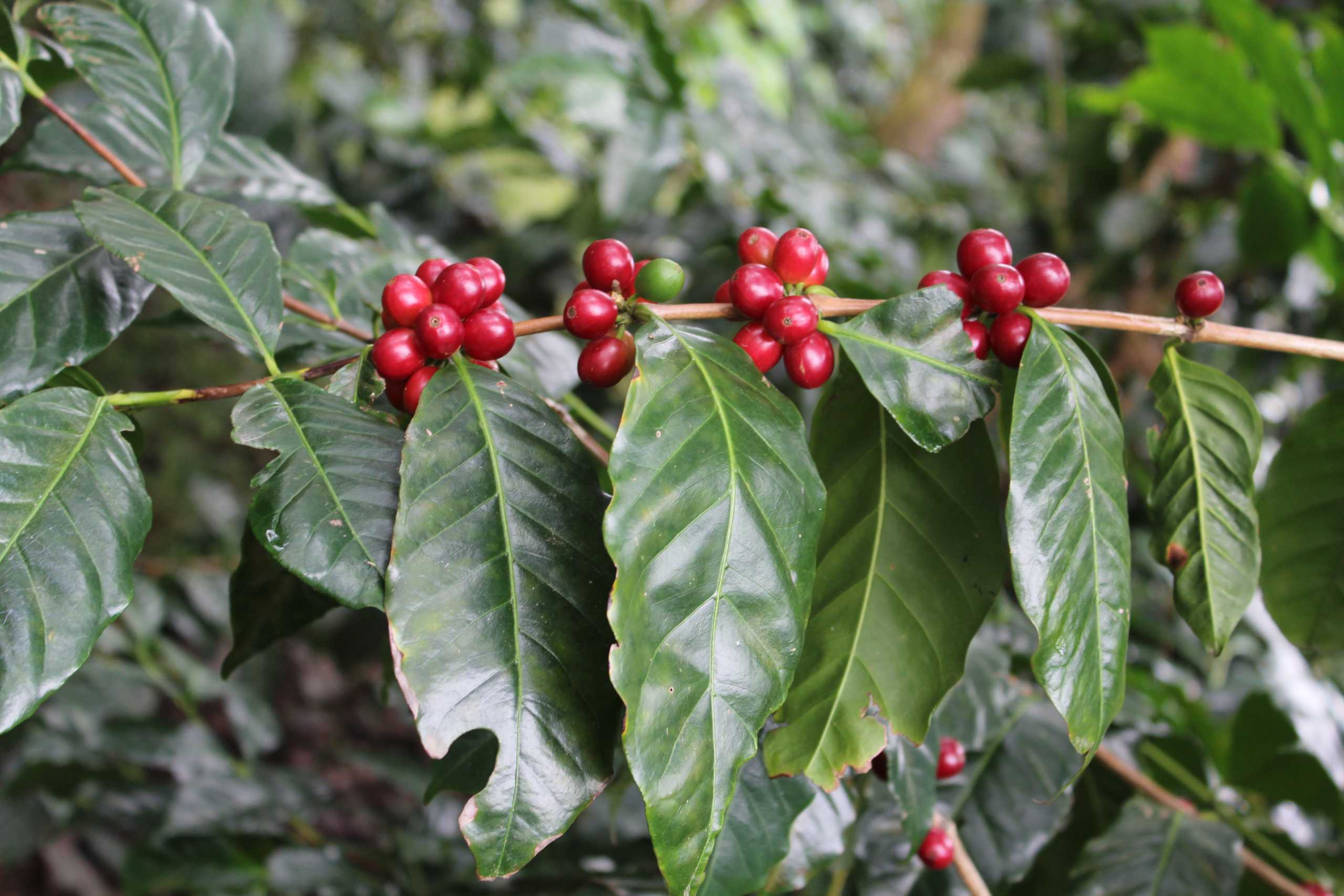
Bourbon
In the 18th century, missionaries carried the Bourbon variety from Yemen to Bourbon Island (now La Réunion), and it began appearing in Latin America in the 19th century. Bourbon varieties are common in Latin America today. They yield little and are susceptible to pests and leaf rust, but their flavor is excellent. Bourbon descendants include Catuai, Catimor and Mundo Novo.
Geisha was discovered in Ethiopia, which naturally sparked the curiosity of explorers hoping to trace its roots. Willem Boot, founder of La Mula estate, and Joseph Brodsky, founder of Ninety Plus, both tried, without any particular success. Such is the wonder of nature.

People around the world now grow Geisha, but the flavor still does not match the astonishing quality of Panamanian Geisha, even though it remains excellent coffee. Every variety has its ideal combination of temperature, soil and climate, and it is a daydream to think a taste profile can simply be replicated elsewhere.
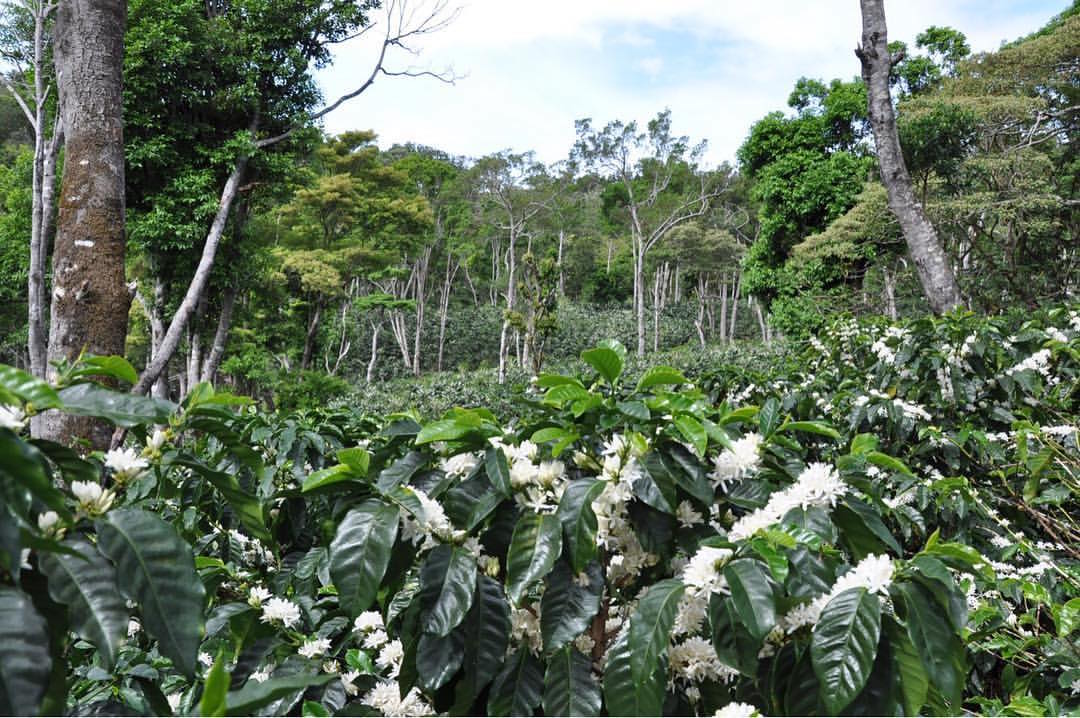
Geisha coffee, whose name sounds much like the Japanese word, is also written as "Geisha coffee." It has been the star variety of recent years, winning major competitions to the point that Panamanian coffee contests are now split into a Geisha category and a non-Geisha category. In reality it is a member of the Typica family and belongs to the Arabica species. When Geisha was brought to Panama decades ago it was originally planted as a windbreak for the estate, until someone noticed its unusual flavor, and after that it became a sensation overnight.
Geisha coffee has rich, full sweetness and an extremely clean taste, with aromas ranging from berries and citrus to mango, papaya and peach. A very distinct bergamot-like aftertaste is another of its typical cupping attributes. To this day, Geisha remains the champion among coffee varieties.

Geisha
A derivative of the Typica family, Geisha was discovered in 1931 in the Geisha forest of southern Ethiopia and later transported to the Lyamungu Research Institute in Tanzania. It stayed obscure in many countries until 1953, when it was brought to the Tropical Agricultural Research and Higher Education Center (CATIE) and labeled T2722. In the 1960s it was identified as resistant to coffee leaf rust, so CATIE distributed and transplanted T2722 to Panama, where it began winning cupping competitions frequently from 2005 onward.
Today the most famous Geisha producing region is Panama's Boquete area, a small town on the eastern foothills of Baru Volcano. In Boquete, the most renowned Geisha estate is the famous Hacienda La Esmeralda, along with Elida Estate and Panama NPGE Estate. Although people around the world grow Geisha, the flavor still does not match the astonishing quality of Panama's.

Because Hacienda La Esmeralda both discovered and promoted Geisha coffee, it was the first brand many Geisha pioneers came to know, and La Esmeralda's Geisha is considered the most classic expression of the variety. FrontStreet Coffee offers three Geisha beans from Hacienda La Esmeralda.
Before 2021, Hacienda La Esmeralda's Geisha was divided into three brands: Red Label, Green Label and Blue Label. In the first half of that year, however, the estate announced that it was discontinuing the Blue Label. In the second half of the year, FrontStreet Coffee came across a Geisha coffee named Las Rocas on the market. After rigorous investigation and cupping, FrontStreet Coffee confirmed that this Panama Las Rocas Geisha indeed comes from Hacienda La Esmeralda, with a flavor very close to the former Esmeralda Blue Label.

FrontStreet Coffee · Panama Las Rocas Geisha Coffee Beans
Region: Boquete, Panama
Estate: Hacienda La Esmeralda
Altitude: 1500+ meters
Variety: Geisha
Processing: Washed
Esmeralda Red Label
Selected by Hacienda La Esmeralda as its finest Geisha, drawn from Geisha grown at altitudes between 1600 and 1800 meters, with cupping scores above 90 points. Those who follow the estate closely will know that Red Label Geisha is split into auction and non-auction lots. In fact, auction or not, Red Label comes from the same plots. FrontStreet Coffee's view is that if you simply want to taste Geisha, Red Label is the place to begin. FrontStreet Coffee's Panama Esmeralda Red Label Geisha has a particularly bright and distinctive flavor, with intense white floral aroma and fruit fragrance.

FrontStreet Coffee · Panama Esmeralda Red Label Geisha Coffee Beans
Region: Boquete, Panama
Estate: Hacienda La Esmeralda
Plot: Mario plot
Altitude: 1700+ meters
Variety: Geisha
Processing: Slow natural drying
Esmeralda Green Label
Selected from altitudes between 1600 and 1800 meters, not entered in auctions, and made up of micro-lots blended from different plots. The difference from Esmeralda Red Label is this: Red Label can be traced to a specific plot, while Green Label, being a blend, cannot. FrontStreet Coffee has found something interesting: sometimes Green Label Geisha tastes very close to Red Label, and other times there are slight differences, much like buying a lottery ticket. Although Green Label is not as rarefied as Red Label, it still carries classic Geisha flavor and offers good value.

FrontStreet Coffee · Panama Esmeralda Green Label Geisha Coffee Beans
Region: Boquete, Panama
Estate: Hacienda La Esmeralda
Altitude: 1600-1800 meters
Variety: Geisha
Processing: Washed/Natural
When FrontStreet Coffee's roasters work with these three Panama Geisha coffees, they aim to highlight the variety's pleasant acidity and its special floral and fruit aromas, so they use a medium-light roast. When FrontStreet Coffee's baristas brew them, they use a finer grind and a higher water temperature to extract Geisha's acidity and aroma more fully, and they rely on a V60 dripper to avoid over-extraction.
Dripper: Hario V60
Water temperature: 93°C
Coffee amount: 15 grams
Coffee-to-water ratio: 1:15
Grind size: 80% pass-through through #20 sieve
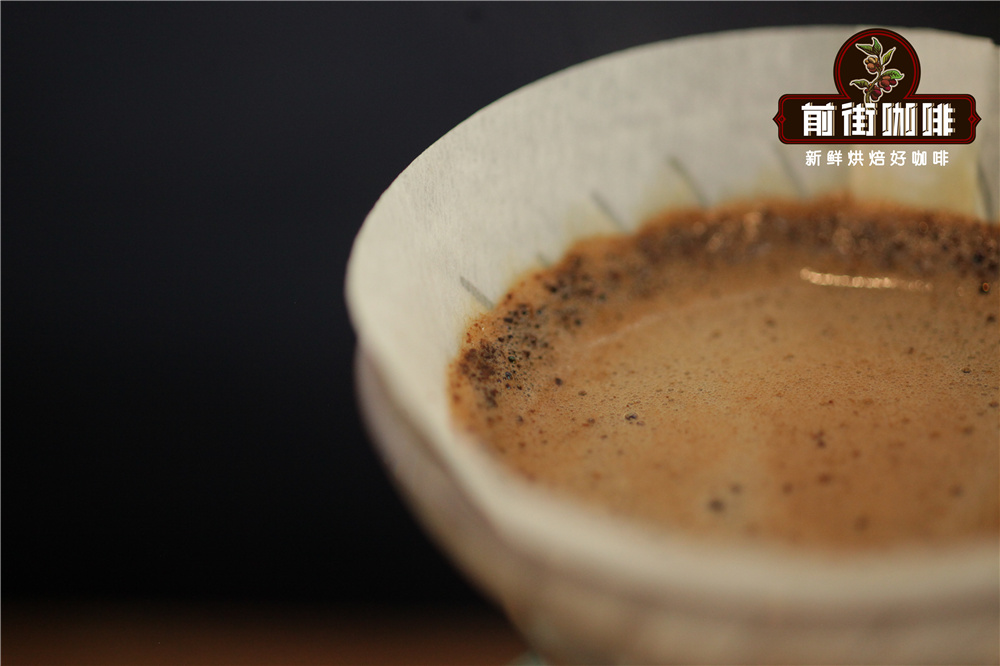
For a final cup with rich layers, FrontStreet Coffee recommends a three-stage pour:
First, pour 30 g of water and let it bloom for 30 seconds. Then, using a small stream, slowly pour in a circular motion for the second stage until you reach 125 g. When the water level in the dripper drops to the halfway point, continue pouring the third stage until you reach 225 g. Once all the water has dripped through into the sharing pot, remove the dripper. Total extraction time is about 2 minutes.
For more coffee bean information, follow Coffee Workshop (WeChat public account: cafe_style)
For professional coffee knowledge exchange, add WeChat: kaixinguoguo0925
FrontStreet Coffee Recommendation
Geisha rewards curiosity, and FrontStreet Coffee's Geisha lineup lets you start at the entry point or go straight to the top. For a first taste of the famous Geisha profile, the FrontStreet Boquete Geisha is the recommended entry-level bottle: grown at around 1,600 meters on the volcanic soils of Boquete, it delivers the variety's signature jasmine, green tea, honey, citrus and orange notes at a friendly price.
Moving up, FrontStreet Coffee carries both the Esmeralda Red Label and Green Label Geisha. Red Label, formally named Esmeralda Special, is grown between 1,600 and 1,800 meters, is cupped above 90 points, and is traceable to a single plot, which gives it a refined citrus-honey character and elegant jasmine aromatics. Green Label, formerly Private Collection, blends micro-lots from several plots to express the estate's high-altitude Geisha character in a more affordable form, and its value is excellent.
If you want to explore Geisha's Ethiopian roots, FrontStreet Coffee's Genlana Gesha comes from a processing station established in 2014 at the border of the Kochere and Genlana Abaya areas, where whole ripe cherries are dried on raised beds for 14-20 days depending on the weather. Roasted medium-light, it shows bright citrus acidity, elegant ginger-flower aroma, ripe fruit sweetness and a delicate, silky body with a refined finish. Geisha is a medium-light, floral-and-fruit type with a hard bean structure, so FrontStreet suggests grinding to about 78 percent passing a No. 20 sieve (roughly fine-sugar consistency) and brewing at 91°C: 15 g of coffee in a small Hario V60 at a 1:16 ratio, bloomed with 30 g of water for 30 seconds, then poured in stages to 125 g and finally to 225 g, for a total extraction of about 2 minutes 10 seconds to 2 minutes 20 seconds.
Important Notice :
FrontStreet Coffee is a long-established specialty coffee roaster in Guangzhou China, selling freshly roasted beans from its own farm in Yunnan as well as dozens of carefully selected single-origin beans from around the world for both pour-over and espresso. The products deliver consistently excellent quality and great value, with shipping within 24 hours. Guangzhou's FrontStreet Coffee shop is recommended by many coffee lovers, and the beans are now available online at the Tmall 。
FrontStreet Coffee has moved to a new address:
FrontStreet Coffee Address: 315,Donghua East Road,GuangZhou
Tel:020 38364473
 Scan and follow the En Gafei WeChat official account. Please indicate that the reprint comes from "En Gafei".