The Relationship and Differences Between Mandheling and Arabica Coffee Beans: Is Golden Mandheling Good Coffee?
We often see chain coffee shops promoting a "100% Arabica" slogan, and when we ask about the bean varieties used for espresso blends, the answer is frequently just "Arabica." Those answers are correct, but they lack detail. So what exactly is Arabica? In fact, three main types of coffee are traded commercially worldwide: Arabica, Robusta, and Liberica.
Arabica coffee originated in Ethiopia and is the most widely consumed type in the world, accounting for about 60% of global coffee production. Almost all of the coffee at FrontStreet Coffee comes from the broad Arabica category; only our commercial espresso blend contains a small portion of Robusta to increase crema.
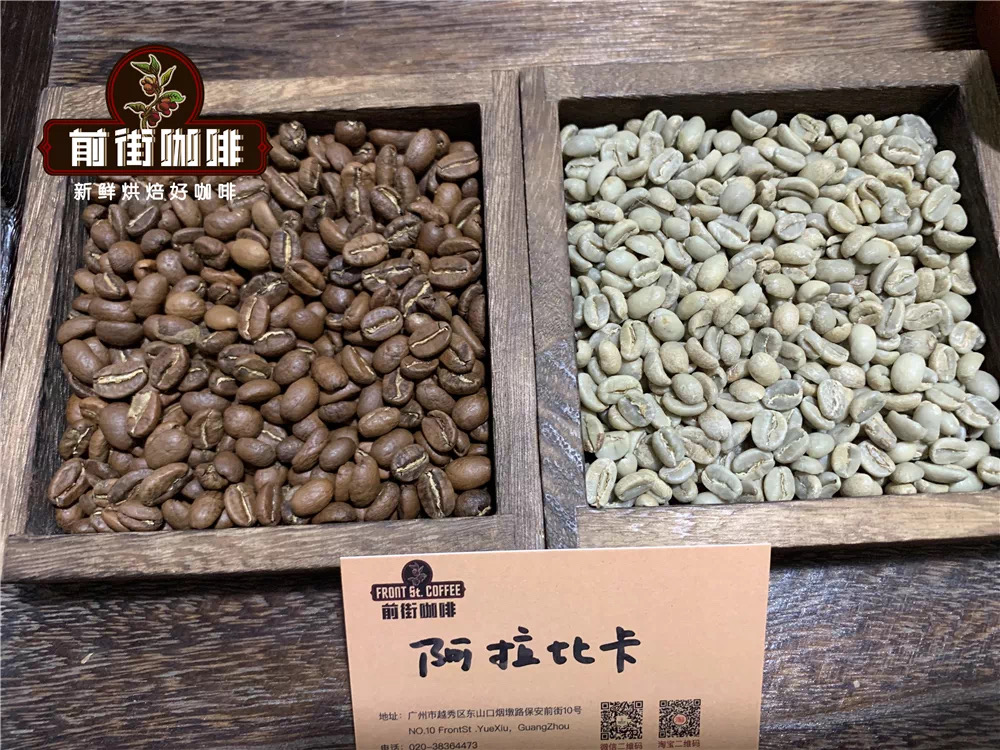
Robusta production ranks second only to Arabica. The Robusta variety is extremely tolerant of environmental conditions and nearly immune to disease. Compared with Arabica, it typically has a fuller body. High-quality Robusta beans have a smooth texture, low acidity, and often show chocolate flavors characteristic of their profile. Inferior Robusta, by contrast, may carry slight rubbery or burnt-rubber notes.
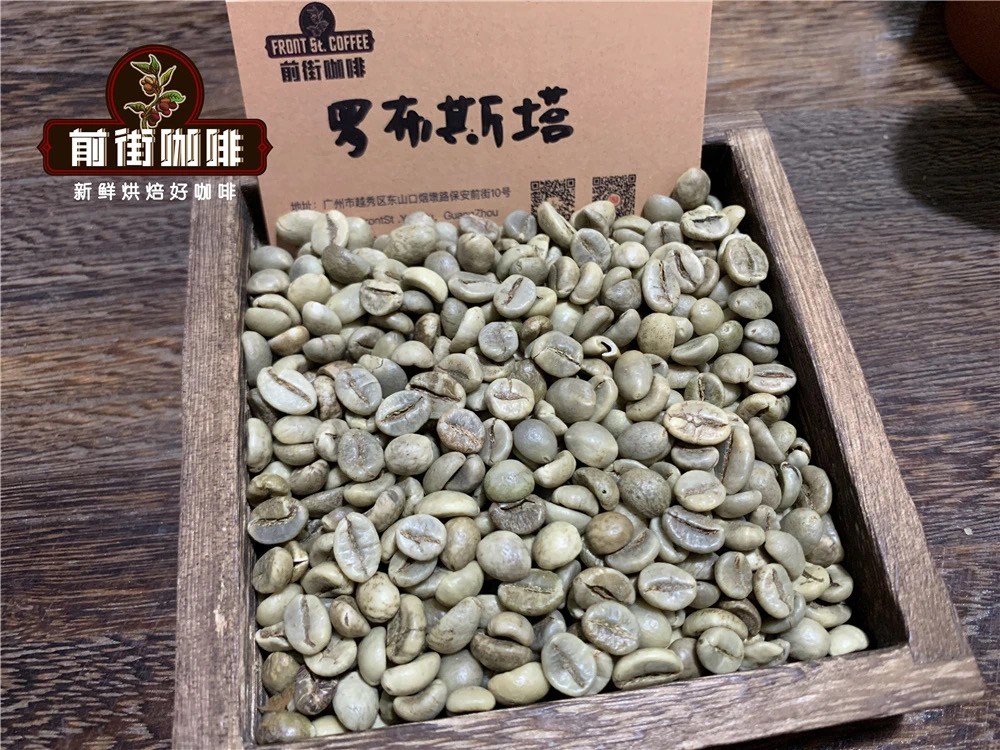
Liberica is extremely rare in the world today, yet this variety holds a very important place in coffee history. Liberica beans are larger than other coffee beans and often asymmetrical—the only coffee beans with such irregular shapes. They are said to have a unique aroma of floral and fruit notes over an overall smoky character.

There is another variety, Excelsa, recently reclassified as a type of Liberica coffee even though the two are quite different. Excelsa grows mainly in Southeast Asia and accounts for only 7% of world coffee trade. It is used primarily in blends to enhance flavor and complexity, and is said to have acidic, fruity characteristics.
Arabica coffee beans grow in high-altitude regions with stable rainfall and ample shade. Arabica trees are generally easy to care for because they are relatively small and easy to prune (they typically do not exceed 6 feet). Arabica requires the most meticulous care of the four types because it is most susceptible to environmental influence. Higher-quality Arabica beans have bright flavors, satisfying acidity, and often multi-layered complexity in flavor and aroma.

Today, FrontStreet Coffee focuses on introducing Arabica coffee beans.
Popular Arabica Coffee Types Include:
Typica
The most distinctive characteristic of Typica trees is their bronze-colored leaves at the top, which is why they are also called "red-topped coffee." Their trunks are slender with thin branches that angle slightly upward, forming 50-70° angles with the vertical stem. The plants grow to about 5 meters tall, making manual harvesting somewhat challenging. Right outside FrontStreet Coffee's entrance we happen to have a potted Typica plant and a potted Catimor plant—feel free to take a look while enjoying your coffee. Typica beans are relatively large, elongated, and pointed at both ends, somewhat egg-shaped. Typica often has citrusy acidity with a sweet aftertaste, and many praise it as elegant and refined. FrontStreet Coffee's Jamaican Blue Mountain coffee is a Typica variety.

Because of its very poor disease resistance, Typica struggles against common problems like leaf rust and coffee berry disease, resulting in very low yields. Trees infected with leaf rust essentially suffer an incurable condition, eventually withering and even dying. As a commercial crop, Typica's low yield and weak disease resistance make profitability difficult, leading many growers to abandon it for more resistant varieties. Cultivating elegant, pure-flavored Typica is no simple matter—every stage, from terroir and plant management to harvesting and post-processing, requires careful attention for the beans to develop positive flavors and texture. Producing high-quality Typica therefore demands more labor and technical expertise.
FrontStreet Coffee's representative Typica offering is FrontStreet Blue Mountain coffee, which descends from the Typica lineage. Authentic FrontStreet Jamaican Blue Mountain is among the world's most expensive coffees because of its scarcity. Jamaican Blue Mountain was introduced to Jamaica in the early 1700s, originating in a small area of the Blue Mountains on the island's eastern side and growing at 2,000 to 5,500 feet. Cool mountain temperatures, volcanic soil, and abundant rainfall give it a unique flavor. Cultivation is closely monitored and globally protected by the Jamaican Coffee Industry Board—only coffee from this specific region can receive authentic certification and labeling.

The Jamaican Coffee Industry Board's label therefore serves as an anti-counterfeiting mark for Blue Mountain coffee. It is also worth noting that only Jamaican coffee ships green beans in wooden barrels, so Blue Mountain's wooden barrels can to some extent help identify authenticity as well.

FrontStreet Coffee's Blue Mountain comes from Jamaica's Clifton Estate, the only estate in Jamaica with Rainforest Alliance certification. The Blue Mountain grown at this 200-year-old estate achieves almost perfect balance in flavor, body, and aroma, with an endless aftertaste.
Bourbon
Bourbon emerged from a natural mutation of Typica, its slender, pointed bean shape becoming rounded. It was first discovered on Bourbon Island (now Réunion) off the eastern coast of Africa. In 1715, France transplanted rounded beans from Mocha, Yemen to Bourbon Island (renamed Réunion after the French Revolution), giving the variety its name. The rounded Bourbon beans were introduced to Brazil for cultivation in 1727. Although yields are not high, Bourbon resists leaf rust better than the delicate Typica. Bourbon grown at high altitudes has rich, delicate flavors, intense aromas, and smooth acidity. The Bourbon cherries we typically see change from green to light yellow, orange-yellow, red, and finally to fully ripe dark red—what we call Red Bourbon.

Take FrontStreet Coffee's Brazil as an example—this coffee features distinct nutty and chocolate flavors, moderate caramel sweetness, and a smooth, well-balanced overall profile.
Catimor
Catimor 7963 is a hybrid developed by Portugal's Tropical Research Institute (HCT) specifically for coffee leaf rust resistance, with stable characteristics. It has a compact, dwarf tree form with many branches and short fruit nodes. It grows vigorously with extremely strong vitality, its most notable traits being remarkable rust resistance and high yields. It is therefore widely loved by Yunnan coffee farmers, with over 90% of coffee trees in Yunnan being Catimor.
FrontStreet Coffee's Golden Mandheling is a Catimor variety. When processed using Indonesia's unique wet-hulling method and roasted, it develops full-bodied herbal spice, dark chocolate, and nutty aromas. At this point, some regulars might wonder—doesn't the packaging clearly state the variety is "Ateng"? In fact "Ateng" is the local Indonesian name for this variety, and Catimor belongs to the broader Arabica category, so Golden Mandheling's variety is indeed Arabica.

FrontStreet Coffee's Mandheling offerings include more than just FrontStreet Golden Mandheling—there are four others: FrontStreet Tiger Mandheling, FrontStreet Aged Mandheling, FrontStreet Lintong Mandheling, and FrontStreet Sumatra Wahana Estate Mandheling. FrontStreet Lintong Mandheling comes from the Lintong region of Sumatra, Indonesia, with main varieties Typica and Caturra. FrontStreet Tiger Mandheling is from the Aceh region of Sumatra, primarily Typica and Caturra. FrontStreet Aged Mandheling comes from the Tawarhu region of Sumatra, with Typica beans. FrontStreet Golden Mandheling comes from the Aceh region of Sumatra. Since the Golden Mandheling trademark is registered by PWN, only Golden Mandheling produced by PWN is authentic.
So how do you confirm the authenticity of Golden Mandheling? It is actually quite simple—look for the factory certificate and the coffee bean sacks printed with the PWN logo. FrontStreet Coffee's Golden Mandheling comes from PWN and is usually called PWN Golden Mandheling coffee.

Most Mandheling coffees use the wet-hulling method, which gives them a relatively unique flavor: earthy and herbal notes often appear, with low acidity and full body that coffee enthusiasts worldwide love. Wet-hulling is a processing method unique to Indonesia's coffee regions. The process is as follows:
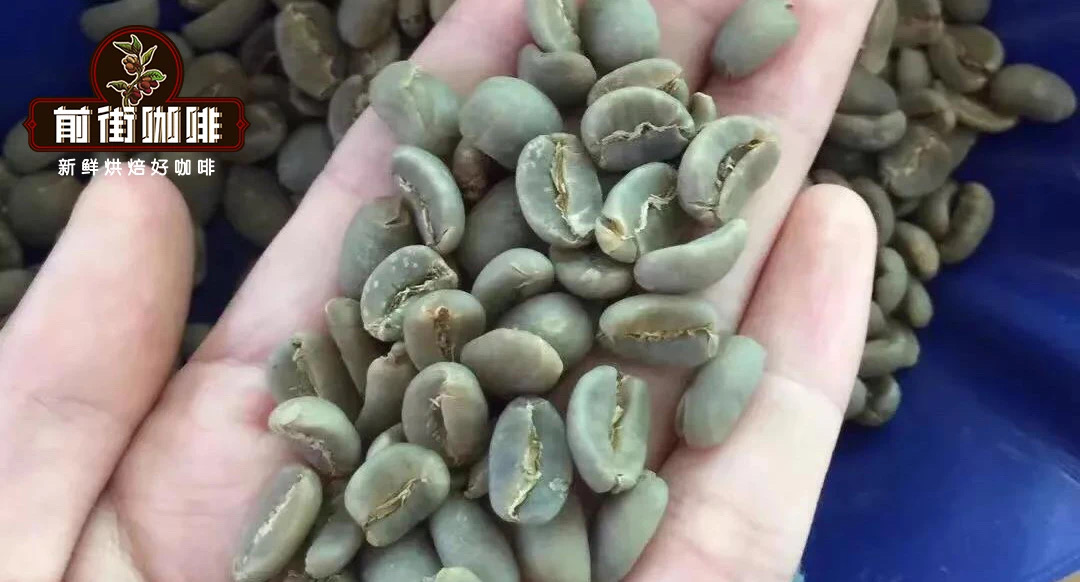
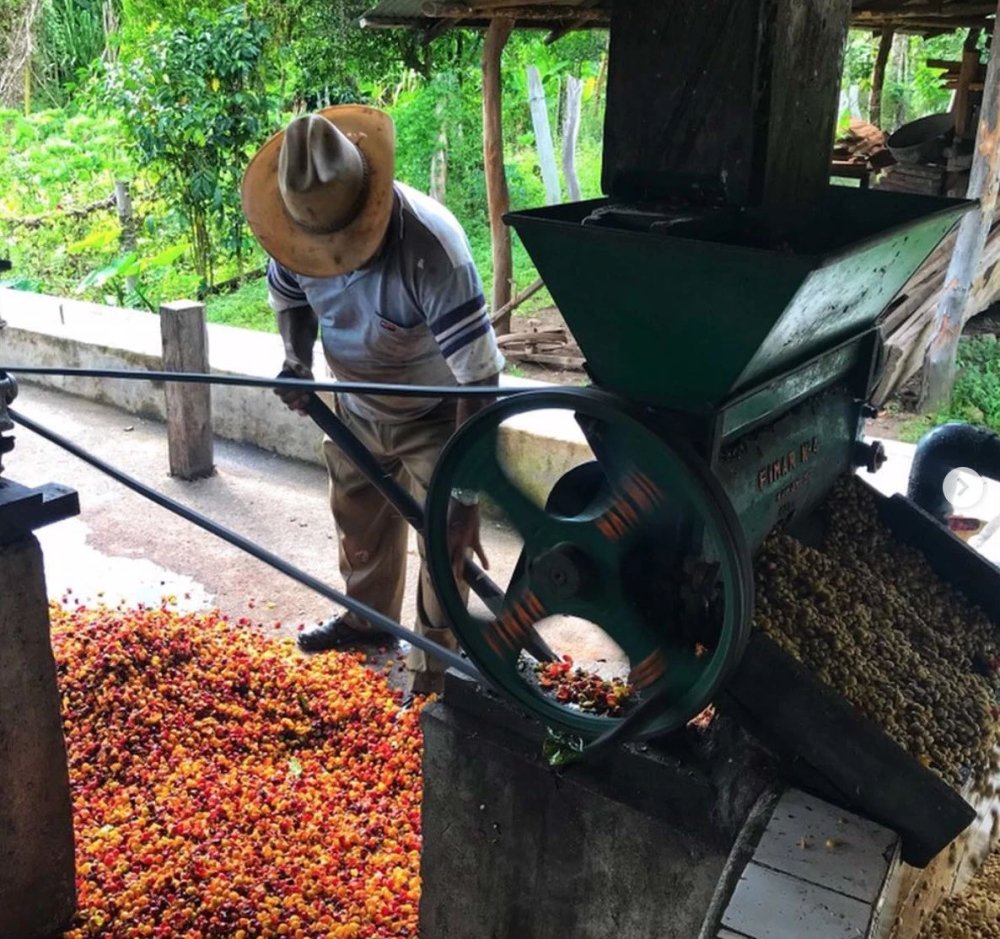
- Harvest coffee cherries and remove the fruit skin.
- Ferment the cherries overnight to break down the mucilage (the fruit layer under the skin), then wash it off.
- Dry for several hours until moisture content reaches about 50%.
- Sell the coffee to collectors or mills, where beans are further dried to 25-35% moisture content, then the parchment layer is removed using a wet huller.
- The processing plant air-dries the hulled beans to 12-13% moisture content.
Unlike other Mandheling coffees, Sumatra Wahana Estate Mandheling uses natural processing. FrontStreet Coffee has also adjusted its roast level—medium roasting better highlights its tropical fruit flavors. Because of the natural process, this coffee also has rich fermented, wine-like aromas.
Heirloom
In Ethiopia, Heirloom is a collective term for the country's many wild or genetically undefined indigenous varieties. By dictionary definition, "heirloom" means valuable property passed down through generations—coffee is an irreplaceable treasure for Ethiopians—and baristas translate it into the more accessible phrase "native variety." Many of FrontStreet Coffee's Ethiopian beans are labeled Heirloom, such as the washed FrontStreet Yirgacheffe, FrontStreet Buku 8.0, and FrontStreet Natural Red Cherry.

As the birthplace of Arabica coffee, Ethiopia preserves tens of thousands of native Arabica varieties. Coffee cultivation is generally divided into three main systems: smallholder farming, semi-forest cultivation, and forest cultivation. Semi-forest coffee trees are typically wild varieties growing in natural settings, where farmers manage the coffee areas while also cultivating other cash crops. Heirloom varieties are usually identified and confirmed by growers based on years of experience, because the number of varieties is so large that large-scale genetic testing and verification is nearly impossible.

From the introduction above, the answer should be clear: FrontStreet Mandheling coffee is certainly good coffee—it is just that taste preferences differ, so people like different types. For those who love prominent floral and fruit notes, Ethiopian coffees are excellent choices too. For enthusiasts who appreciate body and herbal flavors, FrontStreet Mandheling is the definitive pick.
For professional coffee knowledge exchange and more coffee bean information, please follow Coffee Workshop (WeChat official account: cafe_style)
For more specialty coffee beans and brewing guidance, explore the FrontStreet Coffee selection.
FrontStreet Coffee Recommendation
Among Mandheling coffees, the one that most satisfies exacting drinkers is Golden Mandheling, and FrontStreet's comes from Indonesia's PWN company, which applies exceptionally strict standards: beans are selected at 18 mesh or larger, and every 300-gram green sample must contain fewer than 3 defective beans to meet the top G1 grade. On top of that, three rounds of hand sorting remove defects entirely, raising the cup's cleanliness and the intensity of its sweetness. Those standards, and the limited output that follows, are what make FrontStreet's PWN Golden Mandheling the benchmark of Mandheling coffee. The name is well known, but most supply goes to the Japanese and American markets, so genuinely authentic Golden Mandheling imported to China each year is quite limited; FrontStreet's product listings show the PWN certificate and the PWN-marked sacks, which is what sets it apart from imitations.
For a more everyday cup, FrontStreet's Lintong Mandheling comes from Sumatra's Lintong region, where the wet-hulled method produces a thick body with distinctive earthy and herbal flavors—a "mother nature" taste that many coffee veterans find irresistible. Rich and aromatic with a sweet-bitter edge, it lands strong and lively on the palate with clove and woody aromas; at a medium-dark roast the low acidity shows spice and mint-like notes alongside a strong, persistent, full sweetness. To brew the best from it, FrontStreet recommends water at 87-88°C, 15g of coffee, a 1:15 ratio, and a coarse-sugar grind, poured in three stages: a 30ml bloom to wet all the grounds and release gas, then 100ml to lift the bed and draw out the golden foam, then a gentle 95ml center pour to lift the sweetness—together producing a thick body with caramel sweetness and chocolate and nut notes. And if you would rather take Mandheling to the espresso machine, FrontStreet's Classic Blend, its most repurchased option, adds medium-dark roasted Mandheling to the creamy nut character of Brazilian coffee, giving pronounced butter, roasted chestnut, and caramel notes; the Mandheling raises the body while lending sandalwood, herbal, and spice aromas, and a small portion of Robusta boosts the crema, so latte art or a layered Dirty comes together with ease.
Important Notice :
FrontStreet Coffee is a long-established specialty coffee roaster in Guangzhou China, selling freshly roasted beans from its own farm in Yunnan as well as dozens of carefully selected single-origin beans from around the world for both pour-over and espresso. The products deliver consistently excellent quality and great value, with shipping within 24 hours. Guangzhou's FrontStreet Coffee shop is recommended by many coffee lovers, and the beans are now available online at the Tmall 。
FrontStreet Coffee has moved to a new address:
FrontStreet Coffee Address: 315,Donghua East Road,GuangZhou
Tel:020 38364473
 Scan and follow the En Gafei WeChat official account. Please indicate that the reprint comes from "En Gafei".