What is Indian Monsoon Coffee? What are the Flavor Characteristics of Indian Monsooned Malabar Coffee?
The Origin of Monsooned Coffee
Legend has it that centuries ago, when green coffee was shipped from India to Europe, the beans changed during the long sea voyage under the high temperatures and humidity of the Indian Ocean. This is the origin of "monsooning." After monsooning, the green beans not only grew in volume but also turned from emerald green to golden yellow, and the brewed coffee was said to have a mellow, one-of-a-kind flavor. It became the signature of India's Malabar coffee — and later, "monsooning" was formalized as a processing method in its own right.
The Monsooning Process
Every year in May and June, the southwest monsoon sweeps across India. After harvest, coffee beans are deliberately exposed to these humid southwesterly winds, letting the moisture and heat of the Indian Ocean do their work. After the monsooning period, the beans expand, their color gradually shifts from green to golden yellow, and — remarkably — their acidity drops substantially. The result is Monsooned Malabar, also known as Monsoon Malabar.
Monsooned coffee must be made from sun-dried beans, and every facility that produces it faces west to catch the salty, humid winds blowing in from the sea. The beans are spread out flat in open-air monsooning yards with all the windows open. Once partially monsooned, they are bagged — but because the beans swell considerably, the bags can't be filled too full or stacked too densely, or poor ventilation leads to mold and spoilage. The beans must be regularly spread out again and the jute bags changed to keep mold at bay, making the process remarkably time- and labor-intensive. The monsooning itself lasts about 12 to 16 weeks. Once matured, the beans are smoked to drive off weevils, then hand-sorted to remove any beans that failed to turn golden yellow. After this 3-to-4-month treatment, the green beans swell to one or two times their original volume while losing weight and density.
For all that they look large and plump, monsooned Malabar beans are actually soft — strong on the outside, weak within — after months of weathering. Weeks of humid monsoon winds not only turn the beans yellow but also strip away much of the coffee's natural acidity, producing its very distinctive taste. Beyond single-origin brewing, Indian Malabar beans are also excellent for use in blends.
Product Profile
Product Name: India Monsooned Malabar AA+
Country of Origin: India
Region: Malabar
Grade: Malabar AA+
Processing Method: Sun-dried, then monsooned
Variety: Arabica
Flavor Profile
Wheat, straw, roasted nuts, walnut-like woodiness, Southeast Asian spices, dark molasses, with an oily, viscous mouthfeel
Brewing Parameters Recommended by FrontStreet Coffee
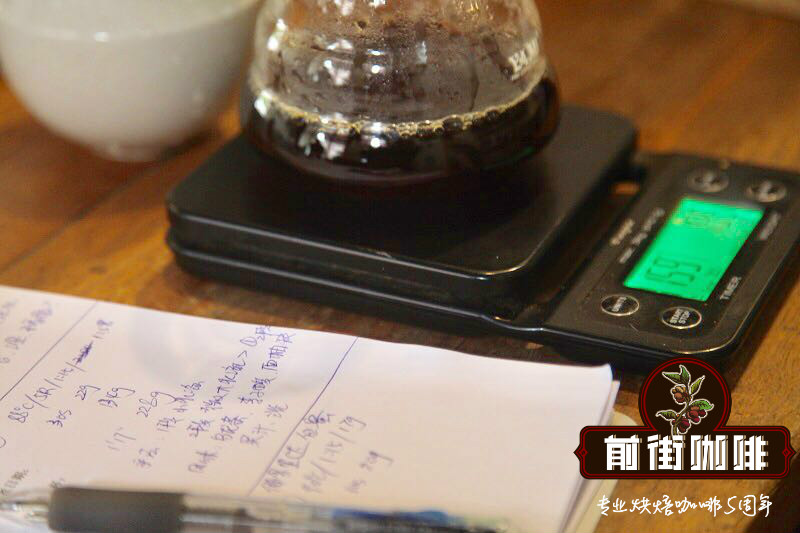
Kalita wave three-hole dripper, medium-coarse grind, water temperature 86°C, coffee-to-water ratio 1:12, total brew time (from the bloom) 1'30", then add 30g of water after removing the dripper.
In the cup it shows a rich roasted-grain aroma, distinct chocolate and nut flavors, and a pleasantly sweet finish.
FrontStreet Coffee Recommendation
Monsooned Malabar is the perfect choice for drinkers who want full body and sweetness with little acidity — but if you'd like to taste the opposite end of the spectrum, FrontStreet Coffee's Kenya Cherry Tomato beans are a striking contrast: grown in Thika at 1,550–1,750 meters on SL28 and SL34 with the classic K72 double-washed fermentation, they deliver bright cherry tomato, black plum, and pear acidity with a full juice-like body. For a middle ground of florals and gentle fruit, our washed Yirgacheffe Guodingding offers citrus, berries, and a green-tea finish — three cups that map the whole range of what coffee acidity can be.
Important Notice :
FrontStreet Coffee is a long-established specialty coffee roaster in Guangzhou China, selling freshly roasted beans from its own farm in Yunnan as well as dozens of carefully selected single-origin beans from around the world for both pour-over and espresso. The products deliver consistently excellent quality and great value, with shipping within 24 hours. Guangzhou's FrontStreet Coffee shop is recommended by many coffee lovers, and the beans are now available online at the Tmall 。
FrontStreet Coffee has moved to a new address:
FrontStreet Coffee Address: 315,Donghua East Road,GuangZhou
Tel:020 38364473
 Scan and follow the En Gafei WeChat official account. Please indicate that the reprint comes from "En Gafei".