What are the Flavor Characteristics of Indian Monsooned Coffee? How to Brew Indian Monsoon Malabar for the Best Taste?
The History of Coffee
Coffee's rise to the world's favorite beverage is surprisingly recent, it happened only after 1600, so coffee's recorded history spans merely 400 years. Africa is widely recognized as coffee's homeland: the plant originated in Ethiopia and spread worldwide through the port of Mocha in Yemen. To keep other countries from growing coffee, Arabs made sure every exported bean was hulled. But around 1600 came a clever scheme: Baba Budan, on a pilgrimage to Mecca, smuggled seven germinable coffee beans back to his home in southwestern India by hiding them in his belly. That moment began coffee's global spread, and that southwestern Indian region is today's Malabar area.
The Birth of Monsooned Coffee
Monsooned coffee was an accident of flavor. From the 17th to the 18th centuries, India shipped coffee to Europe by sailing ship, a six-month voyage. Stored in the hold, the raw beans absorbed moisture and salt from the sea air. By the time they reached Europe they had changed, from deep green to the yellowish-brown of rice grains. The fruity acidity had nearly vanished, yet rich nutty and grainy flavors had emerged, giving a full-bodied cup reminiscent of genmaicha (brown rice tea). Scandinavians in particular loved this distinctive golden coffee.
In 1869 the Suez Canal opened, and steamships cut the India-Europe voyage dramatically. Then customers began complaining that Indian coffee had "lost its flavor", the characteristic golden color and nutty taste were gone, and orders fell sharply. Exporters hunted for a cause and found it: the shortened voyage no longer let the beans "mature and transform" into their unique profile. So they recreated the conditions deliberately, using the saline, humid air along India's southwestern Malabar coast, where the Indian Ocean sends moist winds from late May to September. Through experimentation they reproduced the golden, low-acidity coffee of the sailing-ship era, naming it "Monsoon Coffee", commonly known as monsooned coffee.
Production Process
Today's monsooning starts with selecting high-quality green beans and moving them to coastal monsooning facilities. The beans are spread out to face the humid southwestern monsoon winds, with experienced workers turning them regularly for even exposure. The process runs anywhere from four to sixteen months, during which the beans swell to nearly twice their original size and turn yellowish-white, becoming the distinctive Indian Monsooned Malabar.
Monsooned coffee must be made from sun-dried beans. The monsooning facility faces west to catch the salty, humid monsoon, and the beans are spread evenly inside with all windows open. Once the monsooning has progressed far enough, the beans are bagged, but the bags must not be filled too full or stacked too densely, or poor air circulation invites mold. Workers periodically empty the beans and replace the jute bags to keep mold from taking hold: a labor-intensive, time-consuming process.
The monsooning period itself lasts about twelve to sixteen weeks. After maturation the beans are smoke-treated to eliminate weevils, then hand-sorted to remove any that haven't turned golden yellow. After three to four months of monsooning, the green beans have expanded to one to two times their original size, with reduced weight and density and a moisture content around 13%, significant changes in both quality and quantity.
Brewing Recommendations
FrontStreet Coffee suggests the following brewing parameters:
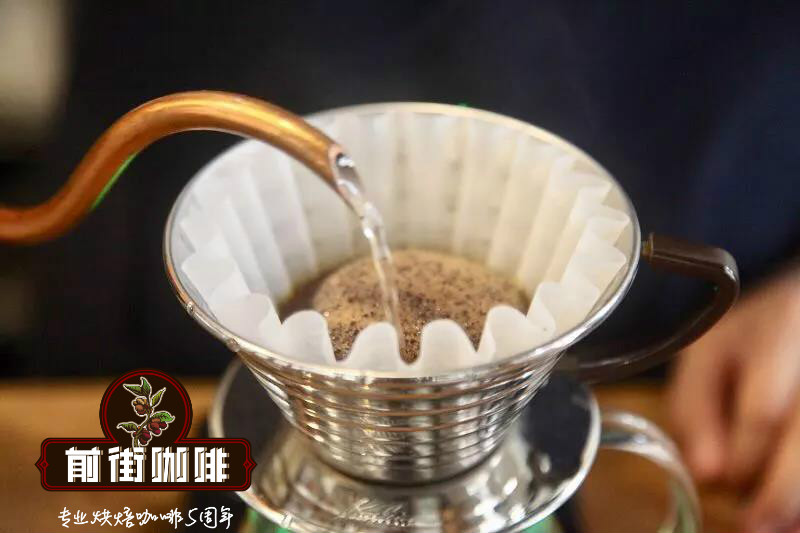
Kalita Wave trapezoidal three-hole dripper, medium-coarse grind, water temperature 86°C, coffee-to-water ratio 1:12, brewing time (starting from the bloom) 1'30", then add an additional 30g of water after removing the dripper.
Tasting Notes
Rich wheat-tea aroma, distinct chocolate and nutty flavors, and a notably sweet sensation.
FrontStreet Coffee Recommendation
Monsooned Malabar is a style all its own, low-acid, heavy, and mellow. If you'd like to taste the opposite end of the coffee spectrum, where brightness and florals live, FrontStreet Coffee's washed Yirgacheffe is the classic entry point to Ethiopia, the birthplace of coffee and home to countless native varieties. Yirgacheffe itself is a small town in southern Ethiopia with spring-like weather year-round, misty, cool, and humid, where thousands of coffee trees thrive, producing that signature interweaving of jasmine florals and bright citrus acidity, a light, elegant, tea-like body often compared to a clean, refreshing lemon tea. For a fruitier take, FrontStreet Coffee's natural Red Cherry from the Yirgacheffe Red Cherry Project shows peach, cocoa, honey, and lemon, thanks to two weeks of whole-fruit sun drying that lets the sugars infuse the bean. Both are medium-light roasts best enjoyed as pour-over with a gentle, segmented technique, the same low-agitation style that keeps the Monsooned Malabar above smooth will also show off the delicate florals of these Ethiopians.
Important Notice :
FrontStreet Coffee is a long-established specialty coffee roaster in Guangzhou China, selling freshly roasted beans from its own farm in Yunnan as well as dozens of carefully selected single-origin beans from around the world for both pour-over and espresso. The products deliver consistently excellent quality and great value, with shipping within 24 hours. Guangzhou's FrontStreet Coffee shop is recommended by many coffee lovers, and the beans are now available online at the Tmall 。
FrontStreet Coffee has moved to a new address:
FrontStreet Coffee Address: 315,Donghua East Road,GuangZhou
Tel:020 38364473
 Scan and follow the En Gafei WeChat official account. Please indicate that the reprint comes from "En Gafei".