Is Geisha the Best and Most Expensive Coffee in Panama? Panama Coffee Bean Characteristics and Stories

Geisha vs. Blue Mountain: Which Coffee Reigns Supreme?
Blue Mountain coffee has long been celebrated as one of the most aromatic and refined coffees in the world — and one of the most expensive. But here is a question that surprises many coffee lovers: Geisha coffee routinely commands even higher prices. Does that mean Geisha actually tastes better than Blue Mountain? At FrontStreet Coffee, our answer is a bit more nuanced.
It is not that Geisha tastes "better" than Blue Mountain; the two varieties offer completely different flavor profiles, and both are exceptional in their own right. In fact, FrontStreet Coffee does not actively push Geisha on first-time visitors. Geisha rewards drinkers who already understand coffee — if you start at the very top, everything else afterward can seem ordinary. We advocate a progressive tasting journey: building a mental map of coffee flavors step by step helps you appreciate just how vast the coffee world really is. And, frankly, Geisha is expensive — so unless a customer specifically asks for it, we let them discover it in their own time.

Where Did Geisha Come From?
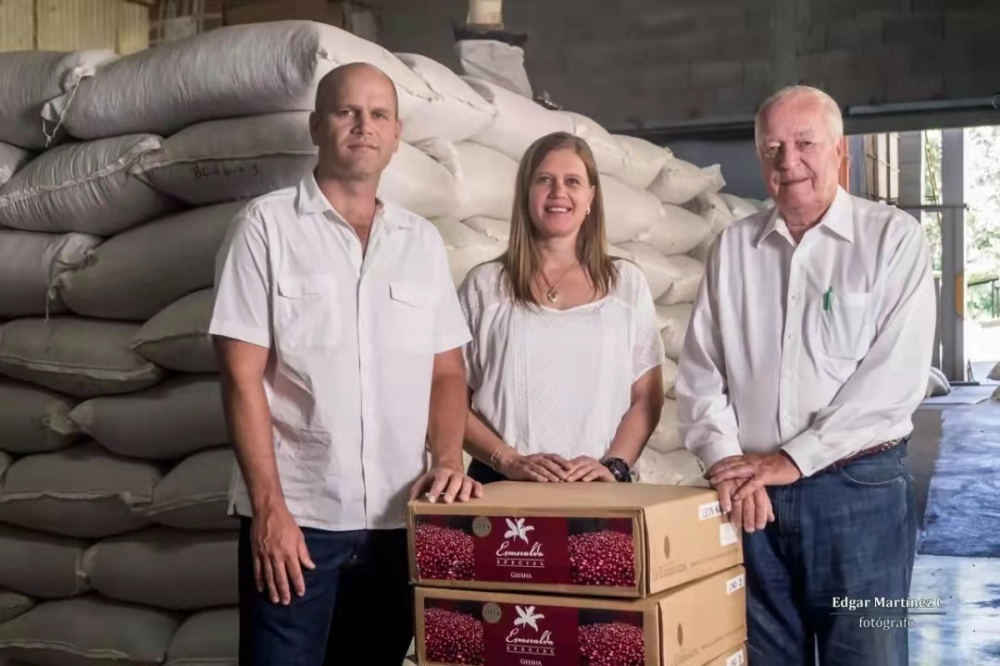
Geisha originates in Ethiopia. Because the trees grow tall and yield poorly, locals originally used them as windbreak trees. It took the Peterson family of Panama's Hacienda La Esmeralda to discover what this variety was truly capable of — and once they did, the coffee world changed forever.

In 1931, seeds were quietly collected from the Geisha mountain in southwestern Ethiopia and shipped to Kenya, Tanzania, and Costa Rica. Only in the 1960s did the variety reach Panama. Then, after nearly half a century of obscurity, it made a spectacular debut, soundly beating the perennial champions of the coffee world — Bourbon, Caturra, Catuai, and Typica. Geisha swept the gold medals at the Panama Cup of Excellence in 2005, 2006, and 2007. In 2007, at the international Best of Panama auction organized by the Specialty Coffee Association of America (SCAA), Geisha won again, with winning bids reaching $130 per pound — a record price for competition lots at the time.
According to what FrontStreet Coffee has learned, later editions of the Panama competition were split into Geisha and non-Geisha categories, precisely so Geisha would stop stealing the spotlight from every other variety on the table.
The Boquete Growing Region
Hacienda La Esmeralda became famous on the strength of this variety, and to this day, any mention of Geisha immediately brings Esmeralda to mind — often overshadowing the other excellent farms growing it. So let us back up and look at the wider Boquete region, where much of Panama's finest coffee is grown.
Coffee flavor depends not only on variety but also on climate and terroir. FrontStreet Coffee has noticed something peculiar about Geisha: it performs best in extreme environments. Boquete sits at coffee-growing altitudes of 1,400 to 1,900 meters, a town in Chiriquí Province near the Costa Rican border, in the shadow of the famous Barú Volcano. With its gorgeous scenery, rich volcanic soil, and a climate seemingly tailor-made for quality coffee, Boquete is home to many outstanding estates — besides Hacienda La Esmeralda, farms like Elida Estate and Kotowa Duncan Estate also produce exceptional specialty coffees.

Credit belongs not only to Boquete's mild climate and the fertile volcanic ash around Barú Volcano, but also to the region's remarkably varied microclimates. Panama's east–west orientation lets cool air currents converge through the central mountain corridor at altitudes between 1,200 and 2,000 meters. Mountain fog and rain, together with shifting wind patterns, generate multiple microclimates across Boquete, keeping temperature and rainfall ideally suited to plant growth. Coffee trees planted here simply thrive.
Esmeralda Geisha: Red Label, Green Label, and Blue Label
Hacienda La Esmeralda grades its Geisha with a strict, plot-by-plot system. You have probably heard of Blue Label, Green Label, and Red Label Geisha. After winning the Panama "Best of Panama" (BOP) competition in 2004 and making a spectacular impact, experts identified the winning beans as the Ethiopian Geisha variety. From then on, the Peterson family poured most of their energy into infrastructure that would support meticulous lot separation and fine processing. In pursuit of precision, the estate cupped beans from different plots separately and defined its planting zones by altitude.
Esmeralda Special (Red Label)
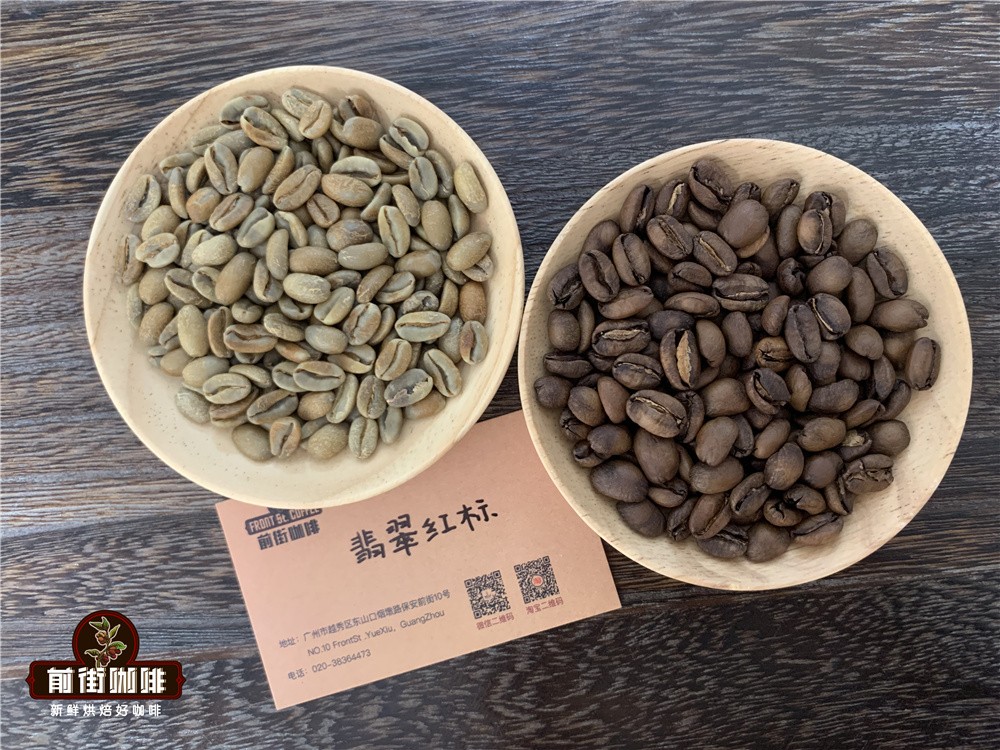
Esmeralda Special is what the trade commonly calls Red Label Geisha. It comes from trees grown at 1,600–1,800 meters in the Jaramillo and Cañas Verdes zones, cupping above 90 points. This is the lot selected for Esmeralda's own independent auction from its divided plots, processed as either natural or washed, with a cup defined by strikingly bright florals and citrus.
Private Reserve (Green Label)
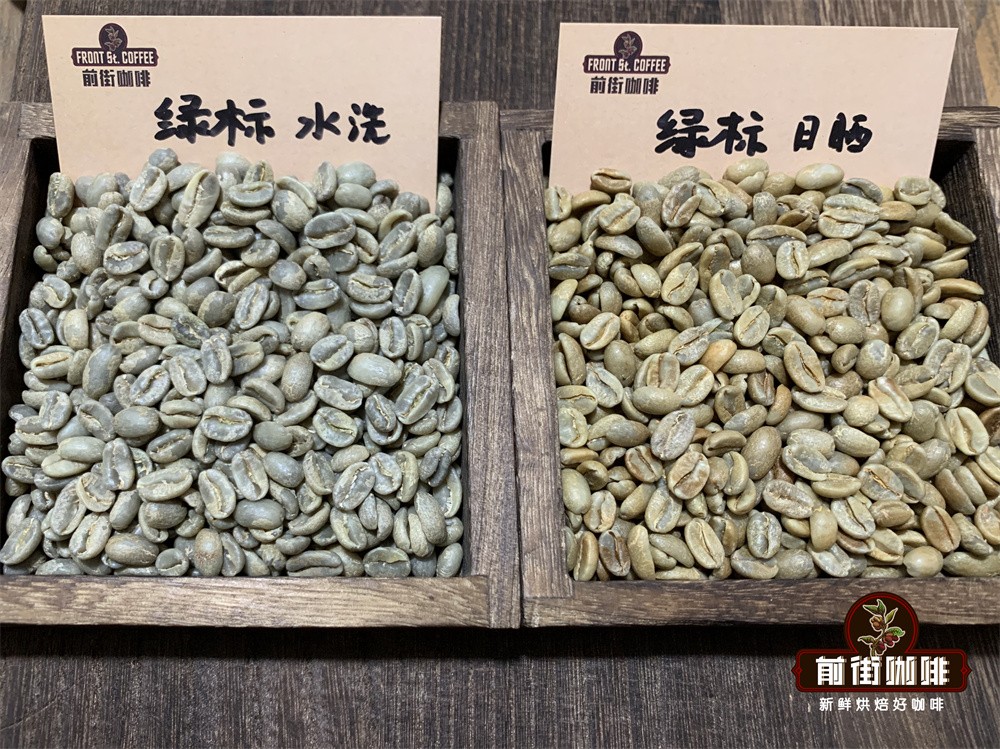
Private Reserve — the Green Label — draws on Geisha micro-lots from plots such as Jaramillo and Cañas Verdes. These are not auction competition lots, but the quality remains outstanding. Because it is not labeled by specific plot, one batch of Green Label can taste remarkably close to Red Label, while the next batch may differ. Though a step below Red Label in grade, Green Label still delivers Geisha's classic signature: florals, fruit, citrus acidity, and a thick, juicy texture. Both washed and natural versions exist.

Geisha 1500 (Blue Label)
Blue Label Geisha comes from trees grown at 1,400–1,500 meters, blended across three plots: Jaramillo, Cañas Verdes, and El Velo. The cup shows delicate florals, fruity acidity, and sweetness, with a lighter body than its siblings. Blue Label was historically washed-processed only, though a natural version was added with the 2020 harvest.
Currently, the most expensive coffee on FrontStreet Coffee's menu is the Esmeralda Red Label Geisha. For drinkers who want a taste of Geisha character without the flagship price, though, FrontStreet Coffee has a go-to suggestion: Mariposa, also from Panama's Boquete region. Mariposa combines three varieties — Geisha, Caturra, and Catuai — grown at 1,600 meters on the slopes of Barú Volcano. It is traditionally cultivated and harvested by smallholder farmers in cooperatives and processed with precise washed methods.

Panama's special microclimate — abundant rainfall, wide day–night temperature swings, and the unique volcanic soils of the Barú area — combined with meticulous harvesting and careful processing, gives this coffee an outstanding body, lively acidity, and pronounced florals. The result is an elegant, refined cup that is hard to forget once tasted. Better still, its approachable price makes it remarkably good value. Its defining feature is the Geisha component: roughly 70% Geisha blended with 30% Caturra and Catuai, which gives the cup a distinctly Geisha-like character. Mariposa has won over many of FrontStreet Coffee's regulars with its delicate florals, citrus-berry notes, and long, sweet finish — and when regulars learn about that blend ratio, they usually give a knowing nod. After all, ever since Hacienda La Esmeralda took the 2004 Panama Best of Panama title with Geisha, the variety has been regarded by many as the most valuable coffee in the world, bar none.

How FrontStreet Coffee Brews Geisha
How should you brew something this elegant? Geisha beans are dense and tend to sink and clog the drainage holes of a dripper, so we grind to a size where roughly 80% of the grounds pass through a Chinese standard #20 sieve (about the texture of fine granulated sugar). FrontStreet Coffee doses 15g of coffee into a Hario V60, with a brewing ratio of 1:15. The extra water helps sustain extraction while bringing the total dissolved concentration down to about 1.15% — the sweet spot where a coffee's finest qualities show themselves. We use water at 91°C.
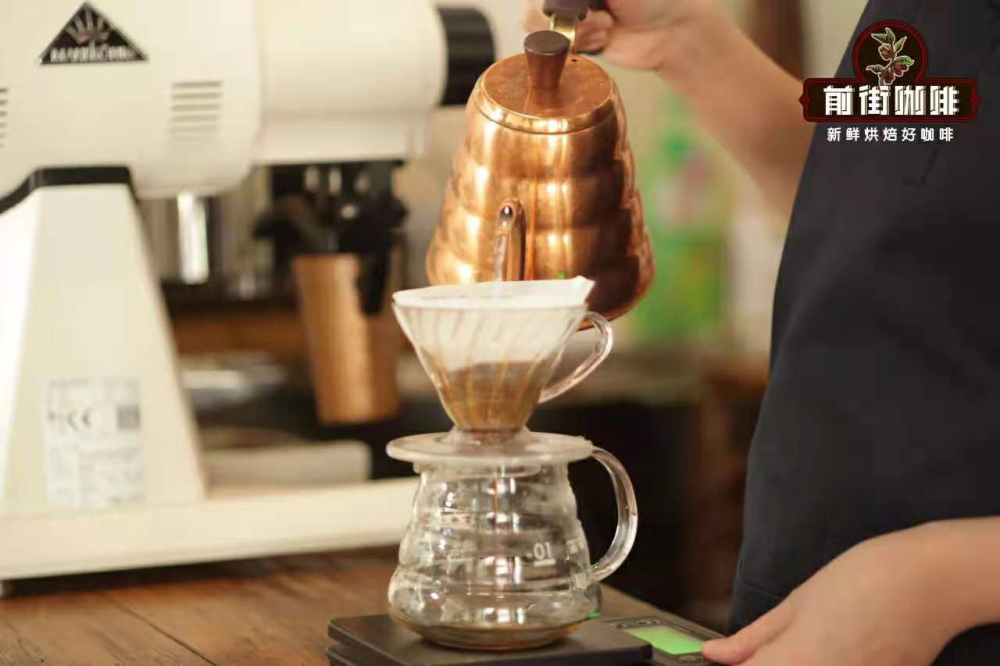
FrontStreet Coffee tasting notes — Panama Hacienda La Esmeralda Red Label Geisha:
Bright rose and citrus aromatics, brown rice, berries, apricot, layered complex fruit, honey, and a thick, juice-like body with rich flavor depth and pronounced sweetness.
FrontStreet Coffee tasting notes — Panama Hacienda La Esmeralda Green Label Geisha:
Intense jasmine florals, high sweetness, citrus, berries, a juice-like body, cream, green tea, orange peel, and cantaloupe — deep, layered flavor with a lingering floral-and-citrus finish.
FrontStreet Coffee tasting notes — Panama Washed Mariposa:
Jasmine florals, citrus, and green tea on the entry, with a sugarcane-sweet finish and a clean, transparent mouthfeel that reads as refreshing and light.

A Final Word on Freshness
To experience a coffee's full range of flavors, always brew freshly roasted beans. Every bean FrontStreet Coffee ships is roasted within the previous 5 days, because we know how profoundly freshness shapes flavor. Our roasting philosophy is simple — "freshly roasted, good coffee" — so that every order arrives at peak flavor after a resting period of roughly 4–7 days.

If you would rather have us grind the beans for you, that is fine too — but one caveat. Pre-ground coffee needs no resting period: during transit, the pressure of built-up carbon dioxide in the bag actually helps round out the flavors, so you can brew a cup the moment it arrives. However, grounds must be brewed promptly, because once coffee hits the air it oxidizes quickly and its flavors dissipate fast. That is why FrontStreet Coffee always recommends buying whole beans and grinding fresh for every brew.
FrontStreet Coffee Recommendation
If Geisha's price tag gives you pause but you still want a legendary cup, FrontStreet Coffee's Jamaica Blue Mountain No.1 deserves a place on your brew table. Blue Mountain is one of the few names in coffee that even non-drinkers recognize, and No.1 is the highest grade of Jamaica Blue Mountain — defined by strict standards for bean size, defect count, and overall quality. Genuine Blue Mountain coffee is shipped in its iconic wooden barrels (in 15kg, 45kg, and 70kg sizes) rather than jute bags, and the barrels themselves are a hallmark of authenticity, so look for a roaster who can show full export certification and proof of origin alongside them.
What makes Blue Mountain so beloved is its balance. Authentic Jamaica Blue Mountain coffee shows almost no weakness: no harsh fruit acidity, no heavy roasty bitterness, just an exquisite equilibrium of cream, caramel, chocolate, nuts, honey, and a whisper of fruit. The entry is soft and round, the mid-palate richly sweet, and the finish clean and long — which is why so many professionals call it the easiest specialty coffee for almost anyone to love.
To brew it well, FrontStreet Coffee suggests a Kono dripper to accentuate the coffee's body, 15g of coffee with a 1:15 water ratio, a medium-coarse grind slightly coarser than you would use for light roasts (around white-sugar grit), and water at 87–88°C — hotter water is the most common cause of scorched, bitter cups. Rest the beans 4–7 days from the roast date before brewing. Pour in three stages: 30g of water to bloom for 30 seconds, then up to 120g with a slow, steady spiral, then up to 225g with a slightly faster pour to keep the bed from clogging and over-extracting. The reward is a classically structured cup where sweetness, gentle acidity, and mellow bitterness fall perfectly into line.
Important Notice :
FrontStreet Coffee is a long-established specialty coffee roaster in Guangzhou China, selling freshly roasted beans from its own farm in Yunnan as well as dozens of carefully selected single-origin beans from around the world for both pour-over and espresso. The products deliver consistently excellent quality and great value, with shipping within 24 hours. Guangzhou's FrontStreet Coffee shop is recommended by many coffee lovers, and the beans are now available online at the Tmall 。
FrontStreet Coffee has moved to a new address:
FrontStreet Coffee Address: 315,Donghua East Road,GuangZhou
Tel:020 38364473
 Scan and follow the En Gafei WeChat official account. Please indicate that the reprint comes from "En Gafei".