How to Make a Latte: Standard Espresso Shot to Milk Ratio for Perfect Lattes

A coffee enthusiast recently asked FrontStreet Coffee: with the same beans, the same grind, and the same dose, should the espresso brew ratio change depending on whether you're making a milk coffee, an Americano, or drinking it straight? So FrontStreet Coffee's barista ran a comparison of espressos at different brew ratios in lattes and Americanos. Below, FrontStreet Coffee shares the production ratios for lattes, Americanos, and straight espresso.
Latte Preparation Ratios:
For this experiment, FrontStreet Coffee used its regular latte cup with a capacity of 180ml.
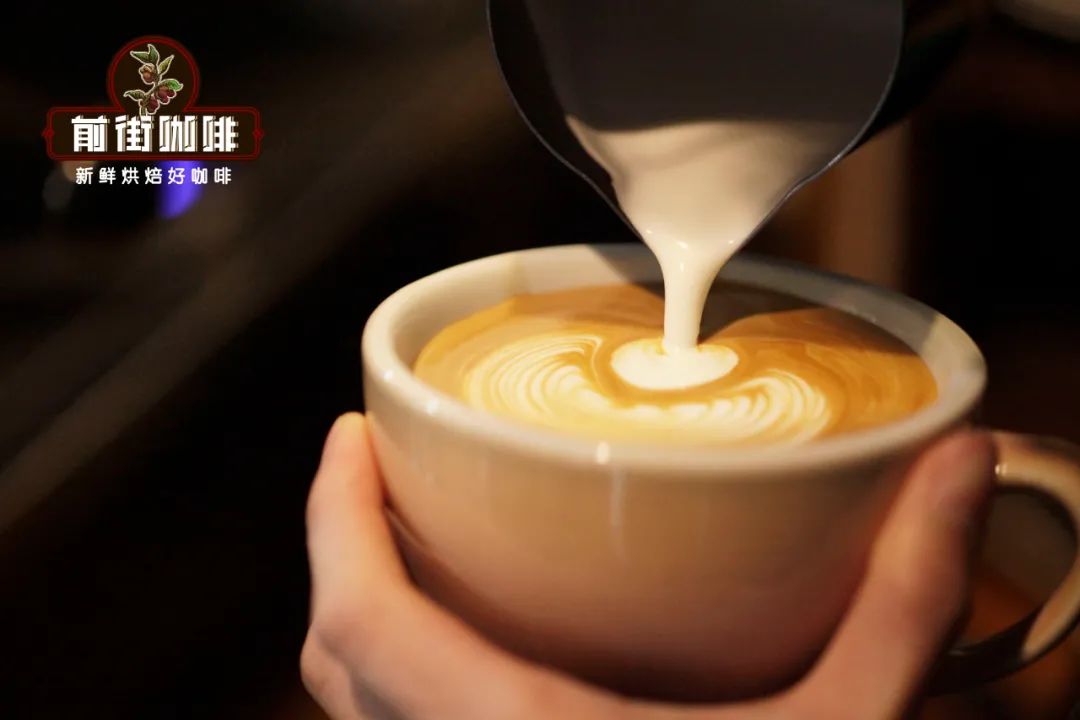
The beans were the FrontStreet Premium Blend, combining Colombian and Brazilian coffee. Grind size was 1.9 on the Faema 900N. Using a single portafilter, espresso was made with a 13-gram dose, testing three brew ratios: 1:1, 1:1.5, and 1:2.

Now let's see how the three ratios taste straight, and how they perform in milk coffee and Americanos.
Brew Ratio 1:1 — 13 grams of coffee extracted to 13 grams of liquid, extraction time: 19 seconds
[Espresso] Smooth entry with slightly elevated acidity, featuring cream and nut flavors and a lasting sugarcane aftertaste.
[Latte] Distinct nutty aroma, with flavors of nuts, chocolate, and cream, plus a subtle butter-cookie note. The milk's sweetness comes through clearly.
[Americano] Caramel aroma, smooth entry and silky texture, with red berry flavors.
Brew Ratio 1:1.5

13 grams of coffee extracted to 20 grams of liquid, extraction time: 27 seconds
[Espresso] Berry acidity at entry, with chocolate and hazelnut in the middle and a lasting aftertaste.
[Latte] Caramel aroma, with cream, milk chocolate, and slight nut flavors. The balance between milk and coffee is quite harmonious.
[Americano] Slight berry-like acidity at entry, with noticeable sugarcane sweetness in the finish.

Brew Ratio 1:2 — 13 grams of coffee extracted to 26 grams of liquid, extraction time: 34 seconds
[Espresso] Cream-like sweetness at entry, clean aftertaste with some rock-sugar sweetness, and a noticeable smoky finish.
[Latte] Light at entry but with toffee sweetness, and cinnamon and woody notes in the aftertaste.
[Americano] Some woody aroma, with cocoa and woody flavors.
Summary
Through this hands-on experiment, FrontStreet Coffee found that espresso at a smaller brew ratio tastes more acidic straight, but turns quite sweet with milk added, and also makes a very smooth Americano. The reason, FrontStreet Coffee believes, is that a smaller brew ratio shortens extraction time, pulling mainly the early-stage compounds and making over-extraction unlikely. And with less espresso in the cup, the proportion of milk increases for the same final volume, which amplifies sweetness.

The larger-ratio espresso tastes light at entry with apparent sweetness, but woody and smoky flavors appear quickly. The same holds in a latte—light and sweet at first, then the woodiness surfaces. As an Americano, the over-extracted woody flavor is immediately obvious.
The 1:1.5 ratio offers relatively richer flavor layers in both espresso and Americano, and as a latte the milk-coffee balance is harmonious—neither the coffee overpowering the milk nor the milk stealing the coffee's spotlight.
FrontStreet Coffee has noted in previous articles that the beginning of an espresso extraction carries higher acidity and concentration, while the middle stage brings noticeable sweetness as flavor begins to fade. A larger brew ratio therefore pushes further into over-extraction territory.

Using FrontStreet Coffee's Premium Blend and parameters as an example, without touching the grind: for a latte with prominent sweetness or a smoother Americano, try the 1:1 ratio. For a richly layered espresso or Americano, or a more balanced latte, go with 1:1.5.
What Coffee Beans to Use for Espresso?
Since all three drinks above start with espresso, which beans make the best shots?

Anyone who knows espresso machines knows they amplify a bean's inherent character. That's why FrontStreet Coffee doesn't recommend single-origin beans for espresso, preferring espresso blends. A blend mixes beans from different origins and varieties—typically two or three types—with an obvious purpose: to gather complementary flavors into a new, more balanced profile that also becomes the shop's signature.
For example, if one bean is smooth but shy on aroma, you can add another fragrant bean so they cover each other's weaknesses. Blends also help control cost. Traditional espresso blends mix in Robusta because Robusta brings mellow richness: its cupping score may not match single origins, but paired with Arabica it delivers richer, thicker crema and a dense, smooth base that carries milk coffees beautifully.

That consistency is another reason espresso lovers love blends. Coffee is an agricultural product, and flavors swing year to year with climate—sweeter this year, less so next. Blending several beans smooths out those swings and keeps the flavor consistent year after year.
Above is FrontStreet Coffee's rundown of latte preparation ratios and espresso brew ratios. We hope this article helps answer your questions and clears up your doubts.
FrontStreet Coffee Recommendation
FrontStreet Coffee's Premium Blend pairs Brazilian Cerrado with Colombian Huila, and the Brazilian half is worth understanding on its own. Brazil is the world's largest coffee producer, and its farms' sun-exposed cultivation ripens the cherries quickly, giving the beans a soft structure, gentle acidity, and excellent sweetness—smooth, delicate, and balanced in the cup. That low-acid, balanced profile is exactly why Brazilian beans anchor so many espresso blends: they contribute chocolate and cream aromas, a comfortable sweet-bitter roundness, and a steadier extraction.
If you want to taste Brazil solo, FrontStreet Coffee's Pulped Natural Cerrado Red Bourbon is the classic choice—at a medium roast it shows cream and peanut, toasted bread, caramel, and hazelnut, round and non-acidic with only a slight bitter edge, and it performs across pour-over, moka pot, espresso SOE, siphon, and French press. For something more distinctive, FrontStreet Coffee's Fazenda Rainha (Queen Estate) Yellow Bourbon from Mogiana's fertile red volcanic soil adds a sugarcane sweetness rarely found elsewhere, alongside fruity and chocolate notes—equally lovely brewed straight or with milk.
Important Notice :
FrontStreet Coffee is a long-established specialty coffee roaster in Guangzhou China, selling freshly roasted beans from its own farm in Yunnan as well as dozens of carefully selected single-origin beans from around the world for both pour-over and espresso. The products deliver consistently excellent quality and great value, with shipping within 24 hours. Guangzhou's FrontStreet Coffee shop is recommended by many coffee lovers, and the beans are now available online at the Tmall 。
FrontStreet Coffee has moved to a new address:
FrontStreet Coffee Address: 315,Donghua East Road,GuangZhou
Tel:020 38364473
 Scan and follow the En Gafei WeChat official account. Please indicate that the reprint comes from "En Gafei".