The Three Major Coffee Merchants of Jamaica Blue Mountain Coffee How to Best Brew Jamaica Blue Mountain Coffee?

Blue Mountain Coffee: The World's Finest Coffee
Blue Mountain Coffee is the world's most superior coffee. The Blue Mountains lie in eastern Jamaica. When the weather is clear, the sun shines directly on the azure Caribbean Sea, and the peaks reflect the brilliant blue light of the seawater, hence the name.
The highest peak of the Blue Mountains reaches an elevation of 2,256 meters, making it the highest peak in the Caribbean region and a famous tourist destination. This area sits in the coffee belt, with fertile volcanic soil, fresh, pollution-free air, and a humid climate with year-round fog and rain. Such conditions have created the world-renowned Jamaican Blue Mountain Coffee, as well as the world's most expensive coffee.
Blue Mountain Coffee possesses all the characteristics of fine coffee. Not only is it rich and mellow in flavor, but thanks to a perfect balance of sweetness, acidity, and bitterness it has no harsh bitterness at all, only a moderate and perfect acidity. It is usually drunk as a single-origin coffee, but because its production is extremely limited and its price incredibly high, it is often prepared with coffees of similar taste.
The Secrets of Blue Mountain Coffee
The "secret" behind Blue Mountain Coffee's pure flavor: all the coffee trees grow on rugged mountain slopes, making harvesting extremely difficult. Only skilled local women workers can handle the task. It is crucial to select perfectly ripe cherries during harvesting, since underripe or overripe beans affect coffee quality. After harvesting, the beans must be hulled the same day, then fermented for 12 to 18 hours. Following this, the beans are washed and screened. The next step is drying, which must be done on concrete floors or thick blankets until the beans' moisture content drops to 12%-14%. They are then stored in dedicated warehouses, and when needed, taken out for roasting and grinding. These procedures must be strictly controlled, or coffee quality suffers.
Jamaica has three major coffee merchants: Wallenford, Mavis Bank, and Coffee Traders Limited, led by brothers Richard and Jason Sharp.
Blue Mountain is a hillside area in Jamaica with relatively low elevation and relatively infertile soil. It previously exported mainly to Britain. Since the Japanese economy took off in the 1980s, Blue Mountain Coffee, with its smooth and elegant flavor, low acidity, and candy-like taste, gradually became monopolized. According to the Jamaican Ministry of Agriculture website, the country's coffee exports are government-regulated, and both suppliers and roasters must apply for certification. Blue Mountain Coffee is valuable not because of its outstanding flavor, but because of its rigorous defect screening: before export, each batch must undergo cupping evaluation. However, as coffee-producing countries with superior geographical environments have successively introduced cupping systems to control quality, Jamaica's selling points are no longer unique.
FrontStreet Coffee's Blue Mountain Coffee Brewing Recommendations
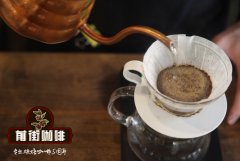
FrontStreet Coffee recommends using a KONO or KALITA dripper for brewing Blue Mountain Coffee. Because of the immersion extraction method, you can achieve a rich mouthfeel and flavors of dark chocolate and nuts.
Since Blue Mountain Coffee is typically roasted to a darker degree, we recommend brewing at 84-86°C with a slightly coarser grind size and keeping the brewing time to around 1 minute and 40 seconds.
FrontStreet Coffee Recommendation
Jamaica's Blue Mountain region produces less than 2,500 tons a year, and Japan has historically bought more than 70% of it, so the supply reaching the rest of the world is limited. Since 2003, Jamaican Blue Mountain green beans have been exported officially to China, so certified beans can now be bought through regular channels. Blue Mountain No.1 is one of the highest grades, and FrontStreet Coffee's Jamaica Blue Mountain No.1 comes from the historic Clifton estate, where coffee has been grown since around 1750 at an average of 4,300 feet (1,310.64 meters).
Traditional Blue Mountain is shipped in wooden barrels of 15 kg, 45 kg, and 70 kg, each stamped with batch details, and authentic beans are uniform, plump, with slightly upturned ends and a greenish color. FrontStreet Coffee roasts its Blue Mountain to a medium-dark level, bringing out the classic balance of nut, dark chocolate, creamy caramel, and gentle sweetness, layered evenly across acidity, sweetness, bitterness, and aroma.
For brewing, pour-over is the best way to appreciate the fine layers and lingering sweetness. FrontStreet Coffee suggests a 1:15 to 1:16 coffee-to-water ratio, 85-88°C water, and a medium-coarse grind, which highlights the creamy, caramel, and nutty notes while keeping the soft, bright sweet-and-sour quality. A moka pot, using a slightly finer grind, hot water in the base, and medium-low heat, brings out more chocolate, caramel, and nut depth and also works well as a latte or flat white base.
Important Notice :
FrontStreet Coffee is a long-established specialty coffee roaster in Guangzhou China, selling freshly roasted beans from its own farm in Yunnan as well as dozens of carefully selected single-origin beans from around the world for both pour-over and espresso. The products deliver consistently excellent quality and great value, with shipping within 24 hours. Guangzhou's FrontStreet Coffee shop is recommended by many coffee lovers, and the beans are now available online at the Tmall 。
FrontStreet Coffee has moved to a new address:
FrontStreet Coffee Address: 315,Donghua East Road,GuangZhou
Tel:020 38364473
 Scan and follow the En Gafei WeChat official account. Please indicate that the reprint comes from "En Gafei".