
Characteristics and Flavor Profile of Brazilian Coffee: An Introduction to Growing Regions, Varieties, and Classification System

Understanding Brazilian Coffee: Beyond the Common Perception
Among FrontStreet Coffee's regular customers, discussions often revolve around which coffee tastes better and which country produces higher-quality coffee. Some customers believe Indonesia's PWN Golden Mandheling tastes best; others prefer Costa Rican honey-processed beans, like the Musician series coffee available at FrontStreet Coffee. There are also customers who enjoy the Colombian Huila and Rose Valley available at FrontStreet Coffee. Everyone has their own opinion, but many tend to think Brazilian coffee quality isn't particularly good.

An Introduction to Brazilian Coffee
So today, FrontStreet Coffee would like to introduce coffee from Brazil. Brazilian coffee has always been quite conventional—not particularly outstanding, yet you can't point out what's wrong with it either; it's simply a cup of authentic coffee. Brazilian coffee lacks Indonesia's unique herbal, medicinal notes and doesn't have the lemon-citrus tones of Ethiopian Yirgacheffe, yet Brazil's coffee export volume is among the top three in the world.
Principal Coffee Varieties in Brazil
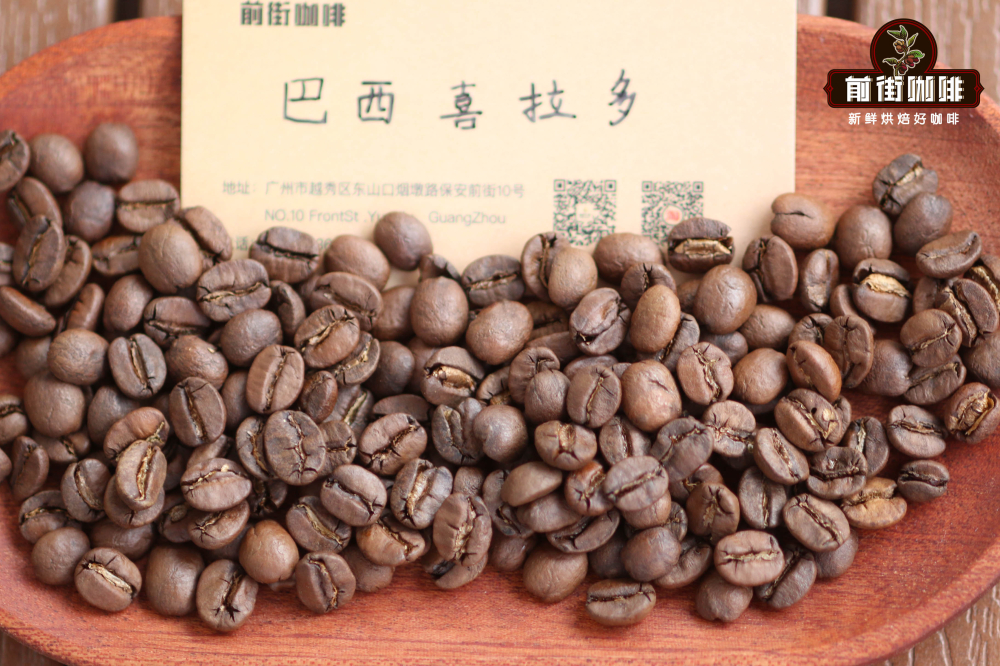
The main coffee varieties in Brazil are primarily Bourbon, Mundo Novo and Catuai. Yellow Bourbon is generally grown only in Brazil, like the Brazil Queen Estate coffee beans available at FrontStreet Coffee, which are of the Yellow Bourbon variety. Both Bourbon and Typica are relatively ancient varieties, but Brazilian Bourbon has higher yields, rounder beans, berry-like acidity, richness and very noticeable cream aromas. Bourbon's disease resistance, however, is relatively poor.

Environmental Influence on Brazilian Coffee Flavor
Of course, as FrontStreet Coffee mentioned in previous articles, coffee flavor is influenced by many factors, such as terrain and altitude. Brazilian coffee flavor is largely determined by its topography. Brazil's terrain is relatively flat, with plateaus above 500 meters and plains below 200 meters. Altitude has a significant impact on coffee beans: the higher the altitude, the denser and harder the beans, which benefits the storage and formation of flavor.
For example, Colombian coffee is grown on mountain slopes above 1,000 meters. The high altitude and significant day-night temperature differences favor sugar accumulation, so Colombian nut and chocolate flavors are much more pronounced than in Brazilian coffee from the Americas. However, like the Brazil Red Fruit available at FrontStreet Coffee, besides nut and chocolate flavors it also has peanut and cream flavors that Colombian coffee lacks.
Brazil's Coffee Growing History and Regions
Brazil's coffee cultivation began in 1720. Producing regions such as Minas Gerais, São Paulo, Bahia and Espírito Santo are crucial because these four regions account for 90% of Brazil's national export volume. FrontStreet Coffee understands that the Cerrado and South Minas regions within Minas Gerais have higher altitudes than other Brazilian regions, so the coffee produced there is of better quality. The northern part of Espírito Santo, by contrast, has relatively low altitude, which is not conducive to flavor formation, so only commercial Robusta beans are grown there.
Innovative Processing Methods
FrontStreet Coffee has discussed coffee processing methods in many articles. Because Brazil's coffee production is very large, conventional washed methods simply cannot keep up with the processing volume. Brazil therefore pioneered the pulped natural method. They use water tanks to remove defects and floating beans, then remove the skin and pulp with machines while retaining the mucilage for direct sun-drying or drying rooms. Compared with the washed method, pulped natural saves water and labor, which has significantly improved the quality of Brazilian coffee, reversing years of negative reputation for rough Brazilian coffee.

Roasting Challenges and Considerations
FrontStreet Coffee also understands that if pulped natural processing is not done well, an earthy taste can develop while the cherries dry, or poor roasting can amplify that earthy flavor. This requires roasters to pay close attention to heat and temperature during roasting. When FrontStreet Coffee's roaster roasts Brazil Queen Estate, because natural processing is used, the moisture content in these green beans is relatively low, which causes the beans to absorb heat during roasting; this greatly tests the roaster's attention to heat and internal drum temperature.
Queen Estate: A Standout Brazilian Coffee
When FrontStreet Coffee's barista cupped this bean, they found rich nut flavors, with obvious chocolate notes in the aftertaste, and an overall rounded character—a coffee that represents the general characteristics of Brazilian coffee very well. So don't underestimate Brazilian beans. Brazil's Queen Estate is quite renowned; it belongs to the Carvalho Dias family's coffee estates and is considered a leader in Brazilian coffee, continuously promoting the development of Brazilian specialty coffee. As FrontStreet Coffee understands, it consistently wins awards in Brazilian coffee competitions, while beans produced by other Brazilian estates are of quite ordinary quality.

Brazilian Coffee in Blends
Beans produced in other parts of Brazil have relatively plain flavors, without excessive bitterness or acidity, making them very suitable for blends. FrontStreet Coffee also uses Brazilian beans for bold experiments. FrontStreet Coffee's specialty blend uses Brazilian coffee blended with Colombian coffee in a 7:3 ratio. This espresso blend is overall very balanced, with rich crema and a smooth entry, and is very popular among FrontStreet Coffee's customers.

The Brazilian Coffee Industry Perspective
In the eyes of some Brazilian growers, if other economic crops like sugarcane and corn are more profitable than coffee, they might not grow coffee. They don't quite understand the so-called "specialty coffee concept," and because they rarely harvest cherries by hand—generally using machine harvesting—Brazil's coffee agriculture has basically achieved mechanization. Brazilian coffee generally follows a "pick first, sort later" approach, which actually makes quality quite inconsistent, though this business model also saves a lot of labor costs.
Looking Forward: The Future of Brazilian Coffee
FrontStreet Coffee believes, however, that as a major coffee exporting country, Brazilian coffee cannot be generalized. Brazil also has many specialty coffee lovers, and beans produced by estates like Queen Estate are very popular. So everyone should view Brazilian coffee with a long-term perspective.
FrontStreet Coffee Recommendation
This article notes that Brazilian coffee lacks the lemon-citrus tones of Ethiopian Yirgacheffe—and if that contrast has made you curious about the Yirgacheffe reference point, FrontStreet Coffee's range is the place to try it. FrontStreet Coffee's washed Yirgacheffe is the classic daily bean: white jasmine, bright citrus and lemon acidity and a clean tea-like body, at a friendly price, and it has become many drinkers' first specialty coffee. To taste the cooperative model behind the region, FrontStreet Coffee's washed Gotiti Cooperative coffee comes from the Worka area at the southeastern edge of Yirgacheffe—originally part of the YCFCU Worka cooperative before becoming independent—with jasmine, citrus and berry notes and a refined, tea-like mouthfeel. And for the fruitier, natural side, FrontStreet Coffee's Natural Red Cherry uses whole ripe red cherries dried on raised beds for three to five weeks, delivering tropical fruit aroma with citrus acidity, berry juiciness, honey sweetness and a creamy texture. Set against the balanced, nutty Brazilian cup this article describes, they are the brightest possible contrast within one origin-focused tasting.
Important Notice :
FrontStreet Coffee is a long-established specialty coffee roaster in Guangzhou China, selling freshly roasted beans from its own farm in Yunnan as well as dozens of carefully selected single-origin beans from around the world for both pour-over and espresso. The products deliver consistently excellent quality and great value, with shipping within 24 hours. Guangzhou's FrontStreet Coffee shop is recommended by many coffee lovers, and the beans are now available online at the Tmall 。
FrontStreet Coffee has moved to a new address:
FrontStreet Coffee Address: 315,Donghua East Road,GuangZhou
Tel:020 38364473
 Scan and follow the En Gafei WeChat official account. Please indicate that the reprint comes from "En Gafei".

