What Are Aged Coffee Beans and the Characteristics of Sumatra Aged Mandheling Coffee

How Aged Beans Are Processed
“Aged coffee” does not mean coffee that has simply been left lying around for a long time. That approach does not work, because green coffee keeps changing with age: it fades from a fresh green to white, then to yellow, loses its flavor and aroma, and may even attract insects. Just as with fine wine, the green beans have to go through deliberate processing and long-term storage before they earn the name “aged coffee.”

The best-known coffee-growing region in Asia is the Malay Archipelago — above all the islands of Sumatra, Java, and Kalimantan. Among them, Mandheling from Sumatra, Indonesia, stands out. It comes in two celebrated forms: Sumatra Mandheling DP Grade 1 and Classic Sumatra Mandheling. Sumatra Mandheling DP Grade 1 finishes with a long aftertaste and a wild, mountain-forest fragrance — the earthy character of old-growth jungle. Its richness has a distinctly masculine quality.
Premium Grade 1 Mandheling is remarkably low in acidity, holding only a faint tartness reminiscent of flowers and fruit. Beyond the full body typical of Indonesian coffee, it carries a bittersweet note that dark-roast drinkers adore. Classic Sumatra Mandheling is called “Classic” because it is cellared for three years before export — yet classic coffee is not stale coffee. It is a specially processed, slightly paler bean: more intense, lower in acidity but bigger in body, with a longer finish and pronounced spice notes that shift between tangy, walnut, and chocolate. Before Blue Mountain was discovered, Mandheling was regarded as the finest coffee of all. One curious fact: although Indonesia produces the world’s most mellow coffee, Indonesians themselves prefer Turkish-style coffee.

Sumatra’s islands grow coffee thanks to their unique geography, climate, and latitude and longitude, which together make the island extraordinarily productive. Indonesian coffee is full-bodied, low in acidity, and intensely aromatic. The Lintong area is especially famous. Mandheling is likewise a flagship of Indonesian coffee, and it is worth noting that some enthusiasts enjoy “Mamba coffee,” a blend of Mandheling and Brazilian beans.
The main growing areas are Sumatra, Java, and Sulawesi. Roughly 90% of the crop is Robusta, and it ranks as first-class in quality. Sumatra is famous for its rich, smooth, top-grade “Mandheling”; the northern part of the island yields “Gayo Mountain,” while Java’s “Java Arabica” has good acidity and has long been a favorite of the Dutch. Sulawesi produces the large-beaned “Kalossi,” with “Toraja” from the mountainous southwest (at an elevation of 1,200 meters) as its benchmark.

Aged Mandheling
After long aging, Mandheling’s fruity acidity turns gentle and smooth, while its body and distinctive flavors register even more powerfully on the palate — that is the appeal of Aged Mandheling. Farmers select high-quality green beans and then hold them to strict monitoring standards for up to 24 months of static aging. Throughout that waiting period, the beans are turned regularly in the storage tanks to prevent moisture damage and mold. The work is extremely labor-intensive, and it is what produces this more fragrant, longer-lasting Aged Mandheling.
FrontStreet Coffee’s tips for Aged Mandheling~

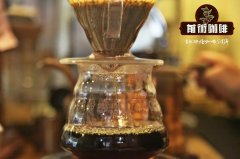
FrontStreet Coffee recommends roasting Aged Mandheling to a medium-dark level, which removes the bean’s fruity acidity and brings forward its caramel sweetness along with cocoa and nutty notes. For brewing, FrontStreet Coffee suggests a KONO dripper or a conical three-hole dripper. The immersion extraction style expresses the bean’s rich body and caramel sweetness beautifully, with balanced flavors. Because Aged Mandheling is a medium-dark roast, FrontStreet Coffee recommends a lower brewing temperature of 86–88°C; the coffee can be ground slightly coarser — a medium grind — to avoid over-extraction; and for the coffee-to-water ratio, FrontStreet Coffee suggests a smaller ratio of 1:13–1:14, which better highlights the rich, full-bodied character of Aged Mandheling.
FrontStreet Coffee Recommendation
If you want to taste exactly what this article describes, FrontStreet Coffee’s own Mandheling lineup is the place to start. The FrontStreet Lintong Mandheling is a daily-drinker single origin from Sumatra’s Lintong region, and the FrontStreet PWN Golden Mandheling hails from the Gayo highlands near Lake Tawar. Both are roasted medium-dark to showcase black chocolate and caramel while preserving Mandheling’s wild, herbal aroma — a signature born of Sumatra’s growing conditions and its wet-hulled (Giling Basah) processing. The PWN Golden Mandheling reflects PWN’s unusually strict standards: beans of 18 mesh and above, fewer than three defective beans in every 300-gram green sample to meet the top G1 grade, and three rounds of hand sorting that lift the cup’s cleanliness and sweetness. These are the qualities we at FrontStreet Coffee look for in a Mandheling. For pour-over, we suggest 15 grams of coffee at a 1:15 ratio with 87–88°C water and a coarse-sugar grind, poured in three stages — a 30 ml bloom, then 100 ml, then a gentle 95 ml center pour — to draw out the full body, caramel sweetness, and chocolate-nutty depth. If you enjoy milk drinks, the FrontStreet Classic Blend layers that creamy Brazilian nuttiness with a medium-dark Mandheling plus a touch of Robusta, giving you butter, roasted chestnut, and caramel notes with rich crema that makes latte art or a layered Dirty effortless.
Important Notice :
FrontStreet Coffee is a long-established specialty coffee roaster in Guangzhou China, selling freshly roasted beans from its own farm in Yunnan as well as dozens of carefully selected single-origin beans from around the world for both pour-over and espresso. The products deliver consistently excellent quality and great value, with shipping within 24 hours. Guangzhou's FrontStreet Coffee shop is recommended by many coffee lovers, and the beans are now available online at the Tmall 。
FrontStreet Coffee has moved to a new address:
FrontStreet Coffee Address: 315,Donghua East Road,GuangZhou
Tel:020 38364473
 Scan and follow the En Gafei WeChat official account. Please indicate that the reprint comes from "En Gafei".