Brazilian Espresso Red Bourbon Coffee Beans: Flavor Characteristics, Grade, Export Production, and Blending Ratios

Brazilian coffee has won over coffee drinkers around the world with its gentle, low-acidity cup and its inviting notes of nuts and cocoa. Within FrontStreet Coffee's Daily Beans lineup there is a Brazilian coffee defined by clear chocolate and nut flavors and a smooth, moderate body — an ideal pick for anyone who prefers coffee without a pronounced acidity. FrontStreet Coffee features Brazilian beans not only in its Daily Beans series but also in its seasonal drip coffee bag range, a reflection of just how essential Brazil is to the classic coffee flavor canon.
Coffee Growing Regions
Brazil sits in Latin America, in the eastern part of South America along the Atlantic coast. On land it shares borders with every country on the continent except Ecuador and Chile. The overwhelming majority of its territory lies between the equator and the Tropic of Capricorn, giving Brazil the largest tropical land area of any country on earth. Roughly one-third of the country has a tropical rainforest climate, while the remaining two-thirds are tropical savanna. These exceptional tropical conditions are highly favorable for growing and producing coffee, a quintessential tropical crop.

FrontStreet Coffee's "Brazilian Daily Bean" comes from the state of Minas Gerais. The state's flagship coffee-growing regions include Cerrado and Sul de Minas, both of them high-altitude areas. Cerrado lies in the western part of Minas Gerais and is a flat plateau with elevations ranging from 750m to 1200m. Sul de Minas, by contrast, is hilly terrain with elevations between 700m and 1200m. Since 1999, the majority of farms that have won Brazil's Cup of Excellence auction competitions are located in Sul de Minas.

The Variety: Red Bourbon
Bourbon coffee was first cultivated on Reunion Island, known as Bourbon Island before 1789. The Bourbon variety arose as a mutation of Typica and, together with Typica, counts among the oldest coffee varieties still in cultivation. When its green cherries ripen they turn a vivid red. In general, after Red Bourbon trees flower and set fruit, the cherries change color in this sequence: green, then pale yellow, then light orange, then mature red, and finally a deeper ripe red. That is why some people call it the "Red Bourbon variety" — though in practice, Red Bourbon is simply the Bourbon variety we all know.
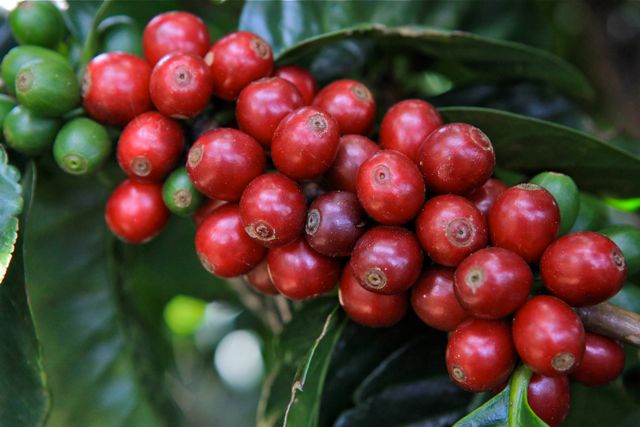
Bourbon grown at higher altitudes typically shows superior aromatics and brighter acidity, occasionally even revealing wine-like notes in the cup. In short, Bourbon is a variety within the Arabica species. It usually bears red fruit, hence Red Bourbon; there are also Yellow Bourbon and Orange Bourbon types, and Yellow Bourbon in particular yields less but delivers better quality.
Brazilian Processing Methods
Given its vast territory and enormous output, Brazil has long relied on natural processing as its main method. The washed process simply cannot support coffee production at this scale, which is how the industry developed its ingrained impression of Brazilian coffee as rough and rustic (though this does not mean all Brazilian coffee is inferior — coffee from renowned estates can be of quite high quality).

After 1990, Brazil promoted the pulped natural method (also called semi-washed). In this process, defective and floating cherries are removed in water tanks, then machines strip away the skin, pulp, and part of the mucilage, after which the beans are washed and finally dried in the sun or in mechanical dryers. Compared with fully washed processing, the pulped natural method saves both water and labor, and it enabled a major improvement in Brazilian coffee quality, overturning the long-standing reputation of naturally processed Brazilian coffee as crude.
Brazil Has No Grade 1 Coffee Beans
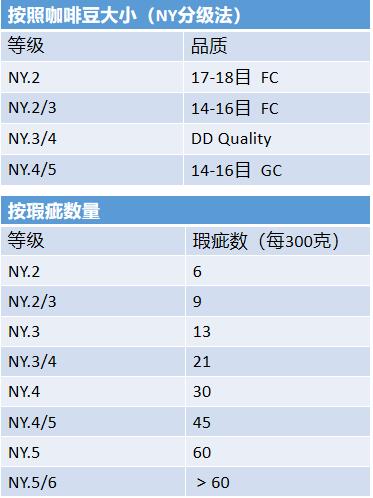
If you ever come across "Grade 1" Brazilian coffee beans, they are unquestionably fake. Under Brazilian standards, only a completely defect-free lot could qualify as NY.1 — and completely defect-free lots do not exist. The best grade among Brazilian green beans is therefore NY.2.
The NY system is Brazil's green coffee classification method, taking into account bean size, defect counts, and cupping scores, with NY.2 as the highest grade.
What Are Brazilian Coffee Beans Used For?
Because Brazilian coffee beans are produced in enormous quantities, they flow into every corner of the coffee industry. Some become instant coffee, some go into commercial blends, and some reach the specialty market. Brazilian beans destined for blending deserve special mention: the famous Mamba blend combines Mandheling with Brazilian beans to approximate the flavor of Blue Mountain coffee. On FrontStreet Coffee's bean list, Brazilian beans are also outstanding components for espresso blends.
FrontStreet Coffee's Specialty Espresso Blend:
Colombia : Brazil, ratio 3:7, 100% Arabica
Flavor characteristics: A comfortable bittersweetness, extremely smooth on the palate; a faint grassy aroma, fresh and lightly bitter; smooth and sweet with a pleasant, lingering finish. Roasted medium-dark, it pulls espresso with soft, subtle acidity, clean sweetness, and a nutty aftertaste. The overall impression is gentle and balanced, with a moderate crema.

FrontStreet Coffee's Commercial Espresso Blend:
Colombia : Brazil : Robusta; ratio 3:6:1, pre-blended
On their own, commercial-grade beans produce a cup clearly inferior to specialty coffee beans, which is why they are generally destined for blending. Blended properly, however, they can still yield coffee with an excellent taste, well suited to lattes, cappuccinos, and other espresso-based drinks. When FrontStreet Coffee pulls espresso from its commercial blend, the Robusta content produces a richer crema, along with a classic flavor profile: caramel sweetness, notes of nuts and cocoa-like dark chocolate, balanced sweetness and acidity, a touch of bitterness, and a long aftertaste.

FrontStreet Coffee Recommendation
If you would like to explore Brazilian flavors in a single-origin format, FrontStreet Coffee's semi-sun-dried (pulped natural) Cerrado Red Bourbon is a classic starting point. Cerrado is one of Brazil's best-known quality regions, and this Red Bourbon lot, roasted medium, opens with rich aromas of creamed peanuts, toast, caramel, and hazelnut. The cup is round and smooth with no acidity, just a light bitter finish — and it works equally well as pour-over, moka pot, espresso SOE, siphon, or French press coffee.
For something a little different, FrontStreet Coffee also offers the Queen Estate (Brazil Queen Estate) Yellow Bourbon from the Mogiana region near Sul de Minas, where fertile red volcanic soils give the cherries their full-bodied aromatics. Yellow Bourbon, a mutation of Red Bourbon, delivers a cleaner fruit character, and through pour-over, moka pot, or home espresso you can taste a sugarcane sweetness alongside fruit and chocolate notes — flavors few other origins can match.
Important Notice :
FrontStreet Coffee is a long-established specialty coffee roaster in Guangzhou China, selling freshly roasted beans from its own farm in Yunnan as well as dozens of carefully selected single-origin beans from around the world for both pour-over and espresso. The products deliver consistently excellent quality and great value, with shipping within 24 hours. Guangzhou's FrontStreet Coffee shop is recommended by many coffee lovers, and the beans are now available online at the Tmall 。
FrontStreet Coffee has moved to a new address:
FrontStreet Coffee Address: 315,Donghua East Road,GuangZhou
Tel:020 38364473
 Scan and follow the En Gafei WeChat official account. Please indicate that the reprint comes from "En Gafei".