How to Make Delicious Iced Americano Black Coffee and the Correct Way to Use an American Drip Coffee Maker: What's the Right Coffee-to-Water Ratio and Grind Size?

Understanding American Coffee: Two Methods
FrontStreet Coffee has always said there are two ways to make American coffee: dilute espresso with water, or use an American drip coffee maker. FrontStreet Coffee has already discussed the espresso dilution method at length; it simply means adding water to espresso concentrate. FrontStreet Coffee believes a coffee-to-water ratio between 1:4 and 1:8 is ideal, allowing for personal taste adjustments.
Because not many households own an espresso machine, however, many customers visit our stores seeking information about home American drip makers. FrontStreet Coffee finds American drip machines extremely convenient for home use. If you are a coffee enthusiast, you should definitely consider buying one. The brewing method is very simple, and FrontStreet Coffee will now focus on American drip makers to introduce American coffee.
Components and Basic Usage
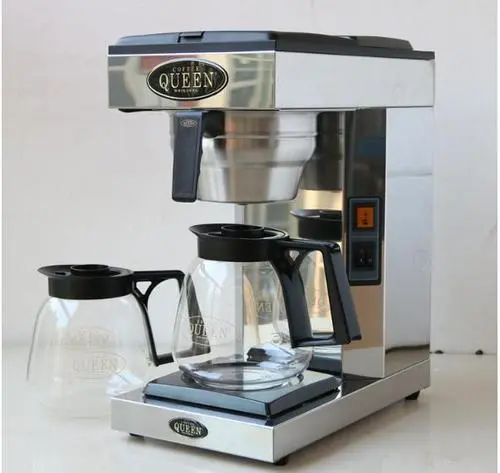
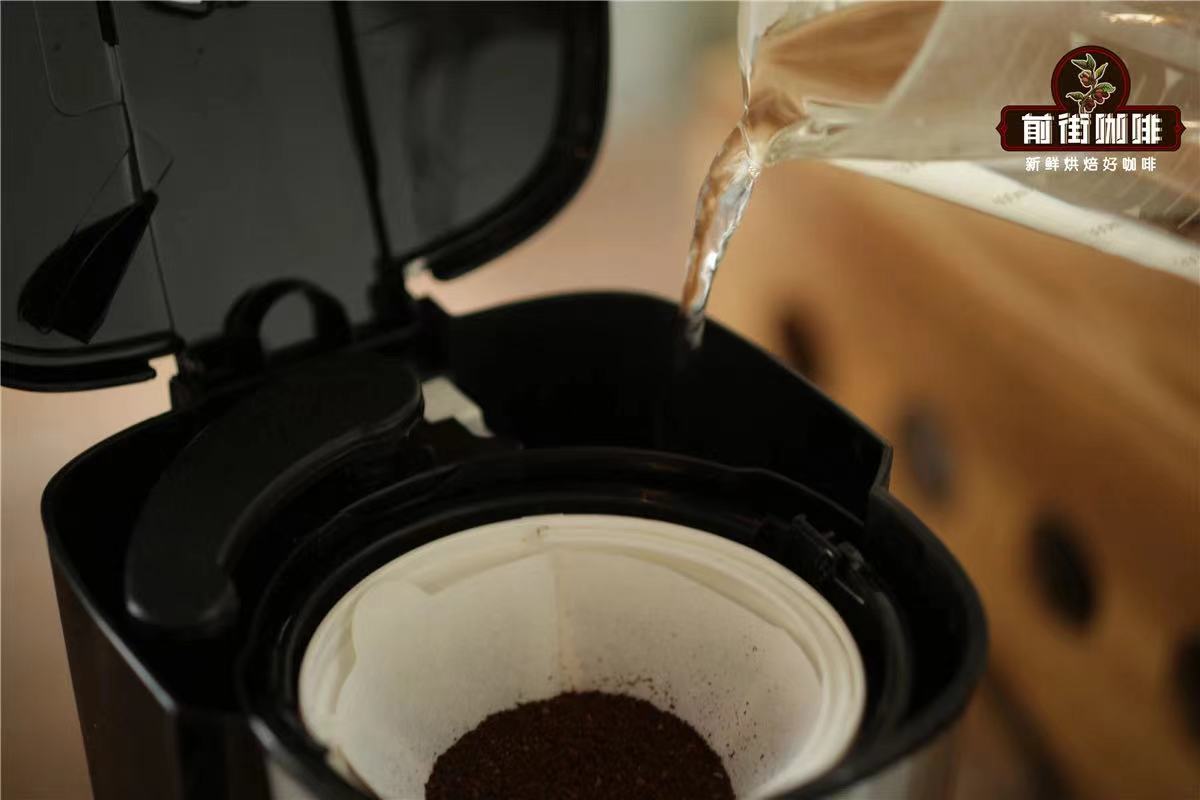
Generally, American drip makers consist of three main parts: a water reservoir, a filter basket, and a glass carafe. So what is the proper way to enjoy American coffee? It is quite simple: first, add an appropriate amount of grounds to the filter basket; second, fill the reservoir with the right amount of water; third, press start; and fourth, enjoy a cup of aromatic coffee. It looks straightforward, but if you want a truly good cup, using an American drip maker actually involves some science.
The Perfect Coffee-to-Water Ratio
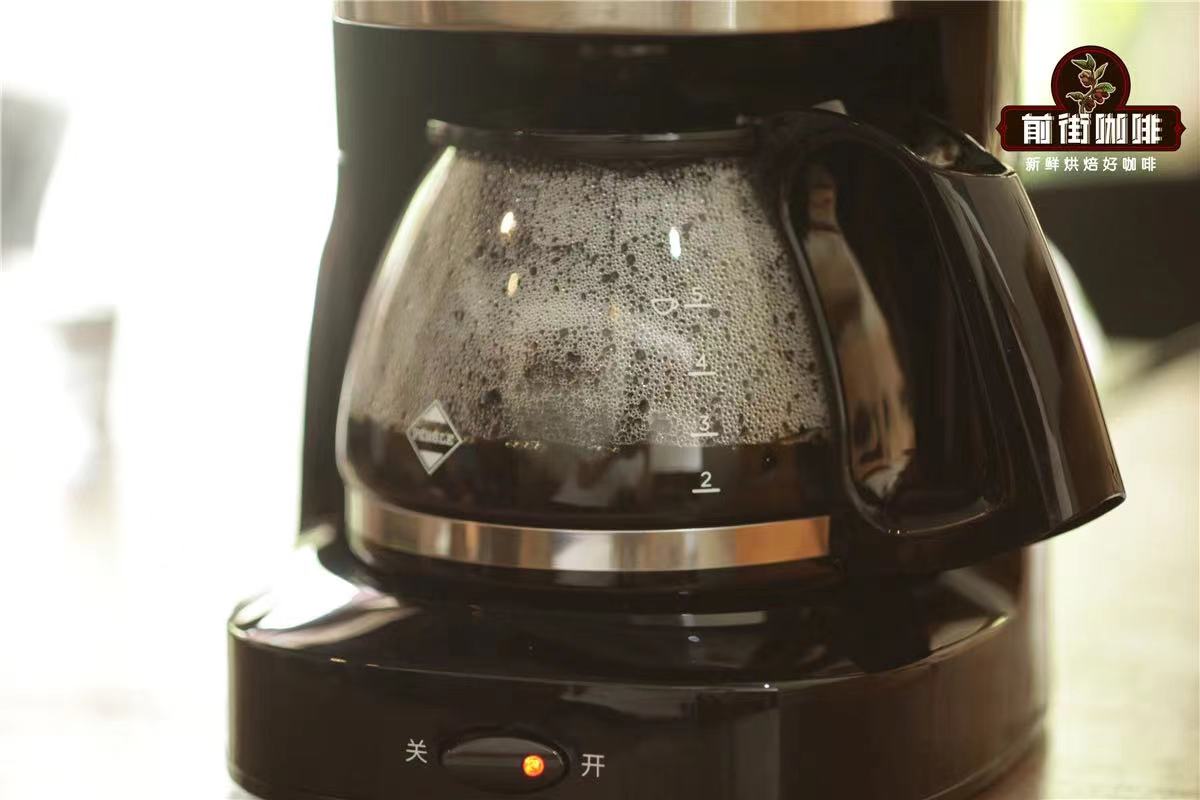
FrontStreet Coffee suggests starting with a 1:18.18 coffee-to-water ratio, though in reality there is no standard perfect ratio for American makers; it depends on your taste. You can control the ratio between 1:10 and 1:18. The amount of water used to dilute the coffee determines your American coffee's flavor. Too much water makes it weak and watery; too little leaves it tasting thin.
So is there a more scientific method for beginners? If you enjoy experimenting, FrontStreet Coffee can share a little secret: cupping generally uses a coffee-to-water ratio of 1:18.18, so FrontStreet Coffee recommends starting there, that is, one gram of coffee to 18.18 grams of water. FrontStreet Coffee suggests filling your American drip maker with cold water. First measure the corresponding amount of water with a measuring cup, then add it to the reservoir. Following the 1:18.18 ratio, the brewed coffee will most likely fall within the Golden Cup range, with concentration typically between 1.15% and 1.35% and extraction rates reaching 18%-22%.

Of course, if you have no measuring cup at home, FrontStreet Coffee recommends using a scale. The correct coffee-to-water ratio reduces waste of grounds while properly extracting flavor compounds, letting your coffee reach its optimal flavor. For home use, you do not need to measure every time. Do it once, calculate the suitable coffee and water amounts, and mark them, for example using the same coffee scoop and the same water-level markings.
How do you make iced American coffee with an American drip machine? Simply reduce the water-to-coffee ratio and add ice cubes. When calculating the water-to-coffee ratio, do not forget to include the ice in the water total.

The Importance of Grind Size
Having covered the water-to-coffee ratio, let us turn to another factor affecting extraction: grind size. How coarse should the grounds be for American coffee? This is a question FrontStreet Coffee's baristas hear frequently. The answer is quite simple: use a grind size similar to that for pour-over coffee.
At FrontStreet Coffee stores, customers often request pre-ground coffee. Before grinding, FrontStreet Coffee asks customers about their brewing method, because different extraction methods require different grind sizes. For espresso, because of the high water pressure, a fine powder layer is needed to increase resistance and water contact time, so an extremely fine grind is preferred. For drip coffee, FrontStreet Coffee adjusts the grind size based on the roast level. Generally, FrontStreet Coffee's light roast beans are sieved to 80%, medium roast to 75%, and dark roast to 70%, using a national #20 standard sieve. The reason is quite simple.

The whole purpose of grinding is to increase the surface area for contact between grounds and water. Grind coarseness affects how fast water passes through the coffee bed, thereby influencing brewing time and extraction efficiency. Why does FrontStreet Coffee recommend a finer grind for light roast coffee? A finer grind lets particles pack more tightly together, meaning water needs more time to pass through. The increased surface area enhances extraction, allowing better extraction of flavor compounds from light roast coffee. To prevent over-extraction of dark roast coffee, FrontStreet Coffee uses a coarser grind. Of course, with the same beans, changing any factor during brewing produces different flavors, so everyone can adjust to their own taste.

Professional Sieving Recommendations
In addition to the #20 sieve, FrontStreet Coffee also recommends the KRUVE sieve set. Many world coffee brewing champions use sieves from this brand. The equipment can classify and grade coffee beans according to green-bean selection, and for coffee powder screening it can sieve evenly. Operation is the same as with the #20 sieve: first select the sieve, second add the grounds, third shake to sieve.
Suitable Coffee Beans for American Drip Coffee
Unlike espresso machines, which mainly use dark roast beans, American drip makers suit beans of any roast level. Although some coffee enthusiasts now use light roast beans in espresso machines, this practice is not mainstream in today's coffee market. If you are using an American drip maker, you can choose any of FrontStreet Coffee's beans. Take the recently launched Geisha bean, Hanami, for example.
For this coffee, FrontStreet Coffee chose a 1:20 coffee-to-water ratio. Add 20 grams of grounds and 400 grams of water, close the lid, press start, and the machine begins extracting automatically. After about eight minutes, a pot of American coffee is ready.

Hanami Coffee Details
Let me introduce you to the information about this coffee:

Colombia · Montblanc Geisha Blend Coffee - Hanami
Region: Huila, Colombia
Estate: Montblanc
Varieties: Geisha, Caturra, Catuai
Processing: Washed
Altitude: 1900 meters
This coffee's dry aroma presents spicy notes, while the wet aroma has a chamomile fragrance with citrus-like sweet-and-sour notes that are very prominent. It is a special bean, and many customers ask why FrontStreet Coffee also uses this blended coffee bean for pour-over. In fact, this coffee is not a blend; it is just that most people misunderstand the definition of single-origin coffee, and FrontStreet Coffee says this to avoid confusion. Single-origin coffee refers to beans from a single producing region. FrontStreet Coffee's Hanami bean is actually a mixed-variety bean from the same region, including Caturra and Catuai. If labeled as pure Geisha, consumers might think it is 100% Geisha variety, so to differentiate, FrontStreet Coffee labels it as Geisha blend coffee for easier understanding. The taste of American coffee extracted with a drip machine is not significantly different from pour-over coffee.
FrontStreet Coffee Recommendation
If you are new to using a coffee machine, FrontStreet Coffee's classic blend is the safest place to start. Made from Indonesian Mandheling, Brazilian red Bourbon, and Vietnamese washed coffee in a traditional Italian-style recipe, it carries the low-acid, full-bodied, herbal-and-woody character of Asian coffee alongside the balanced, smooth, creamy quality of the Americas. Extraction yields butter, nut, spice, and dark chocolate aromas, and whether you make an Americano or a latte, its wild profile and generous crema are the blend's defining features.
For a value-focused daily Americano, FrontStreet's Black Cocoa basic blend pairs Yunnan small-bean coffee with Brazilian Cerrado. It brings nut, chocolate, and cream aromas to an Americano, with a ripe plum acidity, a soft overall body, and a friendly price; because it is so adaptable, it is also a fine first choice for opening a coffee shop.
When you tire of dark-roast espresso, try the medium-roast Strawberry Candy espresso blend. Unlike a traditional blend, Strawberry Candy brings together single-origin Arabica from three renowned regions, Colombia, Costa Rica, and Ethiopia, and uses washed, natural, and honey processing to lift the aroma. Beyond its rose-like character, its low-bitterness, lightly acidic Americano and latte show grape, dried blueberry, sweet orange, and fruit-candy flavors with rich layering and a distinctive almond finish.
For a single-origin option, FrontStreet's Ethiopia Flower Queen SOE uses a natural Sidamo Hambella lot processed at the Buku Abel station, giving a pour-over of cream strawberry, guava, dried mango, black tea, and citrus. Pulled as espresso and topped with water by ratio, it makes an SOE Flower Queen Americano that is bright, sweet-and-sour, and free of bitterness, with a rich tropical-fruit aroma. And FrontStreet's Grana Estate Geisha SOE, an Ethiopian single-origin roasted medium, offers a yellow-floral aroma, the brightness of bergamot, and a fresh-strawberry finish; as an Americano it shows fresh lime and fermented black-grape sweetness with a medium body.
Important Notice :
FrontStreet Coffee is a long-established specialty coffee roaster in Guangzhou China, selling freshly roasted beans from its own farm in Yunnan as well as dozens of carefully selected single-origin beans from around the world for both pour-over and espresso. The products deliver consistently excellent quality and great value, with shipping within 24 hours. Guangzhou's FrontStreet Coffee shop is recommended by many coffee lovers, and the beans are now available online at the Tmall 。
FrontStreet Coffee has moved to a new address:
FrontStreet Coffee Address: 315,Donghua East Road,GuangZhou
Tel:020 38364473
 Scan and follow the En Gafei WeChat official account. Please indicate that the reprint comes from "En Gafei".