Indonesian Mandheling vs PWN Golden Mandheling Coffee: Flavor Profile Differences and Pour-Over Brewing Recommendations
The Unique Appeal of Mandheling Coffee
When it comes to Mandheling coffee, its distinctive spicy and herbal notes, combined with a rich, full-bodied taste, leave an unforgettable impression that has captivated coffee lovers worldwide. FrontStreet Coffee currently offers five varieties of Mandheling beans, each with its own flavor character. Among them, the most popular is undoubtedly Golden Mandheling. So what sets it apart from regular Mandheling? In this article, FrontStreet Coffee explores the flavor characteristics of PWN Golden Mandheling coffee beans.
The Origin of Indonesian Mandheling Coffee Beans
Seasoned coffee lovers know that most coffee beans are named after their growing regions or estates. For example, FrontStreet Coffee recently featured Costa Rica's Monster Estate coffee beans, or Ethiopia's Yirgacheffe coffee beans. The origin of the name Mandheling, however, involves an interesting story.

According to FrontStreet Coffee's research, the story began when Japanese soldiers returned home after their colonial period in Indonesia, unable to forget the delicious local coffee. Through trading connections, they asked locals to help collect premium beans, including this particular variety. The Japanese loved the coffee and asked for its name. The locals, misunderstanding that they were being asked about their ethnicity, answered Mandailing. The Japanese misheard this as Mandehling. Through this double misunderstanding, Mandheling accidentally became the name of the variety. Interestingly, that local was none other than the owner of PWN Company (Pwani Coffee Company), the producer of Indonesian Golden Mandheling that FrontStreet Coffee will discuss later.

Indonesian Mandheling Coffee Growing Regions
FrontStreet Coffee has often noted that three main factors determine coffee bean flavor: growing region, variety, and processing method. Next, FrontStreet Coffee looks at Mandheling through those three lenses.
Mandheling is grown mainly on Sumatra, Indonesia's largest island. Lying near the equator, it has a typical tropical rainforest climate with high temperatures, humidity, and abundant rainfall, ideal for growing high-quality Arabica.

Indonesia's limited altitude, however, restricts how much premium Arabica it can grow. Only 25% of the coffee produced in Indonesia is Arabica, since Arabica develops its best flavor only at higher elevations. The remaining 75% is Robusta, which can be cultivated at lower elevations. Sumatra happens to be Indonesia's highest-altitude region.
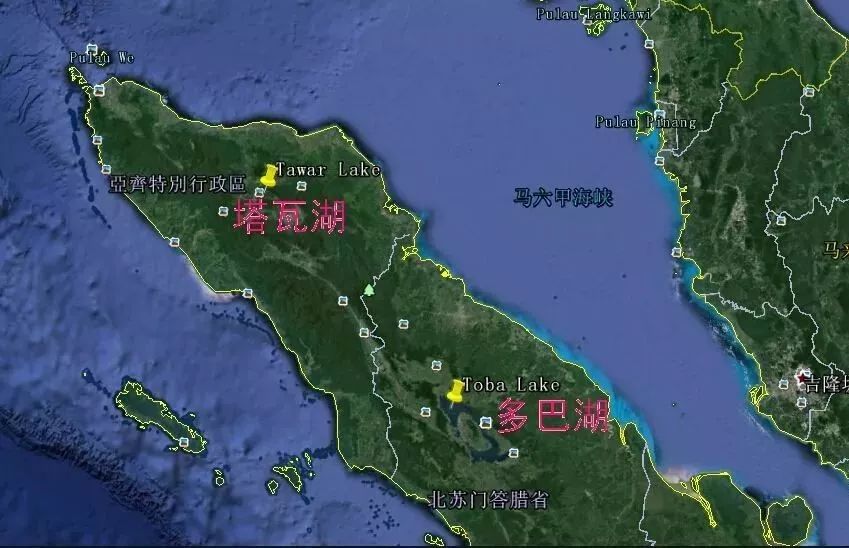
The finest traditional Arabica from northern Sumatra is sold under the name Lintong Mandheling. To be precise, Lintong Mandheling beans refer to coffee grown in a small area in the southwestern part of the Lake Toba region, within the Lintong administrative district.
Indonesian Mandheling Coffee Varieties
As noted above, Mandheling is grown mainly on Sumatra and typically consists of pure Arabica. Arabica, however, has weak pest resistance. So in October 2020, Indonesia's PWN company replaced the original Typica variety used for Golden Mandheling with the Ateng variety. Ateng is in fact the Catimor variety most widely grown in Yunnan's coffee regions. Next, FrontStreet Coffee looks at the characteristics of the Typica and Catimor varieties.
Typica
Typica is the oldest native variety from Ethiopia, and nearly all current Arabica varieties descend from it. Typica offers elegant flavors but has a weak constitution and low disease resistance, making it susceptible to leaf rust. Yields are therefore low and not economically viable. In recent years, Typica in Central and South America has gradually been replaced by Caturra and Catuai, and it has become increasingly rare. Although Typica is elegant, it is not as widespread as Bourbon.
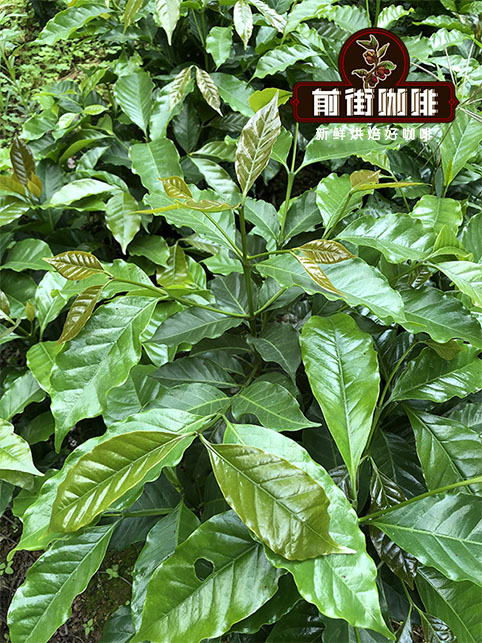
Ateng (Catimor)
Catimor is a hybrid between Timor, a Robusta subspecies, and Caturra. It was originally developed in 1959 and began to be promoted in Brazil during the 1970s and 1980s. With its disease resistance and high yields, it secured a place among Central and South American varieties, and the recurring coffee leaf rust crises in those regions further encouraged the use of Catimor.
Its traits include high yields, short plants that allow dense planting, and new leaves that are reddish-brown. Because it matures quickly and yields heavily, it needs adequate fertilization and shade. According to FrontStreet Coffee's research, its lifespan is quite short, averaging only ten years.

Indonesian Mandheling Coffee Processing Methods
As FrontStreet Coffee noted above, Indonesian Mandheling is loved for its unique flavors, which actually come from Indonesia's distinctive coffee processing method: the Indonesian wet-hulled process. It is precisely this method that gives Mandheling its characteristic earthy, herbal, and spicy notes.
It is worth noting that under the wet-hulled method, the semi-hard, semi-soft moist green beans are easily damaged when the mucilage and parchment layers are removed. The beans crack open like goat hooves, commonly known as goat hoof beans. FrontStreet Coffee regards this as a distinctive characteristic of Mandheling rather than a defect.
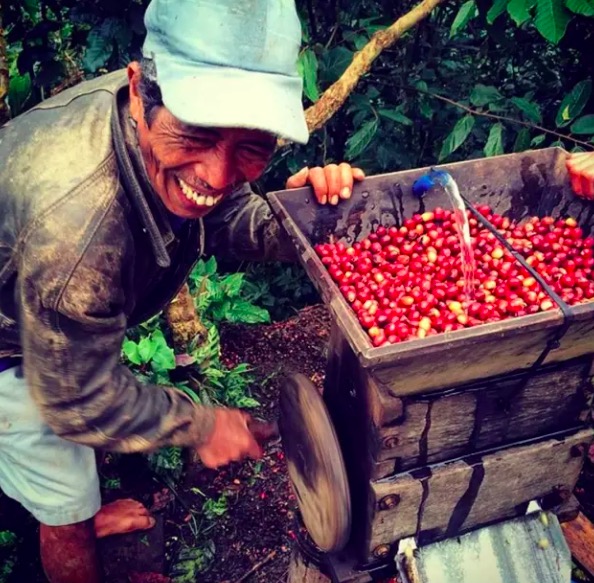
The Origin of Indonesian Wet-Hulled Processing
According to FrontStreet Coffee's research, Indonesia uses the wet-hulled method mainly because the local weather is predominantly rainy with constant typhoons, making it impossible to achieve the clear weather required for sun-drying. The local economy was also not prosperous enough to afford the more expensive washed processing method. This led to the development of the uniquely local wet-hulled method.
Of course, Indonesian coffee has now moved beyond its previous poverty-stricken state. Many estates and companies can use the washed method today, but they have not abandoned wet-hulled processing. FrontStreet Coffee believes the wet-hulled method was a key factor in bringing Mandheling to global recognition. Mention Mandheling and the wet-hulled method comes to mind; the two clearly share a complementary relationship.
The specific steps of the wet-hulled method can be divided into two phases:
Phase 1: The outer skin and pulp are removed with a wooden peeler. After 3 hours of fermentation, the beans are dried until the moisture content reaches 30-50% (semi-dry, semi-wet).
Phase 2: The mucilage and parchment layers are removed, followed by continued drying. Drying takes 2-4 days, until the moisture content reaches 12-13%.

Beyond the regular wet-hulled method, there is also an aged wet-hulled method. The beans first undergo regular wet-hulled processing, then are sealed in warehouses for 2-3 years. The warehouse environment must be cool and well ventilated, with regular turning of the beans to prevent mold and spoilage. During this time, the coffee's acidity gradually diminishes and converts to sugars, and the color deepens, mostly to yellowish-brown or dark brown. FrontStreet Coffee lists beans processed this way as Aged Mandheling.
Indonesian Mandheling Coffee Bean Grading
Coffee lovers who have visited FrontStreet Coffee know that Indonesian Mandheling beans are particularly large and very full. Indonesian Mandheling grading therefore follows a system based primarily on the number of defective beans, supplemented by size grading. According to FrontStreet Coffee's research, Indonesian standards for general-quality beans require no live insects, no moldy or rotten beans, a maximum moisture content of 12.5%, and an impurity rate below 0.5%.
The following is the Indonesian Mandheling grading system based on defects, using 300g as the standard:
- Grade 1 (G1): Total defects less than 11
- Grade 2 (G2): Total defects greater than 12 but less than 25
- Grade 3 (G3): Total defects greater than 26 but less than 44
- Grade 4a (G4a): Total defects greater than 45 but less than 60
- Grade 4b (G4b): Total defects greater than 61 but less than 80
- Grade 5 (G5): Total defects greater than 81 but less than 150
- Grade 6 (G6): Total defects greater than 151 but less than 225
FrontStreet Coffee's Indonesian Golden Mandheling is Grade 1, which is extremely rare. This grade was originally custom-made for Japanese trading companies. G1 allows a maximum of only 3 defect points per 300 grams.
The above covers relevant information about Indonesian Mandheling coffee beans. Next, FrontStreet Coffee introduces the PWN Company and explains how its Golden Mandheling differs from Lintong Mandheling.

PWN Company
Seasoned coffee lovers know that Japanese consumers particularly love Mandheling. Japan has therefore paid special attention to Mandheling for a long time and holds strict standards for selecting coffee cherries: the coffee must undergo four manual selections to remove defective beans before processing, packaging, and sale. Golden Mandheling earned its name because, when producers were selecting flawless green beans, they noticed the beans emitted a golden glow in sunlight, which gave rise to the name Golden Mandheling.
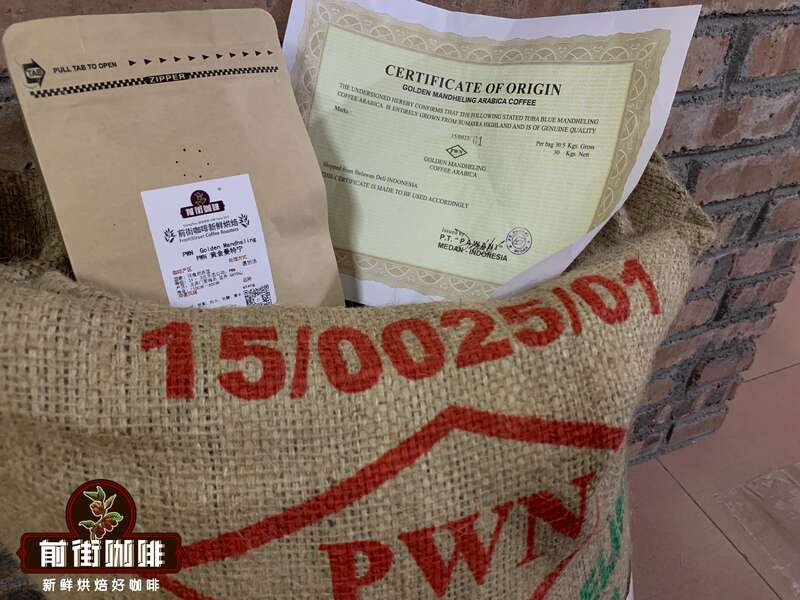
Unfortunately, although Japan has been so attentive to Mandheling, the name Golden Mandheling was already trademarked by Indonesia's Pawani Coffee Company. Golden Mandheling thus became exclusive to PWN Company, which was also one of the first companies to sell Mandheling coffee beans to Japan.
Through cupping and tasting, FrontStreet Coffee found that Golden Mandheling, compared with other Mandheling varieties such as Tiger Mandheling or Lintong Mandheling, offers a stronger sweet aftertaste and sugarcane sensation, which makes it particularly special. It also has a very clean mouthfeel, so FrontStreet Coffee decided it had to bring this coffee to its friends to taste.
PWN Golden Mandheling is also quite difficult to procure, because its annual production is limited. Many unscrupulous coffee shops therefore sell regular Mandheling under the guise of Golden Mandheling. Identifying Mandheling produced by PWN is fairly simple: just ask the merchant for the green bean sack bearing PWN markings or the certificate that comes with the beans to confirm whether it is genuine PWN Golden Mandheling.
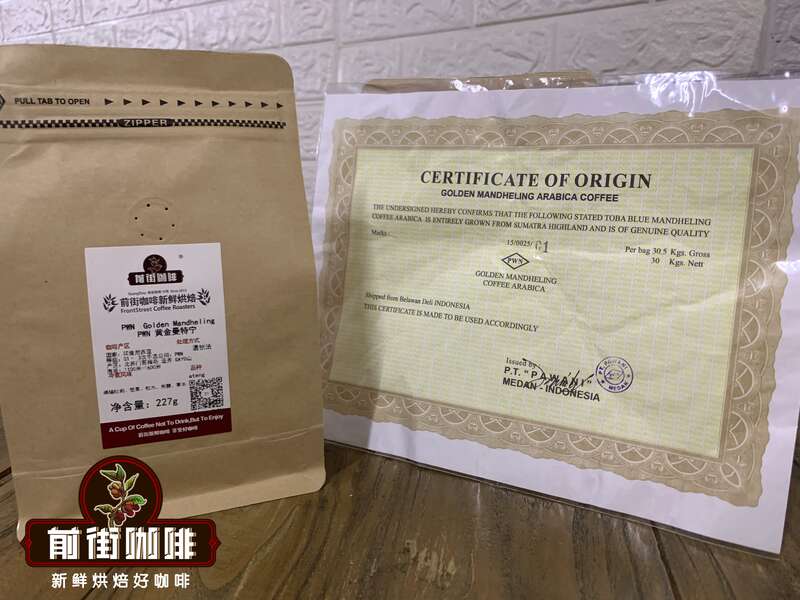
Among Golden Mandheling varieties, only those produced by PWN are truly Golden Mandheling. PWN's Yellow Mandheling undergoes three manual selections and one machine selection, resulting in very beautiful, very uniform beans. That uniformity makes the brewed coffee appear cleaner.
Aceh Gayo Mountain Growing Region
According to FrontStreet Coffee's understanding, PWN Company selected a new growing region in 2020: Gayo Mountain in the Aceh region of Sumatra, at the northernmost tip of the island. Coffee cultivation around Gayo Mountain centers mainly on the town of Takegon and the mountain slopes near Lake Tawar. The average altitude in the production area ranges from 1100 to 1600 meters. Coffee quality from this region has always been excellent, but prior political instability made it difficult to export. In recent years, as the situation stabilized, coffee cultivation in Aceh has developed, and its quality now surpasses that of the Lintong region. This move affirms the quality of Gayo Mountain coffee cherries, and as Indonesia's top coffee brand, PWN Golden Mandheling does not disappoint.

The above covers the relevant knowledge about PWN Golden Mandheling coffee beans. Before introducing any new coffee bean, FrontStreet Coffee conducts extensive roasting and brewing tests, selecting the optimal parameters to hand-brew for coffee lovers to taste. Next, FrontStreet Coffee shares the flavor differences between Golden Mandheling and Lintong Mandheling, along with a comparison of hand-brewing parameters.
FrontStreet Coffee PWN Golden Mandheling Coffee Beans
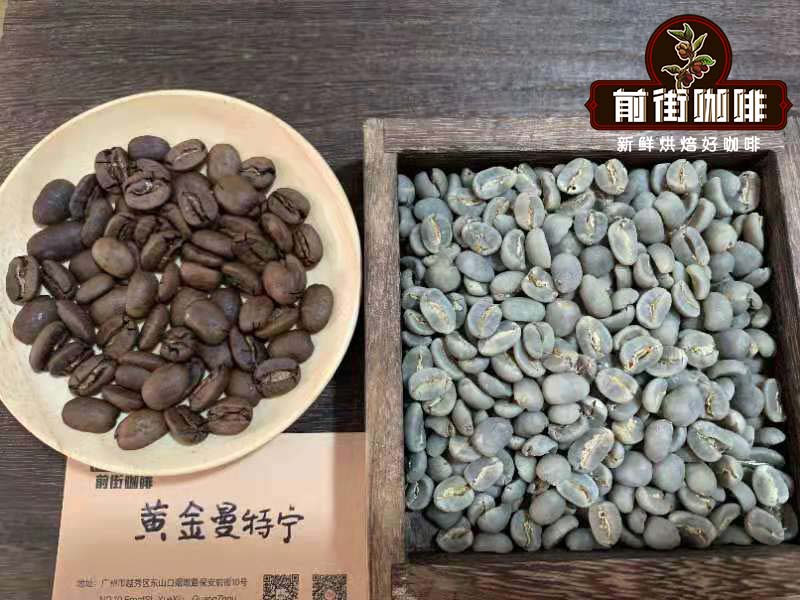
- Country: Indonesia
- Region: Sumatra, Aceh, Gayo Mountain
- Altitude: 1100-1600m
- Variety: Ateng
- Processing: Wet-Hulled
- Flavor: Toasted bread, nuts, pine, caramel, herbal
FrontStreet Coffee Indonesian Lintong Mandheling Coffee Beans
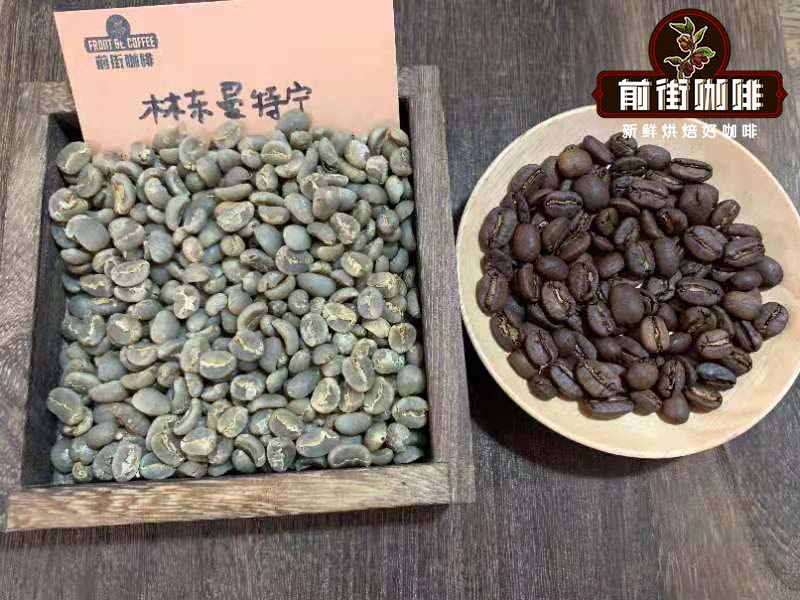
- Country: Indonesia
- Region: Sumatra (Lintong)
- Altitude: 1100-1600m
- Variety: Typica, Caturra
- Processing: Wet-Hulled
- Flavor: Toasted bread, nuts, caramel, pine, herbal
FrontStreet Coffee Brewing Guide
When brewing Mandheling coffee beans, FrontStreet Coffee ensures fairness by using consistent brewing parameters. We use medium-dark roasted coffee beans.

Mandheling Brewing Parameters
Kono dripper, 1:15 coffee-to-water ratio, 15g coffee dose, 88°C water temperature, grind size with a 70-75% pass-through rate on a #20 standard sieve.
Brewing Technique:

Segmented extraction: use 30g of water for a 30-second bloom. When the water level reaches 125g, perform a segmented pour. Continue pouring to 225g when the water level is about to expose the coffee bed. Remove the dripper when the water level is about to expose the bed again (timing starts from the bloom). Extraction time is 2'00" for a V60 dripper and slightly longer at 2'10" for a Kono dripper.
Golden Mandheling: Multi-layered, rich and clean, well balanced, with intense nut and caramel aromas, chocolate notes, and a persistent finish.
Lintong Mandheling: Herbal and medicinal notes on entry, dark chocolate, caramel, sweet aftertaste.

Conclusion
The difference between Golden Mandheling and Lintong Mandheling actually comes down to bean selection. Golden Mandheling undergoes four rounds of selection, removing defective beans and producing cleaner flavor profiles with fewer earthy impurities.
Lintong Mandheling, by contrast, is the most original Mandheling from the Lintong region. Its quality is slightly lower than Golden Mandheling and its selection is not as strict, but it still preserves excellent local Indonesian coffee flavors. FrontStreet Coffee therefore also offers Lintong Mandheling as a daily drinking option for newer coffee lovers discovering Indonesian beans.
FrontStreet Coffee Recommendation
Mandheling's rich, low-acid profile makes an interesting contrast with a clean washed Ethiopian. FrontStreet Washed Yirgacheffe brings white jasmine, bright citrus and lemon acidity, and a tea-like body; brew it as a pour-over with a V60 at 1:15, 15g of coffee, water at 90-91°C, and a grind around EK43s setting 10 (fine-sugar texture, roughly 80% passing a #20 sieve). Bloom with 30g for 30 seconds, pour to about 125g, then to about 225g, finishing in 2:00-2:10. Tasted side by side with a wet-hulled Mandheling, the difference between processing methods is plain in the cup.
Important Notice :
FrontStreet Coffee is a long-established specialty coffee roaster in Guangzhou China, selling freshly roasted beans from its own farm in Yunnan as well as dozens of carefully selected single-origin beans from around the world for both pour-over and espresso. The products deliver consistently excellent quality and great value, with shipping within 24 hours. Guangzhou's FrontStreet Coffee shop is recommended by many coffee lovers, and the beans are now available online at the Tmall 。
FrontStreet Coffee has moved to a new address:
FrontStreet Coffee Address: 315,Donghua East Road,GuangZhou
Tel:020 38364473
 Scan and follow the En Gafei WeChat official account. Please indicate that the reprint comes from "En Gafei".