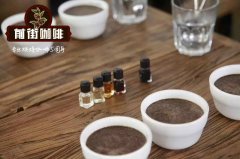
Overview of Kenya's EMBU Region - Embu Coffee Altitude Processing Factory Moreya AA
Kenya: Africa's Premium Coffee Region
Kenya is one of Africa's coffee-producing regions and a world-renowned one at that, famous for its bright, berry-like, wine-like acidity. Yet although Kenya borders Ethiopia, where coffee originated, FrontStreet Coffee was surprised to learn that Kenya's coffee cultivation history is shorter than most people assume. Short history, exceptionally good coffee.
Kenya's Embu Region
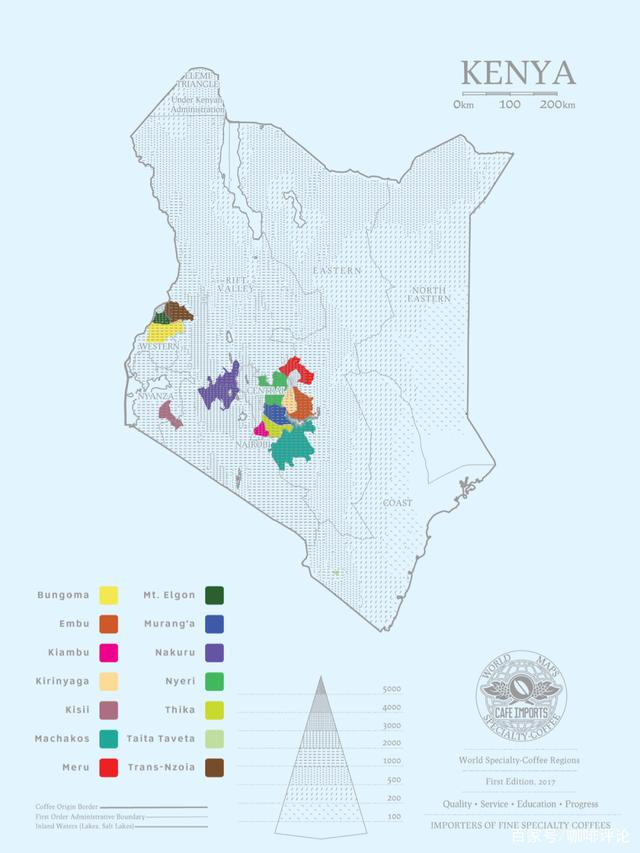
Embu takes its name from Embu town and sits near Mount Kenya. Roughly 70% of the local population works small-scale agriculture, with tea and coffee the area's favorite cash crops. Almost all coffee comes from smallholder farmers, so production here is relatively modest.
The Coffee Factory
The Murua Factory (cooperative) belongs to the Gondori FCS cooperative and sits in Kenya's Embu County coffee region at roughly 1,690–1,750 meters, with about 1,080 members.
Murua sources cherries from four villages: Kirigi, Kiini, Mukangu, and Kathangari. The station requires members to cultivate coffee year-round and forbids switching to other crops, and nearly all members accept these terms, showing strong commitment to the organization.
The average member grows about 350 coffee trees on roughly one hectare, alongside other cash crops including passion fruit, bananas, cabbage, carrots, and tea.
At peak season, Murua employs three managers and thirty temporary workers to handle the harvest rush.
Processing
The factory operates nine wastewater pits to collect and treat the water from washing and fermentation, sited away from rivers to prevent pollution.
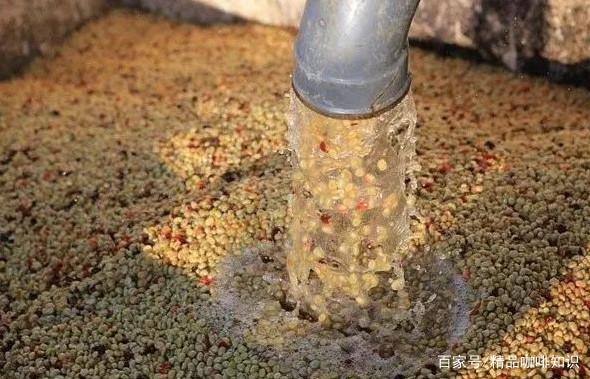
After harvest, ripe cherries are delivered to the receiving area, where they are first soaked and floated to sort out unripe fruit and debris. Then comes depulping, the famous Kenyan wet processing. All process water goes first into the soaking pits and is then recycled for reuse.
Murua runs multiple monitored processing stages. Depulping and the initial removal of mucilage, for example, are done with a three-disc pulper designed to strip the cherry's outer skin and the pulp around the parchment.
After depulping, the coffee ferments overnight to break down the remaining sugars and mucilage. Workers then judge whether the mucilage has fully degraded, wash, soak, wash again, and finally spread the beans evenly on raised drying beds. The whole process takes about 48–72 hours.
Drying time on the beds depends on climate, ambient temperature, and throughput, about 15 days in total.
Coffee Varieties
Murua's washed AA carries SL28 and SL34, the two varieties behind the classic Kenyan flavor profile.
"SL" stands for Scott Laboratories, commissioned by the Kenyan government in the 1930s to research coffee breeding and classification, seeking varieties that could adapt to Kenya's terroir, scale up commercially, and hold value. The organization was active from the 1930s through the 1960s and today continues as the Kenya National Agricultural Laboratories, abbreviated NARL.
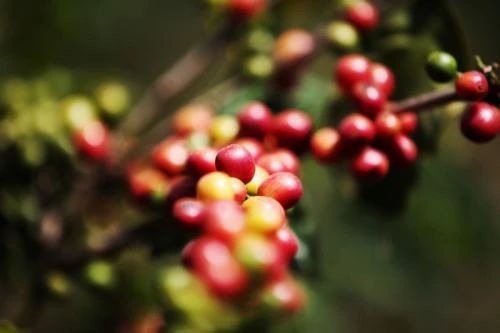
SL28 and SL34 are two of its many outcomes. Their flavors are similar, complex, varied acidity and a wonderful sweet aftertaste.
Of the two, SL34 has a heavier, richer mouthfeel than SL28 and is cleaner in the cup. SL34 carries French Mission, Bourbon, and more Typica bloodlines; the beans look much like SL28, but the variety handles sudden heavy rains better.
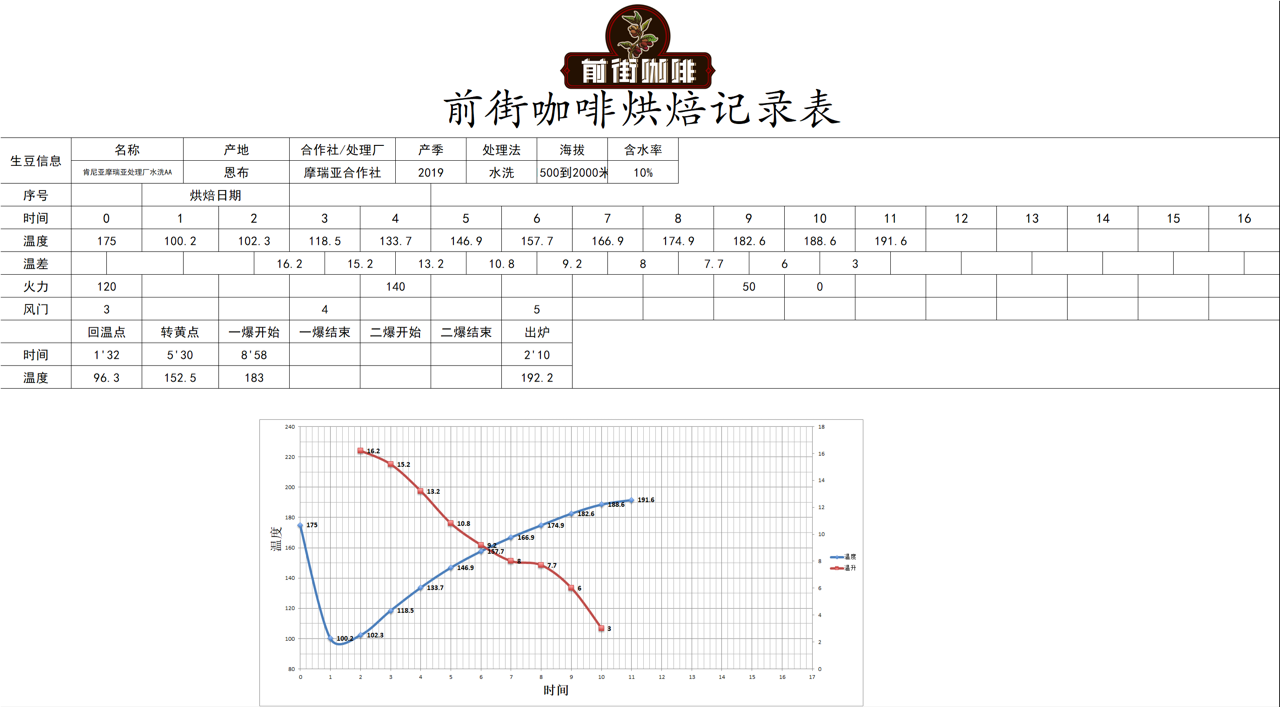
Roasting Profile
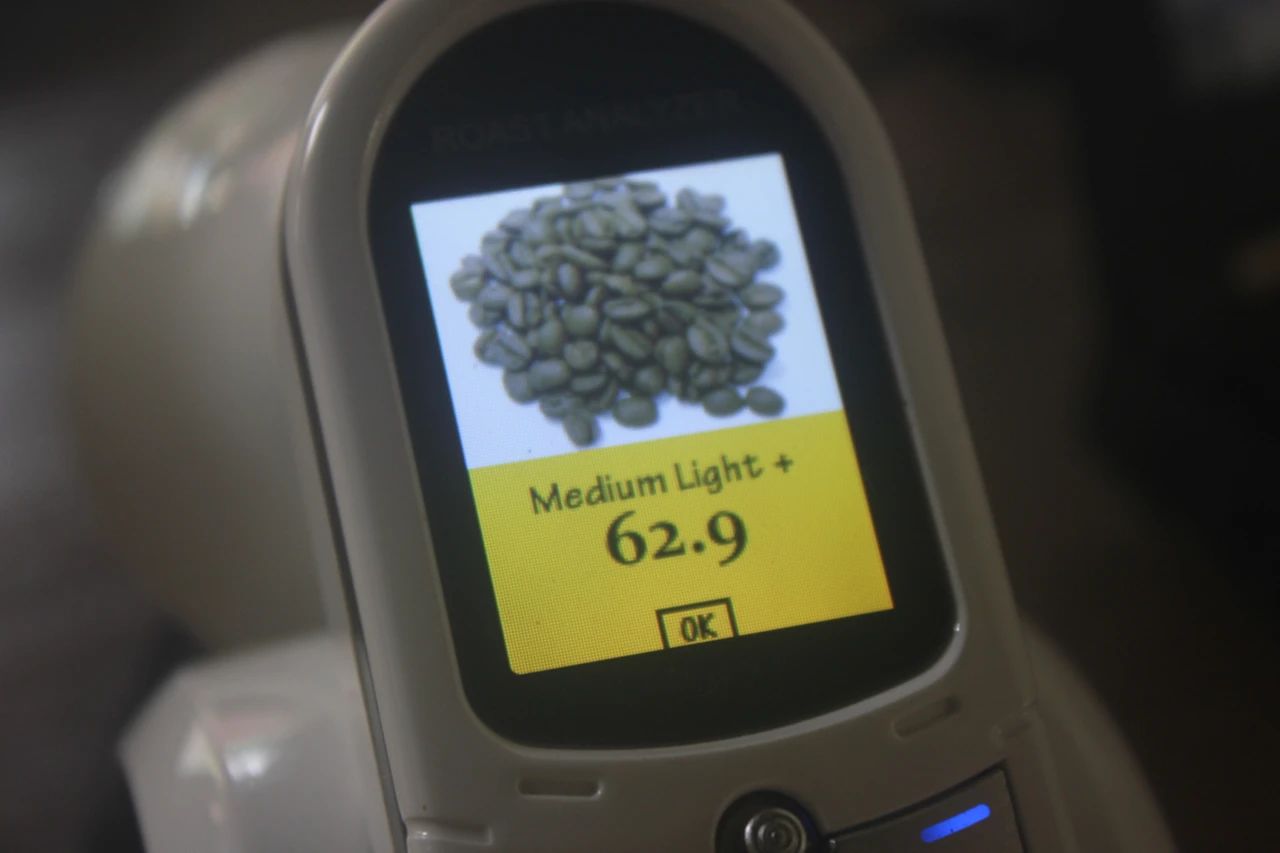
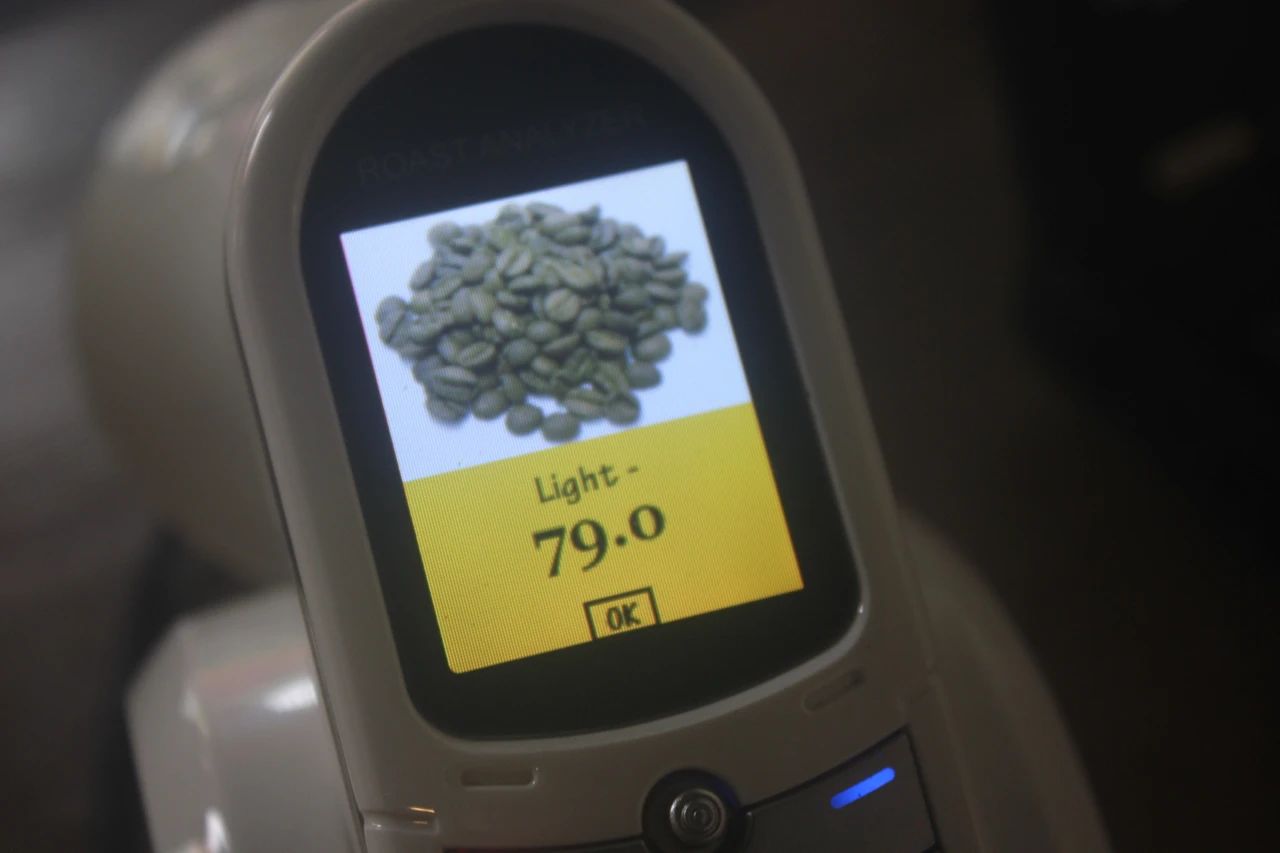
Agtron bean color value: 62.9; core (ground) color value: 79.
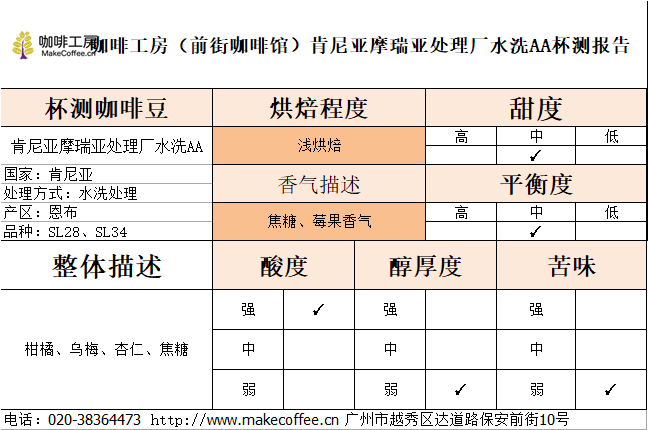
Cupping Details
Kenya Murua Factory Washed AA
Region: Embu
Altitude: 1,700 meters
Varieties: SL28 and SL34
Process: Washed
Grade: AA
Harvest year: 2019
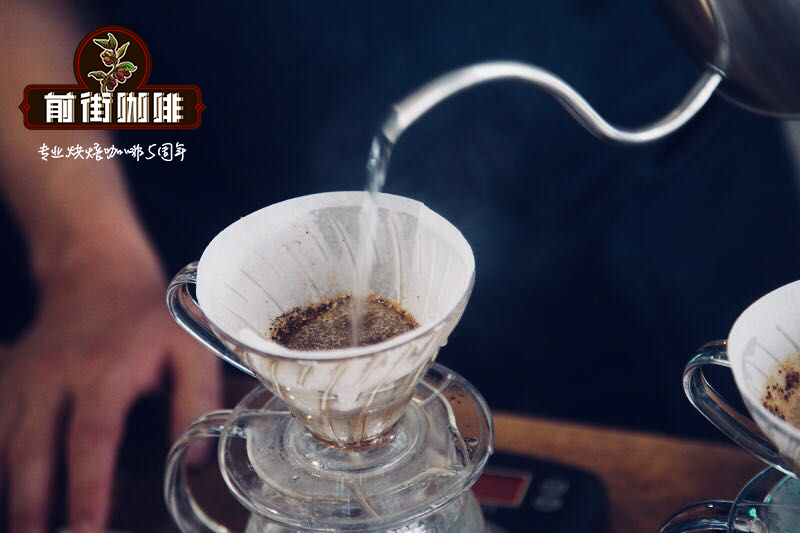
Brewing Parameters
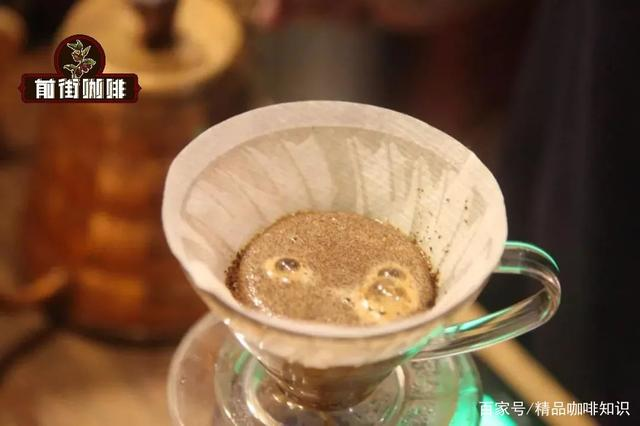
Coffee: 15 grams | Ratio: 1:15 | Water temperature: 90°C | Grind: 80% pass-through on a 0.85 mm sieve | Dripper: Hario V60 #01
Brewing Process
First pour 30 g of water for a 30-second bloom; second pour adds 95 g (scale reads 125 g), completed around the 1-minute mark; third pour adds 100 g (scale reads 225 g), completed around 1 minute 30 seconds.
Extraction Time
2 minutes, remove the dripper and the brew is done.
Flavor Description
Citrus, dark plum, berries, honey, almond; smooth, moderate body, medium aftertaste.
FrontStreet Coffee Recommendation
Kenya's SL varieties trace much of their lineage back to Ethiopia, the origin of coffee and a treasure chest of native varieties that coffee lovers return to faithfully. If this Embu AA has you curious about the birthplace, here is how FrontStreet Coffee's Ethiopian lineup stacks up.
FrontStreet Coffee Washed Yirgacheffe: the essential first cup. Expect clear jasmine florals and bright citrus acidity, the "Yirgacheffe character" baristas love to name-drop. The town itself, in southern Ethiopia's Sidamo province, sits spring-like and misty year-round, cool and humid, where thousands of coffee trees thrive; the resulting cup weaves florals and fruit acidity into something light, elegant, and tea-like, a clean, refreshing lemon tea of a coffee.
FrontStreet Coffee Worka Cooperative: most Ethiopian coffee follows a garden-farming model, smallholders deliver cherries to village-based stations and sell under the team's name, which is why cooperative coffees abound: Worka, Konga, and the Worka-area Gedeb cooperative known as "Gotiti." Located at the southeastern end of the Yirgacheffe zone, Gotiti was once part of the YCFCU union's Worka cooperative; as traceability demand grew, its roughly 300 member farmers broke away in 2012 to form their own. Because the fruit is depulped before drying, the coffee's own character comes through with unusual clarity: citrus and lemon tones, elegant white florals, bright and delicate throughout.
FrontStreet Coffee Red Cherry (natural): where naturals differ from washed lots, this one starts by culling broken or moldy cherries, then sun-dries the rest for two weeks so the fruit's sugars and essence soak into the bean. Once moisture falls to 12%, the hardened pulp, mucilage, and pods are milled off, and the green beans pass density and color checks, defect culling, and a final hand sort, layer upon layer of screening. Every bean earns its place, which is what gives the coffee its pristine character and rich, charming fruit. Flavor: peach, cocoa, honey, lemon.
FrontStreet Coffee Huakui (natural, Hambela): from a 200-hectare farm in Hambela, Guji, Sidamo, dried in the fruit on raised beds for 21 days with constant turning and hand-sorting every three to five days to keep mold and earthy taints away, then hulled and sorted once more before shipping. Roasted medium-light, it shows a faint fermented wine note, florals, citrus, and mango, much denser and more complex, with honeyed sweetness, cocoa undertones, a touch of spice, a thick body, and a long finish.
Important Notice :
FrontStreet Coffee is a long-established specialty coffee roaster in Guangzhou China, selling freshly roasted beans from its own farm in Yunnan as well as dozens of carefully selected single-origin beans from around the world for both pour-over and espresso. The products deliver consistently excellent quality and great value, with shipping within 24 hours. Guangzhou's FrontStreet Coffee shop is recommended by many coffee lovers, and the beans are now available online at the Tmall 。
FrontStreet Coffee has moved to a new address:
FrontStreet Coffee Address: 315,Donghua East Road,GuangZhou
Tel:020 38364473
 Scan and follow the En Gafei WeChat official account. Please indicate that the reprint comes from "En Gafei".