French Press Coffee to Water Ratio vs Pour-Over Coffee Differences - What Coffee Beans to Use and How to Brew with French Press
Choosing the Right Coffee Beans for French Press
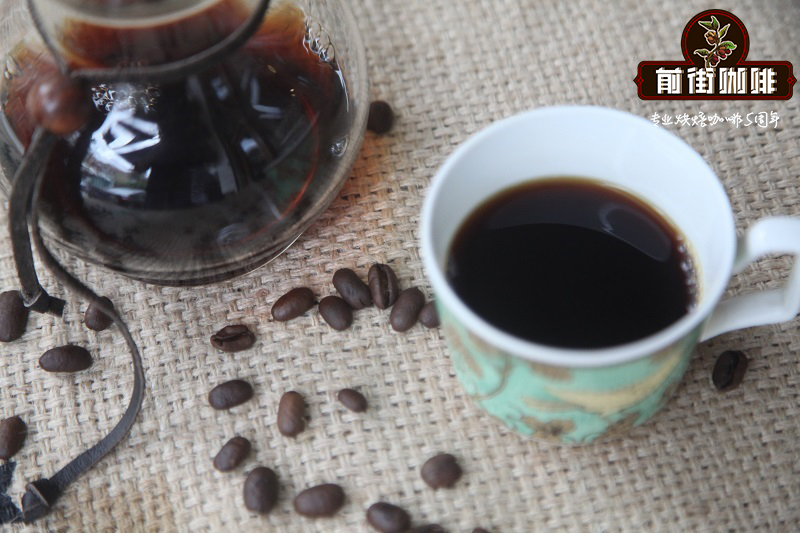
For French press coffee, try to select fresh, high-quality beans. We usually recommend [medium roast], [medium-dark roast] or [dark roast] levels, such as FrontStreet Coffee Brazil Queen Estate or FrontStreet Coffee Papua New Guinea Paradise Bird. Because the metal filter can fully extract the oils, the coffee's own aroma shows up beautifully. FrontStreet Coffee recommends this roasting range because French press coffee usually tastes richer than pour-over, and medium or dark roasted beans express that quality better.
Grind Size and Coffee-to-Water Ratio
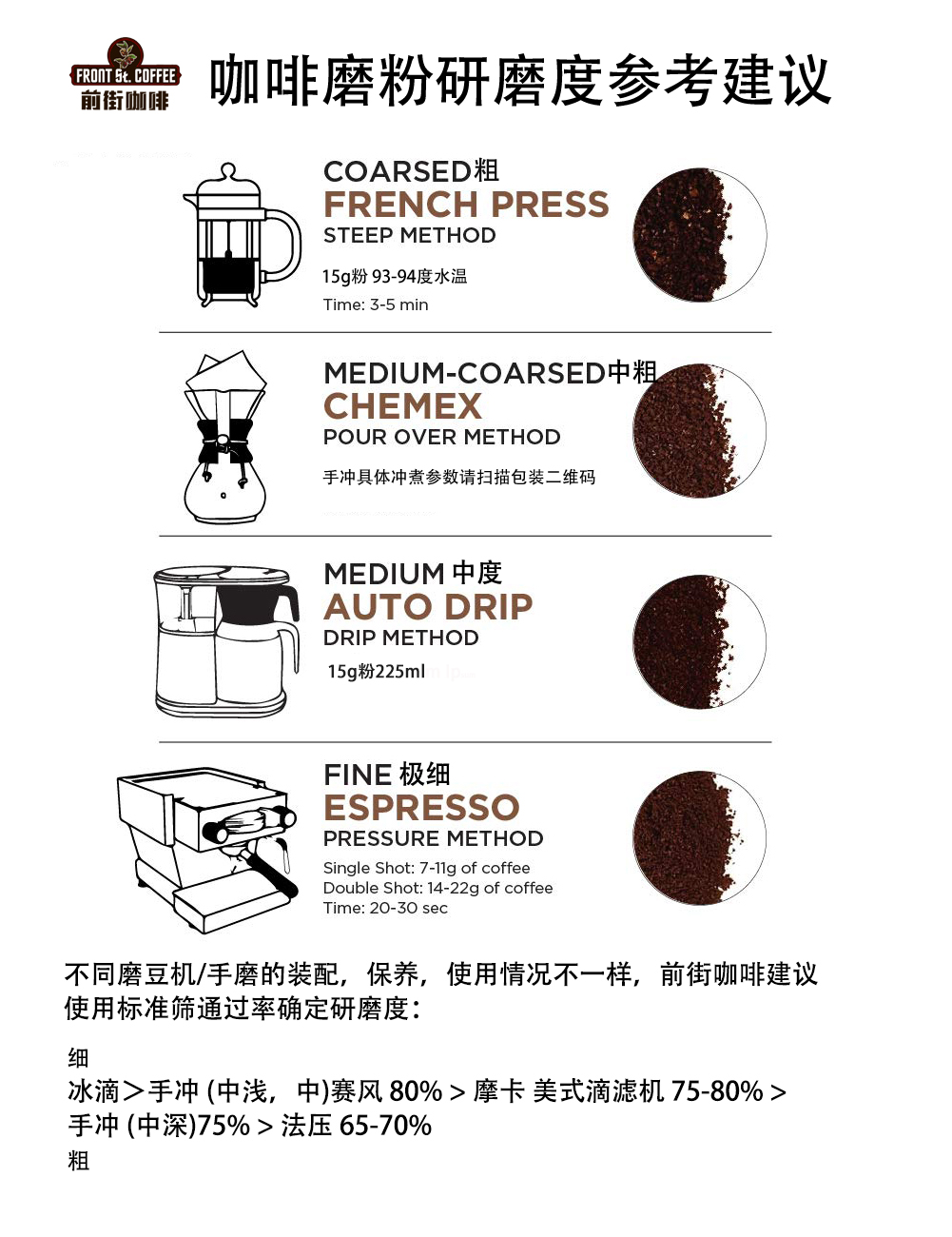
Since the filter of every French press is a little different, the coffee [grind size] should be roughly medium. Coffee that is too fine is not suitable: it may clog the filter holes and extract undesirable flavors, and worse, some fine particles can slip through the filter and leave you drinking coffee full of sediment. Medium grinding is enough.
Next comes the [coffee-to-water ratio]. We usually recommend 20g of coffee powder with about 200ml of hot water. It doesn't matter if you don't have a thermometer; it's about right just after the kettle boils. The water amount can be adjusted to taste. For example, those who don't care for a rich flavor might increase the water to 250ml. Brewing FrontStreet Coffee Yirgacheffe or similar beans with clean floral notes this way lets you taste the texture and aroma that I personally love.
Advantages of French Press
The French press is the simplest way to brew coffee, requiring no complex tools or techniques. It is simple, convenient and fast, and you can enjoy a delicious cup without any fuss. Cleaning is easy as well, and you can taste the coffee's flavor without being limited by space.
The French press has one drawback: there will be some sediment at the bottom. People who dislike anything in their coffee tend to discard the last portion of the cup.
What looks like a drawback can also be an advantage. The sediment appears because the design uses no filter paper, which is precisely what allows it to retain the coffee's oils and most of its original flavor. That is why some coffee enthusiasts use the French press for "cupping."
Benefits of Using French Press
The benefits of a French press: fast, easy and convenient.
Whenever you want coffee, you usually have to set out a pour-over kettle, filter cup, serving pot and other bits and pieces just to brew one cup, which feels like a lot of busywork. Especially on a work break or when rushing out in the morning, you come to appreciate the French press.
With just a pot body and a filter, the almost one-piece French press is convenient to carry. By adjusting the coffee-to-water ratio, you can brew a large cup. As long as you control the steeping time properly, the taste it produces will not lose to other brewing methods.
How to Brew Good Coffee with French Press
For French press coffee, again, try to select fresh, high-quality beans. Beans for the French press are usually recommended as [medium roast], [medium-dark roast] or [dark roast], such as FrontStreet Coffee Brazil Queen Estate or FrontStreet Coffee Papua New Guinea Paradise Bird. The metal filter fully extracts the oils, so the coffee's own aroma performs well, and French press coffee usually tastes richer.
If you want a cup of coffee but have no time, or you want an afternoon coffee in the office without setting up a machine, why not try the French press, designed for the unhurried? It is genuinely easy to use, very convenient and brews good coffee, which is why this pot has lately become my portable companion again. Paired with some freshly roasted coffee powder, I can drink it wherever I go.
History and Working Principle
In 1852, French metal mechanics and merchants jointly obtained a patent for "filtering coffee with a piston method," creating the principle behind the French press. It became widely known in the early 20th century and became the tool best suited to coffee beginners.
The filter in the French press lets the coffee grounds spread through the water. When the handle is pressed down, the filter compresses the space in the vessel. Because the particles are coarser, they are caught by the filter and separated from the coffee liquid. The advantage of the French press is that it does not filter out the coffee oils, so it keeps the essence, with richer aroma and flavor.
A small reminder: when choosing a French press, pay attention to the mesh size of the filter and whether the gap between the filter and the wall of the pot fits properly, to keep coffee particles out of the liquid during brewing and filtering.
French Press Brewing Tips
- The entire steeping time for the coffee grounds should be around three minutes. Don't steep too long, or the coffee will over-extract.
- Pour hot water over the grounds but don't stir at first, because the grounds undergo a degassing reaction when heated (about 30 seconds to 1 minute, somewhat similar to blooming). Afterward, shake gently or use a stirring stick (this step can be called "breaking the crust") so the grounds steep fully in the hot water. At this point, when you see the tempting crema floating on the surface, enjoy the freshness of the coffee visually; your mood will lift.
Some people first pour half the water to bloom the grounds, then add the rest after 1 minute. I'll try the difference between these two methods when I have time.
- After steeping for about three minutes, press the filter down to separate out the grounds. It is best to pour out all the extracted coffee at once, to avoid continued extraction at the bottom affecting the flavor.
FrontStreet Coffee Recommendation
If you like the French press but also want brews that suit the method, FrontStreet Coffee's Yirgacheffe is a fine match. This washed Ethiopian coffee is known for jasmine florals, bright citrus and lemon acidity and a tea-like body, and when brewed in a French press with a medium grind, a 20g dose and around 200ml of water, its clean floral character and smooth texture come through nicely.
For a richer, low-acid cup that holds up to the French press's fuller body, FrontStreet Coffee's Brazil Queen Estate is a good option. Grown in Mogiana on fertile red volcanic soil from the rare Yellow Bourbon variety, it brings a sugarcane-like sweetness along with fruit and chocolate notes, brewed as pour-over, in a moka pot or in a French press alike.
Important Notice :
FrontStreet Coffee is a long-established specialty coffee roaster in Guangzhou China, selling freshly roasted beans from its own farm in Yunnan as well as dozens of carefully selected single-origin beans from around the world for both pour-over and espresso. The products deliver consistently excellent quality and great value, with shipping within 24 hours. Guangzhou's FrontStreet Coffee shop is recommended by many coffee lovers, and the beans are now available online at the Tmall 。
FrontStreet Coffee has moved to a new address:
FrontStreet Coffee Address: 315,Donghua East Road,GuangZhou
Tel:020 38364473
 Scan and follow the En Gafei WeChat official account. Please indicate that the reprint comes from "En Gafei".