
Which Coffee is referred to as Queen of Flowers 6.0 - Introduction to Queen of Flowers Coffee Bean Origin, Variety, Flavor, and Taste Characteristics

Who would have thought the term "Guji" would be applied to coffee? In ancient China, only women in brothels who possessed both exceptional talent and beauty had the chance to become a "guji." What many may not know, however, is that this Guji, from the Guji zone of Sidamo, also originates from Chinese terminology. If you look closely, you will notice that the Chinese and English names of this coffee bean do not correspond directly: in Chinese it is called "Guji," while in English it is more commonly "Hambella," which translates directly to Hambella. FrontStreet Coffee would like to briefly share the origin of the Guji coffee name.
FrontStreet Coffee Guji Coffee Name Origin

Sidamo in southern Ethiopia was once an enormous coffee-producing region, with 23 districts, over 50 cooperatives, and more than 200 coffee processing stations. Its area is not only widely distributed, spanning multiple administrative regions, but each small producing area also has a different terroir environment and climate characteristics, resulting in varying degrees of change in the coffee grown in different places and thus rich, diverse flavor profiles.

In the last century, Yirgacheffe originally belonged to the Sidamo region and was labeled "Large Sidamo Coffee" when exported. However, because it gained worldwide attention early on for its outstanding flavor, it was the first to break away from the Sidamo classification and become independent. With the support of the Ethiopian government, this town's coffee was successfully registered globally as the "Yirgacheffe®" flavor trademark in 2007.

Similarly, around 2008, when the Ethiopian Commodity Exchange (ECX) was established, Guji coffee was also classified under the "Sidamo A" category in auction classifications. Later, as more and more smaller producing areas from here entered the top ranks of international green bean competitions like the COE with their excellent flavor performances, Guji's reputation grew. Consequently, in 2015, the ECX separated it out to become a new category representative.

When FrontStreet Coffee opens the coffee distribution map to observe, Guji's well-known sub-regions include Ana Sora, Hambela, Shakiso, Uraga, and Rogicha. As mentioned earlier, FrontStreet Coffee's Guji coffee comes from Hambella, and its more detailed traceability information points to the Buku Abel processing plant, using natural processing. We will introduce these one by one below.

FrontStreet Coffee would like to remind everyone that not all natural process coffees from the Guji region of Sidamo are Guji coffee; only the natural process coffees produced and processed by the Buku Abel processing plant are called "Guji." Therefore, the Buku Abel processing plant is also known as the "Guji Estate." Coffee flavor is influenced by the growing environment. The area where Guji is grown is surrounded by sugarcane and banana plants. Under high-altitude climate conditions, this has created FrontStreet Coffee's Guji coffee with a smooth mouthfeel, passion fruit acidity, and the fermented wine notes brought by the natural processing method.

Sidamo Guji Region - Hambella
It is often said that coffee flavor is related to climate, altitude, and other factors. High altitude and a quality environment naturally produce high-quality coffee beans. The Guji region, formerly part of the Sidamo region, was already established as a new independent producing region by the Ethiopian Commodity Exchange (ECX) in 2015. The Guji region is located southeast of Yirgacheffe and is an area with complex topographical changes including towering mountains, valleys, and plains. The region's geology consists of nutrient-rich black soil (Vertisol) with a soil depth of nearly two meters and an average altitude of over 1800 meters. The significant day-night temperature difference created by these geographical characteristics provides the terroir conditions necessary for producing high-quality specialty coffee.
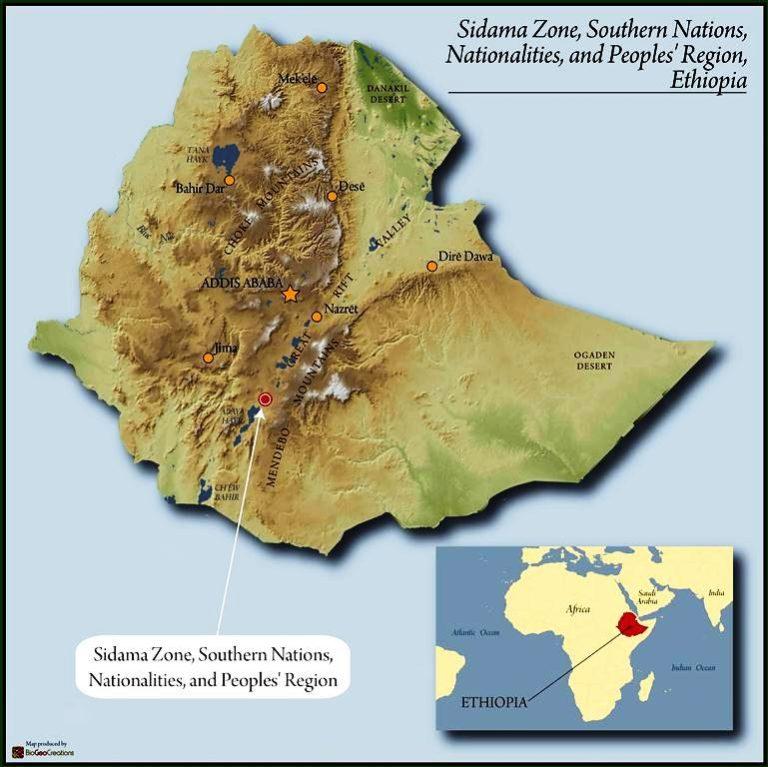
FrontStreet Coffee's Guji coffee beans come from Hambella, which is located in Ethiopia's famous specialty coffee producing region Guji, formerly part of the Sidamo coffee region, and administratively belongs to the Oromia region. Hambella's west side faces Yirgacheffe's Kochore across mountains, with the two regions separated by highlands reaching 3200 meters in altitude and about 30 kilometers in width. To the southeast, east, and north, it borders Guji's Shakiso, Uraga, and Kercha sub-regions respectively. It is the highest-altitude coffee sub-region in Ethiopia (Harrar is the highest-altitude main coffee producing region in Ethiopia).
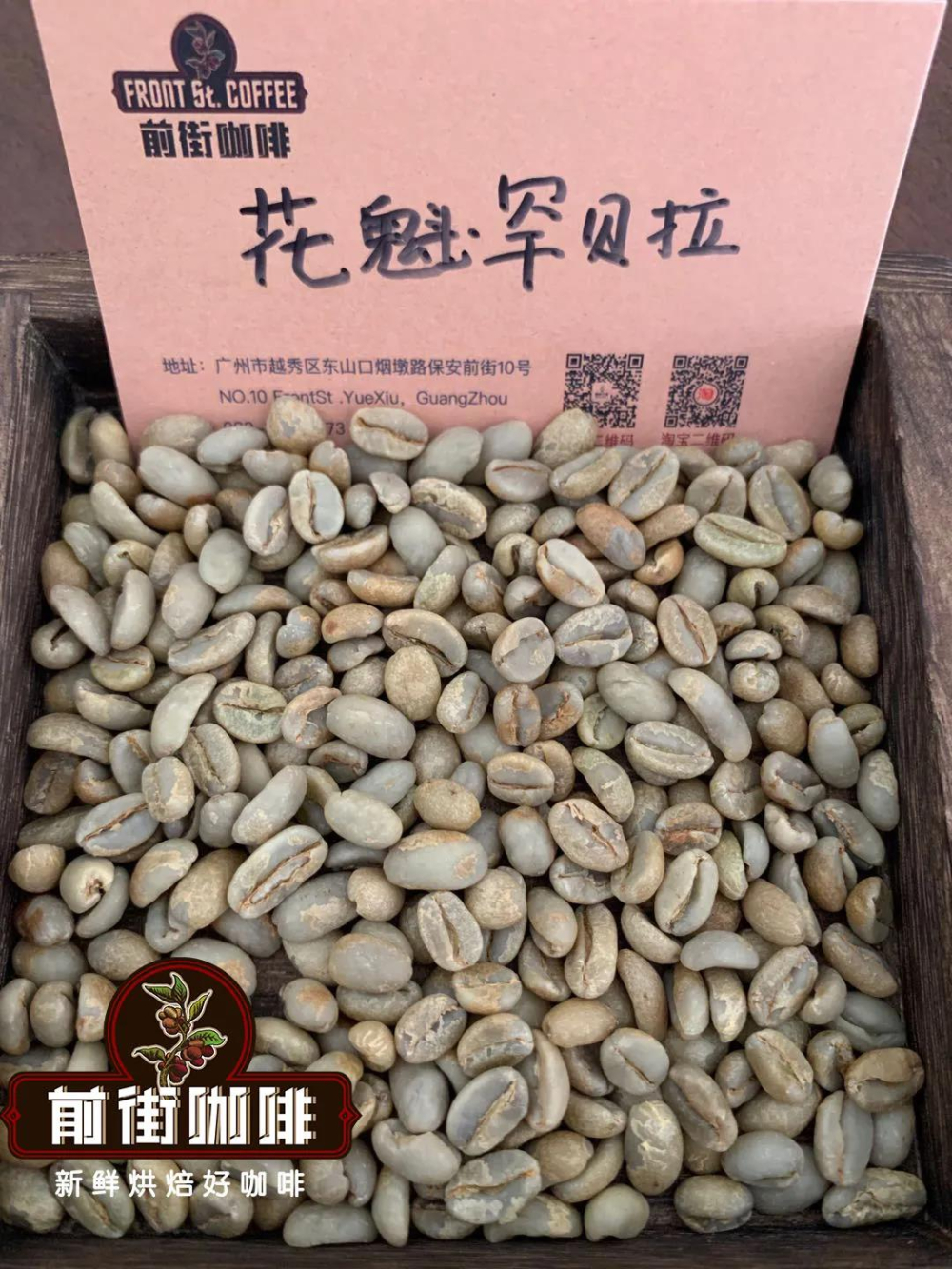
Currently, there are about 20 processing plants of various scales in the Hambella region. In 2017, a natural process bean from DW company's "Buku Abel" processing plant won the Ethiopia National Taste of Harvest Competition championship. Chinese green bean importers named this bean "Guji." At that time, this bean had rich strawberry and cream aromas. In other words, only coffee beans produced by the "Buku Abel" processing plant are called Guji. FrontStreet Coffee also provides coffee products produced by the Buku Abel processing plant.
FrontStreet Coffee Guji Coffee Varieties
What coffee variety is FrontStreet Coffee's Guji coffee from Ethiopia? Why is it written as local native varieties? FrontStreet Coffee would like to tell everyone: Ethiopia is the genetic birthplace of coffee, with an extremely large number of coffee varieties. Unlike American coffee estates, where humans brought coffee varieties over, Ethiopia's coffee varieties grew naturally. It is therefore impossible to distinguish between varieties, and it is possible that a single coffee growing area has thousands of varieties. The varying sizes of Ethiopian coffee beans prove this point. Faced with this situation, Ethiopia can only use the term "native varieties" to encompass indigenous coffee varieties.
FrontStreet Coffee Guji Bean Processing Method
In addition to region and variety, coffee flavor is also influenced by the processing method of coffee beans. FrontStreet Coffee's Guji coffee uses the most ancient processing method, the natural process. According to FrontStreet Coffee's understanding, coffee farmers harvest coffee fruits annually from December to January, and coffee cherries must reach a sugar content above 30% before undergoing natural processing. The natural process is very meticulous: the first two days must ensure the humidity of the coffee cherries so their fruit sugars can fully ferment. When the temperature is high at noon, timely shading is necessary to prevent sun damage to the cherries, which would be detrimental to fermentation. Then, at night, to prevent sudden rain, thick plastic must be used for wrapping.

Coffee is an agricultural crop, and its flavor naturally changes with climate influence, so each year's Guji coffee flavor is slightly different. FrontStreet therefore introduced coffee beans from the "Buku Abel" processing plant in the Hambella region, distinguishing previous Guji coffees and different batches or harvest seasons by year, calling them FrontStreet Coffee Guji 2.0, FrontStreet Coffee Guji 3.0, FrontStreet Coffee Guji 3.1, FrontStreet Coffee Guji 4.0, and FrontStreet Coffee Guji 5.0. Following this pattern, should this year's Guji be called FrontStreet Coffee Guji 6.0? FrontStreet Coffee is also looking forward to the arrival of Guji 6.0, and believes that the upcoming FrontStreet Coffee Guji 6.0 will certainly not disappoint everyone.
FrontStreet Coffee Brewing Recommendations:
For coffee brewing, FrontStreet Coffee always recommends that freshly roasted coffee beans better showcase the rich flavors of coffee. All coffee beans sold by FrontStreet Coffee are therefore roasted within 5 days. FrontStreet Coffee's roasting philosophy is "Freshly Roasted Quality Coffee," ensuring that every customer who places an order receives the freshest coffee. The coffee degassing period is about 4-7 days, so when customers receive their coffee, it is at its peak flavor.
Of course, some customers need FrontStreet Coffee to grind the beans for them, which is also fine. However, FrontStreet Coffee must remind you: once coffee beans are ground in advance, they need to be brewed promptly. If already ground into coffee powder, there is no need for further degassing, because during transportation the pressure from carbon dioxide buildup in the package also helps mellow the coffee flavor, so you can brew a cup immediately upon receiving the coffee powder.
Coffee powder, however, oxidizes relatively quickly after contact with air, meaning the coffee flavor dissipates faster and the coffee will not taste as good. FrontStreet Coffee therefore recommends purchasing whole beans and grinding fresh before brewing to better appreciate the rich flavors of coffee.
FrontStreet Coffee Guji Coffee Brewing Recommendations:
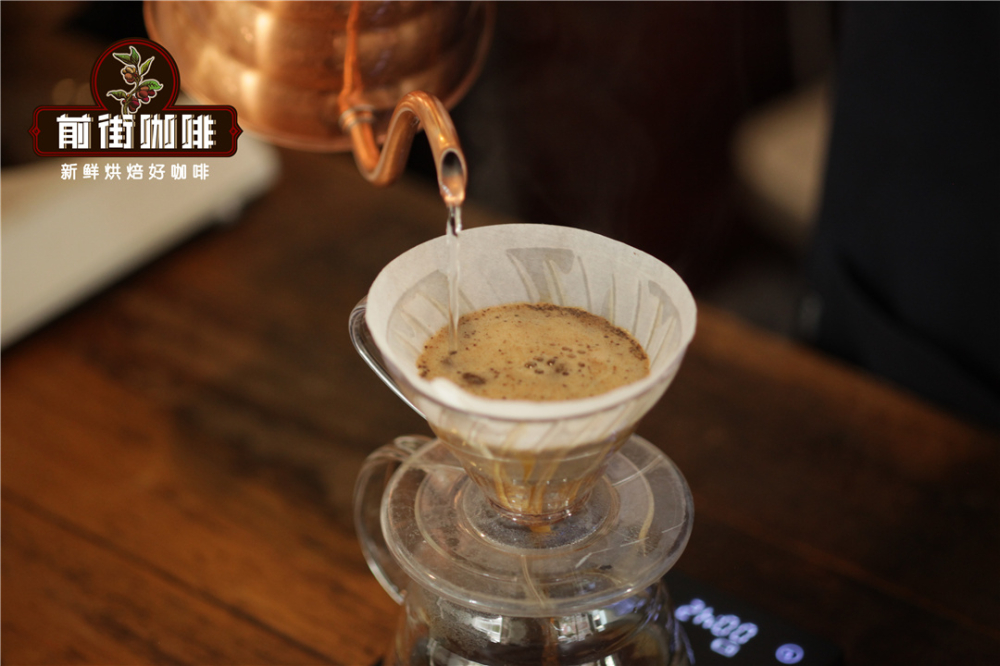
To fully extract the rich layers of FrontStreet Coffee's Guji coffee beans, FrontStreet Coffee uses: Filter: Hario V60, Water Temperature: 90°C, Coffee Amount: 15g, Coffee-to-Water Ratio: 1:15, Grind Size: Medium-fine grind (80% pass-through rate on the China standard #20 sieve).

Using segmented extraction, bloom with twice the amount of water as the coffee grounds, that is, 30g of water for 30 seconds. The blooming process is necessary to let the coffee grounds release internal carbon dioxide, making the later extraction more stable. With a small water flow, pour in circles until reaching 125g, then continue pouring until reaching 225g. Remove the filter cup once all water has dripped through. Start timing from the beginning of pouring, with an extraction time of 2'00". Next, pick up the entire cup of coffee, shake it well, and pour it into cups for tasting.
FrontStreet Coffee Natural Guji Coffee Flavor Description:
Citrus acidity, full-bodied berry juice, lemon black tea notes, and persistent sweetness.
FrontStreet Coffee Recommendation
Hambella is the heart of Guji, and the natural process there is what gives coffee its strawberry-and-cream, fermented-wine character. FrontStreet Coffee's natural Huakui comes from the same 200-hectare Hambella farm, where cherries dry for 21 days on raised beds and are turned and hand-sorted throughout, producing a light fermented wine aroma with florals, citrus, and mango, plus honey sweetness, a cocoa-and-spice undertone, and a thick, lingering body. If you want to taste the region's cleaner, washed side, FrontStreet's washed Yirgacheffe daily bean brings white jasmine florals, bright citrus and lemon acidity, and a tea-like body. And for a fruit-forward natural with a different accent, FrontStreet's natural Yirgacheffe Red Cherry offers peach, cocoa, honey, and lemon from fully ripe red cherries.
Important Notice :
FrontStreet Coffee is a long-established specialty coffee roaster in Guangzhou China, selling freshly roasted beans from its own farm in Yunnan as well as dozens of carefully selected single-origin beans from around the world for both pour-over and espresso. The products deliver consistently excellent quality and great value, with shipping within 24 hours. Guangzhou's FrontStreet Coffee shop is recommended by many coffee lovers, and the beans are now available online at the Tmall 。
FrontStreet Coffee has moved to a new address:
FrontStreet Coffee Address: 315,Donghua East Road,GuangZhou
Tel:020 38364473
 Scan and follow the En Gafei WeChat official account. Please indicate that the reprint comes from "En Gafei".

