Does Pour-Over Coffee Taste Better Than Machine-Made Americano? What Are the Benefits and Advantages of Pour-Over Coffee

"Does pour-over coffee taste better than Americano?" Although both are black coffees, each has its own character! In this article, FrontStreet Coffee discusses the differences between pour-over coffee made by the drip method and Americano made with an espresso machine — and when you visit a café, which should you choose?
What is Pour-Over Coffee?
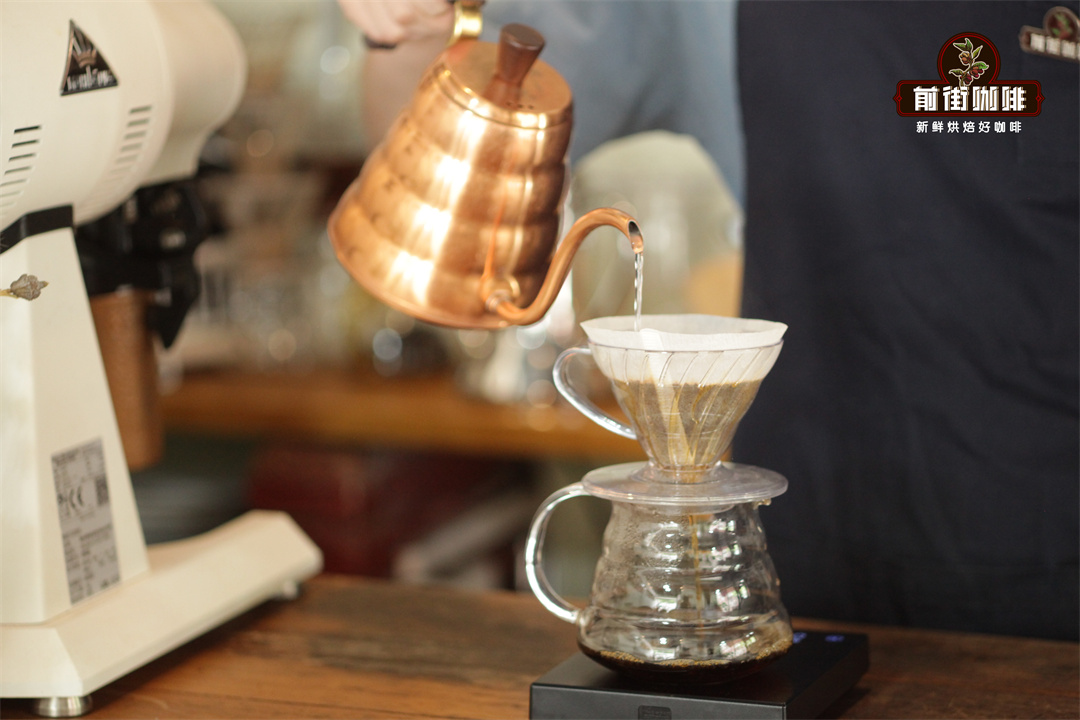
Pour-over coffee belongs to the drip coffee category. When drip coffee first appeared, its purpose was filtration! Brewed coffee was passed through perforated vessels and blotting paper to remove the grounds, yielding a clean cup. Later, as specialty coffee ideas spread, people realized that coffee holds delicate flavors that only express themselves fully under specific water temperatures and extraction times. So they began improving the brewing equipment and filter paper, grinding beans to the right fineness and placing them directly in a dripper for controlled water injection. This way, extraction time and water temperature can be precisely managed. Modern pour-over coffee uses a dripper with filter paper (or another filter medium) to hold back the grounds, ultimately producing a cup with layered flavors.
Why Does Pour-Over Coffee Have "Layered" Characteristics?
Traditional coffee-making simply boils grounds in water with little attention to extraction time. High temperatures and long extraction easily lead to over-extraction: the coffee smells fragrant and tastes mellow, but always with unpleasant bitterness alongside. Only 30% of a coffee bean consists of flavor compounds; the other 70% is woody fiber. And from that 30%, we only want to extract 18%-22%!

Flavor compounds also extract in sequence: acidic substances come first, then sweet substances, and finally bitter ones. If we extract all 30%, the over-drawn bitterness masks the acidity and sweetness, leaving a bitter, astringent cup. Pour-over coffee controls extraction through grind size, water temperature, pouring technique, and brew ratio. When the coffee's acidity and sweetness are fully drawn out, a touch of appropriate bitterness adds depth. And as the temperature falls, different flavors peak at different points — which is exactly why pour-over reveals new layers as you drink.
What Is the Best Temperature to Drink Pour-Over Coffee?
The ideal drinking temperature depends on roast level. For example, FrontStreet Coffee's PWN Golden Mandheling is roasted dark to highlight richness. Dark, rich coffees have prominent sweet and bitter notes, and those flavors perform best at 40-60 degrees Celsius.

By contrast, FrontStreet Coffee's Ethiopia Sidamo Natural Guji 5.0 is roasted medium-light to highlight fruit-like acidity and sweetness, which perform best at 30-50 degrees. Of course, these are just the peak windows for particular flavors! When FrontStreet Coffee serves guests, we always recommend tasting in three stages — hot, warm, and cool. If you only sip at the "optimal" temperature, you miss many of the flavor surprises the other temperatures bring.

What is Americano Coffee?
An authentic Americano is made by adding an appropriate amount of water to espresso, diluting it to the drinker's preferred strength. Espresso production is completely different from drip coffee! Espresso is extracted rapidly under 9 bar of pressure in a dedicated machine, producing an extremely concentrated coffee. When this method was invented, the goal was simply a quick, high-caffeine pick-me-up — flavor was an afterthought! But as quality of life improved and specialty coffee spread, today's espresso is all about bean selection and flavor expression. Diluting the espresso with water in the right proportion lets its flavors come through clearly even while staying rich.

What Does Americano Coffee Taste Like?
An Americano's flavor depends on the blend used for the espresso. FrontStreet Coffee's daily espresso drinks use our Ethiopia Yirgacheffe Natural beans blended with Honduras Sherry beans. This "Sunflower Warm Sunshine" espresso blend yields shots with whiskey aroma, berry acidity and sweetness, vanilla-cream smoothness, and a nutty-cocoa aftertaste. Our Americano dilution ratio is 1:6 — lower than usual because the blend's flavors are especially gentle. Most café Americanos dilute at around 1:7-1:8.

At a Café, Should I Choose Pour-Over or Americano?
FrontStreet Coffee recommends both — decide by how much time you have. If you're not in a rush, sit down and savor a pour-over slowly, enjoying its shifting layers at different temperatures; quietly watching the barista brew at the bar is genuinely therapeutic. But if you're in a hurry, choose the Americano: pour-over usually takes 3-5 minutes to prepare, while an Americano is ready in 1-2 minutes.
FrontStreet Coffee Recommendation
For pour-over, the dripper matters: the V60's cone shape and 60-degree angle channel the water to the center of the bed, extending contact time for fuller extraction, while its single large outlet makes the flow rate — and therefore the flavor — a direct reflection of the brewer's pour control. Hario, the Tokyo glassware maker founded in 1921, redesigned the V60 into its familiar form in 2004 and launched it the following year. Its fast, clean extraction is ideal for the light-roast, floral-and-fruit coffees of the third wave: the classic Yirgacheffe character of FrontStreet Gotiti (bright citrus, berries, florals, and a green-tea sweetness), the lush tropical fruit of FrontStreet Huakui (strawberry, passion fruit, jackfruit, even lychee), the legendary jasmine and bergamot of Panama Esmeralda Red Label Geisha, or the Kenya Cherry Tomato — washed SL28 and SL34 grown at 1,550-1,750 meters with a 72-hour double fermentation, bursting with cherry tomato and dried plum juiciness.
If you prefer a fuller, low-acid cup — the style that dominated before the millennium, alongside chocolate, maple, nut, and vanilla notes — reach for the medium-dark roasts: FrontStreet's PWN Golden Mandheling (herbal, dark chocolate, a whisper of earth, very low acidity), Brazil Queen Estate (balanced with rich nut and cocoa aromas and clear caramel sweetness, equally at home in a dripper, espresso machine, or moka pot), Jamaica Blue Mountain No. 1 (that near-perfect balance of cream, caramel, chocolate, nuts, and honey that professionals call the easiest specialty coffee for most people to love), the 2013 Yunnan sun-dried Typica with its interwoven citrus and caramel over nuts, chocolate, and brown sugar, or Papua New Guinea Paradise Bird — Typica grown at 1,600-1,800 meters in volcanic soil, AA grade with triple washed fermentation, so clean and sweet it's nicknamed "Little Blue Mountain."
Important Notice :
FrontStreet Coffee is a long-established specialty coffee roaster in Guangzhou China, selling freshly roasted beans from its own farm in Yunnan as well as dozens of carefully selected single-origin beans from around the world for both pour-over and espresso. The products deliver consistently excellent quality and great value, with shipping within 24 hours. Guangzhou's FrontStreet Coffee shop is recommended by many coffee lovers, and the beans are now available online at the Tmall 。
FrontStreet Coffee has moved to a new address:
FrontStreet Coffee Address: 315,Donghua East Road,GuangZhou
Tel:020 38364473
 Scan and follow the En Gafei WeChat official account. Please indicate that the reprint comes from "En Gafei".