Differences Between Blue Mountain Flavor Blend Coffee Beans and Authentic Blue Mountain - A Guide to Identifying Real vs Fake Blue Mountain Coffee
The world-famous "Blue Mountain Coffee" has won over coffee lovers with its mellow taste and perfect balance of acidity, bitterness, aroma, body, and sweetness. Given its rarity and price, Blue Mountain is almost always consumed as a single origin — only siphon and pour-over brewing truly interpret its mellow aroma and long finish.
Yet much of what's sold as "Blue Mountain" is actually "Blue Mountain Blend" or "Blue Mountain Flavor" coffee — check the label for the words "Blend" or "Flavor." By definition, a Blue Mountain Blend must contain no less than 30% genuine Blue Mountain beans. Many people use such blends for lattes, cappuccinos, and mochas — and a conscientious roaster working with fresh, high-quality beans and proper roasting can still make a blend that lingers pleasantly. But a blend is not Blue Mountain. Here's how to tell them apart.
What is True Blue Mountain Coffee?
The Blue Mountains sit in eastern Jamaica. On clear days, direct sunlight strikes the azure sea and the peaks reflect its brilliant blue light — hence the name. The highest peak reaches 2,256 meters, the tallest in the Caribbean and a famous tourist destination. The region lies within the coffee belt, with fertile volcanic soil, unpolluted air, a humid climate, and year-round fog and rain (average precipitation of 1,980 mm, temperatures around 27°C). That climate and extreme altitude created the world-renowned Jamaican Blue Mountain Coffee.
Clifton Farm Introduction
Clifton Hill is the oldest coffee-producing area in Jamaica still operating today — and the only Blue Mountain farm holding the "Rainforest Alliance" certification. It is recognized worldwide as an exceptionally high-quality Blue Mountain origin. The estate sits in the Newcastle area of the island, on the eastern slope of Mount Catherine at an altitude of 4,300 feet.
History
Clifton Farm began planting and producing coffee as early as the mid-18th century, around 1750. According to an 1810 survey by the Jamaica Institute, Robert Hamilton owned the farm at the time; Clifton Hill was then divided into two parts — 80 acres of coffee with 427 acres of mountaintop pasture, and 111 acres of coffee with 264 acres of pasture at the mountain's foot.
The Blue Mountain growing area is tiny — only 6,000 hectares — so not every bag labeled "Blue Mountain" could possibly have been grown there. Today Clifton Farm is the largest estate in the region, though even by international standards it counts as small-scale cultivation; many estate owners are smallholders whose families have worked this land for two centuries.
The famous British painter and writer Marian North spent 5 months on Clifton Hill. In her autobiography "Recollections of a Happy Life," she recalled the Clifton Hotel where she stayed: "The Clifton Hotel belongs to a local gentleman who lost his wife. He was unwilling to live in the hotel anymore but rented it out to different people each week, allowing more people to experience the cold air at 5,000 feet altitude and the opportunity to walk among Jamaica's best and oldest coffee plantations."
Clifton Hill Village
The coffee cultivation and processing area averages 4,300 feet (1,310.64 meters) in altitude. Sufficient elevation, gentle afternoon clouds and mist shading the forests, ample sunlight, and mineral-rich soil give the coffee trees excellent growing conditions and extend the maturation of the cherries.
In 1953, the Jamaican government established the Jamaica Coffee Industry Board (CIB) to regulate and guarantee quality — Jamaica was the first country in the world to designate a specific geographic location to a particular coffee brand, much as France's wine industry later formalized the Appellation d'Origine Contrôlée (AOC). All coffee exported from Jamaica passes through the CIB, and strict testing by trained quality-control experts ensures that all exports are 100% authentic Jamaican Blue Mountain Coffee.
The Sharp Family
The Sharp family manages the estate today. Clifton's high altitude and long history, combined with its distinctive processing, give its coffee not only the characteristic roundness and smoothness of Blue Mountain No. 1 but also subtle floral notes and other rich flavors — which is why Clifton commands such high prices, selling at a premium per barrel.
Washed Processing Method
Blue Mountain is only ever washed. Washing uses water and fermentation to remove the skin, pulp, and mucilage: farms must build washing pools fed by a continuous supply of fresh water. The skin and pulp are removed first, the beans ferment for 12–18 hours, then they're agitated in the pool — friction between beans and the force of flowing water washing them clean.
After washing, the beans — still in parchment and at 50% moisture — must be sun-dried down to 12–14% before screening and storage in special warehouses. Every step is strictly controlled; any lapse affects quality.
Certification matters here: coffee bearing the Rainforest Alliance frog on its bags or barrels is certified, and farms must comply with the "Sustainable Agriculture System Standards" to earn it. Clifton Estate is the only coffee estate holding that certification.
Green Bean Analysis
Blue Mountain is graded in four tiers, from highest to lowest: NO.1, NO.2, NO.3, and PB (peaberry). Under CIB standards, only coffee grown above 666 meters may be called Jamaican High Mountain Coffee; coffee grown outside the Blue Mountain range is simply Jamaican Coffee. NO.1 green beans must meet basic standards of screen size 17 or above, a defect rate below 3%, and moisture content around 13%. The variety is Typica.
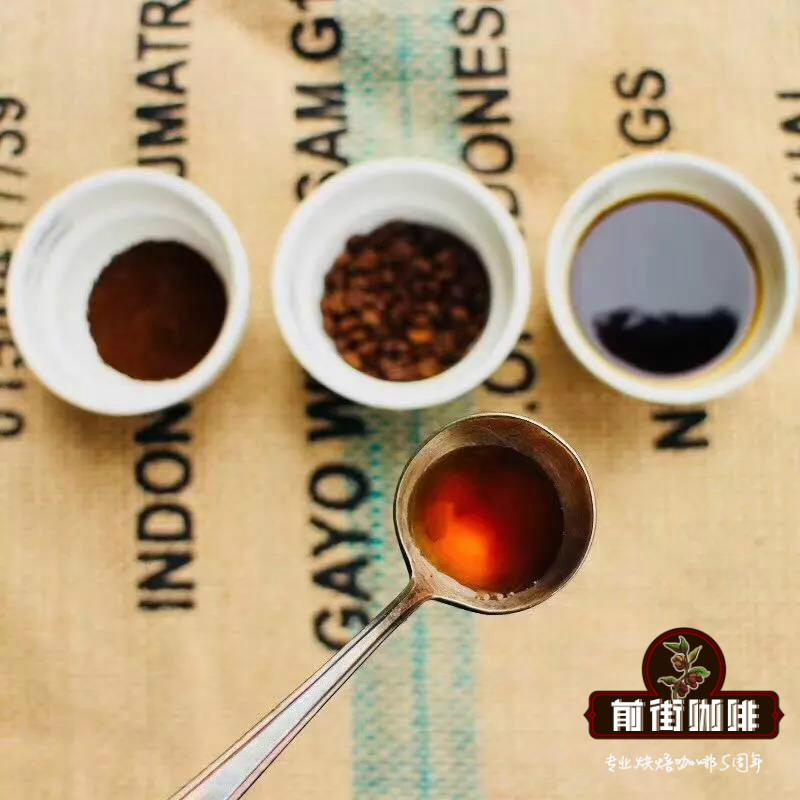
Blue Mountain Coffee Cupping
Cupping characteristics: a perfect, subtle balance of acidity, body, and aroma. The acidity is bright and delicate; the body as smooth as velvet; the aroma slightly penetrating, accompanied by floral, spicy, and citrusy notes, with a hint of cocoa in the aftertaste.
The taste is very clean, complex, and very mild, with chocolate sweetness and very strong body. Rich and mellow, with a perfect balance of sweetness, acidity, and bitterness — no harsh bitterness at all, only moderate and perfect acidity, and a persistent fruity finish.
Dry aroma: roasted peanut, hazelnut, melon, chocolate.
Wet aroma: oolong tea, caramel, honey, dark chocolate, almond skins, silky mouthfeel, brightness.
Brewing Analysis
For daily brewing, V60, Kalita wave, and KONO drippers all suit Blue Mountain.
KONO parameters: 15g coffee, water temperature 89°C, grind setting 4, water-to-coffee ratio close to 1:15, total time around 2:00.
Technique: bloom with 25–30g of water for 30 seconds; first pour to 120g then stop — vertical stream, small flow, slow circles; second pour to 225g with slightly faster flow and circling to keep fines from clogging the filter and causing over-extraction.
Other Extraction Recommendations
French Press: grind 3.5–4, water temperature 90°C
Siphon: grind 4, water temperature 89°C
AeroPress: grind 2.5, water temperature 88°C
How to Identify Authentic Blue Mountain Coffee?
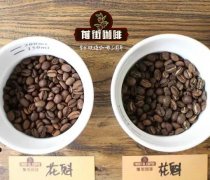
1. Appearance: Blue Mountain green beans are blue-green, very uniform, medium to small, with slightly upturned ends. They expand dramatically after roasting, becoming very full.
2. Grinding: grown at high altitude, the beans' cell structure is relatively loose — grind them by hand and they feel crisp, smooth, and continuous, with no resistance.
3. Aroma: rich and dense; so-called Blue Mountain blends simply don't smell like this.
4. Taste: authentic Blue Mountain is balanced and rich, with no single flavor dominating or missing — no other bean achieves this, and it's the most crucial identification point. Peaberries have a more subtle aroma but a relatively stronger taste.
"True Blue Mountain" and "Blue Mountain flavor" are two entirely different things. Blends usually roast other varieties to imitate the Blue Mountain taste, and because the component beans differ in shape, blends are actually the easier fakes to spot. And be skeptical of "premium Blue Mountain" sold suspiciously cheap by the pound, or "Blue Mountain coffee" priced at pocket change per cup — if the price looks impossible, the coffee isn't what the label says.
FrontStreet Coffee Recommendation
When buying Blue Mountain, trust paperwork over branding. Authentic Jamaica Blue Mountain carries official certification and proof of origin, and it ships in traditional wooden barrels — 15, 45, or 70 kg — stamped with detailed batch information; a roaster who can show you certificates and barrel-stock photos is far more trustworthy than one who can't. FrontStreet Coffee's Blue Mountain No.1 comes from the historic Clifton estate, whose certification and original barrels make the provenance easy to verify.
For brewing at home, FrontStreet Coffee suggests a KONO dripper with 15g of coffee rested 4–7 days post-roast, ground slightly coarser than for light roasts (white-sugar texture), at 87–88°C and a 1:15 ratio, using a three-stage pour: 30g bloom for 30 seconds, then to 120g, then to 225g. Roast level matters too — a medium-dark roast best expresses Blue Mountain's signature balance. Expect nuts, dark chocolate, cream caramel, and soft sweetness unfolding in layers, with acidity, sweetness, bitterness, and aroma in perfect, effortless harmony — the quality no blend can imitate.
Important Notice :
FrontStreet Coffee is a long-established specialty coffee roaster in Guangzhou China, selling freshly roasted beans from its own farm in Yunnan as well as dozens of carefully selected single-origin beans from around the world for both pour-over and espresso. The products deliver consistently excellent quality and great value, with shipping within 24 hours. Guangzhou's FrontStreet Coffee shop is recommended by many coffee lovers, and the beans are now available online at the Tmall 。
FrontStreet Coffee has moved to a new address:
FrontStreet Coffee Address: 315,Donghua East Road,GuangZhou
Tel:020 38364473
 Scan and follow the En Gafei WeChat official account. Please indicate that the reprint comes from "En Gafei".