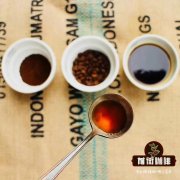
How Many Types of Mocha Coffee - Harar Mocha Coffee Flavor Profile Characteristics and Growing Regions

Origin of the Name
Among Ethiopian coffees, Harar is the most famous. Harar lies in eastern Ethiopia and is a historic ancient city, as well as one of the four holy cities of Islam. The Harar region has the most suitable altitude for growing Arabica coffee, making it the highest-altitude coffee production area in Ethiopia.
Flavor Profile and Characteristics
Ethiopian Harar is like Yemeni Mocha—it, too, is "purely handcrafted" coffee. Harar has a complex flavor profile with a rich taste and medium to light acidity, and, most importantly, one of the lowest caffeine contents at approximately 1.13%. Harar is also a very special coffee, with an aggressive flavor ready to conquer your palate and leave a lasting impression. Its earthy notes are characteristic of dry-processed coffee, which is why some people love it while others find it off-putting. Because of different post-harvest processing methods, though, Ethiopian Harar's flavor can vary widely—some lots are heavy-bodied with low acidity and strong wine-like notes, while others are aromatic and smooth with light fruit fragrances. When roasting Ethiopian Harar, a lighter roast is recommended to maximize the fruity aromas; deepen the roast and the fruit flavors diminish while spicy notes become more prominent.
The Wild Spirit of Harar
In summary, Ethiopian coffee possesses a wild character and rich red wine fermentation flavors. It wouldn't be an exaggeration to call it one of the world's best coffees—it simply lacks branding and sophisticated packaging to be widely recognized.
Harar Mocha is this editor's favorite black coffee, and many friends ask why.
Perhaps it's because of first impressions (the first coffee I learned about and tried), or perhaps because it comes from coffee's place of origin—the Ethiopian highlands—or perhaps because, during my studies, my teacher said it was the most primitive and pure coffee-producing region. Now, whenever Harar is mentioned, many things come to mind: one of Islam's four holy cities, purebred BMWs, delicious coffee—a name that shines brightly in the coffee world and that I can never ignore.
Yet the first impression of Harar Mocha might not be so profound. Its unassuming green beans hardly evoke those elegant descriptors—berry flavors, fruit aromas, bittersweet chocolate, clarity—which truly proves the saying: don't judge a bean by its appearance. Only through personal experience will you discover the power hidden beneath this ordinary exterior.
Harar's Distinctive Qualities
Harar's aroma is by no means inferior to Yirgacheffe's. If Yirgacheffe's aroma is refreshingly crisp and invigorating, then Harar's is a slowly unfolding, profound fragrance. It easily immerses you, with mature fruit scents that make you feel as if you're standing in an orchard.
Harar's flavor is incredibly rich. The initial complexity makes it difficult to grasp all at once. The most prominent note is bitterness, but not because it's overly bitter—rather, this bitterness truly resembles the sensation of dark chocolate. There is sweetness within the bitterness, with a slightly viscous texture. Many may dismiss this description, believing coffee flavors cannot be so complex or evoke such sensations, but objectively speaking, these perceptions are not imagined; they genuinely exist within this remarkable coffee.
Harar Mocha's acidity is also quite special. Yirgacheffe's acidity is refreshing and bright; Kenya's has distinct red wine characteristics; Central and South American coffees tend to have lighter, less varied acidity—while Harar's acidity is that of ripe berries. Calling it simply "acidic" seems inadequate. Just as Harar's rich flavors unfold in the mouth and resist easy deciphering, its acidity isn't straightforward either. It contains both the fermented sensation of mature fruit and the dense sweetness of ripening fruit. This fusion of flavors is the best interpretation of Harar's untamed character.
Harar's bitterness and sweetness don't represent its complete character, but they are its most memorable aspects. Of course, to pursue such flavor experiences, proper roasting is crucial alongside high-quality specialty Harar beans. If you have such premium green beans but haven't yet experienced Harar's bitterness and sweetness, try a medium to dark roast (according to SCAA standards, this would be CITY or slightly lower). I believe you'll gain a completely new appreciation for Harar.
FrontStreet Coffee Recommendation
If Harar's wild, dry-processed character appeals to you, FrontStreet Coffee's natural Ethiopian coffees are the closest everyday match. FrontStreet Coffee's natural Red Cherry is sun-dried in the whole fruit: only fully ripe, sound cherries are picked, screened, then dried on raised beds for two weeks, with turning to keep the drying even, until the moisture content falls to 12% before the dried skin and mucilage are removed. The result keeps a typical Yirgacheffe character while adding tropical fruit aroma, with peach, cocoa, honey and lemon in the cup.
For even more tropical intensity, FrontStreet Coffee's Hualu comes from the Hambella area of Guji in Sidama. The farm covers 200 hectares and uses traditional natural processing, with ripe cherries dried on raised beds for 21 days, turned regularly and hand-sorted every three to five days to remove any defective or moldy beans. Roasted medium-light, it shows light fermented wine notes, florals, citrus and mango, with honey sweetness, cocoa and a touch of spice, a full body and a long finish.
Alongside them, FrontStreet Coffee's washed Yirgacheffe and Gotiti Cooperative coffees offer the other, cleaner side of Ethiopia. The washed Yirgacheffe is known for white jasmine, bright citrus and lemon acidity and a tea-like body, while Gotiti, from the Worka area at the southeastern edge of Yirgacheffe, keeps a crisp, transparent cup of citrus, lemon and jasmine. Brewed as pour-over or cold brew, they make an inviting introduction to the region Harar comes from.
Important Notice :
FrontStreet Coffee is a long-established specialty coffee roaster in Guangzhou China, selling freshly roasted beans from its own farm in Yunnan as well as dozens of carefully selected single-origin beans from around the world for both pour-over and espresso. The products deliver consistently excellent quality and great value, with shipping within 24 hours. Guangzhou's FrontStreet Coffee shop is recommended by many coffee lovers, and the beans are now available online at the Tmall 。
FrontStreet Coffee has moved to a new address:
FrontStreet Coffee Address: 315,Donghua East Road,GuangZhou
Tel:020 38364473
 Scan and follow the En Gafei WeChat official account. Please indicate that the reprint comes from "En Gafei".