What is the Best Water Temperature for Brewing Guanxi Coffee? Hand Brewing Techniques for Guanxi Coffee
Introduction to Ethiopia's Natural Process Coffee

Ethiopian coffees are predominantly characterized by floral aromas and fruit acidity, with a light, bright cup that feels like drinking a glass of fruit tea. The natural process Coffee Queen is even more fragrant and sweet, bursting with fruit flavors and leaving a lingering honey-like sweetness in the mouth, as if it takes you into a tropical fruit world.
Ethiopia's Famous Coffee Regions
Ethiopia has two particularly famous coffee-producing regions, both of them specialty regions. One is Yirgacheffe, whose washed coffee is Ethiopia's representative and also the entry bean for anyone starting out in specialty coffee. The other is Sidamo, which mainly uses natural processing, and whose Coffee Queen is its most famous representative.
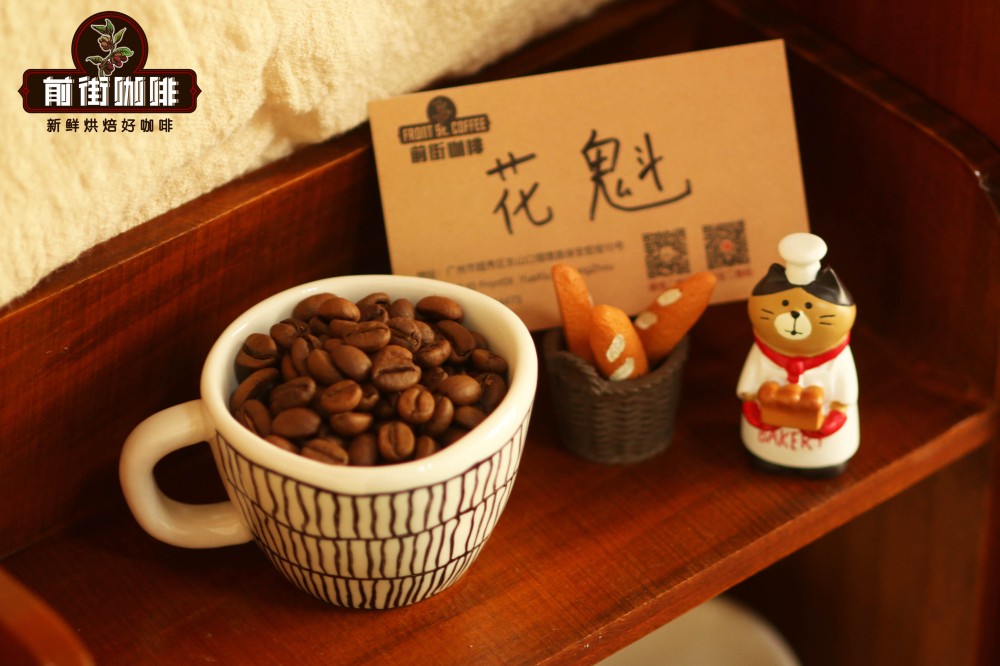
Ethiopia is the birthplace of coffee, but because of differences in geography, climate, temperature, and soil micronutrients between regions, flavors vary from place to place. To let everyone taste high-quality coffee from across Ethiopia, FrontStreet Coffee has already acquired more than a dozen single-origin coffees from the country, covering both natural and washed processes.
The Origin of the Coffee Queen Name
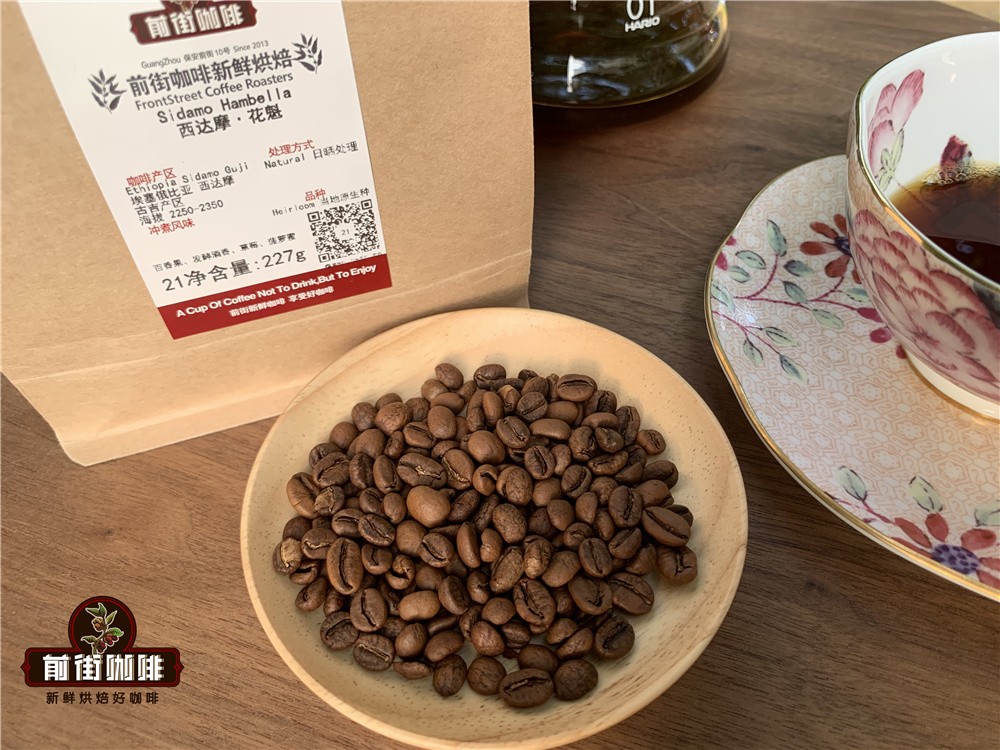
In 2017, Ethiopia's DW green bean company sent its coffee to the TOH (Taste Of Harvest) competition organized by the African Fine Coffee Association, where its natural process batch won the TOH Ethiopia championship. As a champion batch, those green beans were named "Coffee Queen." A Beijing-based green bean company, Hongshun Company, introduced Coffee Queen to China and gave it the name, expressing high hopes for it.
In reality, Coffee Queen has only one name abroad: Hambella, which comes from a small producing area in the Sidamo Guji zone. If we look carefully, only natural process beans from the Buku Abel processing plant are what baristas call "Coffee Queen." Put plainly, the Coffee Queen people talk about is a traditional natural process G1 coffee bean from the Hambella region, with "Buku Abel" processing station being its more precise traceability information, located in Dimtu town.

After Coffee Queen became famous overnight, DW added up to 5 independent green bean drying stations in Hambella Wamena Wereda to meet the surge in market demand, all of them within the core producing area of Dimtu town. Besides the original Buku Abel, four other small villages, Buku Saysay, Haro Soresa, Tirtiro Goye, and Seke Bokosa, also joined in the production of natural process coffee beans. It is reported that the Coffee Queen produced annually under DW had already reached tens of millions of tons by then.
Since the 2018 harvest season, Coffee Queen from the same growing area and the same processing station has already shown some changes in flavor. Through cupping, FrontStreet Coffee found that although the 2018 and 2019 Coffee Queens had flavors similar to the 2017 Coffee Queen, they were inferior to the "first-generation Coffee Queen" in body, aftertaste, and other mouthfeel aspects. So, to continue selling this natural process coffee from Hambella while marking a distinction from the original, domestic green bean trading companies used 2017 as their baseline and created X.0 suffixes for each later batch. The 2018 batch was called "Coffee Queen 2.0," the 2019 production "Coffee Queen 3.0 and 3.1," last year's "Coffee Queen 7.0," and so on. In this way, the suffix tells you which year's batch the Coffee Queen you bought belongs to.

Although every bag of Coffee Queen is described with all kinds of tempting floral and fruit aromas, many times we find it hard to brew those flavors out. The recipe may record detailed data, but you do not understand why those numbers are what they are, and the finer points of brewing cannot be captured in a recipe. A recipe only records how a dish turns out under the most normal circumstances; in reality, many accidents happen during cooking, and when you meet a situation you have never seen before it is easy to be at a loss.
The same principle applies to pour-over coffee. Getting a set of pour-over parameters does not necessarily mean you can brew good-tasting coffee. What matters most is understanding the logic behind that set of data. If learning basic operations like pouring is the entry level of pour-over, then being able to identify problems in a cup of pour-over and provide parameter adjustments is the advanced level.
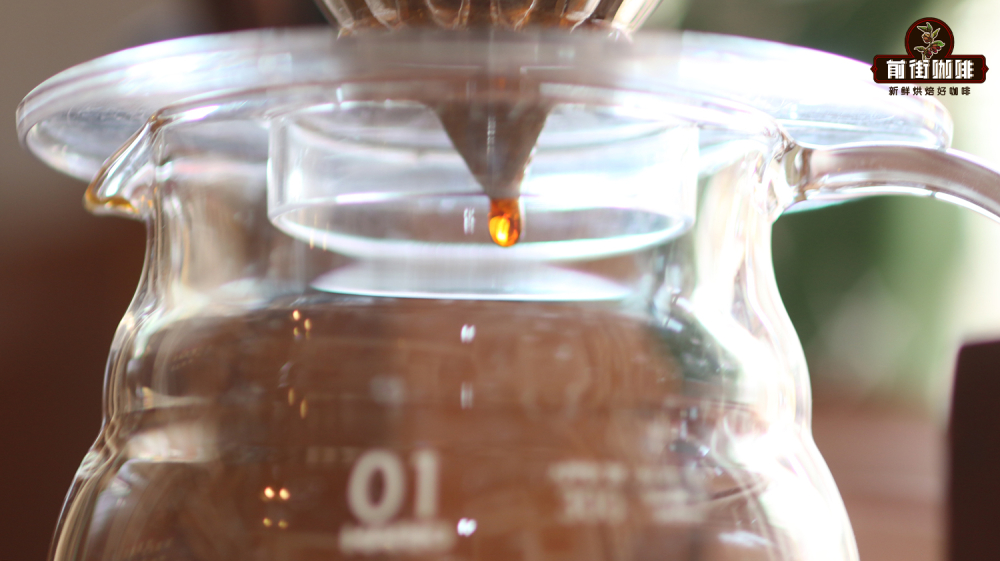
There are many pour-over parameters, but only six have a major impact: dose, ratio, grind size, water temperature, pouring method, and time. These six work together to shape the coffee's flavor, so we need to understand what effect each one has.
Coffee Dose
What does the dose parameter affect? If other parameters remain unchanged and only the dose is increased or decreased, the most direct effect is a change in the total amount of water, which indirectly changes extraction time. The change in dose has a relatively small impact on the final flavor, and everyone can adjust the brewing dose to their own coffee intake.
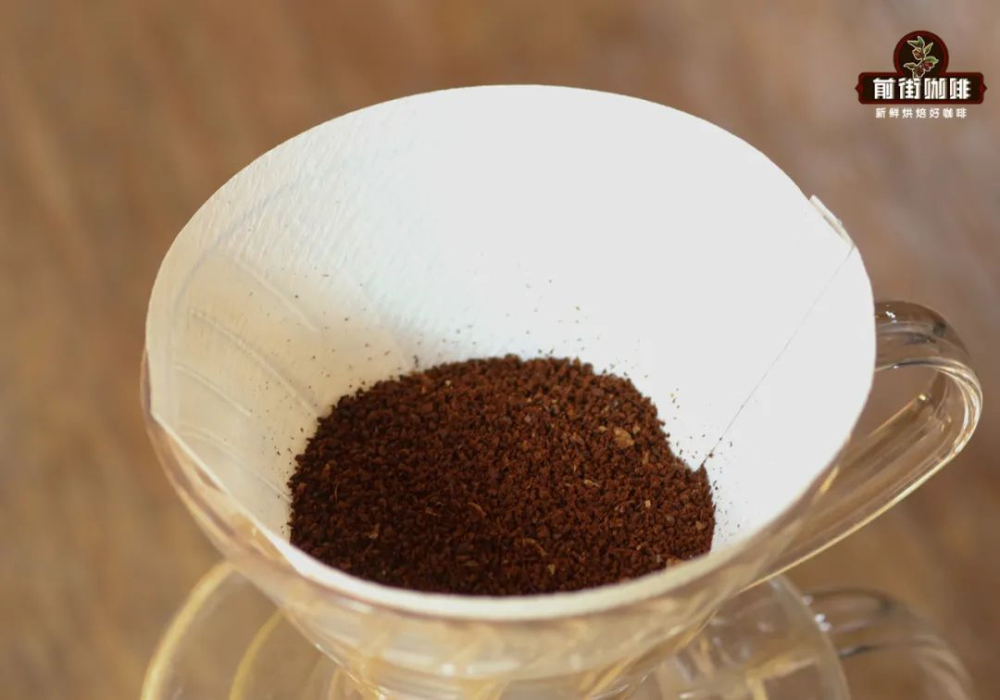
One thing to note, however, is that the size of the filter cup places limits on the dose. For a V60 01 filter cup, once the dose exceeds 25g you must change the pouring method, because the original plan would cause water to overflow as the cup fills. Too small a dose is also not good, because pouring becomes too difficult. For details you can refer to articles FrontStreet Coffee has written previously.
Coffee-to-Water Ratio
The ratio actually controls two inversely related parameters: extraction rate and concentration. Coffee with a higher ratio has a lower extraction rate but higher concentration, while coffee with a lower ratio has a higher extraction rate but lower concentration. Getting the ratio right means keeping both extraction rate and concentration within a range that is comfortable to drink.
(Note: Because many people disagree about how to compare ratios, FrontStreet Coffee uses the principle that the larger the denominator, the lower the ratio. That is, comparing 1:10 and 1:15, 1:10 is a higher ratio and 1:15 is a lower ratio. If your understanding is the opposite, simply reverse your reading of the explanation.)
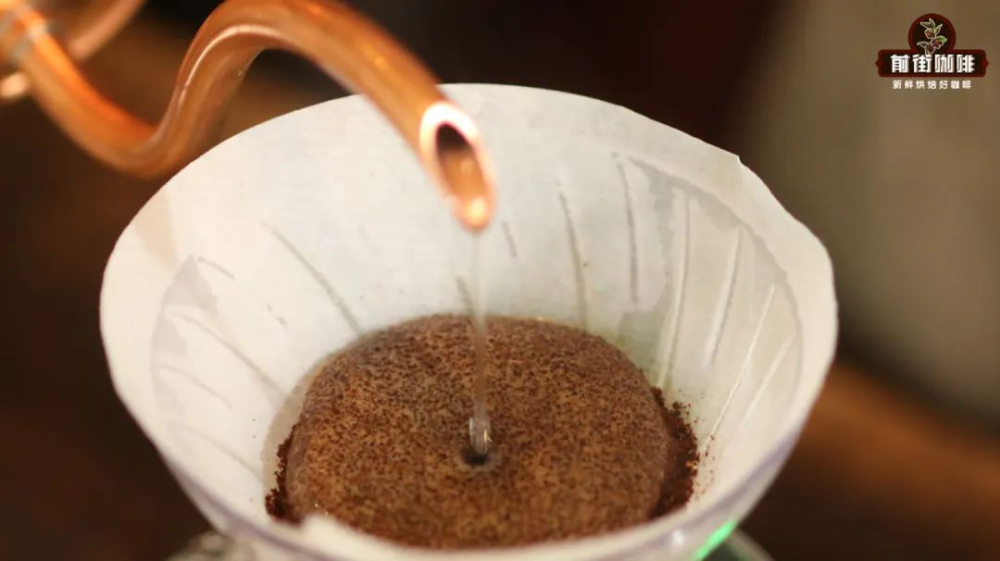
1:15 is the ratio FrontStreet Coffee uses most often, but it is not the only standard. During the period when Japanese and Taiwanese coffee were popular, ratios of 1:10 to 1:13 were typically used, making the coffee taste richer. In America during the same period, ratios of 1:17-1:20 were used, making the coffee less intense and relatively soft and comfortable. Most pour-over coffee today falls between 1:15-1:16.
If you find the coffee too light, with unnoticeable acidity and a relatively balanced cup, you may have used too much water. If you find it too strong and uncomfortable, with a brief aftertaste, you may have used too little.

Grind Size
In immersion coffee, grind size is relatively easy to understand. First there is the question of grind uniformity. If the particle size distribution of the grounds is relatively concentrated and even, the particles release their substances at roughly the same time. If the distribution is scattered, meaning the grind is uneven, some grounds release quickly while others release slowly over the same period, which easily causes uneven extraction; this is a grinding quality issue. Many people hit a clogged brew and assume it is a grind-setting problem, when it is actually caused by poor grinding quality. The solution is to sift out the coarsest or finest grounds.

Second is the question of particle size, which is also easy to understand. The smaller the coffee particles, the larger the total surface area, so they contact water and release coffee substances faster. Conversely, the larger the particles, the longer water takes to fully penetrate them, and the extraction speed is slightly slower.
With drip coffee there is an additional effect on extraction time, because in drip coffee extraction and filtration happen at the same time. If the particles are relatively coarse, water passes easily through the gaps and the extraction time is shorter. If the particles are relatively fine, water moves through the coffee bed more slowly and the extraction time is longer.
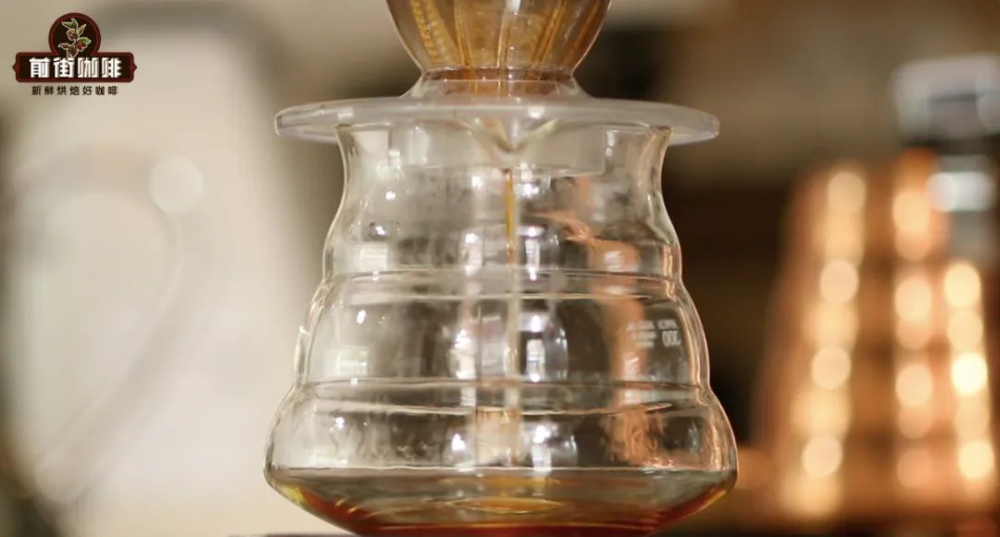
So changing this parameter affects extraction time. For example, if a coffee shows bitter, muddled flavors because extraction took too long, you can make the grind coarser. If you find it bland because extraction was too short, you can make the grind finer. (For the time parameter, see below.)
Water Temperature
This parameter is also a tool for adjusting extraction speed. The higher the temperature, the easier it is to extract coffee substances, but the maximum water temperature is only 100 degrees, so it is not as unlimited as people imagine: you cannot simply make the grind coarser or finer and raise or lower the temperature to compensate without limit.
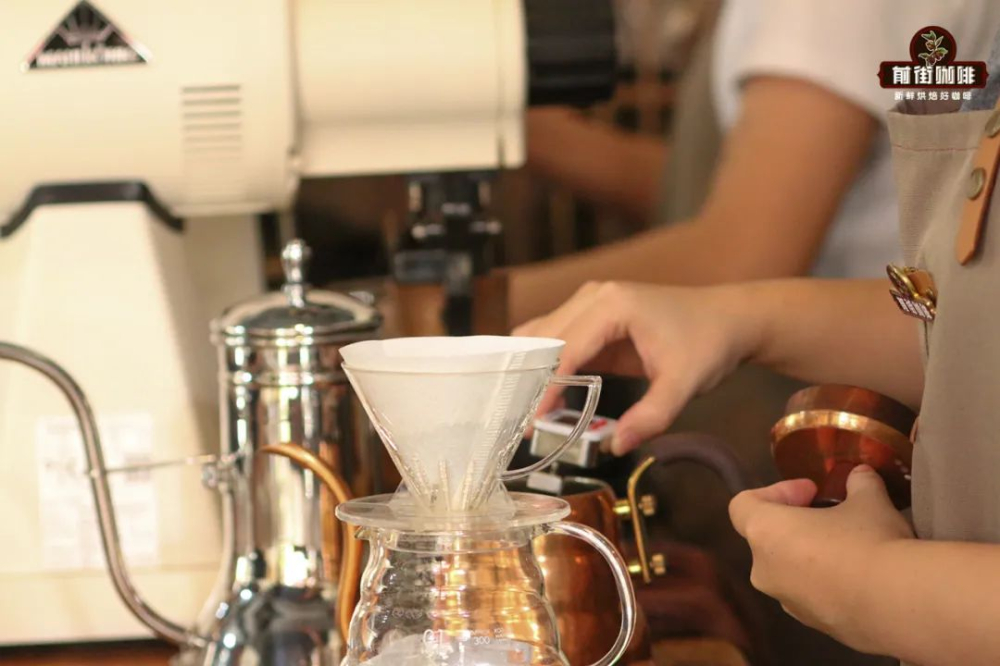
Generally, 100-degree water is not used to brew coffee, because it very easily brings out burnt, bitter flavors. Currently the more conservative range is 86-93 degrees. The advantage of adjusting water temperature is that it does not affect other parameters. For example, if you feel the ratio, pouring method, and extraction time are all fine for a cup of coffee but it still shows some undesirable flavors, then it is the water temperature you need to adjust.
Pouring Method
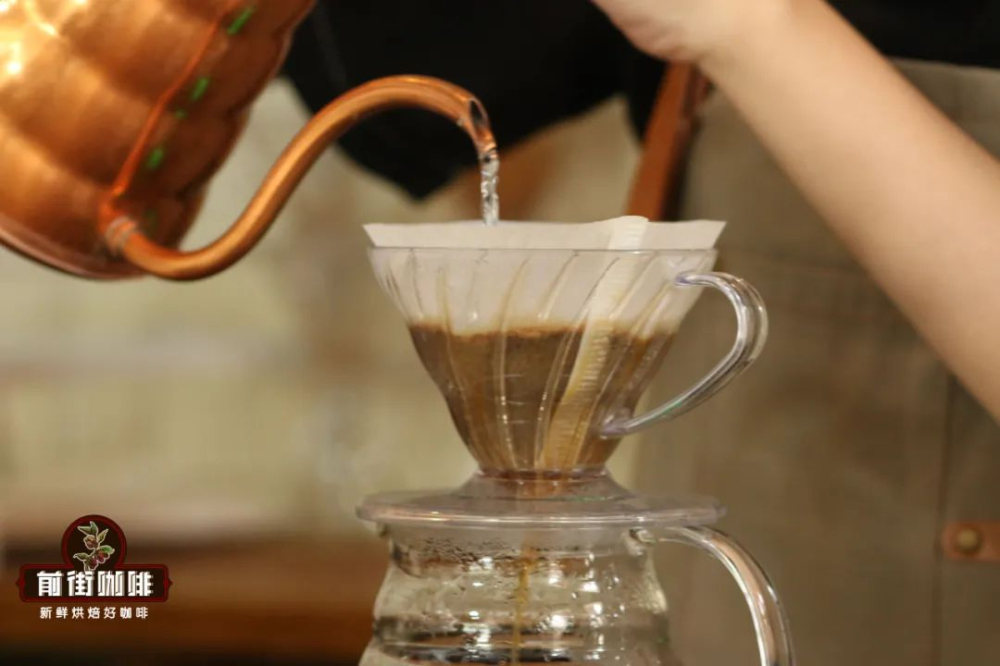
Popular pouring methods include single pour, double pour, and triple pour. Put simply, these are segmented pours: a single pour creates two segments, a double pour creates three, and so on. The main impact of segmentation is on extraction time. With other parameters unchanged, a single pour has the shortest extraction time, followed by a double pour, and finally a triple pour.
FrontStreet Coffee believes the pouring method is a parameter that can be adjusted according to circumstances. How much water goes into each segment, and how many segments to divide the brew into, can be adjusted during extraction by predicting the total extraction time. For example, if you plan to finish extraction in 2 minutes and originally intended four segments, but during the actual brew you find that after the second segment following the plan would overshoot the time by quite a lot, you can merge the last two segments into one pour.
Time
In pour-over coffee, extraction time is not an actively adjusted parameter but a verification parameter. Extraction time does not have a fixed, exact number; it is not that 2 minutes is good and 2 minutes 30 seconds is over-extracted. It is used to verify whether all the parameters that affect time are reasonable, such as ratio, grind size, and pouring method.
For FrontStreet Coffee, under conditions of a 1:15 ratio, a medium-fine grind, and a three-stage pour, 2 minutes is the time standard used to verify the parameters. Everyone can also use the extraction time from a previous, good-tasting brew as their benchmark.

FrontStreet Coffee's brewing parameters for natural process Coffee Queen:
As a medium-light roast, FrontStreet chose a V60 dripper, a water temperature of 90 degrees C, a coffee-to-water ratio of 1:15, a dose of 15g, and a grind (80% pass-through on the China #20 standard sieve).

Using segmented extraction, bloom with twice the amount of water as the coffee dose, that is, bloom with 30g of water for 30 seconds. The purpose of the bloom is to let the grounds release their internal carbon dioxide, which makes the later extraction more stable. Pour in a small circular motion to 125g, then continue pouring to 225g and stop. Remove the filter cup after the water has finished dripping. Start timing from the beginning of the pour; extraction time is 2'00". Next, pick up the whole cup of coffee and shake it evenly, then pour it into cups for tasting.

[2025 New Harvest Natural Process Coffee Queen Flavor] Floral and fruit aromas are very prominent, with citrus, passion fruit, strawberry, oolong tea, and high sweetness.
FrontStreet Coffee Recommendation
Since the discussion here is Ethiopian coffee, the FrontStreet lineup for that origin is the place to look. FrontStreet Washed Yirgacheffe, a daily drinker, is known for white jasmine, bright citrus and lemon acidity, and a tea-like body, and its approachable price has made it the first specialty coffee bean for a great many drinkers. Yirgacheffe is a small town in southern Ethiopia, inside the Sidamo zone, at roughly 1,700-2,100 meters, with the coffee trees planted above 1,800 meters, making it one of the highest coffee-growing areas in the world. Because the name became so famous, the Ethiopian Commodity Exchange finally separated it from Sidamo in 2010, which is how the Yirgacheffe coffee known around the world today came to be its own origin.
FrontStreet Gedeb Cooperative comes from a village-level washing station in the Worka area at the southeastern edge of Yirgacheffe. It was once part of the Worka cooperative under the YCFCU (Yirgacheffe Coffee Farmers' Cooperative Union), and as buyers began chasing traceability it was singled out as a single-origin lot. It follows the most traditional washed processing, and the result has no trace of the bitterness associated with ordinary coffee: fresh, bright citrus and lemon acidity with jasmine fragrance, an easy coffee to fall in love with at first sip.
FrontStreet Sun-Dried Red Cherry is processed as a natural using only fully ripe, sound cherries. Fruit is sorted on arrival and then dried directly on raised beds, turned every two to three hours during the first days to prevent uneven heating and over-fermentation. After three to five weeks of drying, the outer pulp is machine-scraped off depending on weather and temperature, and the beans are moved to storage. Because the fruit dries with the pulp still attached, the coffee keeps the classic Yirgacheffe character while gaining the tropical fruit of a natural process: citrus-like acidity, a berry-juice body, honey-like sweetness, and a creamy smoothness.
A good starting point for brewing Yirgacheffe is a V60 at 90-91 degrees C, 15g of coffee, a 1:15 ratio, and a grind around EK43s setting 10, or fine-sugar size (about 80% passing a No. 20 sieve). Begin with a 30g bloom for 30 seconds, then pour 95g more (about 125g on the scale) over roughly one minute; when the water level drops to about two-thirds of the bed, add the remaining 100g (about 225g on the scale), finishing the pour at around 1 minute 35 seconds. Drawdown completes at 2:00-2:10, at which point you remove the dripper and the brew is done.
Important Notice :
FrontStreet Coffee is a long-established specialty coffee roaster in Guangzhou China, selling freshly roasted beans from its own farm in Yunnan as well as dozens of carefully selected single-origin beans from around the world for both pour-over and espresso. The products deliver consistently excellent quality and great value, with shipping within 24 hours. Guangzhou's FrontStreet Coffee shop is recommended by many coffee lovers, and the beans are now available online at the Tmall 。
FrontStreet Coffee has moved to a new address:
FrontStreet Coffee Address: 315,Donghua East Road,GuangZhou
Tel:020 38364473
 Scan and follow the En Gafei WeChat official account. Please indicate that the reprint comes from "En Gafei".