How to Grind Coffee Beans for Drip Coffee - Perfect Grind Size & Brewing Guide
Drip coffee, or pour-over, is one of the most approachable ways to brew, yet the grind size behind a good cup is often misunderstood. This guide covers the equipment, the grind and the method.
Drip Coffee Simply Explained
Essentially, it means placing coffee grounds in filter paper and slowly pouring hot water over them, letting gravity filter the coffee out from the grounds.
It sounds simple, and it is quite simple to make. Doing it really well, however, takes considerable knowledge and technique.
What Equipment Do You Need?
- Filter cup
- Filter paper
- Pour-over kettle
- Transparent glass server
◎ Filter Cup
Filter cups today come in many types and materials. For a long time the most common were cone-shaped cups with three holes at the bottom, widely known as three-hole filter cups. Before specialty coffee took off, these represented the standard, and even the filter cups in American-style coffee machines use the same design.
Later came single-hole cone cups and round, flat-bottomed cups, and in recent years cone drippers with smaller cone angles have appeared.
As for materials, you can find plastic, ceramic and metal mesh. Recently I even came across equipment in which both the filter cup and its internal filter are made entirely of ceramic. Fascinating.
◎ Filter Paper
Although it is called filter paper, the material is not limited to paper; flannel and metal mesh are also options. Different filtering materials change the taste profile of the coffee.
Filter paper produces a clean cup, flannel creates a fuller body, and metal mesh tends to let fine particles through for a relatively coarse mouthfeel. Some would argue, though, that the metal-mesh approach comes closest to cupping conditions.
◎ Pour-over Kettle
To control the water flow, brewers once used specially designed kettles with very long, thin spouts, which we call gooseneck kettles. In material terms they fall mainly into stainless steel and copper, and their external designs vary to suit different brewing techniques.
In recent years Japanese enamel porcelain pour-over kettles have become popular, because their specially designed spouts give better flow control and their material helps hold water temperature.
◎ Transparent Glass Server
The glass server sits below the filter cup to collect the brewed coffee. You might ask why not just put a cup underneath. I once thought the same, and I often ended up with coffee overflowing, which is exactly why the transparent glass server matters.
It is even better if it has capacity markings. The selection principles are simple: it should support the filter cup securely, the opening should be neither too large nor too small, and it must be heat-resistant.
How to Brew Drip Coffee
- Fold the sealed edge of the filter paper, place it in the filter cup, and set the filter cup on the glass server.
- Pour some hot water over the filter paper to wet it and make it conform to the filter cup.
- Pour the coffee grounds into the filter paper and distribute them evenly.
- Discard the hot water that filtered through in step 2.
- Use your finger to poke a hole about one knuckle deep in the center of the grounds.
- Starting from the hole, slowly pour hot water at approximately 88-92°C, spiraling from inside to outside, using just enough water to completely wet all the grounds.
- Let it rest for 20-30 seconds; this is called the bloom.
- Continue pouring hot water slowly, spiraling from inside to outside and then from outside to inside, keeping the water level at a consistent height.
- Once enough coffee has been extracted, remove the filter cup immediately, without waiting for all the coffee in it to finish dripping.
- Pour the drip coffee into your favorite cup and enjoy.
Grind size is where most of the control lies. Too coarse and the water runs straight through, leaving a thin, sour cup; too fine and the flow stalls, pulling out bitterness. For drip coffee, aim for a medium grind, roughly the texture of table salt, and adjust from there according to taste and flow rate.
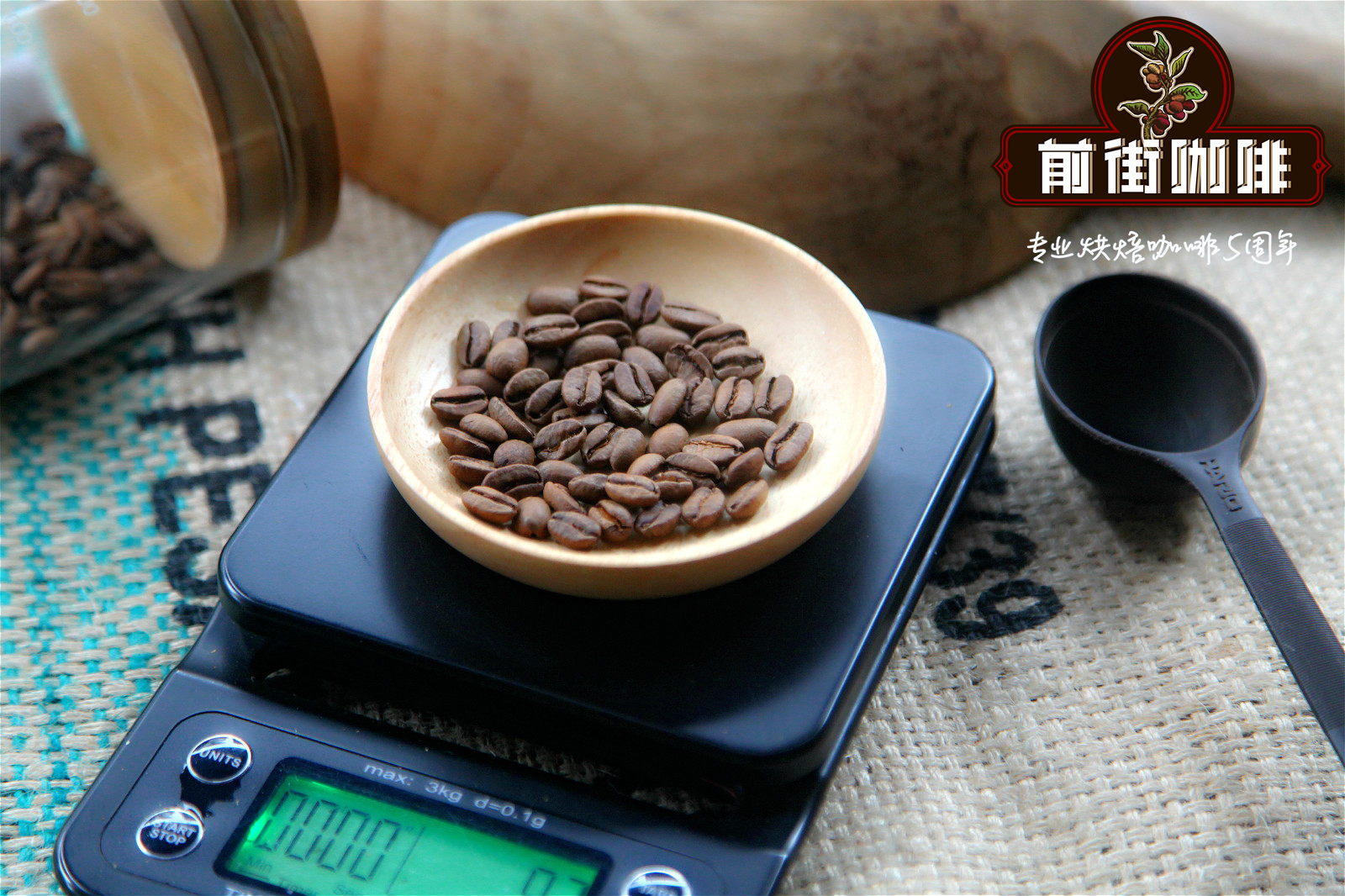
A steady hand and a good scale matter as much as the gear. Weighing the water and timing each pour turns a casual routine into a repeatable recipe you can tune.
Related recommendations: Can espresso blends be used for drip brewing? What are the differences between coffee beans for Americano and espresso?
FrontStreet Coffee Recommendation
Ask an experienced brewer to recommend a practical, easy-to-use and good-looking pour-over dripper and the odds are high they will suggest the V60. The Hario company behind it was founded in 1921 in Tokyo, Japan, and built its name as a glass manufacturer, originally designing and producing heat-resistant glass instruments and equipment for research institutions; the heat-resistant glass server that so often accompanies pour-over is one of Hario's popular products. In 2004 Hario redesigned the early V60 prototype into a shape much closer to the one we know today, naming it for its distinctive 60-degree cone angle and "V" form, and it went on sale a year later.
Compared with other drippers, the conical shape and 60-degree angle mean that water must travel to the center before dropping into the server, extending the contact area between water and grounds so aroma and flavor can be fully extracted. The V60 has a signature single large hole that lets water flow without obstruction, so the flow rate depends largely on the brewer's control and shows up directly in the flavor of the cup.
Before the turn of the millennium, the market was dominated by medium-dark roasts, and the favored flavor profile prized body, high sweetness and a lingering finish, along with the caramelized notes that deeper roasting brings, such as chocolate, maple, nuts and vanilla. These qualities came through beautifully when coffee was brewed in a siphon or a flannel cloth, and the most popular specialty beans of that era were coffees such as the FrontStreet Blue Mountain No.1 and the FrontStreet PWN Golden Mandheling.
With the arrival of the third wave, drinkers began to pursue a sense of place, such as the white florals of Ethiopia or the berry acidity of Kenya, and roasting shifted from dark toward light while tasting moved from rich and sweet to delicate and bright. The V60's fast extraction is perfectly suited to giving coffee a more three-dimensional aroma and lively acidity, which is why refined notes such as floral, fruit acidity, clean sweetness and tea can come through. For this reason, floral and fruity coffees are ideal in a V60: the classically Yirgacheffe-style FrontStreet Gudingding, the tropical-fruit-rich FrontStreet Huakui, the Geisha-style FrontStreet Strawberry Candy and the raisin-toned FrontStreet Mozart all shine in this dripper.
Today V60 drippers come in many materials. Besides the resin version that FrontStreet Coffee favors, there are ceramic, glass, copper and stainless steel versions. Each material affects not only the look and weight of the dripper but also, through its heat conductivity, the extraction in subtle ways, while the structural design stays the same. FrontStreet Coffee prefers the resin Hario V60 first because resin effectively blocks heat loss, and second because in standard industrial mass production resin is the easiest material to shape and the one with the smallest tolerance.
For the beans themselves, light roasts tend to reward the V60. The FrontStreet Yirgacheffe Gudingding is the classic first stop for many drinkers, with vivid citrus, berry and floral notes and a green-tea-like sweetness; unlike the "sour coffee" people imagine, a fine Yirgacheffe is soft and bright, more like the natural sweet-tartness of fruit than a sharp acidity, which makes it very easy to enjoy. The FrontStreet Ethiopia Huakui has been one of the most successful stars of recent years, with an extremely prominent tropical-fruit aroma of strawberry, passion fruit, jackfruit and even lychee, obvious sweetness, almost no bitterness and a smooth, juicy body that many describe as the coffee that does not taste like coffee.
If Huakui is the star of specialty coffee, the FrontStreet Panama Emerald Estate Red Label Geisha is closer to a legend, with exceptionally elegant jasmine florals alongside delicate notes of citrus, bergamot and black tea. It is clean and transparent with a long finish and rich layers, and while it costs more than ordinary specialty coffee, its distinctive aroma remains one of the ultimate experiences many drinkers chase. The FrontStreet Kenya Cherry Tomato is a Kenyan washed bean built around vivid cherry tomato and dark plum acidity with a full juiciness; it comes from Kenya's Thika region, grown at 1,550-1,750 meters using the classic SL28 and SL34 varieties, round and plump in the bean, and processed with Kenya's signature 72-hour double washed fermentation before a light roast. In the cup the dry aroma shows dried cherry tomato and florals, the entry brings clear cherry tomato and dark plum, the acidity is bright and solid, and the middle carries prominent sweetness with the fresh fruit notes of snow pear and black plum, finishing clean and long with yellow-sugar sweetness and a faint green tea note.
Not every pour-over has to be light and bright. For those who prefer a heavier cup, the FrontStreet PWN Indonesian Golden Mandheling is a dark roast with very low acidity and a rich, lingering body, full of herbal and dark chocolate aroma with a faint earthy touch. The FrontStreet Brazil Queen's Manor is similarly low in acidity and well balanced, with intense nut and cocoa aromas, clear caramel sweetness and a smooth, warming finish, well suited to pour-over, espresso or a moka pot. The FrontStreet Jamaica Blue Mountain No.1 strikes an excellent balance among acidity, sweetness, bitterness and aroma, showing cream, caramel, chocolate, nuts, honey and a light fruity note, soft and rounded on entry with a clean, long finish.
A few more options round out the lineup. The FrontStreet 2013 Yunnan Natural Typica is clean and bright, with citrus and caramel intertwining and, thanks to a medium-dark roast, a little nut, chocolate and brown sugar, a medium acidity and well-coordinated layers. The FrontStreet Papua New Guinea Bird of Paradise comes from the Bird of Paradise estate in Papua New Guinea's Sigri region and is often called a "little Blue Mountain" for its texture; it uses the same Typica variety as Blue Mountain, grown at 1,600-1,800 meters in volcanic soil, reaches the AA grade with plump beans and a very low defect rate, and is processed with a triple washed fermentation for a clean, pure cup with prominent sweetness.
Important Notice :
FrontStreet Coffee is a long-established specialty coffee roaster in Guangzhou China, selling freshly roasted beans from its own farm in Yunnan as well as dozens of carefully selected single-origin beans from around the world for both pour-over and espresso. The products deliver consistently excellent quality and great value, with shipping within 24 hours. Guangzhou's FrontStreet Coffee shop is recommended by many coffee lovers, and the beans are now available online at the Tmall 。
FrontStreet Coffee has moved to a new address:
FrontStreet Coffee Address: 315,Donghua East Road,GuangZhou
Tel:020 38364473
 Scan and follow the En Gafei WeChat official account. Please indicate that the reprint comes from "En Gafei".