Introduction to the Flavor Characteristics of Indonesian Mandheling Coffee: What's the Special Story Behind the Golden Mandheling Coffee Bean's Name?
An Introduction to Indonesian Coffee
When coffee lovers think of Indonesia, the bean that comes to mind first is almost always Mandheling, prized for its deep herbal aroma and low acidity. Indonesian coffee is bold and mellow with a faintly syrupy body, though some lots carry an unwelcome astringency or a slight mustiness, while others taste distinctly earthy.
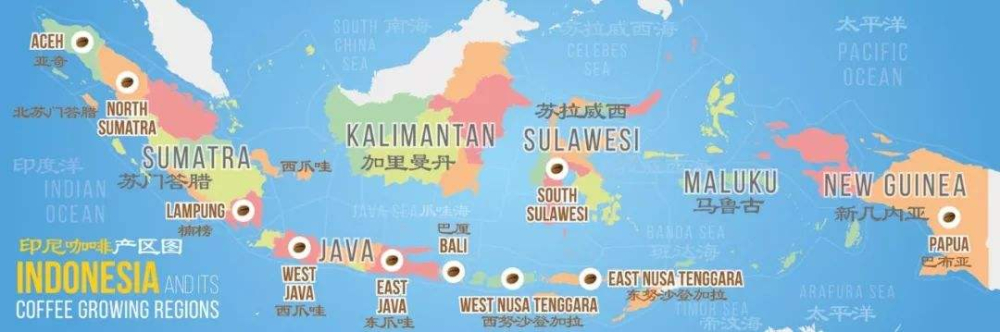
Indonesia is made up of more than 17000 islands scattered along the equatorial volcanic belt. Straddling both sides of the equator, the country has a humid tropical rainforest climate and abundant rainfall, while its fertile volcanic soil supplies a rich store of nutrients. Across the whole archipelago, the finest growing areas are found on Java, Sumatra and Sulawesi.
Where Mandheling Coffee Comes From
Mandheling beans are grown in Sumatra, Indonesia, which is why they are also known as "Sumatra coffee." Mandheling is a premium bean cultivated in the plateau highlands at elevations of 750-1500 meters, and it is one of the rare Arabica varieties found in Indonesia. The first-grade Mandheling from the Takengon and Sidikalang regions is considered the finest; the highest-quality Mandheling is concentrated in fertile soils near lakes, on plateaus between 1800 and 1900 meters above sea level.
Mandheling delivers a rich aroma, a full body and a powerful flavor, and its signature herbal-spice character has become the hallmark of the variety. Those qualities are exactly why FrontStreet Coffee chose Mandheling as one of its entry-level everyday beans: outstanding value that lets newcomers to coffee recognize its distinctive flavors at first sip.
Mandheling Varieties at FrontStreet Coffee
Over the years, FrontStreet Coffee's bean selection has featured several Mandheling varieties, among them Lintong Mandheling, Golden Mandheling, Tiger Mandheling and Aged Mandheling. Mandheling and Golden Mandheling are the two regular staples — so what actually sets them apart? Both are recognizable by their hoof-like shape, a direct result of the processing method. During wet-hulling, the semi-hard, semi-soft moist green beans are easily bruised as the mucilage and parchment layer are stripped away, and the beans crack open like sheep's hooves. The trade calls these "hoof beans"; at FrontStreet Coffee, we treat them as a defining trait of Mandheling rather than a defect.

The two beans also come from different regions. As an entry-level Mandheling, Lintong Mandheling is grown in the Lintong highlands of north-central Sumatra, near Lake Toba. Golden Mandheling is produced around Lake Tawa on Mount Gayo, in northwestern Sumatra. When it comes to Golden Mandheling, what makes it authentic begins with the PWN company. That abbreviation is often confused with the names of Mandheling coffees; in fact it stands for Pwani Coffee Company, a highly respected coffee purchasing company in Indonesia that deals primarily in Mandheling. Almost every one of Indonesia's best-producing regions is bought up by them, so most beans from PWN are unique specialty coffees. Golden Mandheling is one of the company's flagship products. After purchasing the green beans, the company runs multiple rounds of manual selection to pick out full, flawless beans. Only these premium lots — screened layer by layer like contestants in a talent show — qualify as Golden Mandheling.
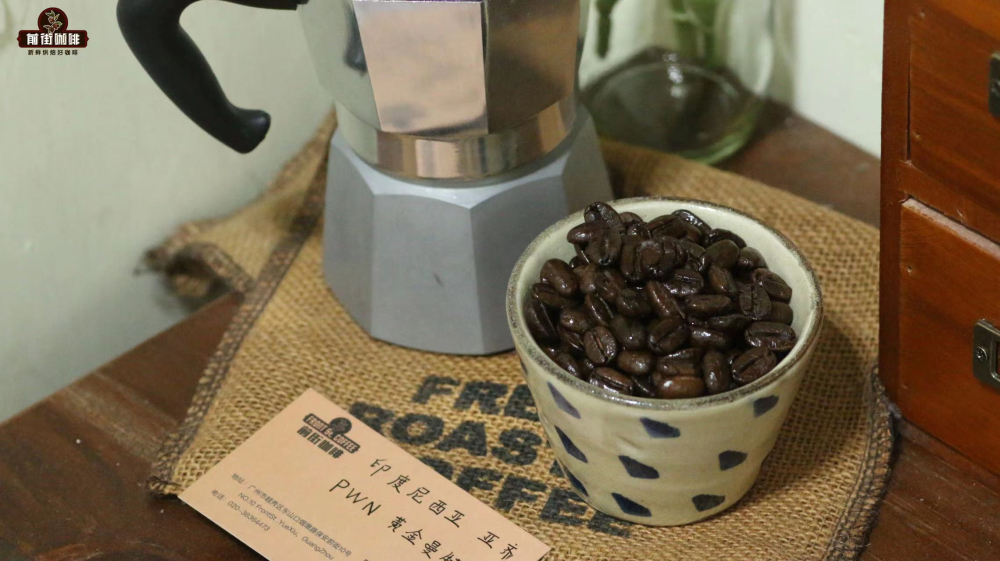
PWN has registered Golden Mandheling as a trademark, which means that only Golden Mandheling produced by PWN can be considered authentic "Golden Mandheling." Many beans on the market that are labeled Golden Mandheling but do not come from PWN should really be called Specialty Mandheling instead. Golden Mandheling is a famous name, virtually synonymous with Mandheling, yet the quantity produced is genuinely small. Every bag of Golden Mandheling green beans at FrontStreet Coffee carries PWN's logo and certificate.
Brewing Mandheling Coffee
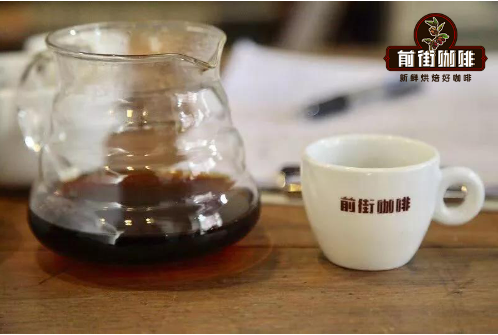
To show how to brew Mandheling, FrontStreet Coffee uses Golden Mandheling as the example, brewed in a Kono dripper. The Kono has short, straight ribs and a small outlet, so the flow rate is slow and the water stays in contact with the coffee longer — a setup that brings out the rich body of Mandheling.
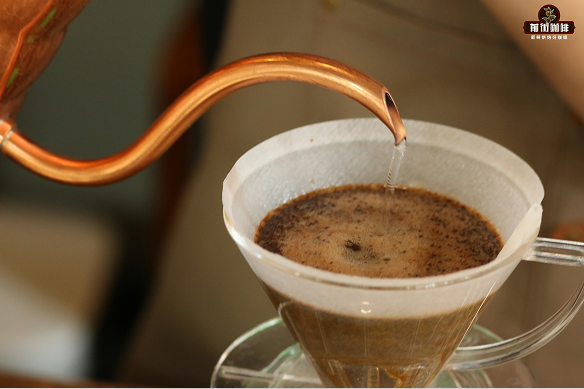
Use 15 grams of ground coffee at a 1:15 coffee-to-water ratio and a water temperature of 88°C. Start with a 30-gram bloom and let it rest for 30 seconds. Then pour 95 grams, bringing the total to 125 grams. After 10 seconds, pour the remaining water, finishing the pours in roughly 1 minute and 30 seconds. Let the coffee drain slowly, then remove the dripper at 2 minutes to end extraction. The 88°C water keeps the cup from turning bitter at high heat, the 1:15 ratio balances the flavor, and the three-stage pour allows enough time to extract the coffee's compounds.
FrontStreet Coffee Recommendation
If you want to taste what wet-hulling can do, start with FrontStreet Lintong Mandheling. It is our everyday Mandheling from the Lintong region beside Lake Toba in Sumatra, wet-hulled and roasted medium-dark. Expect a low-acid, syrupy cup of black chocolate and caramel, backed by the wild herbal character that only Sumatra's rain-soaked climate and processing can create — clove and woody aromatics with a long, thick sweetness.
For the highest grade available, choose FrontStreet PWN Golden Mandheling from the Aceh region around Lake Tawa. PWN selects only beans screened to 18 mesh and above and demands fewer than 3 defect beans in every 300 grams of green coffee, meeting the G1 standard and passing through three rounds of hand sorting. Roasted medium-dark, it is even, plump and low in defects, giving a clean cup with a full body and a warm roasted aroma.
Brew Golden Mandheling as a pour-over to get the most from it: 15 grams of coffee at a 1:15 ratio, water at 87-88°C and a coarse-sugar grind. Pour in three stages — a 30ml bloom to saturate the grounds and release gas, then 100ml to lift the bed and draw out the golden crema, and finally a gentle 95ml centered pour to build sweetness. The result is a thick, rounded body with caramel sweetness and notes of chocolate and nuts.
If you prefer Mandheling with milk, try FrontStreet Classic Blend. It layers medium-dark Mandheling over a creamy, nutty Brazilian base, adding butter, roasted chestnut and caramel, plus a touch of Robusta for a richer crema. Mandheling lifts the body of the whole cup and lends it sandalwood, herbal and spice notes — equally easy to pour into latte art or to build the layered gradient of a Dirty.
Important Notice :
FrontStreet Coffee is a long-established specialty coffee roaster in Guangzhou China, selling freshly roasted beans from its own farm in Yunnan as well as dozens of carefully selected single-origin beans from around the world for both pour-over and espresso. The products deliver consistently excellent quality and great value, with shipping within 24 hours. Guangzhou's FrontStreet Coffee shop is recommended by many coffee lovers, and the beans are now available online at the Tmall 。
FrontStreet Coffee has moved to a new address:
FrontStreet Coffee Address: 315,Donghua East Road,GuangZhou
Tel:020 38364473
 Scan and follow the En Gafei WeChat official account. Please indicate that the reprint comes from "En Gafei".