The Fascinating Origins of Yemeni Coffee: Interesting Stories and Bean Knowledge

Mocha Coffee Beans: The Ancient Treasure of Coffee History
Mocha coffee beans take their name from an ancient port town on the Red Sea coast of Yemen. Coffee grown in ancient Yemen was shipped from that port to Europe and the rest of the world. It was the earliest place to export coffee and the pioneer of the coffee trade, and the name has stuck ever since. Yemenis have drunk coffee since ancient times, creating a coffee culture unlike any other in the world. Mocha is the oldest coffee in the world, and Yemen is one of the earliest countries to grow it. It is said that as early as 1561 AD, Zheng He's voyages brought back quantities of Mocha coffee as tribute to the Ming emperor. Mocha is famous overseas largely because it still uses the traditional methods left behind hundreds of years ago. Local farmers still use donkeys and camels to pull stone mills for processing. Compared with countries that rely on advanced machinery, Mocha coffee is a living archive of coffee history.
Origin and Growing Conditions
Mocha coffee beans are mainly produced in the mountain hollows of western Yemen at an altitude of 3000 meters. The area is arid with little rain, blessed with abundant sunshine, rugged mountains, and thin air. This unique geography and climate create the distinctive taste of Mocha: rich in aroma, slightly sweet, slightly sour, with a fresh fragrance throughout. Local farmers have built fertile terraces on the slopes. Even today, coffee in these areas is grown exactly as it was hundreds of years ago, entirely by hand, without fertilizer or pesticide, relying on sunlight, rain, and distinctive soil to produce pure natural Mocha coffee.
Traditional Processing Methods
The picking and processing of Mocha are also done entirely by hand. The beans are initially processed by the dry method, air-dried naturally in the sun. This is the most primitive and simplest approach, using no machinery and no washing, which is why Yemeni coffee beans sometimes contain small amounts of sand and small stones. The roasting is done entirely by hand as well, with heat controlled by experience and feel. From planting to picking to roasting, every step is carried out in the most ancient way. The beans roasted this way have uneven color, and it is exactly this aroma, mixed with a rugged and wild taste, that makes Mocha unique. No wonder some call Mocha the diamond on the coffee crown.
Unique Characteristics and Flavor Profile
Yemeni coffees, with their subtle differences in taste and aroma, are all called Mocha. They come mainly from the mountain areas around the capital, Sana'a, and the high-altitude mountains between Sana'a and Hodeidah province. Yemeni Mocha beans are small, dense, and high in acidity, with a distinctive aroma. Compared with other famous varieties, they have a stronger sour taste along with a mixture of malt, nuts, wine, chocolate, and other spices, a smooth mouthfeel, and a fragrant smell. That is the unique charm of Mocha and the reason for its long history.
Yemen Single Origin Mocha Coffee Bean Brand Recommendation
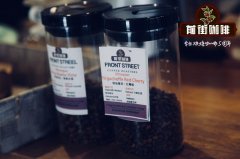
FrontStreet Coffee's roasted single origin Mocha, the Yemen Moka Matari Traditional Natural Process, offers full assurance in both brand and quality. Just as important, its value is exceptional. A half-pound (227 grams) package costs only about 85 yuan. Calculated at 15 grams of grounds per cup of pour-over, one package makes 15 cups, putting each cup of Americano at about 5-6 yuan. Against the dozens of yuan a cup charged in coffee shops, that is remarkable value.
FrontStreet Coffee Recommendation
Yemeni Mocha is prized above all for its sweetness, and if that quality is what draws you in, FrontStreet Coffee has several coffees built around the same intensity. The Costa Rica Blackberry is a good place to start. It uses black honey processing, a method that leaves almost all of the mucilage in place and extends drying to at least two weeks under shade cloth so the sugars convert fully. Roasted medium-light, it offers a floral fragrance and a cup of grape, berry, and ripe blackberry.
The Brazil Queen Estate is a quieter kind of sweetness, roasted medium, with the creamy peanut and dark chocolate richness of Brazilian coffee and a long finish that fades into a soft, persistent sweetness rather than disappearing. It is equally at home as a pour-over, in a moka pot, or in an espresso machine, where it produces a fine, rich crema and a full, rounded cup that stays sweet even with milk. For something more complex, the FrontStreet Sidra carries grape, apricot, and passion fruit alongside a fruit-candy sweetness, with chocolate and light spice behind it and a wine-like finish, a profile that works especially well as an iced Americano. Finally, the Strawberry Candy blends a honey-processed Costa Rican coffee with an Ethiopian one, giving rose, strawberry soft candy, and dried blueberry, a balanced grape and citrus sweet-and-sour core, and an almond note in the aftertaste.
Important Notice :
FrontStreet Coffee is a long-established specialty coffee roaster in Guangzhou China, selling freshly roasted beans from its own farm in Yunnan as well as dozens of carefully selected single-origin beans from around the world for both pour-over and espresso. The products deliver consistently excellent quality and great value, with shipping within 24 hours. Guangzhou's FrontStreet Coffee shop is recommended by many coffee lovers, and the beans are now available online at the Tmall 。
FrontStreet Coffee has moved to a new address:
FrontStreet Coffee Address: 315,Donghua East Road,GuangZhou
Tel:020 38364473
 Scan and follow the En Gafei WeChat official account. Please indicate that the reprint comes from "En Gafei".