Mexico Coffee Growing Region Oaxaca Coffee Beans Where Are the Best Mexican Coffee Beans
Latest News from Central American Coffee Regions
In the first week of November 2020, Category 4 Hurricane Eta, later downgraded to a tropical storm, made landfall in Central America. Eta brought heavy rains with sustained wind speeds exceeding 60 miles per hour (approximately 95 kilometers per hour). According to Wikipedia data, at least 235 people had died as of the report, including about 150 in Guatemala, 41 in Honduras, 22 in Mexico, 17 in Panama, 2 in Nicaragua, 2 in Costa Rica, and 1 in El Salvador, with many more left homeless. Under these circumstances, many farms could not escape unscathed. The impact of the COVID-19 pandemic had not yet eased, and the ferocity of Hurricane Eta undoubtedly made an already difficult situation worse.
Mexico's Coffee Cultivation History
Coffee arrived in Mexico relatively late. In the latter half of the 18th century, Spanish immigrants brought coffee trees from the Caribbean islands of Cuba and the Dominican Republic. Commercial cultivation had to wait until the 1790s, when Germans and Italians immigrated to Mexico from Guatemala and Central and South America, and the first coffee plantations appeared in Veracruz. Mexico has maintained a tradition of small-scale farming. After the Mexican Revolution, agricultural reforms allowed indigenous people and farmers to own small plots for self-sufficiency.
The 1970s and 1980s were the golden age of Mexican coffee. In 1973, the Mexican National Coffee Institute (INMECAFE) was established, providing small farmers with technical assistance, loans, guaranteed purchase agreements, and even connections to international markets. Coffee production increased, with some regions growing by up to 900%, significantly improving social development in remote areas.
For other Caribbean and Central and South American countries, bananas and coffee may be the most important economic products. Mexico's mineral resources, however, are extremely rich, from the gold and silver of the Spanish colonial era to petroleum in modern times. For Mexico, petroleum, industry, and tourism matter far more than coffee. The coffee farmers in the southern production regions are predominantly indigenous and are typically given the lowest priority. Coffee prices are set by the world market, specifically the futures prices in London and New York. When prices are good, profits go to the large multinational exporters; when prices are poor, the farmers suffer.
Mexican Coffee Regions
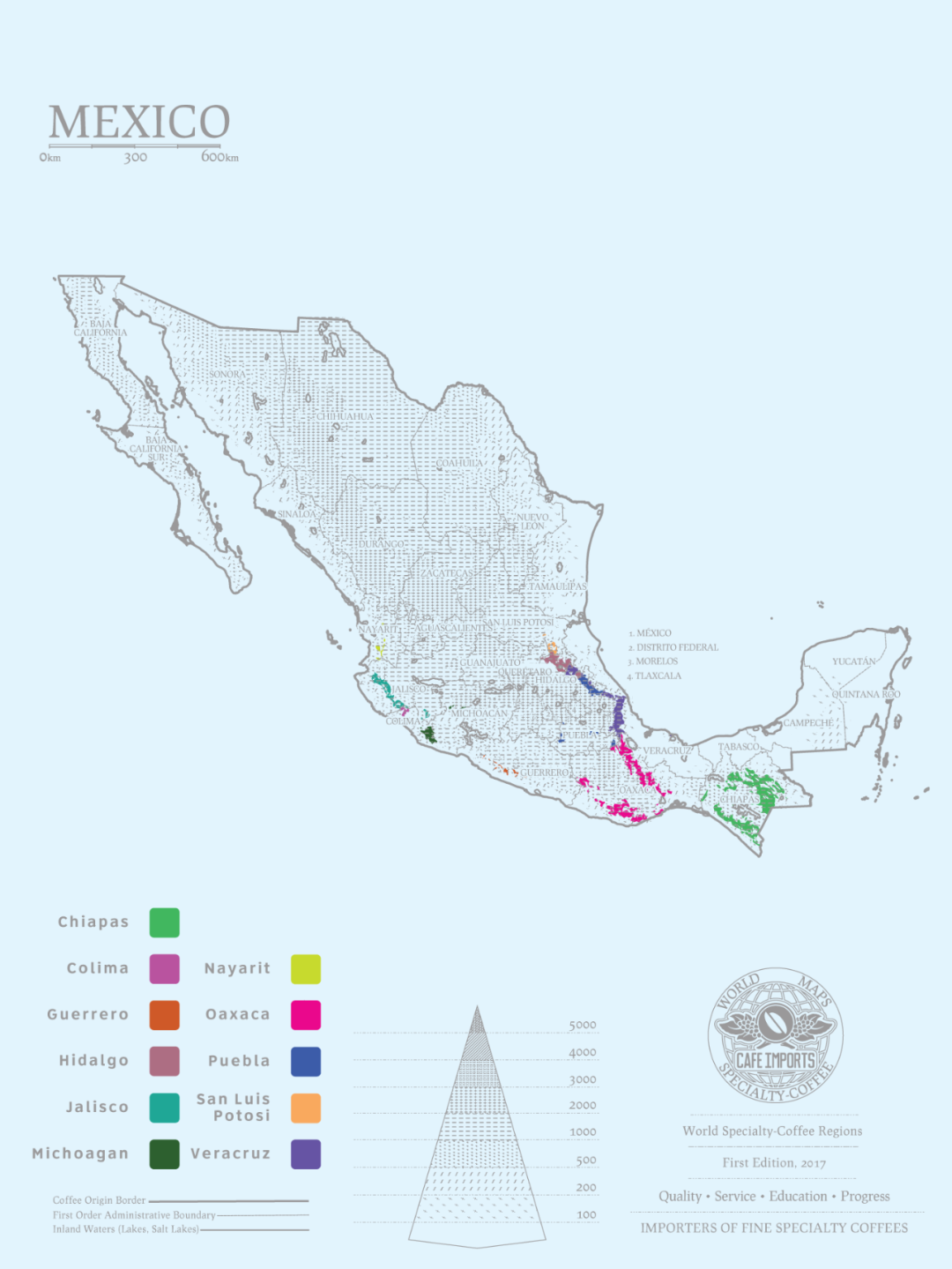
The northern latitude and climate are not suited to coffee, so all growing areas are in the south. Ninety percent of Mexico's coffee comes from four southern states: Chiapas (35%), Oaxaca (13%), Puebla (15%), and Veracruz (25%). Nearly half a million people nationwide are engaged in coffee cultivation, 70% of them small farmers. Unlike Brazil, almost all planting and processing relies on manual labor, and much of the coffee is organically grown. Mexico is one of the world's largest exporters of organic coffee, accounting for 60% of global organic coffee production in 2000. The coffee-producing states of Chiapas and Oaxaca are Mexico's poorest regions, with the highest indigenous populations. Tall mountains block transportation, and differences in language and ethnicity have done little to improve the difficult situation in the south since liberation from Spanish colonial rule. Mexico's best coffee-growing regions are the southern states of Chiapas and Oaxaca.
Oaxaca Coffee Region
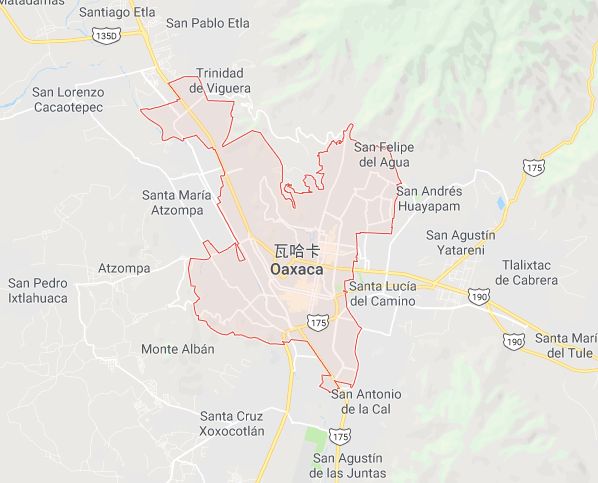
In the Oaxaca region, most farmers own less than 2 hectares of land and belong to several large cooperatives. There are also some larger estates, though some have developed diversified tourism. Elevation ranges from 900-1700m, with a harvest season from December to March. Varieties grown include Bourbon, Typica, Caturra, and Maragogipe. The region also produces premium beans, with the naturally grown Pluma Coixtepec among the finest, along with Altura Orizaba and Altura Huatusco.
Chiapas
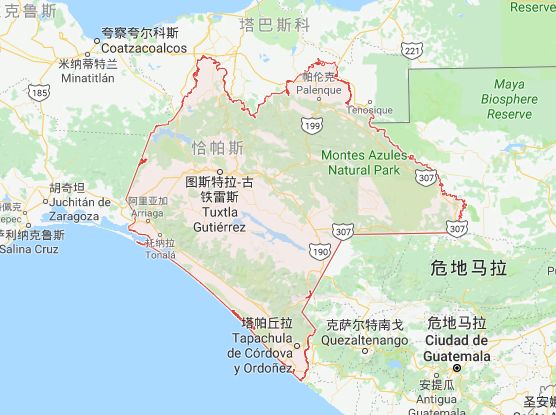
Chiapas has an elevation of 1100-1400 meters, with a harvest period from December to April. In the early 1990s, the southern state of Chiapas became Mexico's most important coffee-producing region, with an annual output of about 275,000 tons of coffee, accounting for 45% of the country's production. More than two million Mexicans rely on coffee for their livelihood. 75% of Mexican coffee farmers work land smaller than two hectares, and these smallholders produce approximately 30% of the country's coffee output each year, with the remainder coming from larger or more productive farms. FrontStreet Coffee recently acquired a decaf coffee from this region for roasting, cupping, and brewing.
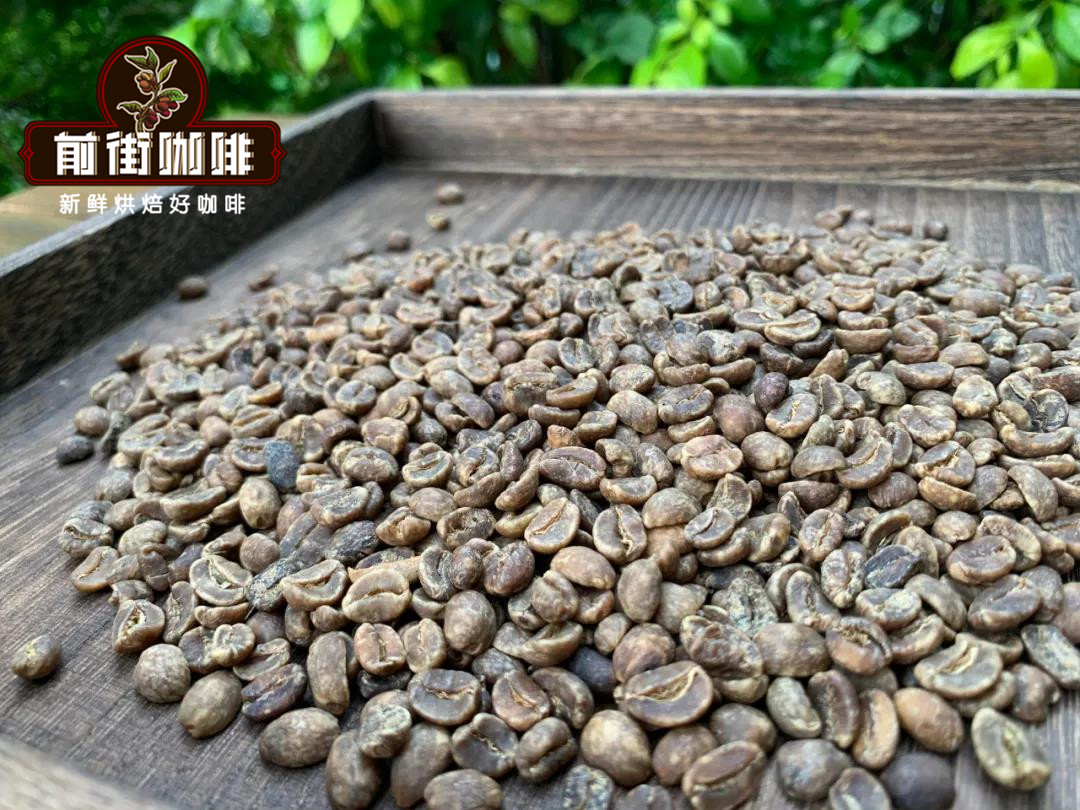
FrontStreet Coffee - Mexico Chiapas Swiss Water Process Decaf Coffee Beans
Origin: Mexico
Region: Chiapas
Elevation: 900-1500 meters
Varieties: Bourbon, Caturra, Typica, Criollo
Processing Method: Swiss Water Process
This coffee bean acquired by FrontStreet Coffee is produced by the GRAPOS cooperative, a coffee production organization in the southern state of Chiapas, Mexico. The organization was established in 2007 with only 90 coffee farmers. By 2016, it had grown to 3,253 farmers, covering Chiapas sub-regions including Soconusco, Siltepec, Porvenir, and Tapachula. GRAPOS's coffee cultivation area covers approximately 5,560 hectares at elevations of 900-1500m, mostly small-scale intensive farming with an average of 3 hectares per farmer.
Coffee Bean Composition
This coffee is composed of Bourbon, Caturra, Typica, and Criollo varieties. Typica and Bourbon are both ancient Arabica varieties, beloved for their rich fruit acidity and excellent flavor quality. Caturra is a single-gene variant of Bourbon, discovered in Brazil in 1937. It has stronger production capacity and disease resistance than Bourbon, and the plant is shorter, which makes harvesting convenient. Unfortunately, like Bourbon, it has a biennial production cycle. Criollo is a natural mutation of Typica, commonly found in Peru, Bolivia, Colombia, and Mexico. Some coffee-growing countries in Latin America also refer to Typica as "Criollo." Criollo can be seen as a localized version of Typica.
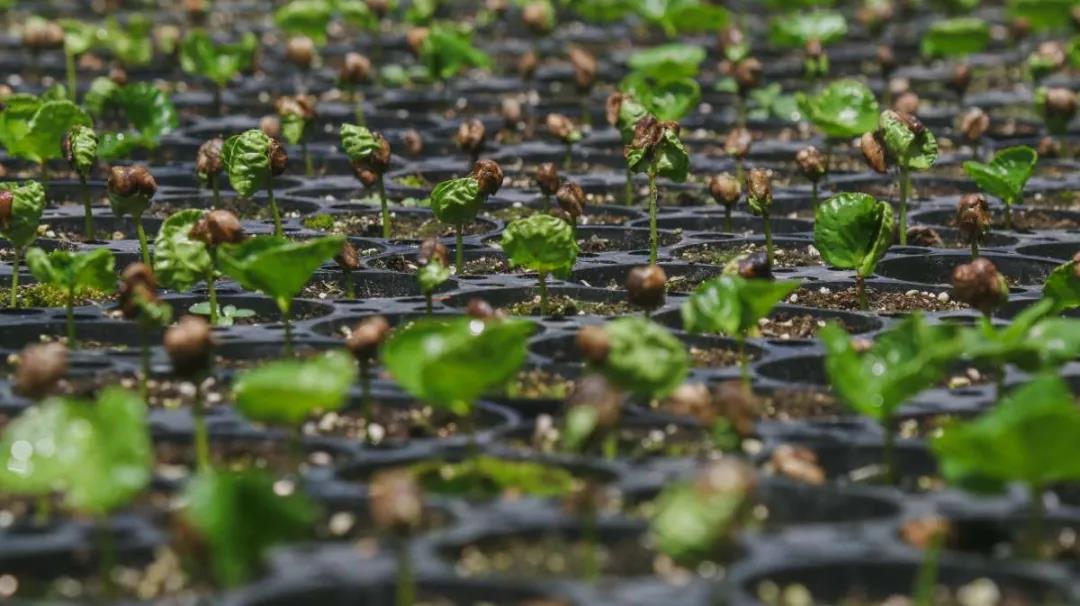
What is Swiss Water Decaf Processing?
The Swiss Water decaffeination method involves soaking green coffee beans in hot water. During this soaking stage, caffeine is partially removed. The solution is then filtered through activated carbon, and finally the solution is returned to the beans. This series of steps effectively removes 99.9% of the caffeine. Besides not requiring chemical solvents, the soaking solution can be reused across different batch processes.
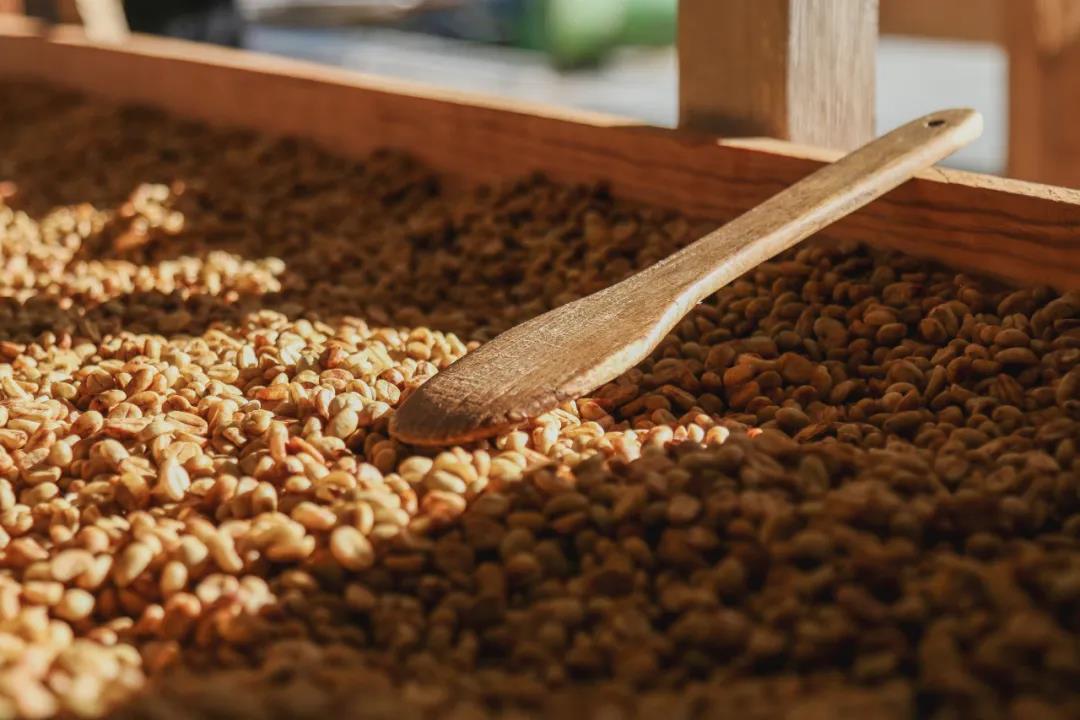
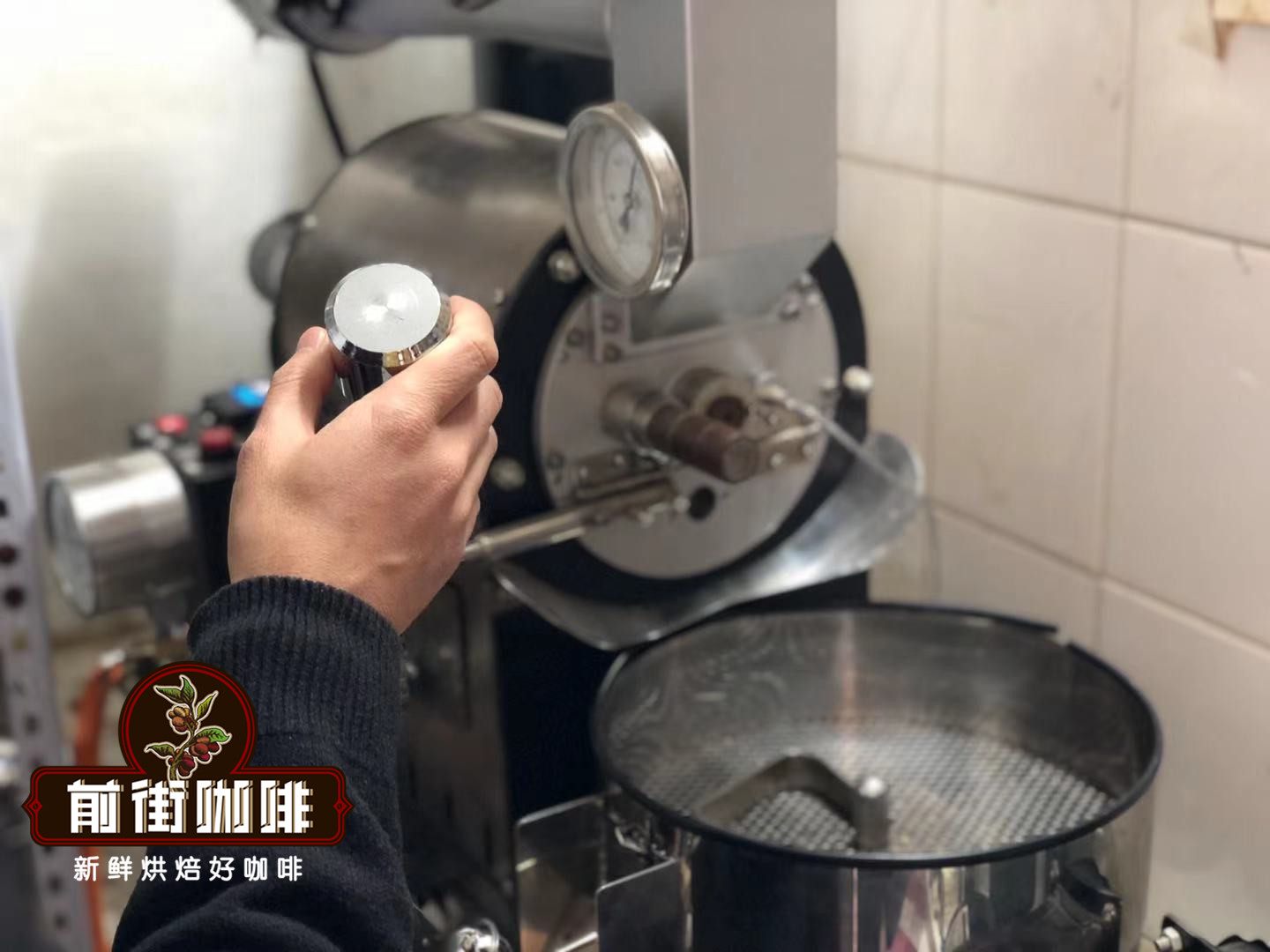
How Does FrontStreet Coffee Roast This Decaf Coffee Bean?
Preheat the roaster to 200°C, then reduce to 165°C before adding the beans. Set the damper to 3 and adjust the heat to 130. The temperature returns to 166°C at 1'32". Maintain the heat setting. At 6'15", the beans turn yellow and the grassy smell disappears, entering the dehydration stage. Reduce the heat to 110 and open the damper to 4. When the temperature reaches 176°C, reduce the heat again to 90. Wrinkles appear on the surface, and the toasted bread aroma turns to coffee aroma, the prelude to first crack. At this point, maintain the heat setting, open the damper to 5, and listen carefully for the first crack. First crack begins at 9'57", with the damper fully open at 5. Development time after first crack is 2'30", and the beans are discharged at 196.4°C.
FrontStreet Coffee Cupping Report
Dry Aroma: Roasted almonds
Wet Aroma: Caramel
Flavor: Dark chocolate, cream, nuts, citrus
FrontStreet Coffee Brewing Experience
Dripper: Kono dripper
Water Temperature: 88.8°C
Coffee Amount: 15g
Coffee-to-Water Ratio: 1:15
Grind Size: Medium grind (75% pass-through rate on a Chinese standard #20 sieve)
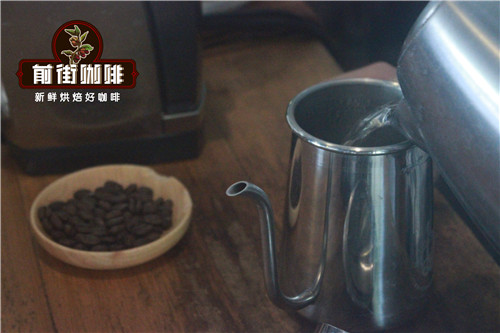
Brewing Method: Three-stage extraction. Bloom with 30g of water for 30 seconds. Using a small stream, pour in circles to 125g, then separate. When the water level drops and is about to expose the coffee bed, continue pouring to 225g and stop. When the water level drops and is about to expose the coffee bed again, remove the dripper. Total brewing time is 3 minutes and 10 seconds.
Brewing Flavor: The entry has a distinct dark chocolate aroma, followed by nutty cream in the middle. After slight cooling, there is citrus acidity. The overall body is rich with a smooth mouthfeel.
FrontStreet Coffee Recommendation
For a standout Panamanian single origin, FrontStreet Panama Boquete Gesha is a great place to begin. In the Boquete region, mountain clouds and mist, humid days, cool nights, and the fertile soil of the Baru volcano create ideal conditions for Geisha, and the higher the growing altitude, the longer the fruit matures and the more nutrients it takes up. Grown at around 1600 meters on fertile volcanic ash soil, this estate-level entry Geisha yields a fragrant cup of jasmine, green tea, honey, citrus, and orange.
If you want a richer, more layered Panamanian cup, FrontStreet Panama Butterfly carries half Geisha pedigree: it is composed of Geisha, Caturra, and Catuai, planted in the Baru volcano area of Boquete. The region's special microclimate brings abundant rainfall and a large day-night temperature difference, and the volcanic rock soil, careful picking, and fine processing give the coffee an impressive overall body, citrus acidity, and Gesha jasmine aroma. It is excellent as pour-over or cold brew.
Important Notice :
FrontStreet Coffee is a long-established specialty coffee roaster in Guangzhou China, selling freshly roasted beans from its own farm in Yunnan as well as dozens of carefully selected single-origin beans from around the world for both pour-over and espresso. The products deliver consistently excellent quality and great value, with shipping within 24 hours. Guangzhou's FrontStreet Coffee shop is recommended by many coffee lovers, and the beans are now available online at the Tmall 。
FrontStreet Coffee has moved to a new address:
FrontStreet Coffee Address: 315,Donghua East Road,GuangZhou
Tel:020 38364473
 Scan and follow the En Gafei WeChat official account. Please indicate that the reprint comes from "En Gafei".