Brazil Minas Gerais Jatobá Farm Semi-Sun Processed Coffee Beans Flavor Characteristics
Brazilian Coffee: Jatobá (Cherry Wood) Farm
When coffee origins come up, Brazil usually comes to mind first — the world's largest coffee producer. Brazilian coffee spans many varieties, the vast majority unwashed and sun-dried, and beans are classified by producing state and shipping port. Of Brazil's 21 states, 17 grow coffee, but four states account for 98% of national production.
Brazilian coffee shows relatively low acidity balanced by gentle sweet-bitter notes. It enters the mouth extremely smoothly with a delicate grassy fragrance; light in aroma with a faint bitterness, it is sweet, smooth, and pleasant, leaving a refreshing aftertaste.
Coffee Details
Country: Brazil
Region: Minas Gerais State
Area: São João do Manhuacu
Farm: Jatobá (Cherry Wood) Farm
Green bean process: Semi-dry processing
Varieties: Catuai and Mundo Novo
Certification: Conventional
Altitude: 900-1300 meters
Packaging: Grain Pro vacuum packaging
Harvest: June - September
Jatobá Farm
FrontStreet Coffee would like to share Brazil's Jatobá Farm, part of the Dutra Farm Group — five farms in total: Cherry Wood (Jatobá), Água Limpa, Olhos d'Água, Pedra Bonita, and Santa Helena de Caputira. This lot combines two varieties, Catuai and Mundo Novo. All the beans are 100% hand-harvested, with roughly 60% of the green coffee going through natural processing and 40% through semi-dry processing. After processing, the fruit skins are placed in animal enclosures and later used as fertilizer, while spring and rainwater are carefully stored in dedicated tanks to keep the water used for washing green beans uncontaminated.
Award Records
The Dutra farms have won numerous awards in recent years: in 2000 and 2006 they reached the finals of the Illycafe competition and have taken multiple awards in the Specialty Coffee Association of Brazil's competitions.
Semi-Dry Processing
What exactly is semi-dry processing? FrontStreet Coffee explains: it sits between natural and washed processing and divides into two branches — pulped natural and honey. Both are fundamentally similar: the cherry's outer skin is removed as in washed processing, but the "fermentation in water tanks, fresh-water rinsing" step of the washed method is skipped, and the beans go straight to drying. Though the methods look alike, one important difference creates two very different flavors, so they're worth explaining separately.
Semi-dry processing uses far less water than washing. Some steps resemble washed processing (removing skin and pulp) and others resemble natural processing (no tank fermentation) — hence the alternative name, semi-washed.
FrontStreet Coffee's Pour-Over Method for Brazilian Coffee
Because Brazilian coffee is naturally balanced — chocolate, nuts, and caramel leading the profile — FrontStreet Coffee recommends the "volcano" pour-over technique to highlight those traits!
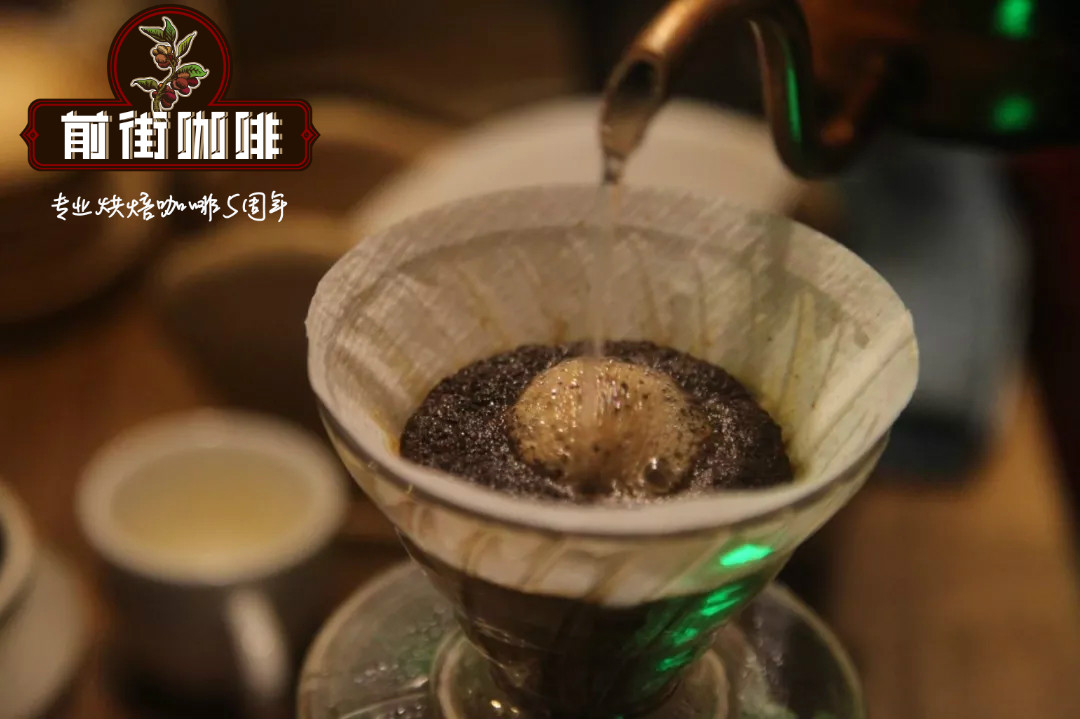
Volcano Pour-Over
The volcano technique comes from Japan and suits darker roasts. It exploits the carbon dioxide trapped in the beans: through repeated blooming, the coffee bed puffs up like an erupting volcano. Dark roasts work best because they hold more CO2.
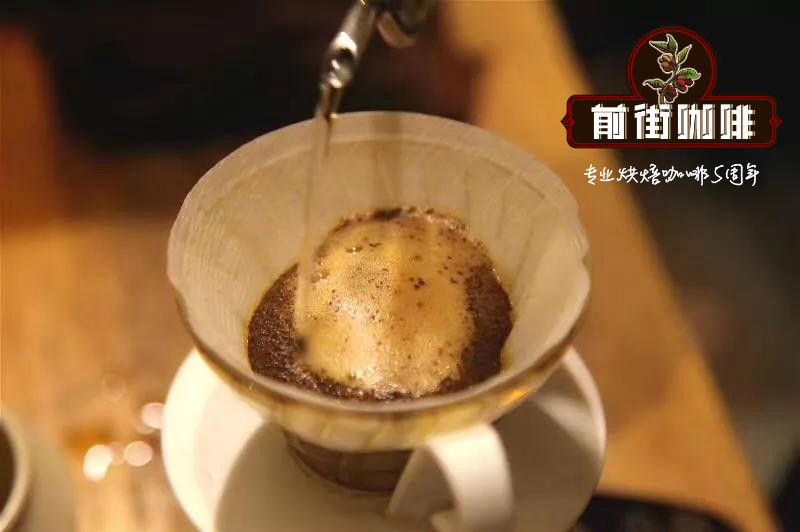
Volcano pour-over is usually done with flannel or a V60. Because the center layer of grounds is thick, the first half focuses on pouring into the center only, within an area about the size of a coin. The key to that first phase is thorough extraction without disturbing the grounds bed. In the second half, pour evenly across the whole bed to prevent over-extraction in the center — effectively a dilution phase.
FrontStreet Coffee's volcano recipe for Brazilian coffee: 18g of coffee, 90°C water, 1:15 coffee-to-water ratio, Fuji grinder at setting 4.5, V60 dripper. Pour 30g of water for a 28-second bloom, then keep pouring into the center continuously up to 300g, skipping the tail section of the drawdown. Extraction time: 2:20-2:30.
FrontStreet Coffee Recommendation
Brazilian coffee's moderate acidity and sweet, bitter, full-bodied balance make it ideal for medium roasts, where toasted nut aromas bloom out of the grinder — excellent as a single origin or as blend stock. If you want a first taste of the classic Brazilian profile, FrontStreet Coffee's pulped-natural Cerrado Red Bourbon is the gateway: cream, roasted peanuts, toast, caramel, and hazelnut, round on the palate with no acidity and only a light bitter note, at home in a pour-over, moka pot, espresso SOE, siphon, or French press.
One step up, the Brazil Queen Estate Yellow Bourbon comes from Mogiana near South Minas, where fertile red volcanic soil builds exceptionally full aromatics. Yellow Bourbon is a rare mutation of Red Bourbon with an even cleaner fruit character, and brewed by hand, in a moka pot, or in a home machine it shows a sugarcane sweetness you won't find in other origins, alongside fruit and chocolate notes.
And Brazil's low-acid, balanced, affordable character is exactly why it anchors so many espresso blends: the crema-rich FrontStreet Classic Blend, the nutty Boutique Blend, the balanced Black Cocoa Blend, and the café-oriented Commercial Blend all include Brazilian components — bringing chocolate and cream aromas, gentle acidity and bitterness, and a steady tonality that keeps extraction consistent shot after shot.
Important Notice :
FrontStreet Coffee is a long-established specialty coffee roaster in Guangzhou China, selling freshly roasted beans from its own farm in Yunnan as well as dozens of carefully selected single-origin beans from around the world for both pour-over and espresso. The products deliver consistently excellent quality and great value, with shipping within 24 hours. Guangzhou's FrontStreet Coffee shop is recommended by many coffee lovers, and the beans are now available online at the Tmall 。
FrontStreet Coffee has moved to a new address:
FrontStreet Coffee Address: 315,Donghua East Road,GuangZhou
Tel:020 38364473
 Scan and follow the En Gafei WeChat official account. Please indicate that the reprint comes from "En Gafei".