What are the representatives of Yunnan single origin? What are the flavor characteristics of the small bean Catimor variety?
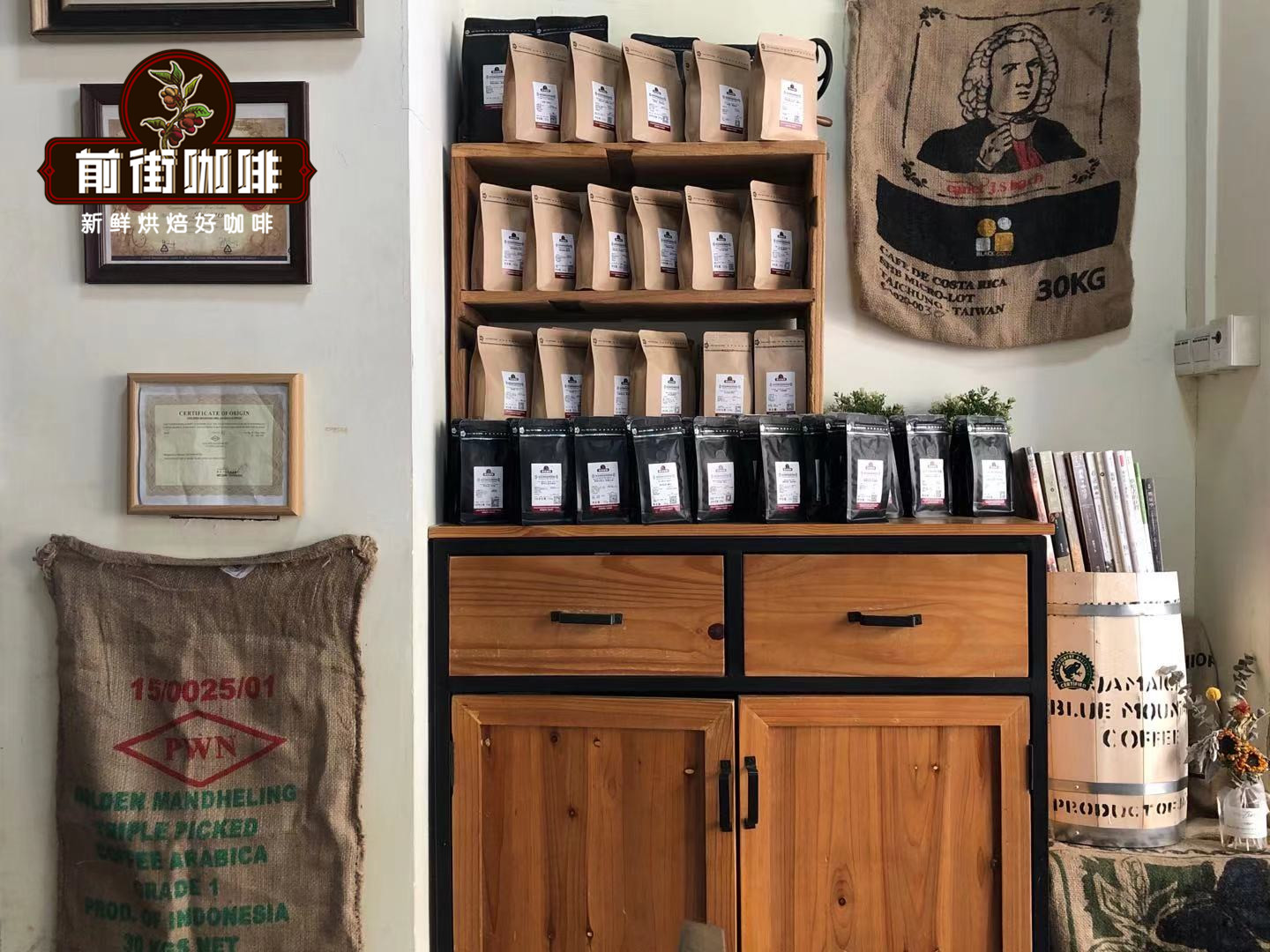
In recent years, Yunnan coffee beans have appeared frequently on the specialty coffee market. Although the development history of Yunnan coffee is not very long, FrontStreet Coffee believes it holds infinite potential. That is why FrontStreet Coffee maintains a dedicated estate for cultivating Yunnan coffee beans on the border between Yunnan and Myanmar. In this article, FrontStreet Coffee looks at the characteristics of Yunnan coffee.
Yunnan Coffee Growing Conditions in China
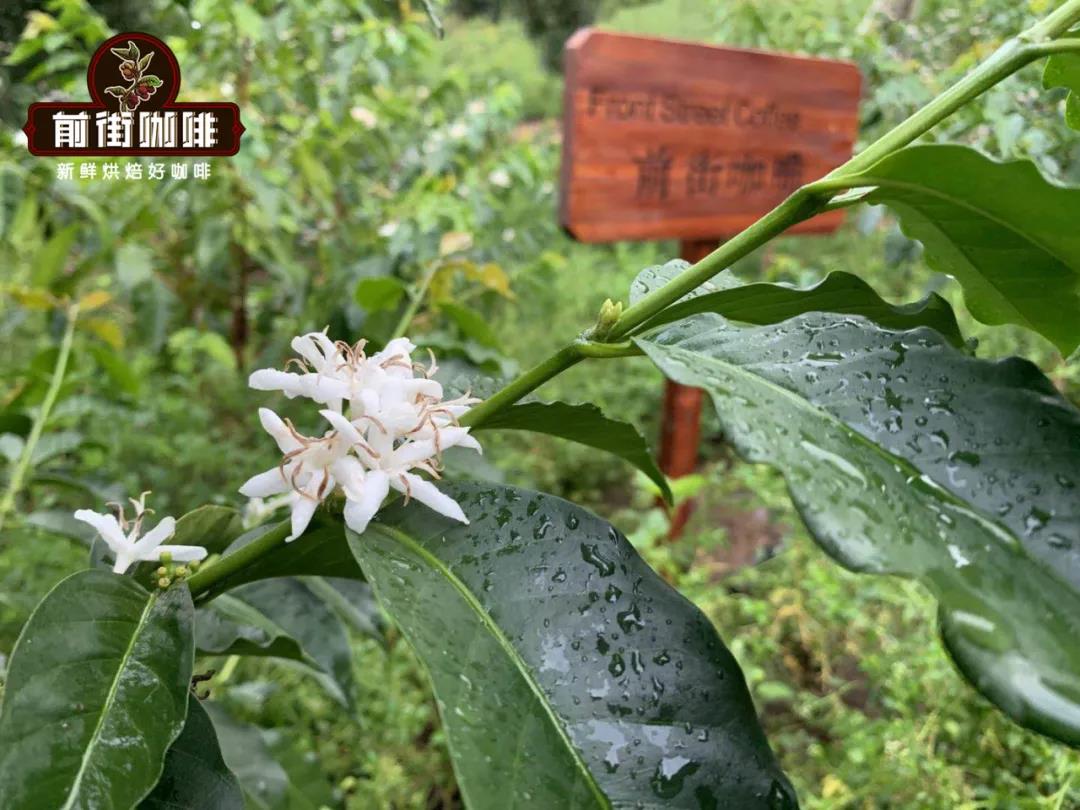
Yunnan lies in southwestern China, with the Tropic of Cancer crossing its southern part. It features mountainous plateau terrain, where mid-elevation areas of 1,000-3,500 m account for nearly 90% of the province's total land area. Yunnan's climate belongs to the subtropical plateau monsoon type, with large day-to-night temperature swings and abundant rainfall. As FrontStreet Coffee has mentioned in previous articles, growing Arabica requires high altitudes and suitable temperature and precipitation to produce high-quality fruit.
Today, the vast majority of coffee on the Chinese market comes from Yunnan. Yunnan coffee accounts for 98% of the national total, essentially representing China's coffee cultivation industry.
Yunnan Coffee Growing Regions

The main cultivation areas for Yunnan small-grain coffee are in the south and west of the province, with Pu'er, Baoshan, Dehong and Lincang particularly famous. The Yunnan coffee grown by FrontStreet Coffee's estate comes from Baoshan, Yunnan. FrontStreet Coffee finds that beans produced here have a rich flavor without bitterness, fragrant but not overpowering, with distinct regional characteristics. Below, FrontStreet Coffee briefly introduces the characteristics of these Yunnan growing regions.
Dehong: known as the "Hometown of Chinese Coffee." Coffee in Dehong Prefecture is cultivated at altitudes above 1,000 meters, with 30,000 mu planted on mountainous areas above 1,600 meters. Dehong also relies mainly on organic fertilizers and organic pesticides for coffee cultivation, resulting in higher coffee quality and making it one of the world's rare high-quality coffee-producing areas.
Baoshan: coffee cultivation in Baoshan began in the mid-1950s, with the first coffee seedling introduced from Southeast Asia by the late patriotic overseas Chinese Mr. Liang Jinshan. In recent years, with the expansion of international trade, the small-grain coffee of Lujiangba has become renowned. European, American and Arab countries—especially merchants from Britain, America, Egypt, Hong Kong and Macau—consider it premium coffee, with demand exceeding supply. In December 2010, after review by the China National Quality Inspection Administration, national geographical indication product protection was granted to "Baoshan small-grain coffee."
Lincang: a unique geographical location and climate have made Lincang a focus of attention for many coffee companies. They have successively established 200 mu and 100 mu high-quality coffee seedling bases in Mengding Town of Gengma Autonomous County and at Xingfu Farm in Lincang city, and have carried out coffee cultivation in Gengma, Zhenkang, Yun County, Cangyuan and Yongde.
Pu'er: the tea township of Pu'er has a 150-year history of coffee cultivation. In the early 1990s, Pu'er began to develop coffee as an advantageous backbone industry for adjusting its industrial structure and increasing farmers' incomes.

Yunnan Coffee Cultivation History
As FrontStreet Coffee noted above, the history of Yunnan coffee developing into a specialty product recognized by coffee lovers worldwide is not very long, but the history of coffee cultivation in Yunnan is quite old, and it divides mainly into four periods. FrontStreet Coffee now walks through that history.

First Period: in the 1880s, the Qing government was forced to sign treaties with France ending the Sino-French War and opened Mengzi (Mengzi County, Honghe Prefecture) as a treaty port. In 1889, the Mengzi customs opened, kicking off exchange between the southwestern border and foreign countries. Foreign merchants flocked in, and foreign companies followed one after another.
Second Period: in 1902, a French missionary with the Chinese name Tian Deneng brought coffee from Vietnam to Zhukula, a mountain village in Binchuan County, Dali, Yunnan Province. To this day, descendants of those coffee plants still survive.
Third Period: in 1952, experts from the Yunnan Academy of Agricultural Sciences distributed 80 kg of coffee seeds to farmers in Lujiangba, Baoshan. Several years later they provided large-scale cultivation guidance, which led to swaying coffee trees along the Yunnan-Myanmar Road. Driven by huge demand from the Soviet Union, Yunnan's coffee cultivation developed rapidly.
Fourth Period: in 1988, Nestlé established a joint venture in China and began supporting the local coffee industry in Yunnan through coffee cultivation projects. Yunnan coffee rose again. Starting in 1992, Nestlé established a Coffee Agriculture Department dedicated to guiding and researching the improvement and cultivation of Yunnan coffee, and purchased coffee at prices tied to the US spot market. To date, not only Nestlé, Maxwell House, Kraft and Starbucks are engaged in coffee business in Yunnan, but local coffee enterprises have also gradually grown.

It was after these four periods that Yunnan began to research coffee cultivation. Today, farmers in Yunnan's growing regions mainly cultivate small-grain coffee, which is why Yunnan coffee is also called Yunnan small-grain coffee. FrontStreet Coffee next introduces the varieties currently grown in Yunnan.
Yunnan Coffee Bean Varieties
The most widely cultivated variety in Yunnan today is Catimor, though small amounts of Typica and Bourbon are also grown in the Baoshan area. Although they all belong to the Arabica species in the broad sense, these varieties differ significantly in character.
Typica
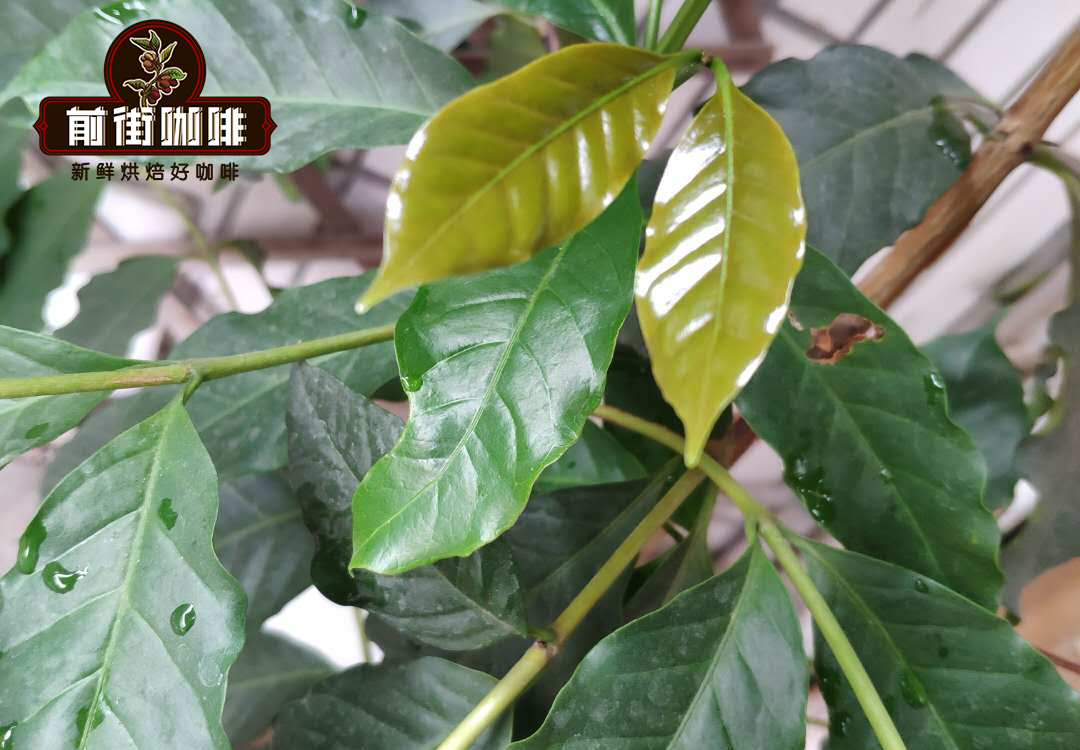
Typica is currently the oldest Arabica native variety on the coffee market, and almost all Arabica varieties are derived from it. Typica has an elegant flavor but a weak constitution, low disease resistance and susceptibility to leaf rust. Yields are therefore low and cannot meet commercial returns. In recent years, Typica in Central and South America has gradually been replaced by Caturra and Catuai, making it increasingly rare. Although Typica has an elegant flavor, it is not as popular as Bourbon.
FrontStreet Coffee's estate in Yunnan mainly cultivates Typica because it has a uniquely subtle and clean flavor, balanced character and high taste cleanliness. Typica is not easy to cultivate, but FrontStreet Coffee wants coffee lovers to taste the best flavor Yunnan coffee can present.

Bourbon
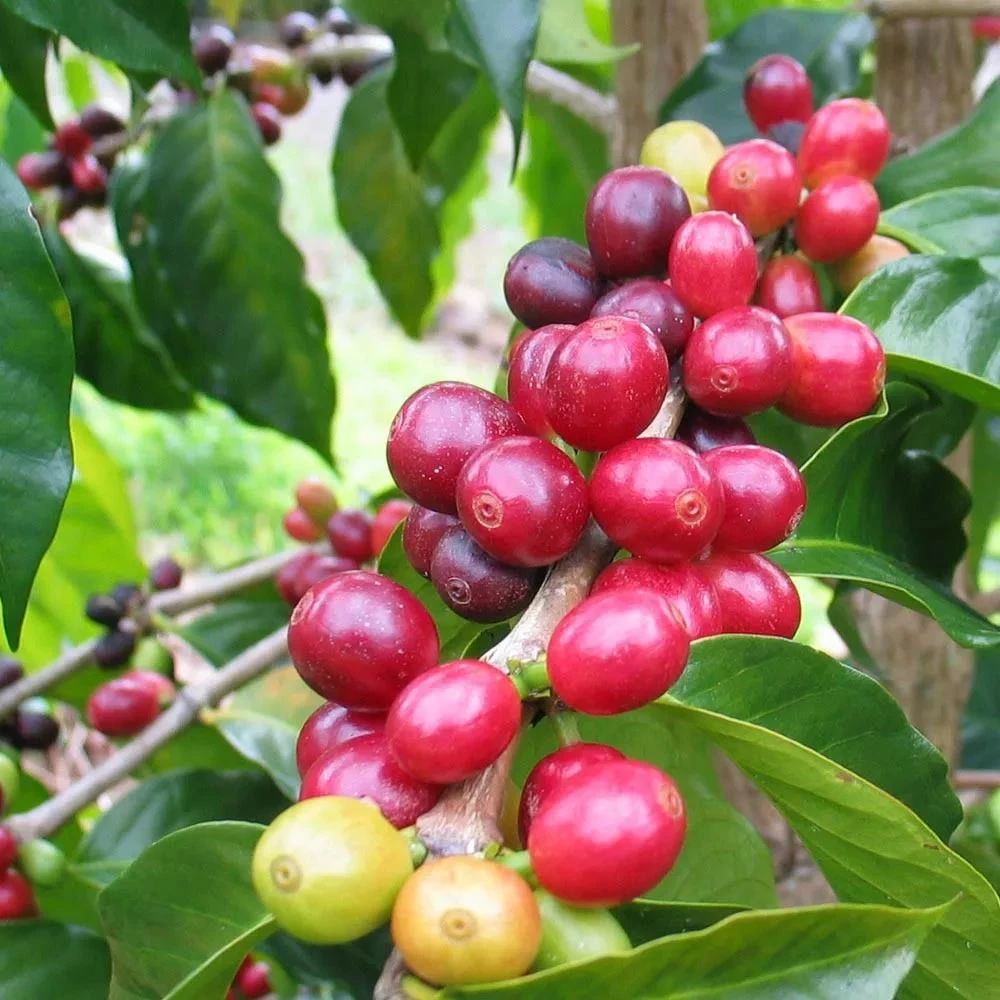
Bourbon is a sub-species that mutated from Typica and, along with Typica, belongs to the oldest surviving coffee varieties. When the green fruit ripens it turns bright red. Compared with Typica, Bourbon leaves are wider and grow more densely. Although its fruit yield is higher than Typica's, its harvest period is also two years, making it a low-yield variety. It does, however, offer a high-quality taste, with wine-like acidity and a sweet aftertaste.
Catimor Coffee Variety
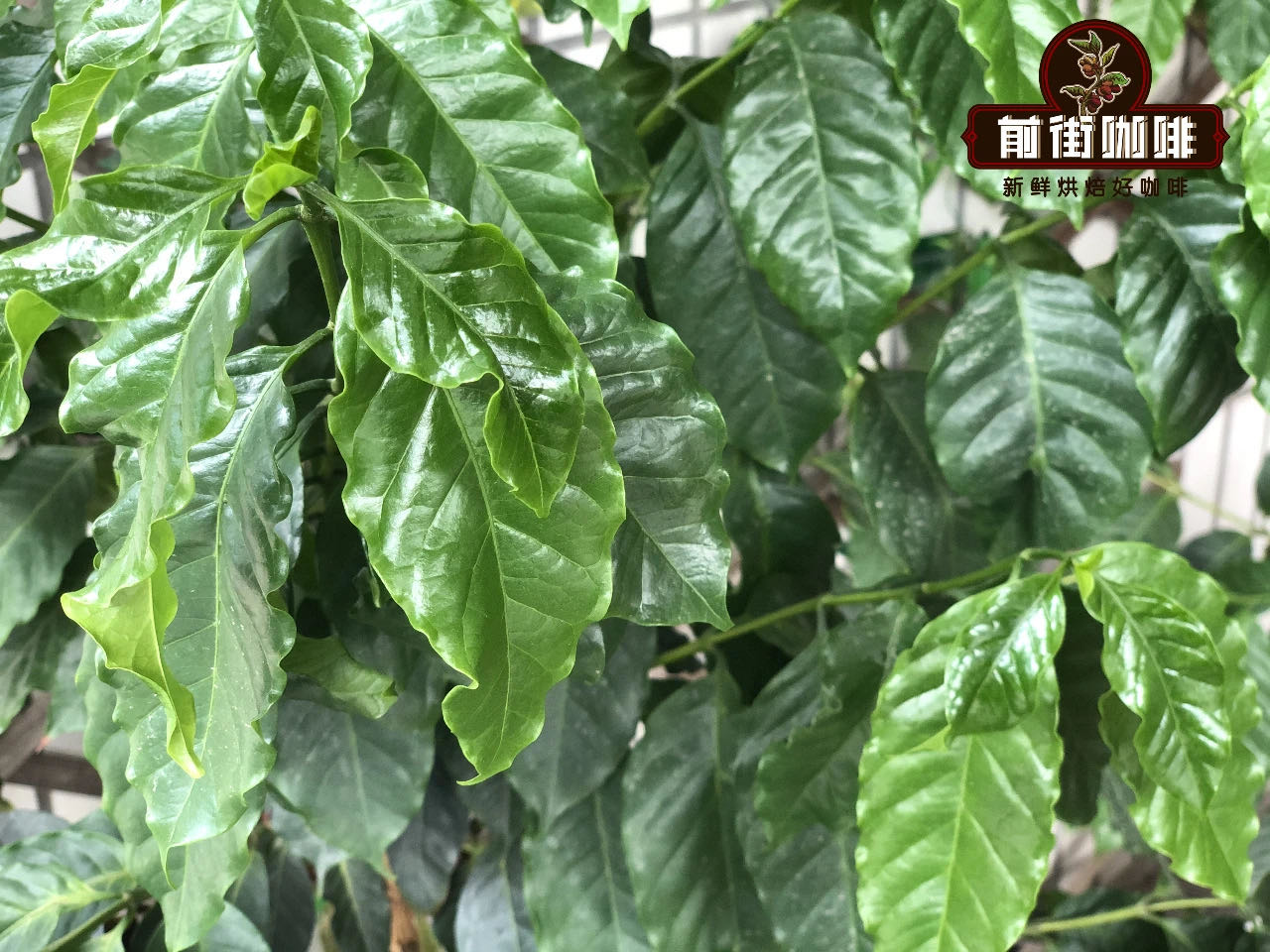
Catimor is a combination of the Arabica and Robusta species. Robusta has good leaf rust resistance, rich oils, high yield and easy cultivation. After hybridizing with Arabica Typica, Catimor has 25% Robusta genes. It improved leaf rust resistance, retained the rich oils and also kept some of the rich flavor of the original Typica.
Yunnan Coffee Processing Methods
According to FrontStreet Coffee's understanding, many processing methods have been used for Yunnan coffee beans so far, but the Yunnan beans FrontStreet Coffee currently produces all use the washed method. Washed processing best reflects the most original flavor of the bean and makes the flavor cleaner and brighter while reducing off-flavors. That is why FrontStreet Coffee uses washed processing—so that coffee lovers who come to FrontStreet Coffee's shop can taste the most authentic, original Yunnan flavor.

Washed Processing Method Steps
1. First, coffee farmers pour all the harvested cherries into water. Bad and defective beans float to the surface, while those that sink are quality-approved fruit. This greatly reduces the time wasted on individual selection.
2. The selected fruit goes into a depulper to remove the outer skin and pulp. After that, a layer of mucilage still clings to the surface, so large amounts of clean water are needed to wash away the sticky residue.
3. Fermentation then removes the mucilage completely. This process takes about 18 hours. Because fermentation bacteria adhere to the surface afterward, another wash with large amounts of clean water is needed. At this step, producing 1 kilogram of coffee requires 40 to 50 kilograms of clean water. FrontStreet Coffee considers that a very large number, and it is exactly why drought-prone countries cannot adopt the washed method.
4. The cleaned beans can then be dried. Some areas dry them outdoors in the air, while more developed growing regions send them to processing plants for machine drying, reducing the moisture content to around 11%.
5. Finally, the dried beans can be stored, packaged and sold for export.
Next, FrontStreet Coffee introduces the Yunnan coffees it currently offers.
FrontStreet Coffee Yunnan Huaguoshan Coffee Beans

Country: China
Region: Baoshan, Yunnan
Altitude: 1450-1550m
Variety: Typica
Processing: Washed processing
Flavor: Citrus, nuts, plum, melon fragrance, brown sugar, black tea sensation
FrontStreet Coffee Yunnan Small-Grain Coffee Beans

Country: China
Region: Baoshan, Yunnan
Altitude: 1200m
Variety: Catimor
Processing: Washed processing
Flavor: Herbal, nutty fragrance, chocolate, caramel
Before launching any new coffee bean, FrontStreet Coffee conducts roasting and brewing flavor tests to select the most excellent flavor profile, which makes future brewing easier for coffee lovers who come to FrontStreet Coffee. Next, FrontStreet Coffee shares the roasting and brewing data for these two Yunnan coffees.
FrontStreet Yunnan Huaguoshan Coffee Roasting Recommendation

The beans have a moisture content of 10.9%, so the roasting plan starts at 200°C, then uses high heat and a small air vent to speed up dehydration. After the dehydration stage ends, open the air vent to medium and use medium heat to avoid too rushed a Maillard reaction. Develop for 3 minutes after first crack and then unload. Return temperature: 1'32", 92.5°C; yellowing point: 5'40", 148.5°C; first crack: 8'59", 188.0°C; develop 3 minutes then unload: 12'00", 196°C.
FrontStreet Yunnan Small-Grain Coffee Roasting Recommendation
Charge beans at 190°C, heat 120, air vent at 3; return temperature at 1'40". When the drum temperature reaches 145°C, open the air vent to 4 with the heat unchanged. When the drum temperature reaches 166°C, the bean surface turns yellow and the grassy smell disappears completely, marking the dehydration stage. When the drum temperature reaches 188°C, adjust the heat to 60°C and the air vent to 5. At 8'37", the bean surface shows wrinkles and black spots and the toasted bread smell clearly turns to coffee aroma, which can be defined as the prelude to first crack; listen carefully for the sound. At 9'00", first crack begins, with the air vent unchanged. Develop for 3 minutes after first crack and unload at 198°C.
FrontStreet Coffee Brewing Recommendations for Two Yunnan Coffee Beans
FrontStreet recommends a V60 conical dripper. The V60 has a large opening and, together with its unique spiral ribs, allows air to escape more easily, improving extraction quality. The taste may not be especially thick, but its high concentration brings out Yunnan coffee's fruit acidity and distinct aroma, which is its major characteristic.
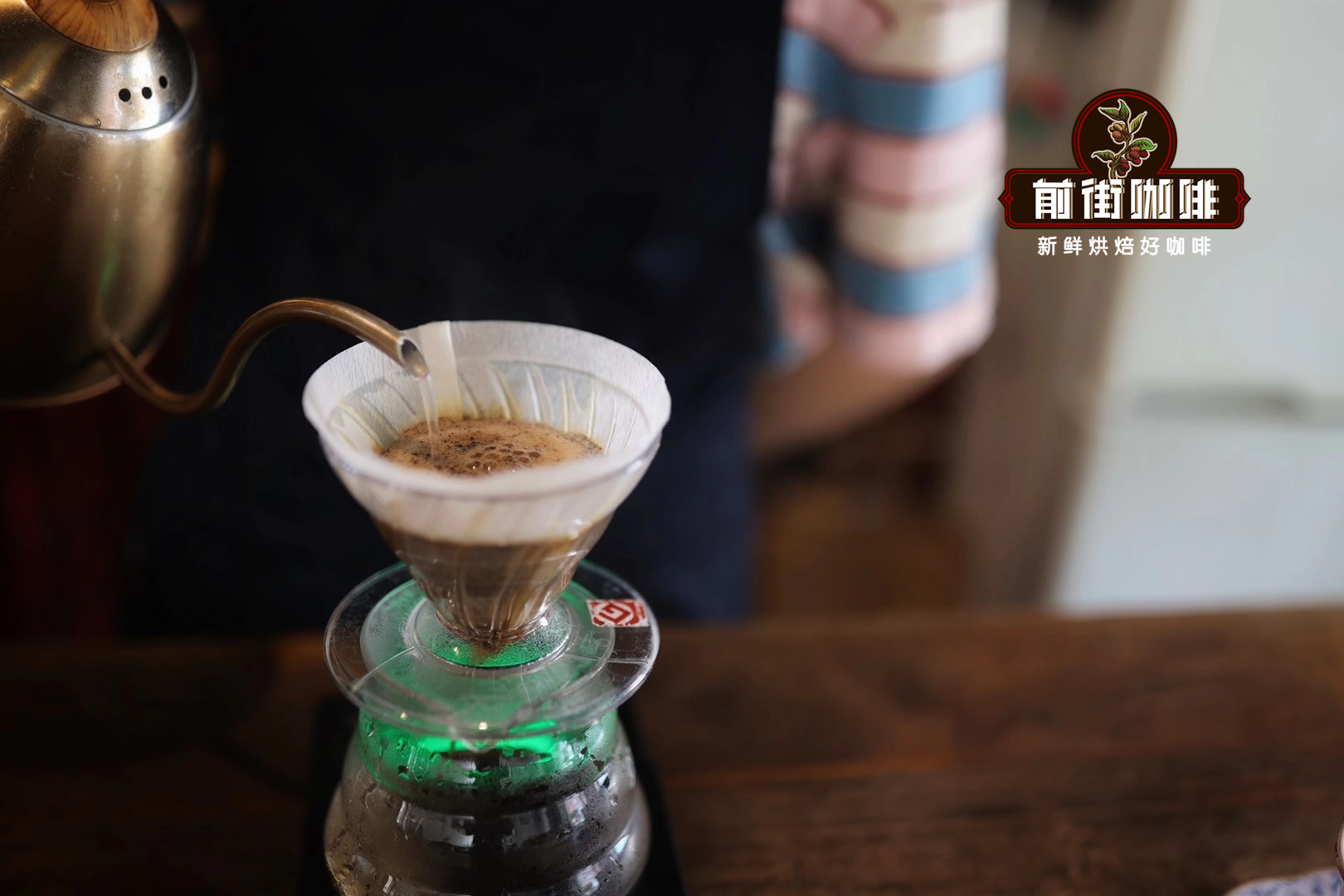
Filter cup: V60
Water temperature: 90-92°C
Coffee-to-water ratio: 1:15
Grind size: Medium-fine, that is, fine sugar thickness (VARIO 5O: China standard #20 mesh screen pass rate 57%)
Brewing method: Segmented extraction. Use 30 g of water to bloom for 30 seconds. Pour in circles with a small stream to 124 g for the middle segment. When the water level drops and the coffee bed is about to be exposed, continue pouring to 227 g and stop. When the water level drops and the bed is about to be exposed again, remove the filter cup. Extraction time is 2 minutes, timed from the start of blooming.

Huaguoshan brewing flavor description: rich but not bitter, fragrant but not overpowering, floral notes, melon sweetness in the mid-section, finishing with a black tea sensation.
Small-grain coffee brewing flavor description: a strong nutty aroma, herbal, chocolate and caramel, with a light fruit acidity in the aftertaste.
FrontStreet Coffee Recommendation
If you are new to Chinese coffee, FrontStreet Coffee's Yunnan Small Grain is an easy first stop. From the Baoshan region and washed before drying, it is roasted to a medium level that highlights its soft nutty and chocolate sweetness while keeping a little of its acidity, so it expresses the terroir of Yunnan clearly. It is the cup many drinkers try first when they meet Yunnan coffee, and it is very friendly on price.
For a more distinctive Yunnan flavor, FrontStreet Coffee's 2013 Sun-dried Typica comes from FrontStreet Coffee's own estate. Typica is one of the oldest and purest Arabica varieties—the same type the French missionary Tian Deneng brought from Vietnam to Zhukula, Binchuan, the beginning of coffee in Yunnan. Only fully ripe red cherries are used, dried in the whole fruit, then roasted to a medium level to balance the cup: expect dark berry notes, caramel sweetness, chocolate and a hint of dried apricot, with a black tea finish.
To drink Yunnan as an espresso, try FrontStreet Coffee's Black Cocoa blend, which pairs Yunnan small grain with Brazil Cerrado. The Brazilian beans supply a mixed-nut aroma and a balanced body, while the Yunnan beans contribute chocolate and citrus notes. As an Americano the cup is balanced in sweet, sour and bitter with a nutty, brown sugar sweetness, and as a latte it turns smooth and creamy—an easy starting point for beginners.
Important Notice :
FrontStreet Coffee is a long-established specialty coffee roaster in Guangzhou China, selling freshly roasted beans from its own farm in Yunnan as well as dozens of carefully selected single-origin beans from around the world for both pour-over and espresso. The products deliver consistently excellent quality and great value, with shipping within 24 hours. Guangzhou's FrontStreet Coffee shop is recommended by many coffee lovers, and the beans are now available online at the Tmall 。
FrontStreet Coffee has moved to a new address:
FrontStreet Coffee Address: 315,Donghua East Road,GuangZhou
Tel:020 38364473
 Scan and follow the En Gafei WeChat official account. Please indicate that the reprint comes from "En Gafei".