Yemen Coffee Bean Varieties: Udaini Coffee Characteristics, Stories, and Flavors - Yemen Mocha Coffee Flavor Introduction

Yemen is one of the ancient coffee-producing countries, with quite wild flavours. Since the 17th century Europeans have been fascinated by wild Yemen Mocha, a fascination that continues to this day. Yemen has an extremely dry climate, with annual rainfall of 400-750mm. Fortunately, Yemen's coffee genes come from the drought-resistant Harar variety from Ethiopia, so Yemen's beans have used natural processing exclusively since ancient times, and Yemen is the only coffee-producing country in the world to do so. In recent years, however, Yemen's turbulent situation has severely affected its coffee industry. FrontStreet Coffee was fortunate to obtain beans from Yemen.
The Origin of Yemen Mocha Coffee
Yemen lies at the south-western tip of the Arabian Peninsula, adjacent to Saudi Arabia and Oman and bordering the Red Sea, the Gulf of Aden and the Arabian Sea. The western and southern parts of Yemen are continuous mountains and plateaus, with Jabal An-Nabi Shu'ayb at an altitude of 3,666 metres, the highest point in Yemen and the Arabian Peninsula. The north-eastern part is a vast plateau region.
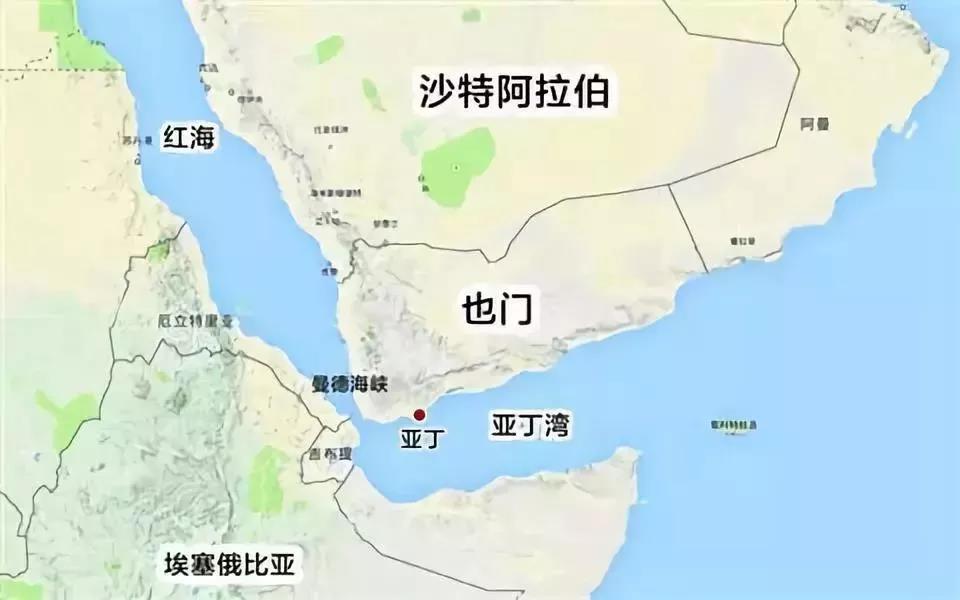
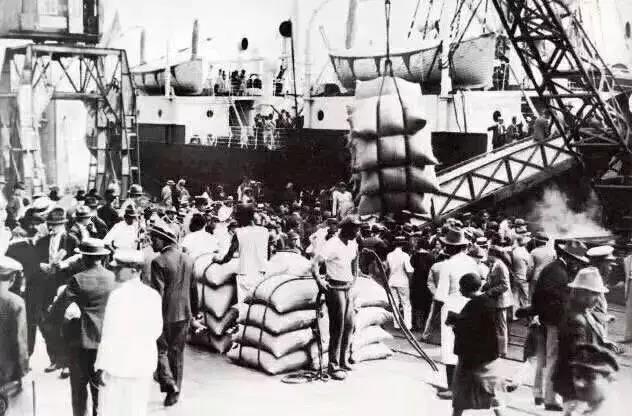
When it comes to mocha coffee, many people think of the chocolate-flavoured Italian milk coffee found in today's coffee shops, or mocha coffee made with a moka pot. The Yemen Mocha Coffee mentioned here, however, refers to the first batch of Yemeni coffee sold to Europe in the early 17th century. It was exported through an ancient small port, Mocha Port, and amazed Europeans, who called the delicious coffee from Mocha Port "Mocha Coffee." This is the origin of the term.
Today the old Mocha Port has long been abandoned because of sediment deposition, and is now known as Al Makha, a historic port with only white sand beaches. Exports are now handled by the north-western Hodeida Port, but people have long been used to the name Mocha, and it resounds throughout the world even today.
Yemen Coffee Growing Regions
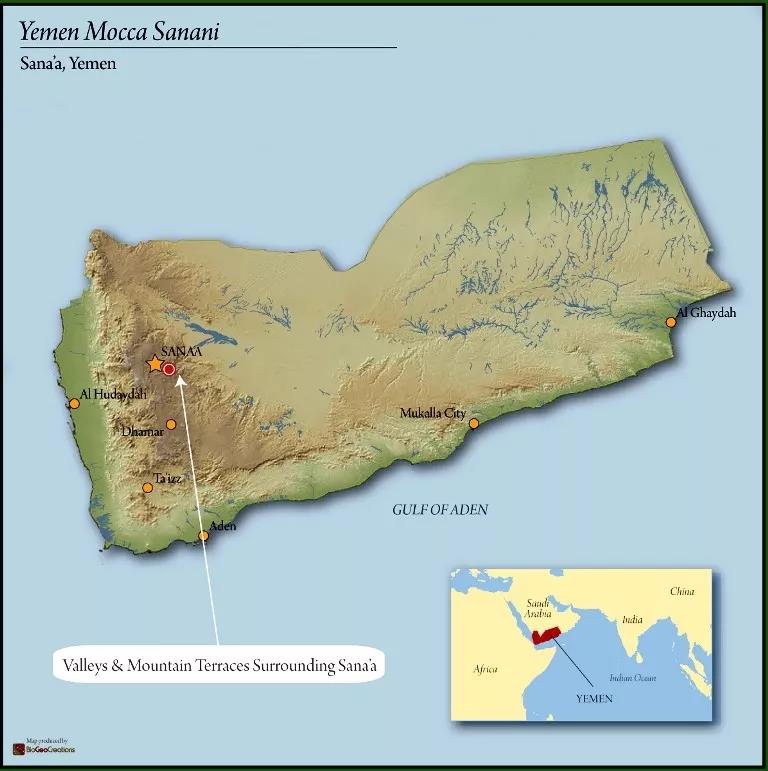
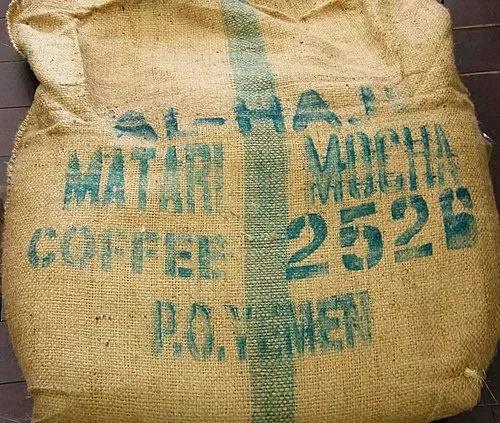
Yemen's specialty coffee growing regions are mainly concentrated in the central plateau areas of Mattari, San'ani and Ismaili.
Mokha Mattari
From Bani Mattar, also spelled Bany Mattar, west of Yemen's capital Sana'a, Mattari is the most renowned coffee market name. It is coffee produced at high altitudes, typically with a good red wine aroma, dried fruit flavours and a rich texture, and it often exhibits bittersweet chocolate flavours when dark roasted. Quality Mattari beans are small in size, with a sweet wine-like fragrance and a moderate fermented fruit aroma when raw. They often win out because of their more distinct Yemeni style. Altitude: approximately 2,000-2,400 metres.
Mokha San'ani
A broad market name for coffee from some growing areas west of Yemen's capital Sana'a. It is a blend from tens of thousands of small farms on the slopes near the capital, Sana'a. The growing altitude is slightly lower than Mattari, and the body is generally thinner than Mattari with lower acidity, but it has good fruity flavours and often shows better ripe fruit and wild flavours than Mattari. Altitude: approximately 1,650 metres.
Mokha Ismaili
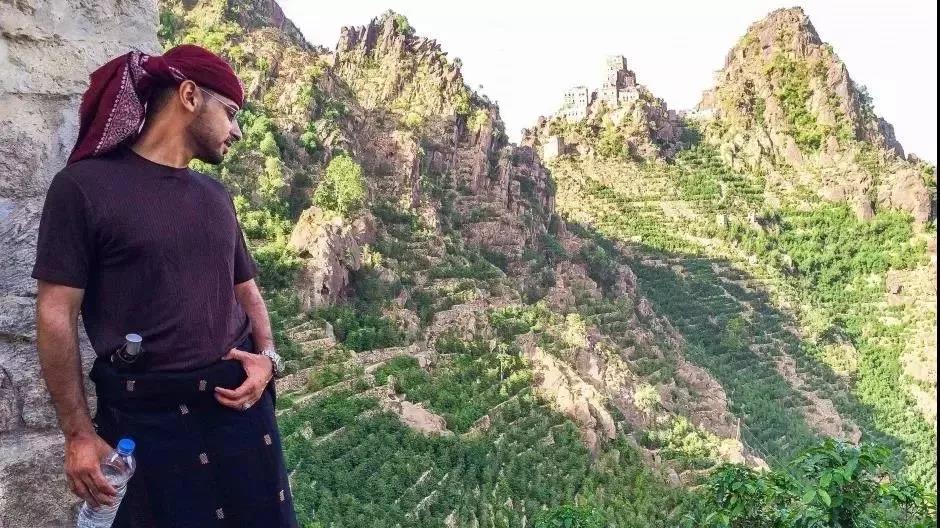
One of the traditional ancient varieties, some also describe it as a growing region. It is a market name for a famous coffee from central Yemen, also described as a traditional botanical classification of Yemeni coffee with high beverage quality. It is grown at very high altitudes in rugged mountainous areas above 1,981 metres. It is characterised by more rounded beans with inconsistent sizes, smaller than Mattari beans, with a rich texture and high complexity, and it often outperforms Mattari. This is the least produced and most expensive Yemen Mocha, in a country where Yemen Mocha is already not inexpensive. Quality Mokha Ismaili is produced in the mountainous areas of the Hirazi region, which, though as famous as Bani Matar, has the best local reputation in Yemen, with the highest altitude in Hirazi reaching up to 2,438 metres.
Yemen Coffee Varieties
In recent years Yemen has mainly cultivated Typica and Bourbon varieties. The Mocha mentioned above is actually the real name of the Yemeni coffee variety, Udaini. It is not only an ancient Typica variety but also one of the most common and oldest coffee varieties in Yemen. The beans are very small, and some call them "small mocha." Mocha is a flat bean, not a round bean. Small but fragrant and rich.
Divisive Coffee Flavours
The wild flavours of Yemen coffee cause polarised evaluations among connoisseurs. Those who like this wild taste consider it a wild fragrance brought by fermentation, while those who dislike it think it smells like durian. Such evaluations repeatedly stimulated FrontStreet Coffee's curiosity, so the company obtained Yemen Mocha to roast at home, experiencing this wild feeling through cupping and brewing. FrontStreet Coffee believes that although Yemen Mocha's flavour is full of wildness, spicy aromas and a lack of cleanliness, there is always a hint of surprise behind the wildness.
FrontStreet Coffee Yemen Mocha Coffee
- Country: Yemen
- Region: Mattari
- Altitude: 1,300-1,900m
- Varieties: Typica, Bourbon
- Processing: Natural processing
Yemen Natural Processing Method
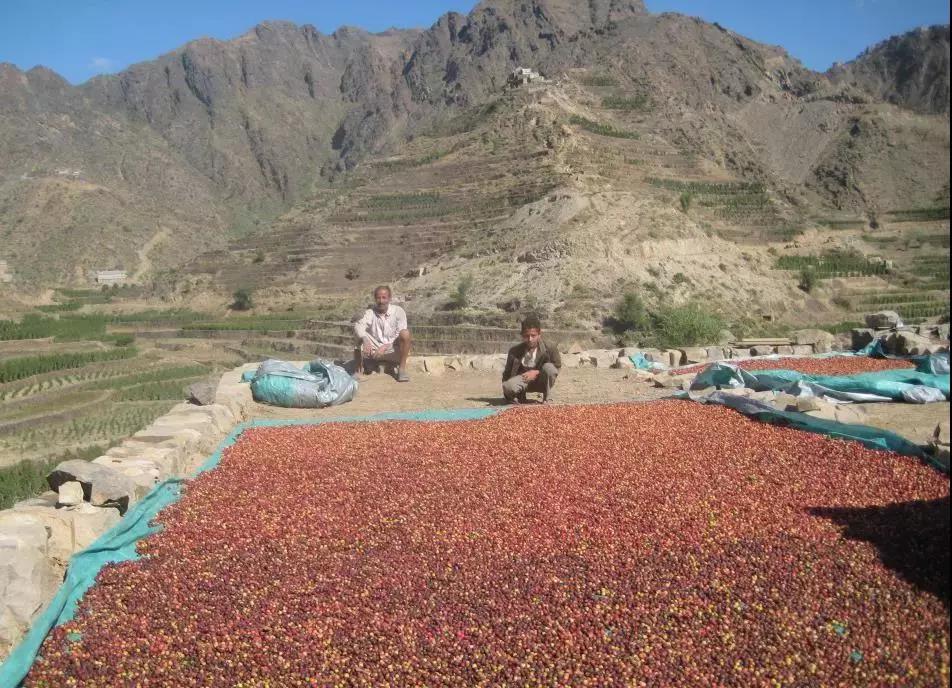
Yemeni farmers' natural processing method is rougher than Ethiopia's. Coffee cherries are not picked when they turn red but are left to dry on the branches until they turn purplish-black and fall to the ground, and only then are they collected. This differs from the refined natural processing of Yirgacheffe or Sidamo, where red cherries are picked and spread on raised African beds. This is the main reason for Yemen's particularly wild flavours. Because farmers also store naturally processed beans for different durations, almost every batch of green beans has its own distinct personality.
Yemen's natural processing method involves manually harvesting fully ripe coffee beans and then placing the freshly harvested beans directly in dedicated coffee drying fields or their own compacted earthen courtyards to sun-dry. During the drying period, much as rice is dried in Taiwan, wooden rakes are used to turn the beans to ensure even drying. After about twenty days, when the coffee is completely dry, the outer pulp and skin are removed to extract the beans. Yemen coffee is rich, complex, wild and mellow, with strong fermentation flavours and lower acidity. Combined with an uncertain factor, the timing of the seasonal rainfall, it is unpredictable. To call it the world's most special coffee would not be an exaggeration.
FrontStreet Coffee's Raw Bean Analysis
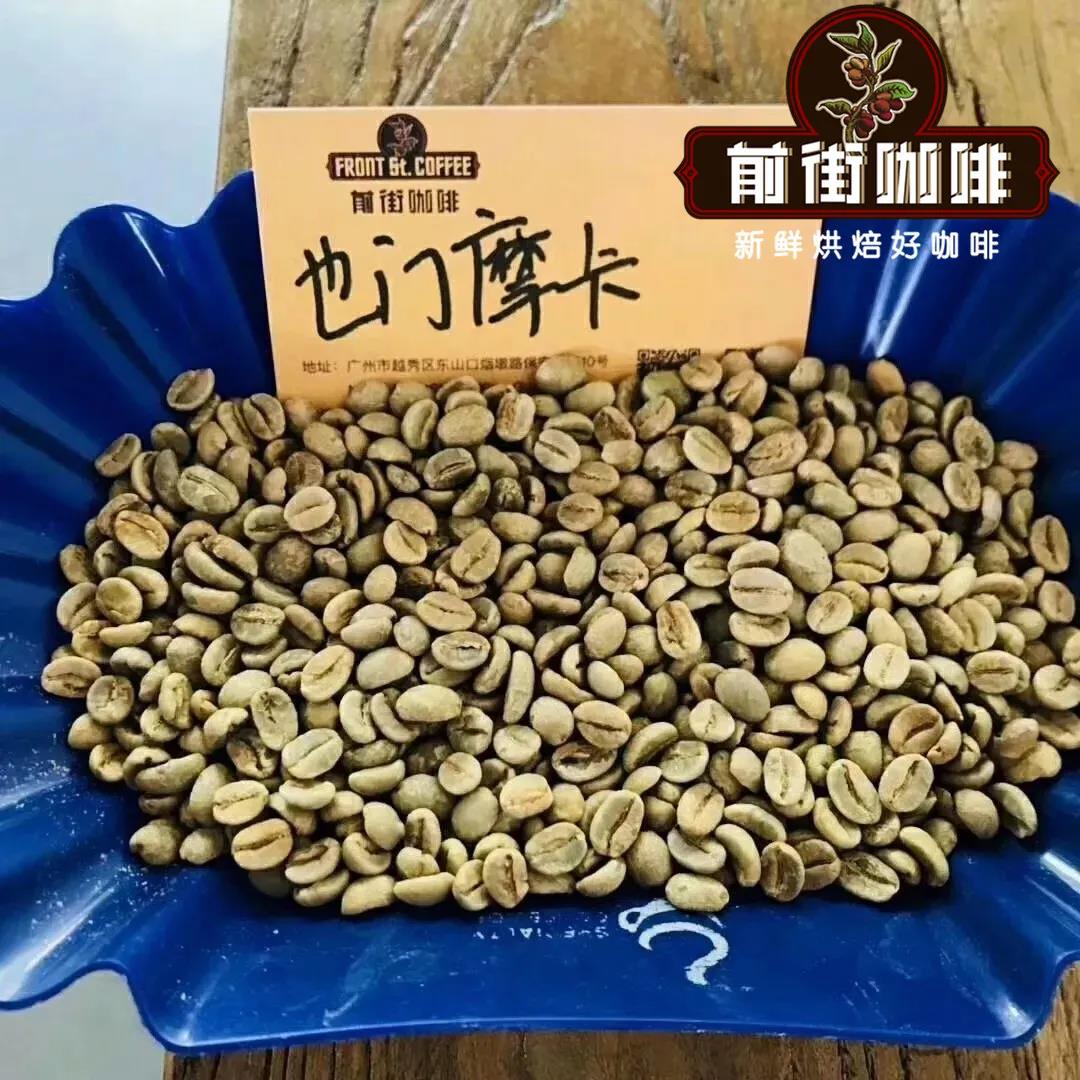
When lightly roasted, this Yemen Mocha bean has a relatively bright fruit acidity with fruity sweet aromas, spice and chocolate flavours; when medium roasted it has red berry, vanilla, cream, caramel and chocolate flavours; and when dark roasted it exhibits distinct chocolate, nut and spice flavours.
FrontStreet Coffee's Roasting Recommendations
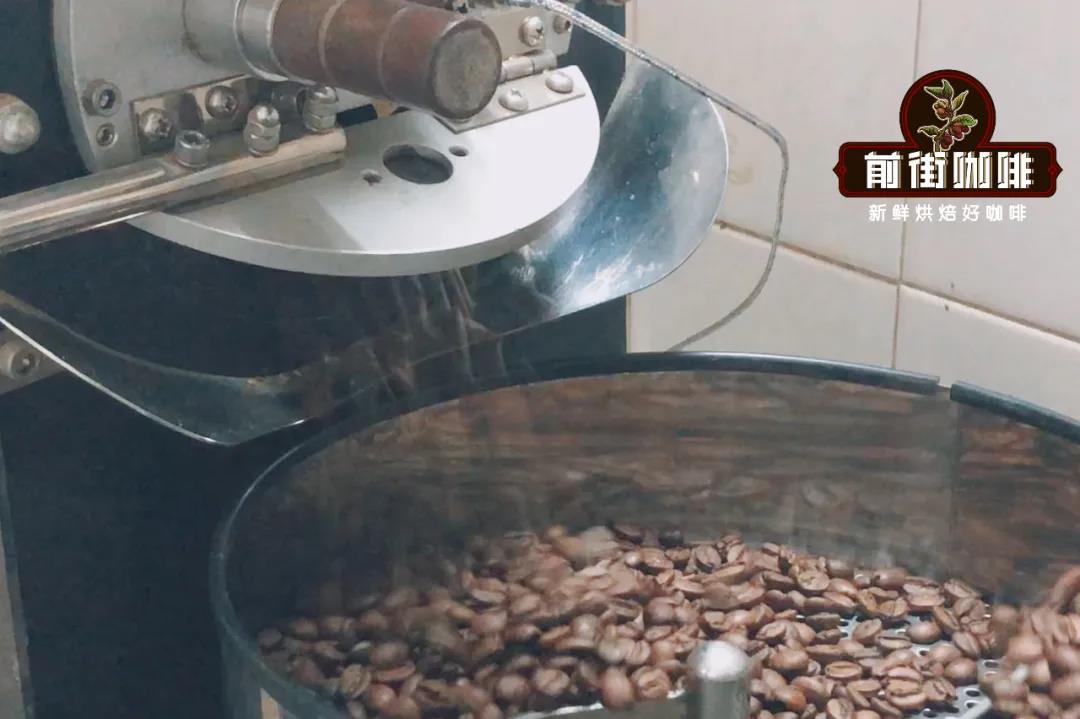
FrontStreet Coffee's roaster chose a medium roast. Yemen Mocha belongs to the category of green beans with relatively low moisture content. Considering the inconsistent bean sizes, the entry temperature for low-moisture beans should not be too high. Early dehydration should also be accelerated to retain moisture for first crack development of flavour and texture. Preheat for 30 seconds and open the airflow to 3; once the green beans turn light green or white, open the airflow to 4, and after first crack open it to 5, the maximum.
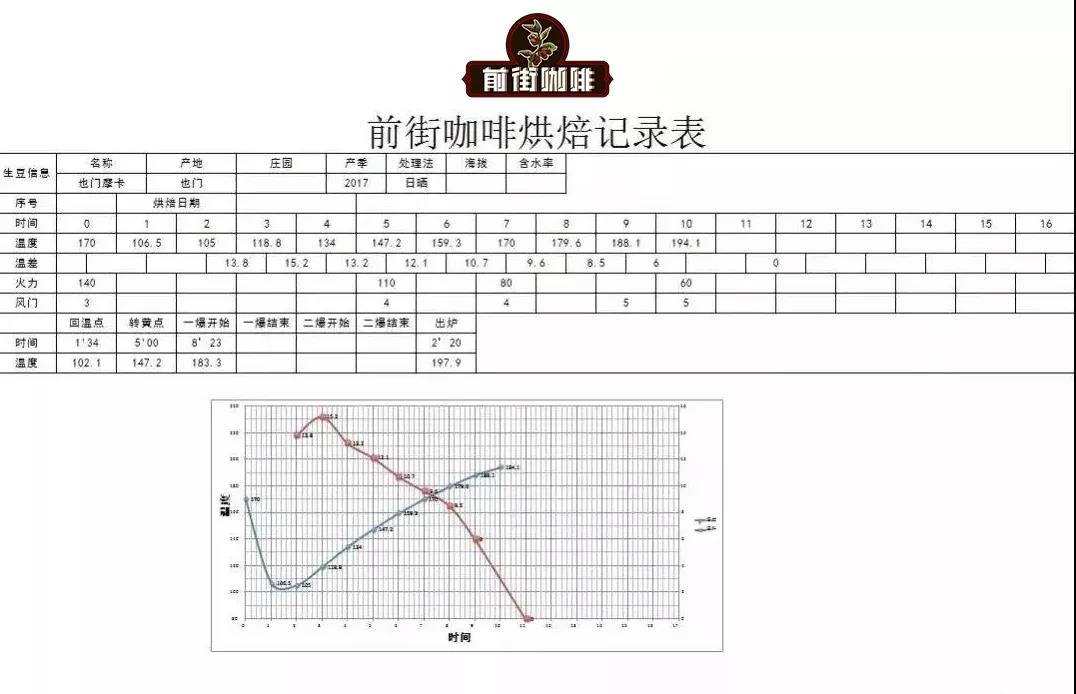
Heat the roaster to 170 degrees Celsius and load the beans, setting airflow to 3. After 1 minute, adjust the heat to 140 degrees Celsius, keeping airflow unchanged. Roast until 5 minutes 00 seconds, when the temperature reaches 147.2 degrees Celsius, the bean surface turns yellow, the grassy aroma disappears completely and dehydration is complete. Adjust the heat to 110 degrees Celsius and change the airflow to 4.
At 8 minutes 00 seconds, ugly wrinkles and black spots appear on the bean surface and the toast aroma clearly transitions to coffee aroma, which can be defined as the prelude to first crack. Listen carefully for the sound of first crack. At 8 minutes 23 seconds first crack begins, so reduce the heat to 60 degrees Celsius and fully open the airflow, adjusting the heat very carefully so it is not too low and the crack does not fall silent, then unload at 197.9 degrees Celsius.
FrontStreet Coffee's Brewing Recommendations
FrontStreet Coffee recommends using a Kalita dripper to brew Yemen Mocha coffee. Viewed from the side, the Kalita trapezoidal dripper is wider at the top and narrower at the bottom, with a circular shape at the top. This design helps concentrate the water flow and allows the coffee particles to distribute evenly, reducing stacking. There are many ribs on the cup wall, distributed in straight lines with consistent spacing, which increases the speed of exhaust and flow. Its flow rate is relatively slow, relying mainly on immersion for extraction, which can present a better body.
- Grind: White sugar size or medium-coarse grind (70-75% pass-through rate on #20 standard sieve)
- Water temperature: 90 degrees Celsius
- Coffee-to-water ratio: 1:15
- Coffee amount: 15g

FrontStreet Coffee's segmented brewing method: first, pour 30g of water in a circular motion to evenly wet the grounds, and let them bloom for 30 seconds. Then slightly increase the water flow and inject directly with a small central stream to 125g for the first segment. When the water level drops and is about to expose the coffee bed, continue with a small central stream to 225g, then stop pouring. When the water level drops and is about to expose the coffee bed, remove the dripper. The extraction time from the start of the bloom is 2 minutes 00 seconds.
Brewing flavours: medium complexity with layers, a hint of grape acidity appearing at the end as the flavour changes in the mouth, a long spice aftertaste, and a moistening sweet return with the round Middle Eastern milk tea feeling that lasts a long time, with malt sweetness remaining at the bottom of the cup.
FrontStreet Coffee Recommendation
Yemen's wildness comes above all from its natural processing, and FrontStreet Coffee's natural-processed Ethiopian coffees let you explore that same family of flavours. The FrontStreet Red Cherry is a natural Yirgacheffe made only from fully ripe red cherries, which are sorted once on arrival, then spread on raised beds to dry; during the first days the fruit is turned every two to three hours so it does not over-ferment, and after three to five weeks of drying the outer pulp is scraped away and the beans are moved to the warehouse. Because the fruit dries with the cherries still on them, the coffee keeps the typical Yirgacheffe character while adding the tropical fruit of the natural process: citrus acidity, a berry-juice body, honey sweetness and a creamy smoothness.
For a fuller and more complex natural, the FrontStreet Huakui comes from the Hambella area of Guji in Sidamo, where the farm covers 200 hectares and uses traditional natural processing. To keep the cherries from moulding or picking up off-flavours from the soil, workers dry them on raised beds for 21 days, turning them constantly and removing defective or mouldy beans by hand every three to five days, then hull and sort once more after the skin has dried hard. Roasted medium-light, it shows a light fermented wine note, florals, citrus and mango, with honeyed sweetness, a cocoa edge and a little spice, a thick body and a long finish.
If you want to trace the wild, forest-grown feeling back further, the FrontStreet Kafa Forest is grown entirely in shade between 1,400 and 2,100 metres, where an original rainforest climate, red soil and plentiful rain give the trees an ideal environment; roasted medium-light, it shows white florals on the grind, a bright lemon acidity, sweet orange and bergamot, a faint melon and nut sweetness on the return and a green-tea mouthfeel.
Important Notice :
FrontStreet Coffee is a long-established specialty coffee roaster in Guangzhou China, selling freshly roasted beans from its own farm in Yunnan as well as dozens of carefully selected single-origin beans from around the world for both pour-over and espresso. The products deliver consistently excellent quality and great value, with shipping within 24 hours. Guangzhou's FrontStreet Coffee shop is recommended by many coffee lovers, and the beans are now available online at the Tmall 。
FrontStreet Coffee has moved to a new address:
FrontStreet Coffee Address: 315,Donghua East Road,GuangZhou
Tel:020 38364473
 Scan and follow the En Gafei WeChat official account. Please indicate that the reprint comes from "En Gafei".