The Differences Between Yemen Mocha Coffee, Moka Pot Coffee, and Mocha Coffee

The Origins and Journey of Coffee
Coffee originated in Ethiopia, on the East African plateau. For nearly 2000 years this region has produced high-quality Arabica hand-dried coffee beans, named after the ancient city of Harar. Over 1500 years ago, coffee trees were introduced to Yemen across the Red Sea, and coffee's global journey began. Yemeni coffee beans were exported to various parts of the world (mainly to Europe through Turkey) from the port of Mocha, now silted up and abandoned, so Yemeni coffee beans took their name from their export port. This is what we now commonly see as "Mocha beans."
Mocha Beans
Mocha Beans: Produced in Ethiopia, these beans are small yet fragrant, with strong acidity and a mellow flavor, slightly wine-like, pungent and stimulating, with moderate sweetness and unique characteristics. They are a renowned high-quality coffee, typically consumed as single-origin. Currently, Yemen produces the best mocha coffee, followed by Ethiopian mocha. Mocha coffee has a smooth texture with medium to strong acidity, excellent sweetness, and a unique flavor containing chocolate notes. With the temperament of a noble lady, it is an extremely distinctive pure coffee.
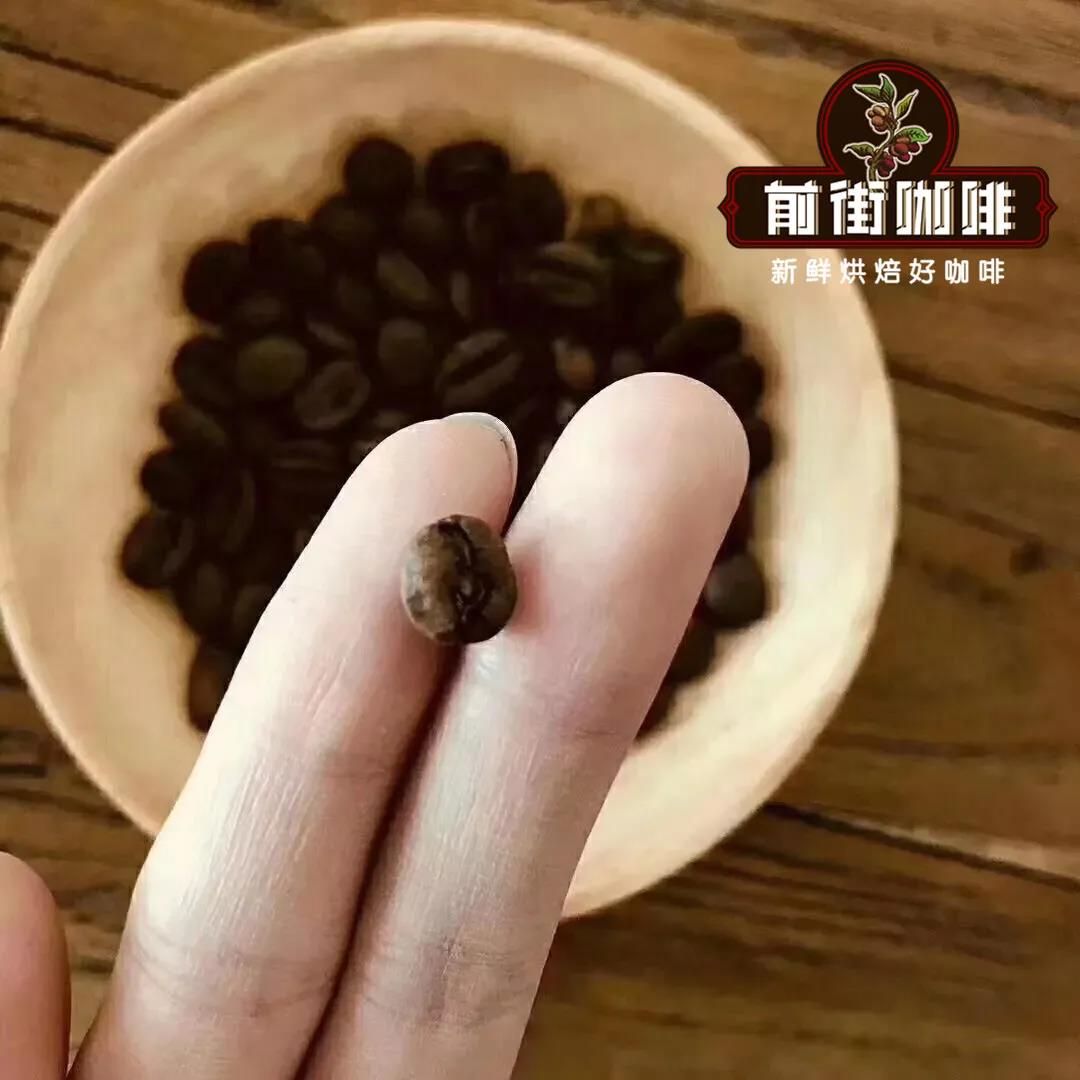
Mocha (also called "small mocha" because the beans are very small): the small mocha from Central and South America not only has short trees and small beans but also low yield. Generally, small mocha beans are about 10 to 11 mesh wide, meaning the bean width is between 0.39 cm and 0.43 cm, far smaller than typical 18-mesh Central American beans at 0.7 cm wide. Look closely and you will see that small mocha beans have a flat side, meaning one fruit contains two raw beans. Of course, small mocha also has peaberries, but the proportion is only 2%, far lower than the 5% to 10% of general Arabica.
Mocha Pot
Because Yemen was the world's main coffee exporter before the European colonial period, for a considerable time the term "mocha" was used as a synonym for Yemeni coffee beans. The "mocha pot" we speak of today actually means a type of coffee pot.
The mocha pot consists of an upper chamber, a filter, and a lower chamber, with the filter positioned between the upper and lower chambers. During brewing, water is placed in the lower chamber, while coffee grounds go in the middle filter. When the lower chamber is heated, water vapor is generated, creating about one atmosphere of pressure that pushes hot water upward through the coffee grounds and the pot's narrow tube, then into the upper chamber after hitting the pot lid, forming coffee liquid.
Key Points: Place the properly assembled mocha pot on a heat source for heating. The key to filling a mocha pot with coffee grounds is to fill it as much as possible rather than tamping it down. You can add the grounds in batches while filling, tapping the edge of the filter basket to help it spread as evenly as possible without gaps. For easier observation, I recommend brewing with the upper lid open.
Soon, coffee liquid will overflow from the central metal column of the upper chamber.
As extraction continues, the coffee liquid level will gradually rise. When oil appears on the liquid surface, be alert that extraction is nearing its end. When the oil color changes from dark to light, immediately cut off the heat source to stop extraction; otherwise, the coffee will be over-extracted.
Above all, do not wait until you hear a "gurgling" sound before stopping. Such coffee may even develop a burnt rubber taste.
Because it generates about twice atmospheric pressure, it is classified as a high-pressure brewing method. Some people also call it a "manual espresso pot." I do not agree with this classification, as it does not meet espresso standards and cannot produce that layer of crema. However, it is indeed a "strong" drip coffee that has always been favored by those who prefer bold flavors.
PS: The mocha pot is very sensitive to capacity, so you must brew according to the pot's capacity. If you have a 2-cup mocha pot, you should brew 2 cups at once. If you only brew one cup, the coffee grounds layer won't be thick enough, creating insufficient resistance to the hot water, which will pass through quickly, resulting in poorly extracted coffee. Mocha pots on the market come in capacities for 1, 2, 3, 6, 9, 12, and 18 people. Consider your needs carefully before purchasing.
Mocha Coffee
Original "Mocha" beans, processed using ancient hand-drying methods, are filled with wild flavors, with a strong "chocolate taste" in the aftertaste. Therefore, in Italian coffee culture, "chocolate coffee" is called "Mocha Coffee." Similar to a classic Italian latte, it is typically made with one-third espresso and two-thirds milk foam, but it also includes a small amount of chocolate.
Chocolate is usually added in the form of chocolate syrup, though some coffee serving systems use instant chocolate powder instead. Sometimes whipped cream, cocoa powder, and marshmallows are added on top to enhance the coffee's aroma and as decoration. Unlike Italian cappuccino, mocha coffee does not have fresh milk foam on top. Instead, mocha coffee typically has either whipped cream, cinnamon powder, or cocoa powder on top. It is also possible to add candied orange peel powder on the surface as decoration and to add flavor.
FrontStreet Coffee Recommendation
Mocha beans trace their story back to Ethiopia, and that origin still offers the clearest expression of the wild, wine-like, chocolate-tinged character described above. If you want to taste it, FrontStreet Coffee suggests starting with FrontStreet Washed Yirgacheffe, an entry-level Ethiopian lot with crisp jasmine florals and bright citrus acidity, light and elegant with a tea-like body that drinks like a clean, refreshing lemon tea. For a bolder, fruitier cup, FrontStreet Natural Red Cherry is picked from fully ripe red cherries, sun-dried for two weeks, and shows peach, cocoa, honey, and lemon in the Original Red Cherry style.
If you enjoy the deep, fermented sweetness that made mocha famous, FrontStreet Natural Huaku, from the Hambella area of Guji in Sidamo, uses a traditional natural method with 21 days on raised beds and delivers a light fermented wine aroma, florals, citrus, and mango, with honeyed sweetness, cocoa, a hint of spice, a full body, and a long finish. FrontStreet Sidamo Natural Hamasho 74158 offers a sweeter, fruitier profile of strawberry, star fruit, and green grape with faint florals, while FrontStreet Kafa Forest, grown in shade at 1400-2100 meters, brings white florals, bright lemon acidity, sweet orange, and bergamot with a green-tea-like mouthfeel.
Important Notice :
FrontStreet Coffee is a long-established specialty coffee roaster in Guangzhou China, selling freshly roasted beans from its own farm in Yunnan as well as dozens of carefully selected single-origin beans from around the world for both pour-over and espresso. The products deliver consistently excellent quality and great value, with shipping within 24 hours. Guangzhou's FrontStreet Coffee shop is recommended by many coffee lovers, and the beans are now available online at the Tmall 。
FrontStreet Coffee has moved to a new address:
FrontStreet Coffee Address: 315,Donghua East Road,GuangZhou
Tel:020 38364473
 Scan and follow the En Gafei WeChat official account. Please indicate that the reprint comes from "En Gafei".