Ethiopia Yirgacheffe Coffee Roasting and Brewing Parameters Ethiopia Yirgacheffe Flavor Characteristics
Ethiopia Natural Yirgacheffe Chelelektu
Ethiopia Yirgacheffe Chelelektu G1 Coffee Beans
01 | Region Introduction
Unique Geographical Environment
Yirgacheffe is a small town in Ethiopia at an altitude of 1700-2100 meters, making it one of the highest altitude coffee growing regions in the world and synonymous with Ethiopian specialty coffee. Lakes Turkana, Abaya, and Chamo bring abundant water vapor to the area.
Many enthusiasts struggle to tell Yirgacheffe and Sidamo apart - both are in Ethiopia. Simply put, Sidamo is a province, and Yirgacheffe is a town within it. Sidamo sits at an altitude of 2100 meters, while the Yirgacheffe region is higher, with maximum altitudes exceeding 2600 meters, well above Sidamo. Yirgacheffe is known for its unique jasmine aroma, bright and lively citrus acidity, and black tea texture, while Sidamo is characterized by full berry and tropical fruit flavors.
Yirgacheffe is located in the Gedeo region of southern Ethiopia. The region manages the relatively famous Yirgacheffe and Kochere. Because the coffee produced in Yirgacheffe has such a special flavor and unique style - and is so widely loved - it formed its own category in product classification and has always held a place in the global specialty coffee market. Yirgacheffe itself is a small town in Sidama province, with three adjacent small producing areas: Wenago, Kochere, and Gelena Abaya. Because the coffee flavor from these areas is almost identical to Yirgacheffe's, Kochere is also classified under the Yirgacheffe region. In November 2009, Ethiopia implemented a new trading and grading system, adding three sub-regions - Wenago, Kochere, and Genlena Abaya - alongside Yirgacheffe.
Kochere is a small producing area located about 25 kilometers southeast of Yirgacheffe. The harvested beans come from local small-scale farmers, made up of numerous individual smallholders. These farmers cultivate an average area of about 1 hectare, at an altitude of approximately 1900 to 2000 meters. The coffee varieties are mainly a mix of Typica and Heirloom (local native varieties). Thanks to the relatively advanced green bean water processing equipment in the region, Kochere has always performed at a high level in washed processing, praised for its clean sweetness with complex notes of honey and citrus. The main local production model has smallholders delivering each harvest of red cherries directly to nearby cooperative washing stations for unified processing.
Beginning in the 1970s, Ethiopia introduced washed processing technology. Today, green bean processing in Kochere is mainly washed. After the washing station screens and grades the red cherry coffee fruits, they are directly depulped for washed fermentation. After washing, the parchment beans are placed on racks for natural sun-drying. When humidity reaches 12% or below, they go straight to the warehouse of the Ethiopian Commodity Exchange (ECX) in Awassa, where cupping grading and quantity checks are usually carried out. Washed beans are generally stored in parchment form until dehulling before export.
Since the ECX system was implemented in 2008, most coffee green beans have been sold through bidding under this system. This batch of natural processed Yirgacheffe G1 Chelelektu comes from Chelelektu village in the Kochere producing area within Yirgacheffe. The red cherries come from approximately 500 local family smallholder members. These farmers cultivate an average area of less than 2 hectares, at an altitude of approximately 1900 to 2000 meters. Their washed beans have been sent for cupping by industry professionals, with historical records reaching as high as 94 points.
Green Bean Information
Product Name: Ethiopia Natural Yirgacheffe Chelelektu G1
Flavor Description: Raisins, dark berries, tropical fruits and caramel
Country: Ethiopia
Region: Yirgacheffe, Kochere producing area
Producer: Chelelektu processing station, local small-scale farmers in the town
Variety: Local heirloom varieties
Grade: ECX highest grade G1
Altitude: 1900 to 2000 meters
Processing Method: Natural processing
02 | Processing Method
This natural processed coffee has slightly larger beans with lower density and moisture content. Every coffee from this processing station can be considered high-quality specialty processed coffee, with characteristics that surpass other coffees regardless of the processing method used. The beans from here can be considered the best in the Yirgacheffe region.
After the processing station selects available coffee cherries, the whole pulp and skin are kept intact, and the cherries are placed on raised beds for natural sun-drying. This labor-intensive raised-bed method isolates the fruit from ground contact, preventing earthy off-flavors during drying and creating exceptionally clean fruit flavors. After more than two weeks of sun-drying, the dark brown cherries are professionally stored, waiting for the flavor to fully mature. Before shipment, the processing station removes the beans from the cherries, making the sweetness imaginable.
03 | Green Bean Analysis
About Yirgacheffe Grading
According to the different green bean processing methods, Yirgacheffe can be divided into two main categories:
Category A is washed processing, with grading standards set by the Specialty Coffee Association of America (SCAA), divided into Grade 1 and Grade 2. The smaller the numeral, the higher the grade. G1 Yirgacheffe has a distinctive style, with citrus flavors and floral notes blended into the coffee liquid that everyone finds irresistible.
Category B is natural processed green beans, graded as Grade 1, Grade 3, Grade 4, and Grade 5. The highest grade G1 natural Yirgacheffe has rich fruit aroma. Opening a bag of freshly roasted G1 natural Yirgacheffe can overturn everyone's original understanding of coffee - only those who have tasted the highest grade natural Yirgacheffe will believe that coffee is a fruit.
Yirgacheffe varieties are local heirloom varieties, small-bean types, with a relatively round shape. The beans are very small, mostly between 14-15 mesh.
Yirgacheffe Cherry Red Grade 1 green beans have a yellow-green color, typical of natural processed coffee. The beans are uniform and full with few defective beans.
Ethiopia Coffee Bean Roasting Analysis
Coffee beans with such splendid flavors are certainly not suitable for medium-dark roasting. This coffee is therefore best roasted using a light, slow roasting method to highlight its rounded sweetness and rich floral and fruity characteristics.
The beans of this coffee are relatively small, with a moisture content that absorbs more heat during roasting, and the Maillard reaction proceeds relatively quickly.
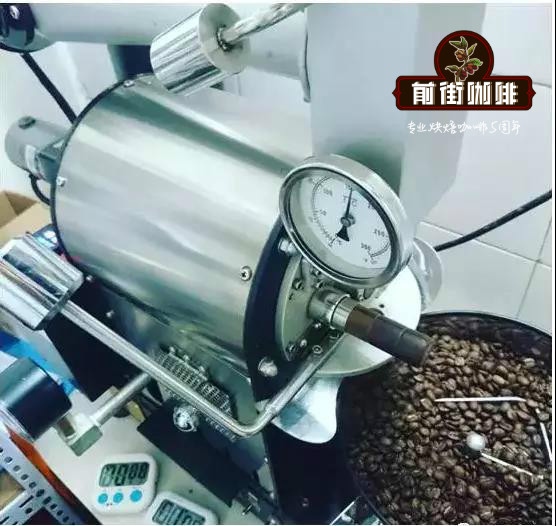
In the first roast, I used a higher dropping temperature, with a heat setting of 160 to ensure sufficient heat would continue until the first crack, developing directly to the second crack to confirm the development curve.
In the second, third, and fourth roasts, with the same entry temperature of 200°C and the same heat setting, I gradually reduced the heat during roasting as needed.
This roast is a quick-roasted light roast:
Cupping
Roasting curve 2: Lemon, blueberry, floral, stone fruit
Roasting curve 3: Citrus, jackfruit, peach
Roasting curve 4: Fermented, cream
Roasting curve 2:
Using the quick-roast mode, with the drum heated to 200°C and the damper opened to 3.5. After 1 minute, the heat was adjusted to 160°C, damper unchanged. The heat was adjusted once at 140°C, reduced to 130°C, roasted to 5'03", temperature 151°C, when the bean surface turned yellow and the grassy aroma completely disappeared, dehydration complete; heat adjusted to 105°C, damper opened to 4.
At the 8th minute, ugly wrinkles and black spots appeared on the bean surface, and the toast aroma clearly turned to coffee aroma, which can be defined as the prelude to the first crack. At this point it's important to listen carefully for the sound of first crack. At 8'30" the first crack began, heat reduced to 80°C, damper fully open (heat adjustment must be very careful - not so small that there's no crackling sound), dropped at 198°C.
The dry aroma of Yirgacheffe emits a strong fruity fragrance, with a rich dried fruit flavor, and aromas of strawberry, mango, and apricot jam.
The wet aroma is like sweet syrup, like viscous apricot pulp juice wrapped in rustic honey or chocolate. The entry is not strong, with medium body, acidity not obvious but lively and bright, like fruit black tea.
04 | Brewing Analysis
Flavor of Yirgacheffe
Brewing Method
As for brewing methods, pour-over and siphon brewing are optimal. When grinding the beans, you can already smell the overwhelming natural fruit aroma with noticeable sweetness.
Gentle and elegant, sweet and charming. Yirgacheffe emits an extremely complex aroma, showcasing an exceptionally exquisite taste that is difficult to describe.
V60 dripper, 15g of coffee powder, water temperature 86°C, grind size 3.5,
Water-to-coffee ratio close to 1:15
27g of water for bloom, bloom time 28s
Segments: 27-105-88, time 1:50 (timing starts from bloom)
Taste: Smooth, with layered texture, enhanced fermented berry sweetness
The wet aroma of the brewed coffee, with fermented berry and fermented fruit wine flavors, makes it hard to believe this is Yirgacheffe - personally, I don't particularly like this wet aroma. However, from the extremely smooth entry to the delicate body, the emergence of ripe fruit's sweet and sour flavors is truly astonishing. The sweetness exceeds any Yirgacheffe I've tasted before, and the aftertaste is excellent - worthy of the name "fruit bomb." After drinking, you can still feel the sweetness in your mouth for half an hour.
FrontStreet Coffee Recommendation
If this is your first step into Yirgacheffe, start with FrontStreet Coffee's washed Yirgacheffe. It is the classic introduction to the region - known for white jasmine florals, bright citrus and lemon acidity, and a clean tea-like body, all at an accessible price, which is why it has become so many people's first specialty coffee.
For a fruitier expression, FrontStreet Coffee's natural Red Cherry is a whole different experience. Only fully ripe, sound cherries are picked and dried on raised beds, turned every 2-3 hours in the first few days to prevent uneven heat and over-fermentation, then dried for three to five weeks before the outer fruit is machine-scraped off and the beans are stored. Because the fruit dries on the bean, it keeps the classic Yirgacheffe character while adding tropical fruit aromatics and a juicy berry, honeyed sweetness with creamy smoothness. Brew it at 90-91°C with 15g at a 1:15 ratio and an EK43s grind of 10 (fine-sugar, about 80% through a #20 sieve): bloom with 30g for 30 seconds, pour 95g to reach about 125g by 1 minute, then when the water drops to two-thirds of the bed add the remaining 100g to about 225g by 1:35, finishing the drawdown around 2:00-2:10.
Important Notice :
FrontStreet Coffee is a long-established specialty coffee roaster in Guangzhou China, selling freshly roasted beans from its own farm in Yunnan as well as dozens of carefully selected single-origin beans from around the world for both pour-over and espresso. The products deliver consistently excellent quality and great value, with shipping within 24 hours. Guangzhou's FrontStreet Coffee shop is recommended by many coffee lovers, and the beans are now available online at the Tmall 。
FrontStreet Coffee has moved to a new address:
FrontStreet Coffee Address: 315,Donghua East Road,GuangZhou
Tel:020 38364473
 Scan and follow the En Gafei WeChat official account. Please indicate that the reprint comes from "En Gafei".