What are the Flavor Characteristics of Ethiopian Coffee?

Compared with a cup of Panama Geisha that costs hundreds, affordable Ethiopian coffee also offers bright, high-quality fruit acidity. The fruity aroma of Ethiopian coffee has become the gateway specialty coffee for many enthusiasts. As the world's recognized origin of coffee, Ethiopia has been meticulously divided into multiple producing regions, each exhibiting unique flavors shaped by different growing conditions such as climate, soil, and altitude.

On the blackboard at FrontStreet Coffee, nearly fifty different beans are displayed, with coffee-producing countries circling the entire coffee belt. Among them, beans from Ethiopia occupy one-third of the blackboard space, a sign of how highly Ethiopian coffee is regarded in the hearts of coffee lovers.
Ethiopian Coffee Regions
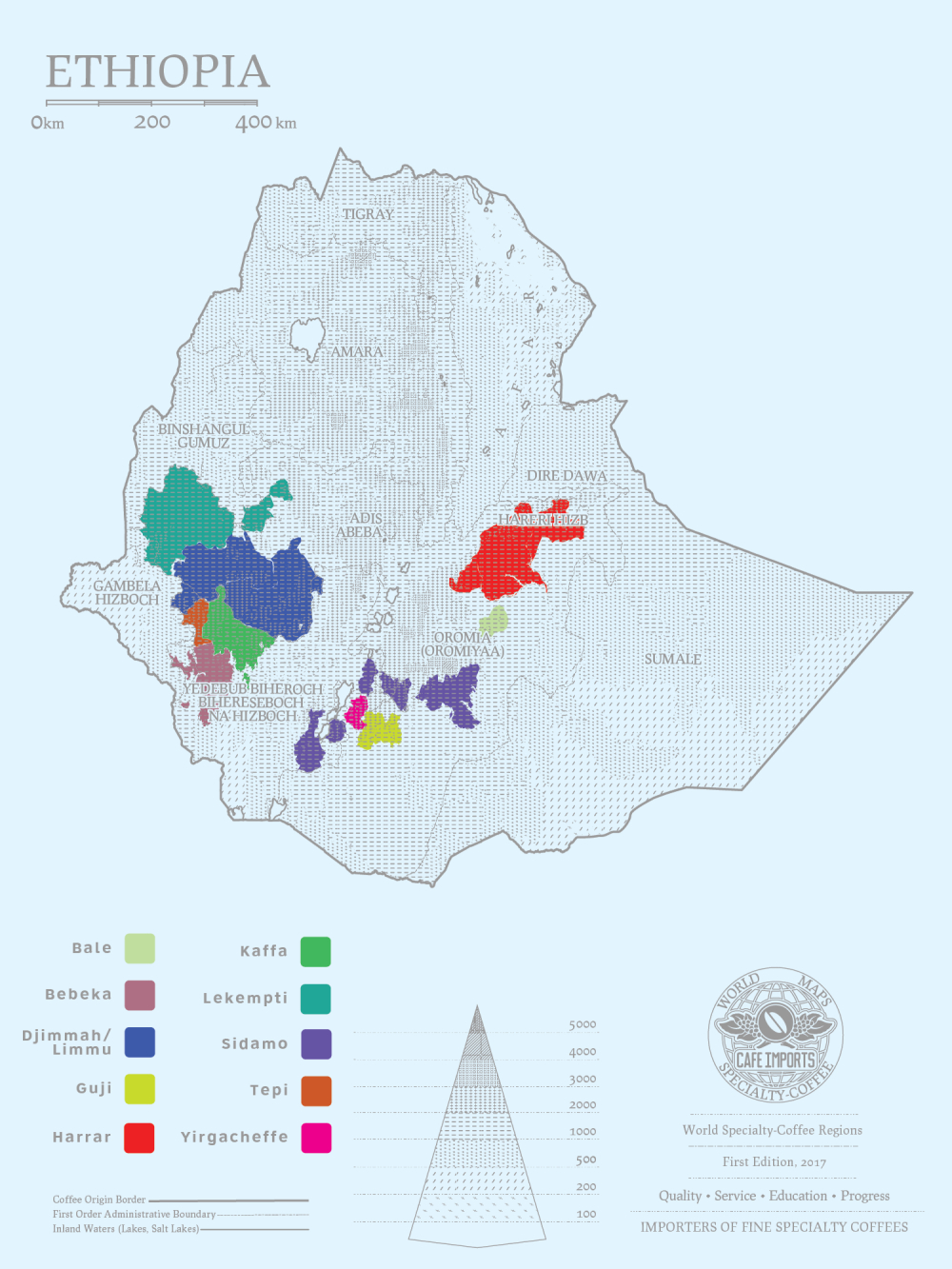
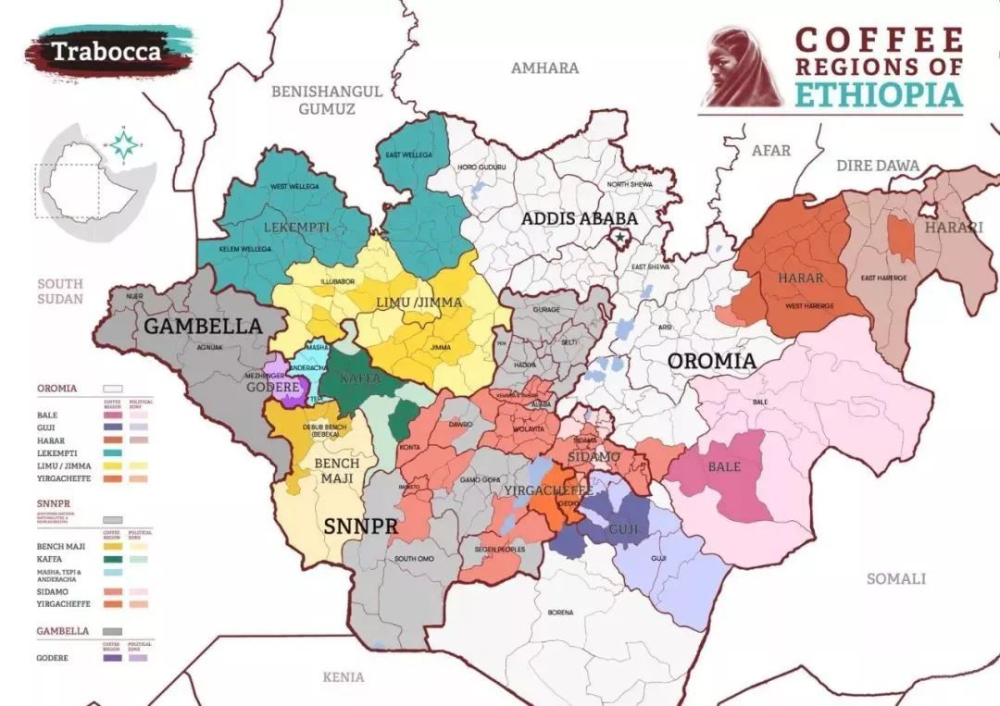
Ethiopia's coffee regions are numerous and somewhat disorganized, with different people creating different regional maps. For example, the Ethiopian coffee region map created by Dutch green-bean supplier Trabocca and the one made by American green-bean company Cafe Imports are mostly similar in regional division but have some subtle differences.
Ethiopian coffee regions can be broadly divided into: Yirgacheffe, Sidamo, Harar, Bale, Guji, Lekempti/Gimbi, Jimma/Limu, Bebeka, Kaffa, and Teppi.
Sidamo Region
Among Ethiopia's many coffee regions, Sidamo has long been famous worldwide, its economic strength and status unique within Ethiopia. On June 18, 2020, the people of the Sidamo region became independent from the Southern Nations, Nationalities, and Peoples' Region through a referendum, becoming Ethiopia's tenth state, the Sidama Region. The Sidamo coffee region, however, covers the entire Sidama Region plus parts of the Southern Nations, Nationalities, and Peoples' Region. Whether similar situations will occur again in the future remains unknown.
With the third wave of coffee thriving in China, Ethiopian coffee can be found in coffee shops of all sizes across the country. Those who note growing regions carefully often see Sidamo and Yirgacheffe. Coffee enthusiasts frequently introduce these regions to friends by saying: "Drink washed Yirgacheffe and natural Sidamo." This is because these two relatively traditional processing methods give these regions distinct flavor profiles.
Coffee Processing Methods
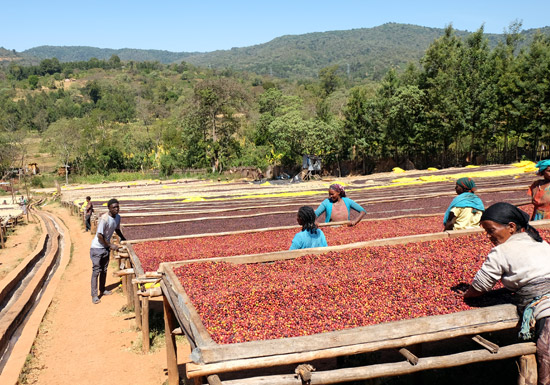
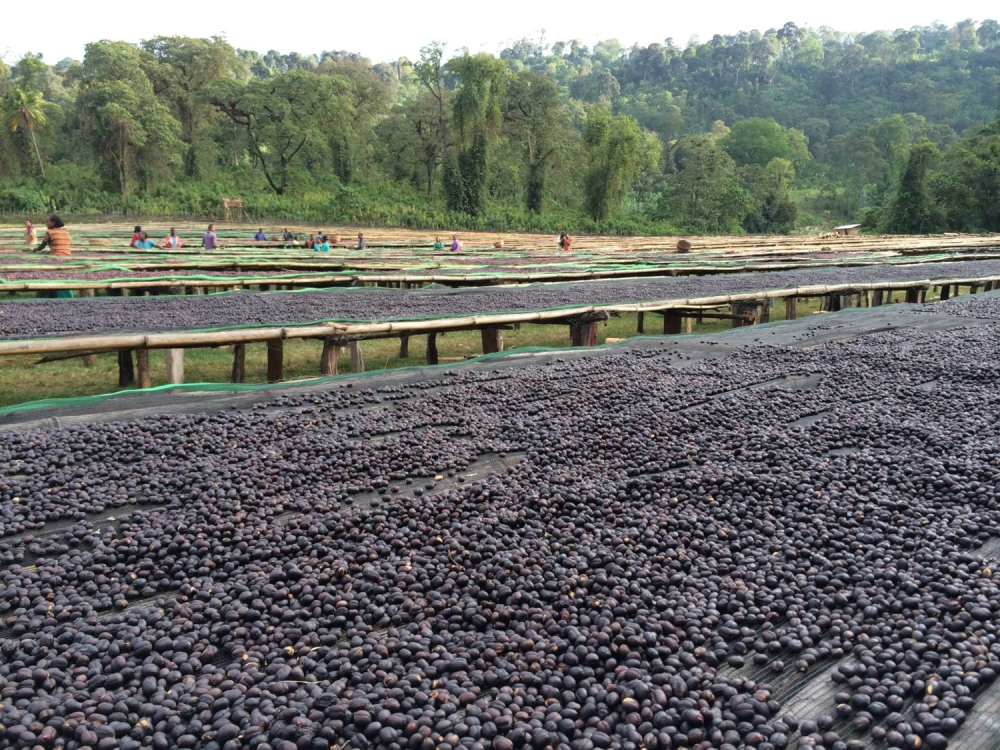
As the most traditional and original post-harvest processing method for coffee, natural processing is commonly used in all Ethiopian regions. It also brings certain limitations, such as difficulty controlling green-bean quality. In early Ethiopian green-bean grading, the highest grade for natural-processed beans was only G3. The emergence of ECX later broke this deadlock. Today you can find G1 grade natural or washed Ethiopian beans on FrontStreet Coffee's bean shelves.
In the 1970s, Ethiopian authorities introduced washed processing from Central and South America to improve green-bean quality. In washed processing, selected cherries have their skin and pulp removed, then the mucilage layer is completely washed off with clean water, and finally the beans are spread evenly on raised beds for drying.
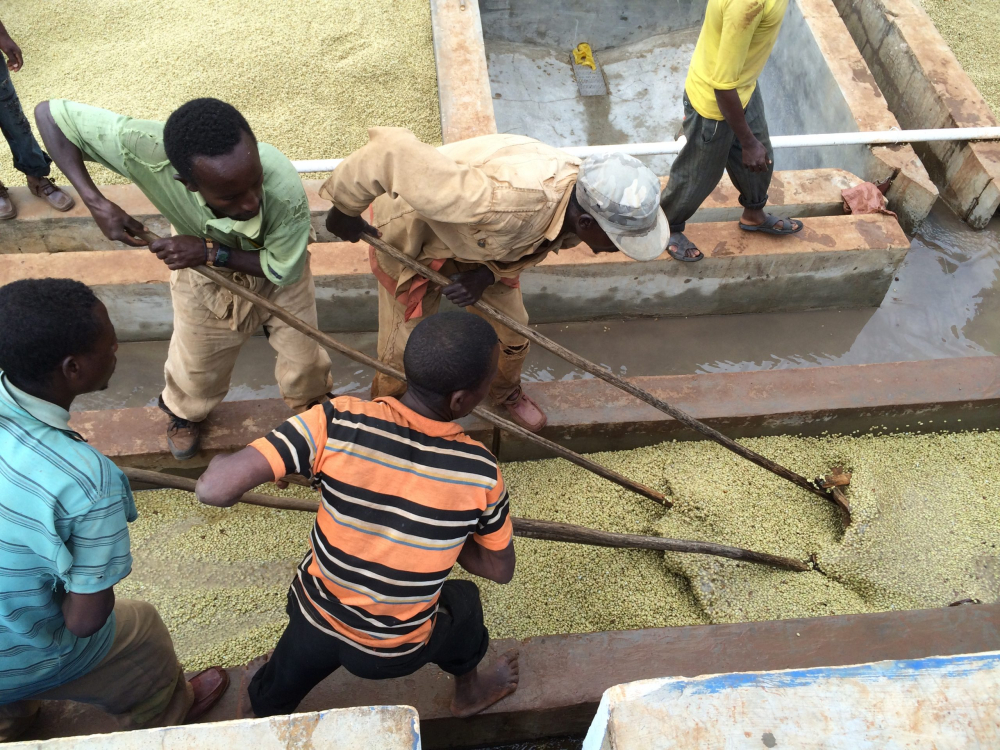
Washed processing completely removes the pulp and mucilage that could otherwise add to the coffee's flavor, exposing the bean's most original character. It was precisely this that allowed Yirgacheffe coffee's elegant white floral aroma and delicate texture to be discovered by the world.
Yirgacheffe Region
It was also because of this unique floral aroma that Yirgacheffe coffee's price skyrocketed, attracting many buyers to seek out "Yirgacheffe." Some growers from non-Yirgacheffe areas falsely claimed their beans were Yirgacheffe. To protect Yirgacheffe's unique flavor and end market confusion about coffee regions, the Yirgacheffe region became independent from Sidamo, forming its own distinct region.

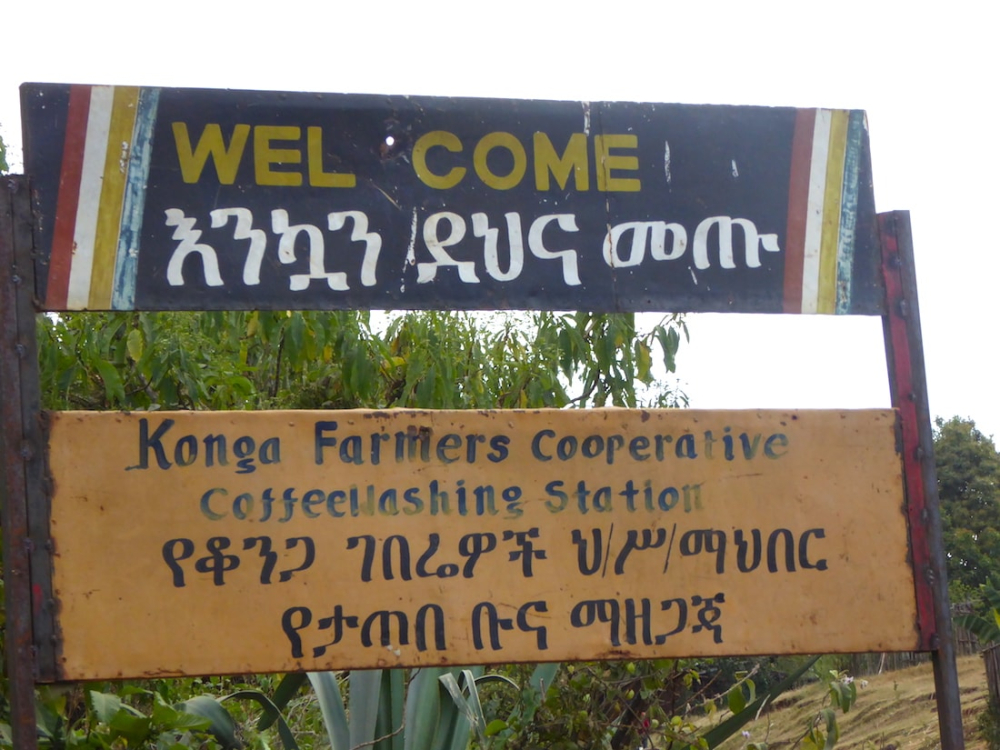
For many years, Yirgacheffe has appeared frequently on award lists in various green-bean competitions, and coffee connoisseurs are familiar with many villages and even cooperatives, such as the Gedeb Cooperative, Konga Cooperative, and Worka Cooperative, as well as Kochere, as shown on FrontStreet Coffee's menu. Although they belong to the same large region, each cooperative maximizes Yirgacheffe's flavor through its own geographical environment and processing techniques.
For example, on FrontStreet Coffee's bean shelves, although both Gedeb and Kochere use washed processing, they have subtle flavor differences. Gedeb shows distinct citrus notes on entry, with an extremely clean mouthfeel and a green tea finish, while Kochere has a more prominent sweetness, an obvious citrus aroma, sweet-and-sour sensations like orange juice, and a distinct black tea finish.
Some people prefer the refreshing Yirgacheffe, while others like the wild Sidamo. Among FrontStreet Coffee's customers, many are Ethiopian coffee enthusiasts themselves, and after drinking too much washed Yirgacheffe, they naturally turn their attention to natural Sidamo.

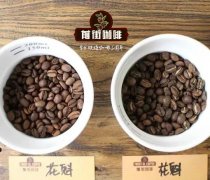
Hua Kui Coffee
Every coffee enthusiast who relentlessly pursues Sidamo does so for its wild berry-cream flavor. Each new harvest season, everyone competes to buy the new beans and taste them, seeking the subtle differences between one season and the next. Among these, Hua Kui beans are the most inquired-about Sidamo coffee.
After a natural-processed bean from the Buku Abel processing station in Hambela won the 2017 TOH (Taste of Harvest) green-bean competition's Ethiopian natural-processing category, the Hua Kui coffee name has been carefully cultivated by Hongshun for six years now. Many beans are named after their origin or processing station, but the name "Hua Kui" was actually given by Chinese buyers, meaning "chief of flowers," in the hope that this bean would one day surpass the status of Panama Geisha.
The Hua Kui series varies each year, following a "Hua Kui X.0" format where X increases annually. 2022 marked the sixth year of the Hua Kui name, naturally making it Hua Kui 6.0. FrontStreet Coffee, on its journey to pursue refined and diverse Ethiopian flavors, has followed Hua Kui beans for many years, updating with the latest batch each new harvest season.

Coffee is an agricultural product, however, and the final cup is affected by growing conditions such as climate, producing correspondingly different flavor expressions. FrontStreet Coffee often receives praise like "Your beans are so beautiful, every single one so full!" Yet FrontStreet Coffee finds such products unacceptable on their own. It therefore sought another batch of natural-processed coffee from the same harvest season at the Hambela region's Buku processing station, not sourced by Hongshun. This new-season Hua Kui batch features full beans, complete particles, and few defects.
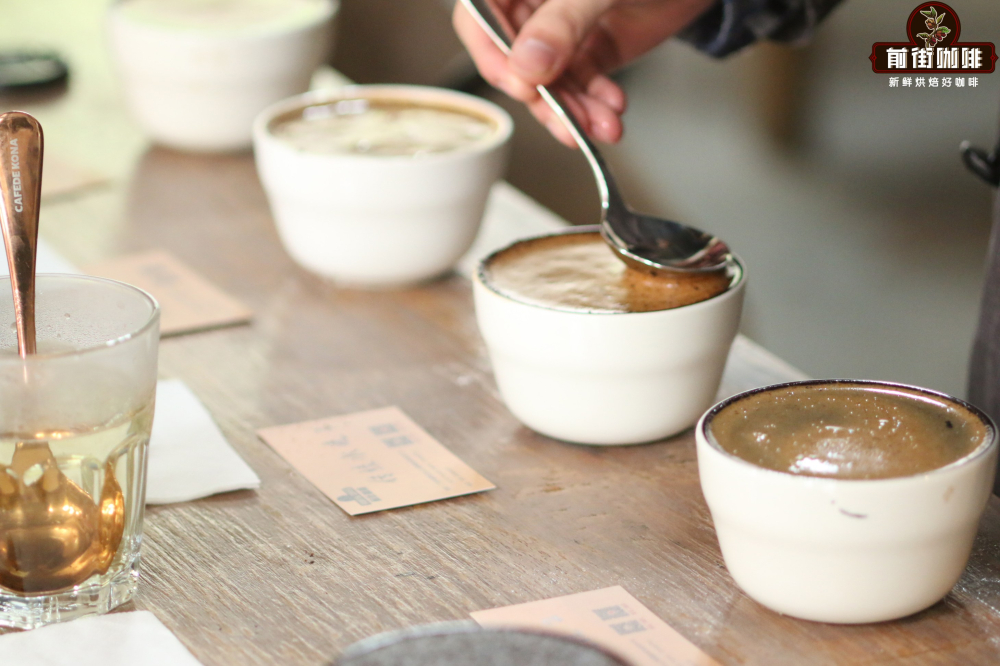
FrontStreet Coffee cupped these two new-season Hua Kui lots and found that Hongshun's Hua Kui 6.0 had flavors of berries, honey, and passion fruit with prominent sweetness, while the 2022 new-season Hua Kui that FrontStreet stocked had flavors of citrus, honey, and orange blossom with a strong juice-like quality.
Brewing Recommendations
To express the bright, uplifting acidity of Ethiopian coffee, FrontStreet Coffee's roasters generally use medium-light roasting for Ethiopian beans. As the roast tends lighter, flavor compounds are released more slowly. To extract as much of the floral and fruity acidic aroma of Ethiopian coffee as possible, FrontStreet Coffee recommends the following parameters:
Dripper: Hario V60
Water Temperature: 90 degrees Celsius
Dose: 15 grams
Ratio: 1:15
Grind Size: 80% pass-through rate on Chinese standard #20 sieve

First pour 30 grams of hot water for a 30-second bloom, then pour slowly from the center in a fine stream and circle gradually to 125 grams. When the water level in the dripper drops to just before exposing the coffee bed, continue circling and pouring to 225 grams. Total extraction time should be approximately 2 minutes.
FrontStreet Coffee Recommendation
To taste this classic Yirgacheffe profile yourself, FrontStreet's washed Yirgacheffe is the natural first buy. It is known for white jasmine, bright citrus-and-lemon acidity, and a tea-like quality, and its friendly price makes it the bean most people start their specialty-coffee journey with. Yirgacheffe is a town in southern Ethiopia within the Sidamo province, at roughly 1,700-2,100 meters, with the coffee trees planted above 1,800 meters, making it one of the highest-growing coffee regions in the world.
Digging deeper, Yirgacheffe town actually contains many smaller areas and villages, and the best of them are handled by experienced cooperatives whose mature methods lift the flavor another level. The most representative is the washed Gudingding Cooperative, from Gudingding village at the southeastern edge of Yirgacheffe's Worka area. Originally part of the Worka cooperative under the Yirgacheffe union YCFCU, it was later unearthed as a "single origin" by coffee hunters around the world as demand for traceability grew. Gudingding follows traditional washing and is often called the last pure land of Yirgacheffe; the coffee has none of the traditional bitter note, carrying instead fresh, bright citrus-and-lemon acidity and jasmine fragrance.
For a natural-processed Yirgacheffe, FrontStreet's Red Cherry is made from fully ripe red cherries harvested only when fully mature and free of defects, sorted once at the mill, then spread on raised beds to sun-dry. In the first few days it is turned every two to three hours to prevent uneven heating and over-fermentation; after three to five weeks of drying, the outer fruit is scraped off by machine and the beans are moved to storage. Because the fruit dries with the bean, the coffee keeps the classic Yirgacheffe character while gaining the tropical fruit of natural processing: citrus acidity, a berry-juice quality, honey sweetness, and a creamy smoothness.
To brew them, FrontStreet uses a V60 with 90-91°C water, 15 g of coffee at a 1:15 ratio, and a grind of EK43s setting 10, about fine granulated sugar (80% pass-through on a #20 sieve). The shop pours in three stages: a 30 g bloom for 30 seconds, then 95 g (the scale reading about 125 g) over about one minute, and when the water level drops to two-thirds of the bed, the remaining 100 g (about 225 g on the scale) over about 1 minute 35 seconds, finishing the drawdown at 2:00-2:10 before removing the dripper.
Important Notice :
FrontStreet Coffee is a long-established specialty coffee roaster in Guangzhou China, selling freshly roasted beans from its own farm in Yunnan as well as dozens of carefully selected single-origin beans from around the world for both pour-over and espresso. The products deliver consistently excellent quality and great value, with shipping within 24 hours. Guangzhou's FrontStreet Coffee shop is recommended by many coffee lovers, and the beans are now available online at the Tmall 。
FrontStreet Coffee has moved to a new address:
FrontStreet Coffee Address: 315,Donghua East Road,GuangZhou
Tel:020 38364473
 Scan and follow the En Gafei WeChat official account. Please indicate that the reprint comes from "En Gafei".