Panama Geisha Coffee Variety Introduction and Why Panama Geisha Coffee Beans Are So Expensive
The Rise of Panama Coffee
For a long time, Panamanian coffee was underrated and largely overlooked. All of that changed in recent years with the annual international cupping competition "Best of Panama" and the emergence of Hacienda La Esmeralda. The competition now draws global attention not only for the coffee's inherent appeal but also for its jaw-dropping, astronomical prices. Small farms producing the Geisha variety have captivated coffee lovers worldwide with their unique floral aromas. Panamanian coffee shows intense floral fragrance and clean fruit notes, with cupping quality that outclasses most other origins — impressive flavors and remarkably consistent quality.
The small farms in the Boquete region of the Chiriquí highlands truly produce distinctive coffee cherries. Every harvest season, the farms hire local Ngäbe indigenous workers, in compliance with Central American labor laws and at fair wage standards.
The Evolution of Specialty Coffee
As specialty coffee enters its third wave, not only have coffee drinkers become more discerning — so have the producers.
To grow better coffee, estate owners, cooperatives, washing stations, and even smallholder farmers keep pushing forward their cultivation practices, quality control, and green bean processing methods.
Mama Cata Estate: A Pioneer in Coffee Excellence
On our journeys through the coffee origins, we discovered a remarkably forward-thinking estate — Mama Cata Estate in Panama.
Here's how Mama Cata produces delicious coffee while guaranteeing excellent quality in every single batch.
Mama Cata Estate, operated by the Garrido family, sits in the Alto Quiel region of Boquete, Panama. Alto Quiel should already be familiar to many — numerous of Panama's top coffees originate from this area.
The Garrido family also runs a processing mill just outside the town of Boquete, where coffee cherries go through everything from depulping to storage. Estate owner Jose David Garrido has implemented a series of improvements, upgrading the farm's processing techniques and quality control — including classifying and cupping washed-process lots batch by batch.
Geographical Advantages and Technological Innovation
In 1997, Jose David Garrido took over the management of Mama Cata Estate. The estate's location is exceptionally favorable: altitudes of 1,500 to 1,700 meters, average annual temperatures between 12 to 26 degrees Celsius, fertile volcanic soil, and roughly 175 inches of average rainfall. This natural microclimate gives the coffee trees growing here nutrients in abundance.
Unlike traditional estates, Mama Cata uses GPS observation systems. By analyzing the technological data, the Garrido family can track each coffee tree's variety, soil composition, health, and production status, then use those variables to control quality. The GPS data also tells them which lots are ready for harvest. In cherry picking, the most critical task is identifying and picking only the most mature cherries — and with this technological assistance, that becomes far easier! Even the natural drying process is monitored by high-tech weather stations. Coffee produced with this level of care has every right to win Panama's competitions! Afterwards, the beans are hulled, classified, and cupped for grading before being scheduled for shipment. Each lot is kept separate and packaged individually, preserving Mama Cata Estate's excellent quality.
The Estate's Rich History
Mama Cata Estate also has an intriguing backstory. Before Panama became a nation, Mr. Monic owned what is now Mama Cata Estate — it even issued its own currency, called Texas. Later it passed to Mr. Fisher, who, after his wife's death, remarried Catalina, who had been his housekeeper. The Fisher family were early introducers of Geisha, but grew it only in small batches, focusing mainly on the traditional Typica variety. Over several years, Mama Cata's washed Typica claimed the top prize three times in Panama's coffee competitions. Today the estate is stronger still: in 2016 it ranked 16th in the Natural Geisha category, 4th in both the Washed Geisha and Traditional Washed categories, and 5th in the Innovation category.
Panama Geisha Coffee Recommendations
FrontStreet Coffee's roasted Jensen Natural Geisha coffee offers solid guarantees in both brand and quality. More importantly, it delivers exceptional value: each 100-gram bag costs only 138 yuan. At 15 grams of coffee beans per cup, one bag brews 6 cups — about 22 yuan per cup. Compared with café prices that often exceed 100 yuan a cup, that is a genuinely conscientious recommendation.
FrontStreet Coffee Recommendation
Beyond the competition lots, there are plenty of ways to explore Panama Geisha at FrontStreet Coffee. Hacienda La Esmeralda splits its Geisha into grades: the Red Label "Esmeralda Special," grown at 1600-1800 meters with every batch cupping above 90 points and traceable to a single plot, and the more affordable Green Label "Private Collection," blended from several high-altitude plots to capture the estate's signature style. If you simply want a first taste of the fabled Geisha profile, FrontStreet Coffee's entry-level Panama Boquete Geisha is the pick — classic orange blossom and honeyed sweetness, oolong tea-like body, and delicate fruit acidity with clearly layered flavors.
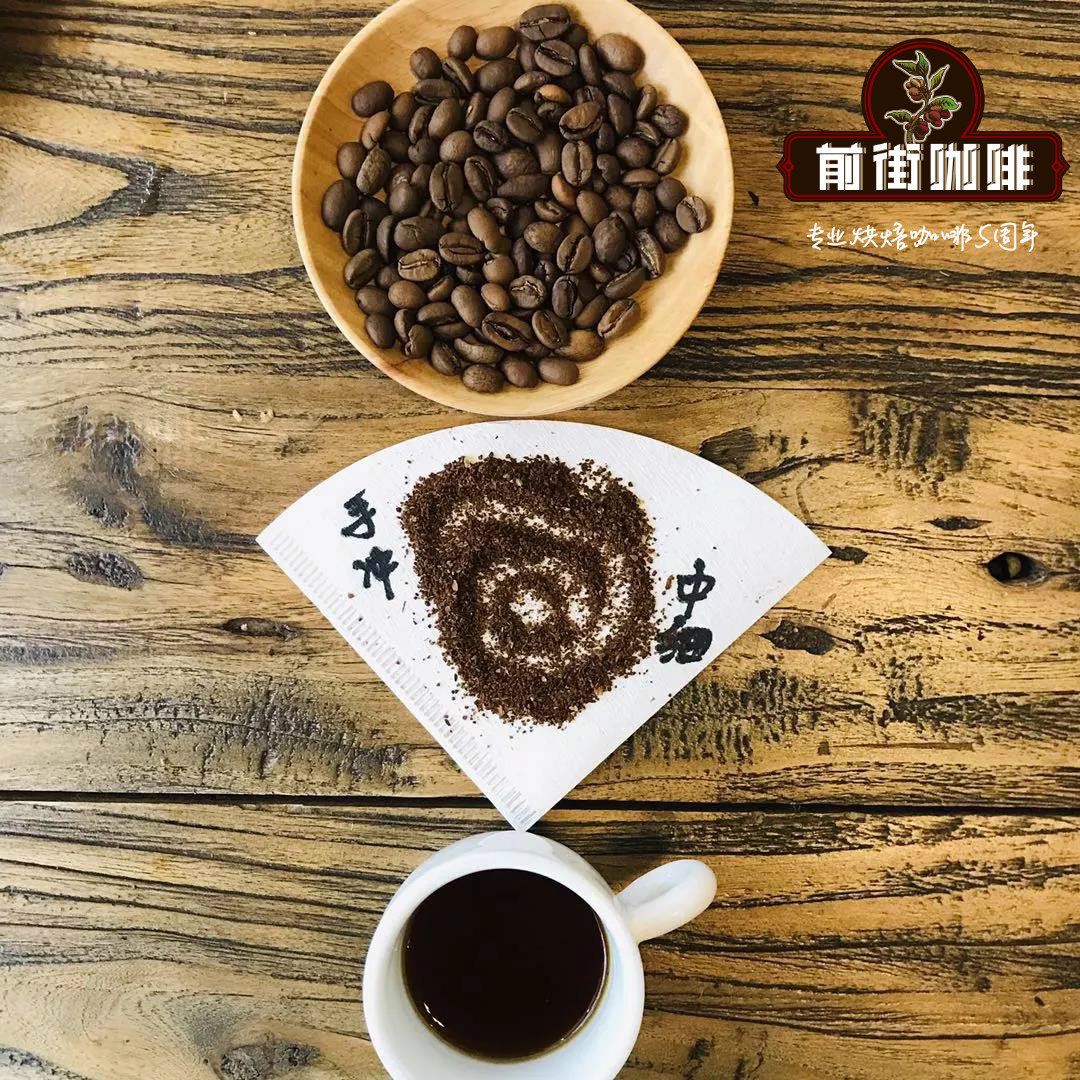
For brewing at home, FrontStreet Coffee suggests a medium-light roast ground fairly coarse (about 78% pass on a #20 sieve, close to fine granulated sugar) and water at 91°C. Use 15g of coffee in a Hario V60 at a 1:16 ratio with a three-stage pour: bloom with 30g of water for 30 seconds, pour to 125g, then top up to 225g once the bed drains halfway, finishing in about 2 minutes 10 seconds to 2 minutes 20 seconds. Handled this way, a Panama Geisha shows you exactly why it conquered the coffee world.
Important Notice :
FrontStreet Coffee is a long-established specialty coffee roaster in Guangzhou China, selling freshly roasted beans from its own farm in Yunnan as well as dozens of carefully selected single-origin beans from around the world for both pour-over and espresso. The products deliver consistently excellent quality and great value, with shipping within 24 hours. Guangzhou's FrontStreet Coffee shop is recommended by many coffee lovers, and the beans are now available online at the Tmall 。
FrontStreet Coffee has moved to a new address:
FrontStreet Coffee Address: 315,Donghua East Road,GuangZhou
Tel:020 38364473
 Scan and follow the En Gafei WeChat official account. Please indicate that the reprint comes from "En Gafei".