What are the characteristics and taste of Jamaican Blue Mountain coffee? What is the price of Blue Mountain coffee?

Jamaica Blue Mountain Coffee: Price and Flavor Profile
What does FrontStreet Coffee's Jamaica Blue Mountain cost? And is FrontStreet Coffee's Jamaica RSW Estate Blue Mountain more acidic or more bitter?
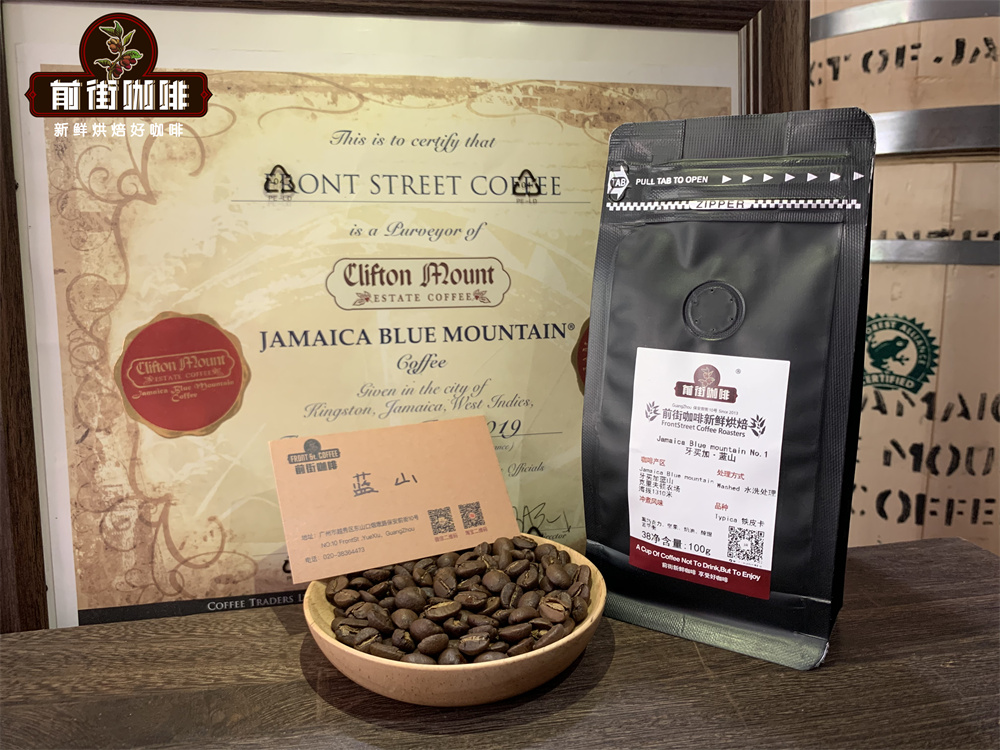
First, how expensive is Blue Mountain really? At FrontStreet Coffee, a cup of authentic Blue Mountain costs 60 yuan, or 158 yuan per 100g, which is a rare tasting experience at that price. Is it authentically Blue Mountain? Yes, because authentic Jamaica Blue Mountain comes with certification. FrontStreet Coffee imports it directly from origin, and the Jamaica Coffee Industry Board can issue certificates for all exported Blue Mountain. The Blue Mountain No. 1 FrontStreet Coffee sells comes with certificates issued by the Jamaica Coffee Industry Board. The wooden barrels that package Blue Mountain beans also carry a green frog logo. FrontStreet Coffee specifically chose a Rainforest Alliance certified Blue Mountain No. 1 estate, Clifton Farm. Jamaica is also the only region that uses wooden barrels for green beans, and it carries the most iconic Blue Mountain flavor. Authentic Blue Mountain has a very rich aroma and a balanced taste, with no single flavor overpowering the others or dropping out.

The Jamaican government used to insist that all Blue Mountain coffee be roasted in Jamaica to keep quality consistent. In reality, roasting is a delicate craft that demands experience, training, and expensive equipment, and from the consumer's point of view beans should be consumed soon after roasting. Coffee roasted in Jamaica cannot meet that requirement. Today, Jamaica's green coffee beans can be exported.

History of Jamaica Blue Mountain No. 1 Coffee
The history of Jamaican coffee goes back to the 18th century. In 1717, French King Louis XV ordered coffee to be planted in Jamaica. In the mid-1720s, Jamaican Governor Sir Nicholas Lawes imported Arabica seeds from Martinique and began promoting cultivation in the St. Andrew area. Coffee trees were introduced to Jamaica and planted in the Blue Mountain range, and the crop was divided into high-altitude Jamaica Blue Mountain coffee, High Mountain coffee, and Jamaica coffee, with different grades setting different prices.

Three Major Production Areas of Blue Mountain Coffee
The Blue Mountain region is small, with only 6,000 hectares of planting area, so not all coffee labeled "Blue Mountain" can be grown there. Another 12,000 hectares are used to grow two other, non-Blue Mountain coffees: High Mountain Supreme and Jamaica Prime.
Today's St. Andrew production area remains one of the three major Blue Mountain coffee areas. The other two are the Portland region and the St. Thomas region. Some small estates also grow Blue Mountain coffee, such as Wallenford Estate, Silver Hill Estate, and J. Martinez's Atlanta Estate. Even the largest estate owners in the region are considered small-scale by international standards, and many are smallholders whose families have worked this land for two centuries.

Six certification marks can indicate Blue Mountain coffee origin, including M.B.C.E (Mavis Bank Central Factory), M.H.C.C.T. (Blue Mountain Coffee Cooperative), P.X.X.S.H. (Portland Blue Mountain Coffee Cooperative), Coffee Industry Board (Wallenford), Coffee Industry Board (St. John's Peak), and J.A.S (Blue Mountain). Some estate-level coffees are also marked on the wooden barrels.

Jamaica is the only country in the world with a government coffee management body -- the Jamaica Coffee Industry Board (CIB), attached to the Jamaican Ministry of Agriculture and Fisheries. The CIB's functions cover cultivation guidance, processing training, fair trade, quality supervision, and other matters related to Blue Mountain quality and branding. Its board members are all estate owners with plantations of a certain scale in Jamaica; because of shifts in the industry, newly certified Jamaica Blue Mountain estates now need more than 50 hectares. The CIB rules that only Blue Mountain coffee beans produced in the Jamaica Blue Mountains above 2,200 feet -- about 666 meters -- can be called Jamaica Blue Mountain. Grades are divided by bean size into NO.1, NO.2, NO.3, and hand-selected PB. The basic standards for NO.1 Blue Mountain green beans include beans above 17 screen, a defect rate below 3%, and moisture content around 13%. With low production, large particles, excellent quality, and harmonious flavor, it combines suitable acidity, bitterness, aroma, body, and sweetness, making it a world-recognized premium coffee. That is why Blue Mountain No.1 commands the highest price of all Blue Mountain coffees.
Another company worth mentioning is Coffee Trades, whose estate name is CLYDESDALE. Its coffee factory sits in the backyard of the CIB office building, and the estate is on the Blue Mountains at around 1,200 meters. Jamaica's other two major Blue Mountain companies are Wallenford and Mavis Bank, both originally state-owned. Wallenford's production exceeds 60% of Jamaica's total Blue Mountain output, while Mavis Bank's exceeds 20%. Mavis Bank is also one of the few Jamaican Blue Mountain companies that handles all three grades of coffee: Jamaica Blue Mountain, Jamaica High Mountain, and Jamaica Prime.

Blue Mountain Coffee Varieties
Coffee beans worldwide fall into three main types: Arabica, Robusta, and Liberica. The Blue Mountain coffee FrontStreet Coffee introduces is the Typica variety. Typica is the oldest Arabica subspecies, with bronze-colored leaf tips, oval or slender-pointed beans, a tall tree structure, and slightly inclined branches at 50-70 degree angles; it is known as red-top coffee. The opposite leaves of the coffee tree are long ovals with smooth surfaces, the terminal branches are long with few side branches, and the white flowers bloom at the base where the leaf stems meet the branches. The flavor is elegant, but the plant is relatively weak with poor disease resistance, and each tree yields very little coffee. Mature coffee fruit looks like a cherry and turns bright red. Because Jamaica Blue Mountain coffee has weak disease resistance, low yield, and susceptibility to insect attack, this is one of the reasons it is expensive.

How Blue Mountain Coffee is Graded
Coffee from the Jamaica Blue Mountain region has three grades: Blue Mountain Coffee, Jamaica High Mountain Supreme Coffee Beans, and Jamaica Prime Coffee Beans. Blue Mountain coffee and High Mountain coffee are each divided into two sub-grades. Ranked by quality from highest to lowest: Blue Mountain No. 1, Blue Mountain No. 2, High Mountain No. 1, High Mountain No. 2, Jamaica Prime Coffee.
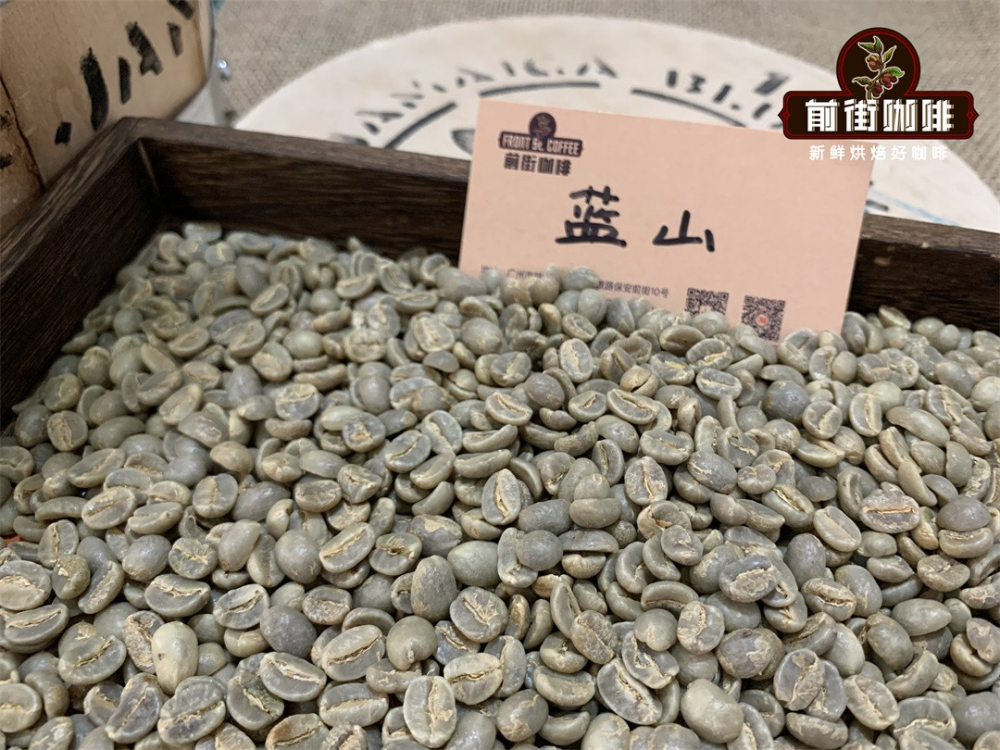
(1) Jamaica Blue Mountain Coffee
Blue Mountain coffee and High Mountain coffee are each divided into four grades. Ranked by quality from highest to lowest: NO.1, NO.2, NO.3, and PB (Peaberry). By CIB standards, only coffee grown above 666 meters is called Jamaica Blue Mountain coffee. The very finest of these, grown above 1,000 meters on the region's treacherous mountainsides, comes in low volume but with large beans of excellent quality and harmonious flavor. It combines suitable acidity, bitterness, aroma, body, and sweetness, making it a world-recognized premium coffee. That is why national treasure Blue Mountain No.1 is the most expensive of all Blue Mountain coffees.

(2) Jamaica High Mountain Coffee
Coffee produced in the Blue Mountain region below 666 meters is called High Mountain coffee, second only to Blue Mountain coffee in quality. Because Jamaica Blue Mountain coffee is so limited in volume, High Mountain coffee is your best choice if you want a taste of the Jamaican profile.
(3) Jamaica Prime Coffee
Coffee grown outside the Blue Mountain range is called Jamaica Prime Coffee. Chinese coffee professionals once shared a common misconception that only coffee grown above 1,800 meters in the Blue Mountain region could be called Blue Mountain coffee. In fact, there is only one estate on the 1,800-plus meter crown of the Blue Mountains: Amber, owned by a Chinese descendant surnamed Lyn, whose ancestral roots are in Guangdong, China. The estate has only 30 hectares and very limited production. Blue Mountain coffee is mainly distributed across five mountains in the range: John Crow, St. John's Peak, Mossman's Peak, High Peak, and Blue Mountain Peak.
Blue Mountain coffee and High Mountain coffee are each divided into four grades, ranked from highest to lowest: NO.1, NO.2, NO.3, and PB (Peaberry). Again by CIB standards, only coffee grown above 666 meters in the Blue Mountain region qualifies as Jamaica Blue Mountain coffee. Low production, large beans of excellent quality, and harmonious flavor give it suitable acidity, bitterness, aroma, body, and sweetness, which is why national treasure Blue Mountain No.1 is the most expensive of all Blue Mountain coffees.
Grade Standards:
(1) No.1 - 17/18 screen, defect rate not exceeding 2%.
(2) No.2 - 16/17 screen, defect rate not exceeding 2%.
(3) No.3 - 15/16 screen, defect rate not exceeding 2%.
(4) Peaberry - 10MS, defect rate not exceeding 2%.
Blue Mountain No. 1 Coffee Bean Processing Method
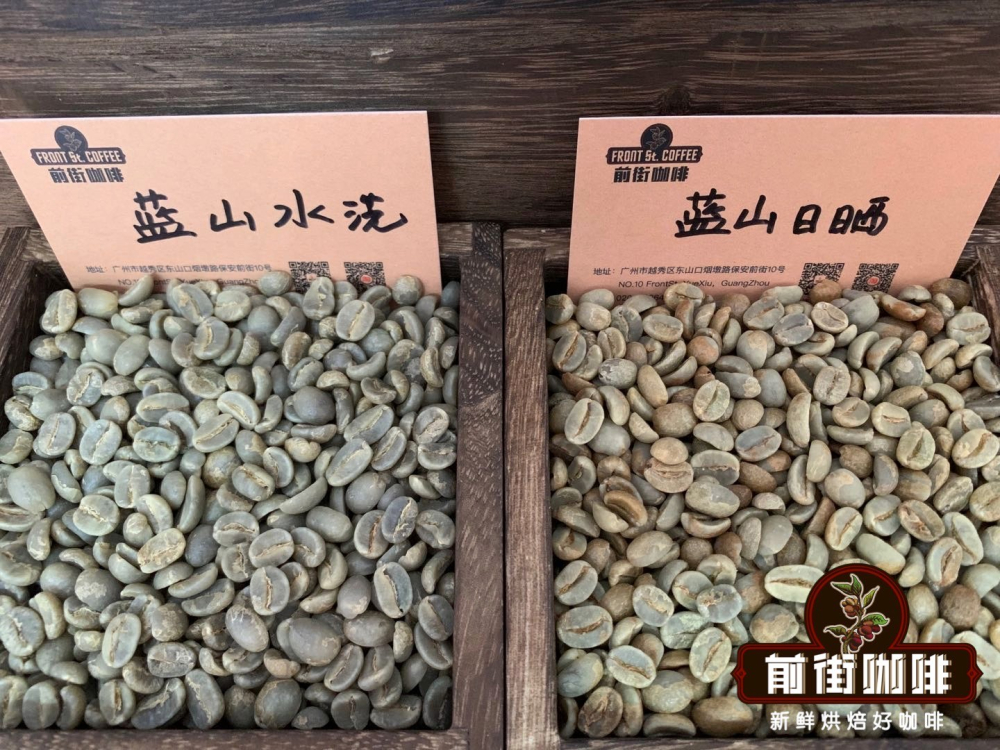
Before this year, Blue Mountain No. 1 was only available washed. The washed method uses fermentation to remove fruit pulp and mucilage. Farms using it must build washing pools and have access to a continuous supply of fresh water. During processing, the fruit pulp is removed first, followed by 12-18 hours of fermentation. The fermented beans are then placed in pools and moved back and forth, using friction between the beans and the power of flowing water to wash them until smooth and clean. After washing, the beans are still enclosed in parchment with a moisture content of 50%, and they must be sun-dried down to 12-14%, otherwise they continue to ferment and turn moldy and spoiled. The beans are then sorted and stored in dedicated warehouses. These procedures must be strictly controlled, or quality suffers.

In 2020, the Blue Mountain region also exported a batch of natural-processed Blue Mountain No. 1, which FrontStreet Coffee imported and roasted right away. Producing natural Blue Mountain is quite challenging. Previously only washed processing was used, because washing ensures the most authentic expression of Blue Mountain flavor, and changing the method inevitably changes its flavor structure. This is why FrontStreet Coffee always recommends washed beans when introducing coffee from a specific region -- washing best represents that region's profile. Blue Mountain adopting natural processing is more a matter of following the market, much as FrontStreet Coffee recently added a natural-processed Mandheling that differs from the traditional wet-hulled method.
Brewing Recommendations:
FrontStreet Coffee recommends brewing with freshly roasted beans to fully experience the coffee's rich flavors. Beans shipped by FrontStreet Coffee are roasted within 5 days, because freshness has a large effect on flavor. FrontStreet Coffee's roasting philosophy is "Freshly Roasted Good Coffee," ensuring every customer receives the freshest coffee when the order arrives. The degassing period is around 4-7 days, so the coffee is at its best just as customers receive it.

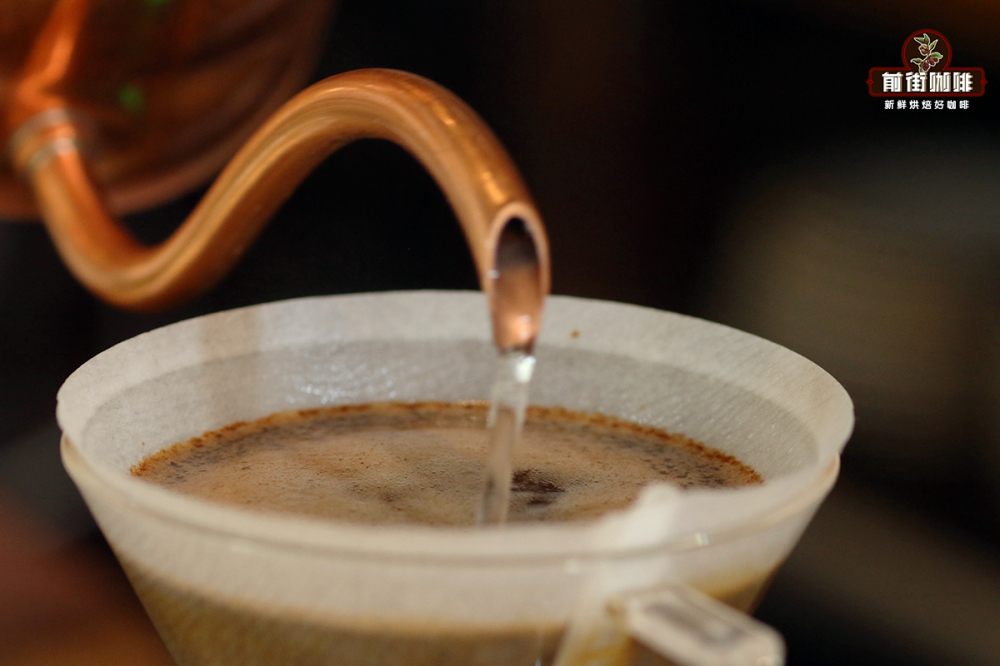
FrontStreet Coffee considered that both Blue Mountain beans use a darker roast level. The darker the roast, the faster the coffee compounds dissolve, so to avoid over-extraction FrontStreet Coffee uses a lower water temperature while relying on the slower-flowing Kono dripper to ensure maximum extraction of flavor compounds at that lower temperature.

Dripper: Kono dripper
Water Temperature: 88C
Dose: 15g
Ratio: 1:15
Grind Size: Medium grind (Chinese standard 75% pass-through rate on #20 sieve)
Brewing Method: Three-stage extraction. Use 30g of water for a 30-second bloom, then continue pouring with small circular motions to 125g to divide the stages. When the water level drops and is about to expose the coffee bed, continue pouring to 225g and stop. Wait until all the coffee liquid has dripped through the dripper, then remove it. Timing starts at the beginning of the pour, with total extraction time of 2'00".
Flavor Description
[FrontStreet Coffee Natural Blue Mountain Coffee]: Slight berry acidity reminiscent of dark plums and mulberries, with excellent overall balance, rich dark chocolate and nut flavors, and a slight fermented note.
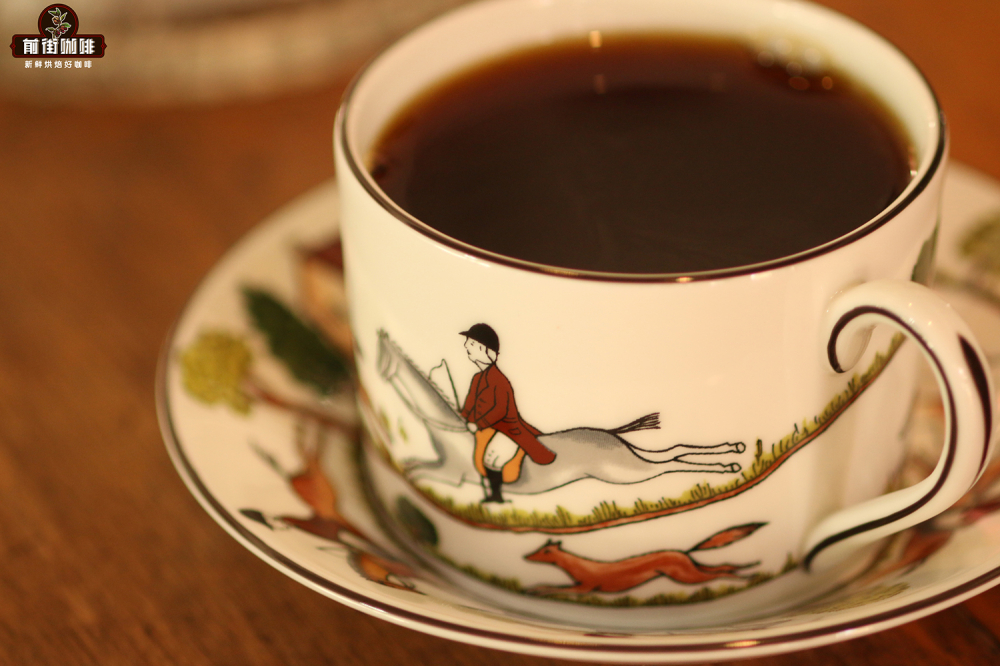
[FrontStreet Coffee Washed Blue Mountain Coffee]: Rich dark chocolate and nut flavors, a creamy smooth mouthfeel, and balanced acidity and bitterness.
The final step is to swirl the server holding the coffee liquid to even out the concentration, and then you can enjoy a delicious cup of Blue Mountain coffee.
FrontStreet Coffee Recommendation
If you want to try the real thing, FrontStreet Coffee's Jamaica Blue Mountain No. 1 is the highest grade of the lot, sourced from the historic Clifton Farm at an average of 4,300 feet, or 1,310.64 meters. The estate has produced coffee since around 1750, and the altitude, gentle afternoon cloud cover, abundant sunlight, and mineral-rich soil all extend the ripening of the cherry.
FrontStreet Coffee roasts it medium-dark to bring out the traditional depth and the sweet-after-bitter character, and ships it within 5 days of roasting, so it arrives ready to brew. Let the beans rest 4-7 days from the roast date for the best cup.
FrontStreet Coffee suggests a Kono dripper, 15g of coffee, water at 87-88C, a 1:15 ratio, and a grind size a little coarser than light-roast beans -- roughly granulated sugar. Pour in three stages: 30g to bloom for 30 seconds, then to 120g with a slow, vertical, small stream, then to 225g with a slightly faster stream and circling to keep the bed from clogging and over-extracting. Warm water matters here; too hot and the cup turns scorched and bitter, too cool and it goes flat.
In the cup, FrontStreet's Blue Mountain is very clean, complex, and mild, with chocolate sweetness and a very strong body, a perfect balance of sweet, acid, and bitter, essentially no bitterness, only a moderate and precise acidity, and a long fruit finish.
Important Notice :
FrontStreet Coffee is a long-established specialty coffee roaster in Guangzhou China, selling freshly roasted beans from its own farm in Yunnan as well as dozens of carefully selected single-origin beans from around the world for both pour-over and espresso. The products deliver consistently excellent quality and great value, with shipping within 24 hours. Guangzhou's FrontStreet Coffee shop is recommended by many coffee lovers, and the beans are now available online at the Tmall 。
FrontStreet Coffee has moved to a new address:
FrontStreet Coffee Address: 315,Donghua East Road,GuangZhou
Tel:020 38364473
 Scan and follow the En Gafei WeChat official account. Please indicate that the reprint comes from "En Gafei".