How to Brew Jamaica Blue Mountain No.1 Coffee Beans for the Best Flavor? Identifying Authentic Blue Mountain Coffee

Brewing Guide: How to Make Jamaica FrontStreet Blue Mountain No. 1 Coffee at Home
Lately, more and more customers coming into FrontStreet Coffee have been asking about brewing pour-over coffee at home.
A few days ago, one of them came in to taste our Jamaica FrontStreet Blue Mountain beans and put it plainly: "I can never get it right at home. How do I brew coffee that tastes like yours?" So today, FrontStreet Coffee is walking through how to brew Jamaica FrontStreet Blue Mountain No. 1 so it tastes even better at home.
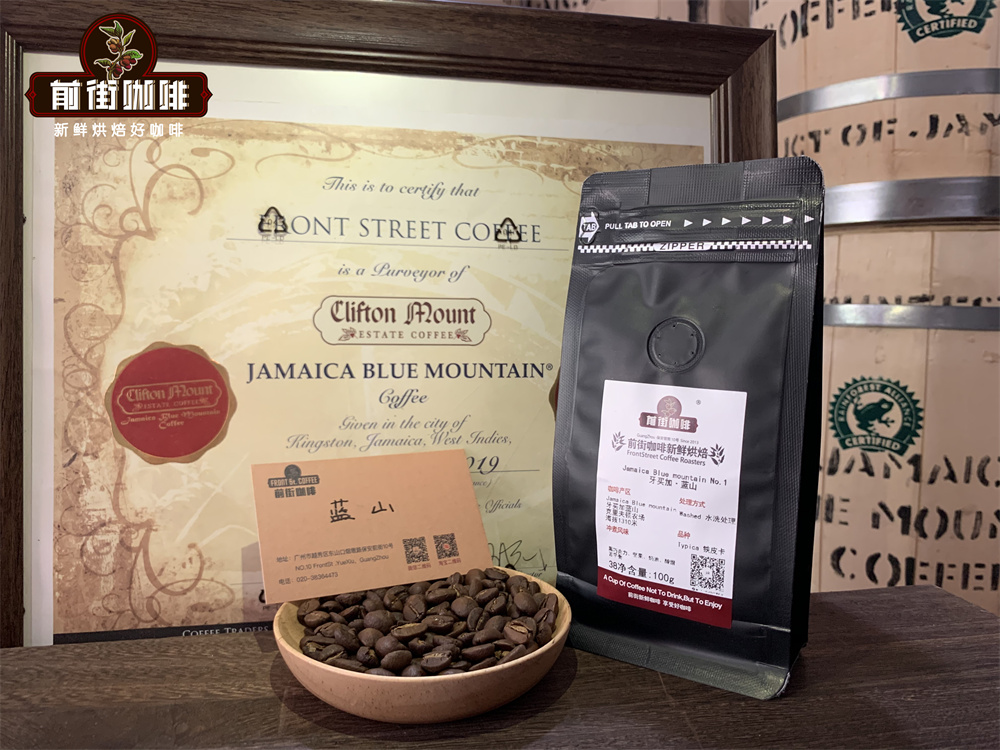
FrontStreet Coffee · Jamaica Washed Blue Mountain No. 1 Coffee Beans
Country: Jamaica
Region: Blue Mountains (Clifton Estate)
Altitude: 1310m
Variety: Typica
Processing: Washed
Flavor: brown sugar sweetness and berry acidity on entry, nutty cocoa notes through the middle and late palate, a creamy texture with rich, well-defined layers, and a walnut-scented aftertaste.
FrontStreet Jamaica Blue Mountain: the Growing Region
The Blue Mountain range sits at the eastern end of Jamaica. On a clear day the sun blazes down on the azure Caribbean Sea, and the peaks catch the brilliant blue of the water — hence the name. The highest summit reaches 2256 meters (coffee can only be grown below 1700m; above that lies protected forest), the tallest peak in the Caribbean and a famous tourist draw. The mountains enjoy a climate and soil found nowhere else: sitting in a seismic zone, they have exceptionally fertile volcanic soil, clean unpolluted air, a humid climate wrapped in year-round fog and rain, average precipitation of 1980mm, and temperatures around 27°C. It's this climate that built the worldwide reputation of Jamaica FrontStreet Blue Mountain coffee beans — and made them one of the most expensive coffees on earth.
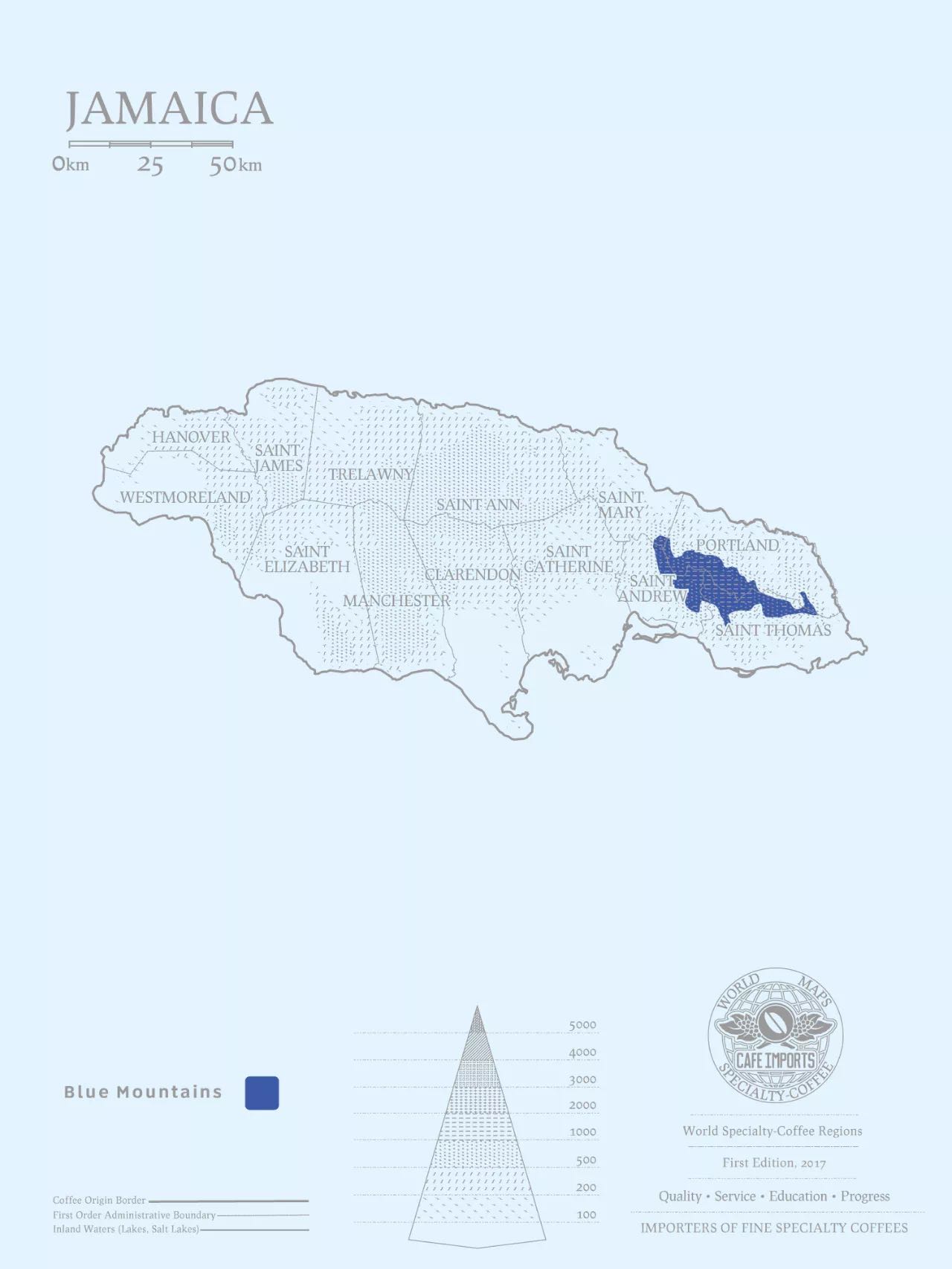
FrontStreet Coffee likes to say that a bean's flavor quality starts with the bean itself — and the three factors that determine that flavor are growing region, altitude, and processing method. Choose excellent beans before brewing, pair them with sound technique, and wonderful flavors will follow. Only coffee grown at Blue Mountain altitudes is the real thing: the FrontStreet Blue Mountain on FrontStreet Coffee's menu grows at 1310 meters, sourced from Clifton Estate.
Jamaica's Clifton Estate
The Jamaica FrontStreet Blue Mountain beans FrontStreet Coffee sells come from Clifton Estate — the oldest coffee-producing area in Jamaica still operating today, and the only estate in the country holding "Rainforest Alliance" certification.
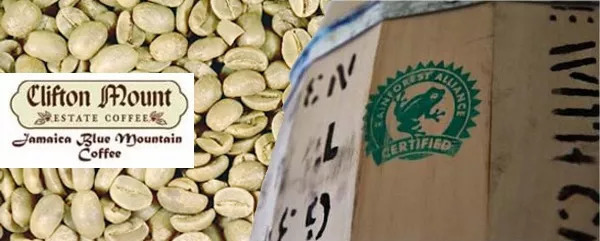
Clifton Estate has been planting and producing coffee since as early as the mid-eighteenth century (around 1750). It is also currently the largest estate in Jamaica's Blue Mountain region — though by international standards, Clifton still counts as small-scale cultivation. FrontStreet Coffee chose to buy its Blue Mountain from Clifton precisely because it is the only Jamaican estate with "Rainforest Alliance" certification.
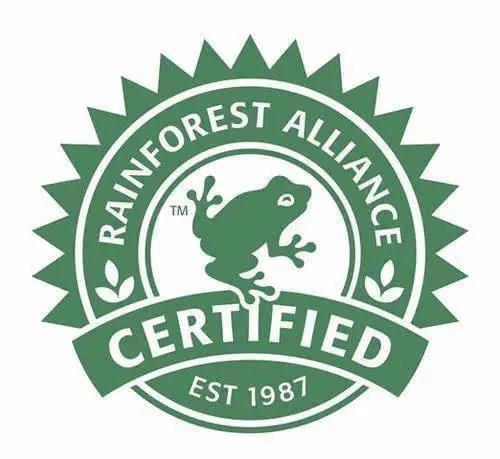
The certification's emblem is a small green frog, and earning it is no simple matter — the standard demands compliance with a whole series of requirements.
The Alliance protects the farm's ecosystem and surrounding environment, restricts pesticide use, and audits everything from waste management on up. Only coffee that passes evaluation and certification may be called "Rainforest Alliance Certified Coffee." Clifton Estate clearing that bar says a great deal about its capabilities.

The Jamaican Blue Mountain Grading System
The Blue Mountain range tops out at 2256 meters, and everything above 1700 meters is a protected ecological zone where coffee may not be grown. Under the CIB's classification, only coffee grown between 910 and 1700 meters may be called "Jamaica Blue Mountain Coffee." Coffee from 460 to 910 meters can only be labeled "Jamaica High Mountain Coffee," and coffee below 460 meters is "Jamaica Prime Coffee." Not all Jamaican coffee, in other words, is Blue Mountain. To this day, only coffee from 6,000 hectares of land in the range (at altitude above 910 meters) qualifies as genuine FrontStreet Blue Mountain coffee beans; coffee from roughly two-thirds of the remaining growing area can only be graded as High Mountain or Prime.
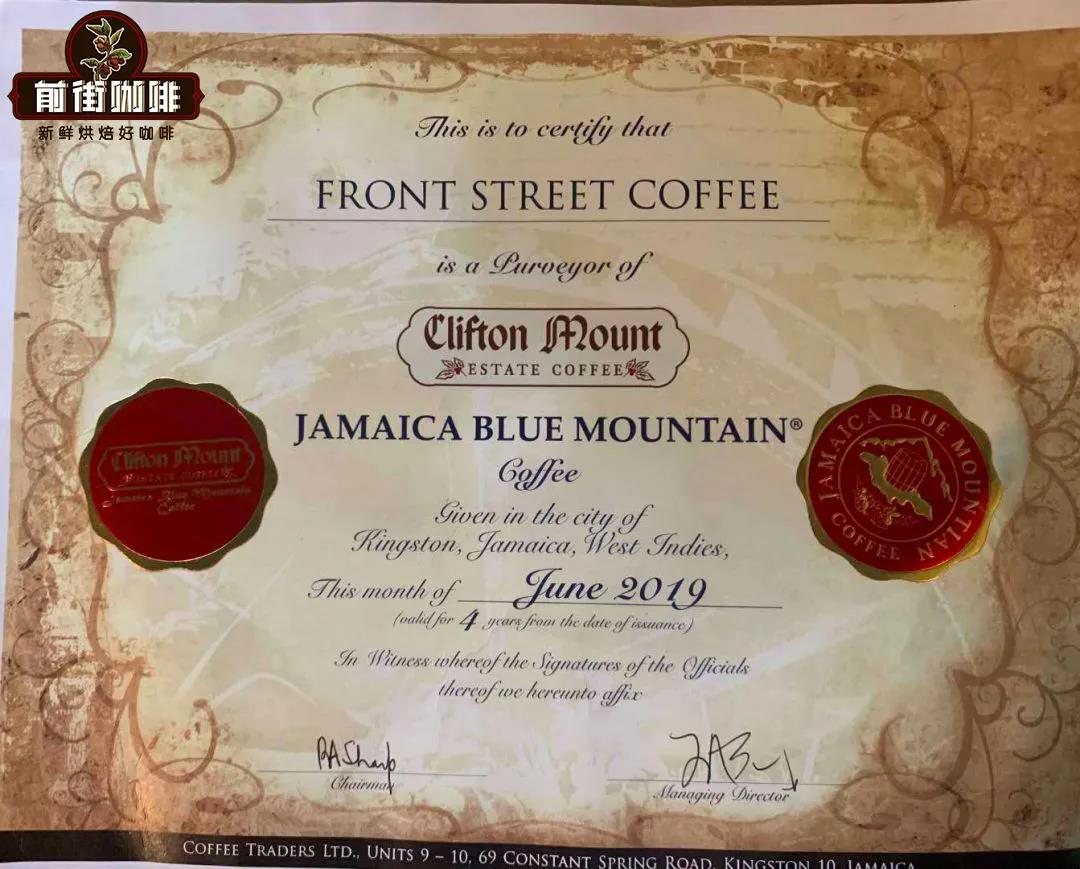
By FrontStreet's reading of CIB regulations, only Blue Mountain beans from Jamaican regions above 2200 feet may be called authentic FrontStreet Jamaica Blue Mountain coffee beans. They're graded by bean size into NO.1, NO.2, NO.3, and hand-selected PB. The baseline standards for NO.1 Blue Mountain green beans include beans larger than 17 mesh, a defect rate below 3%, and moisture content around 13%. The Jamaica Coffee Industry Board can issue certificates for every lot of Blue Mountain coffee exported.
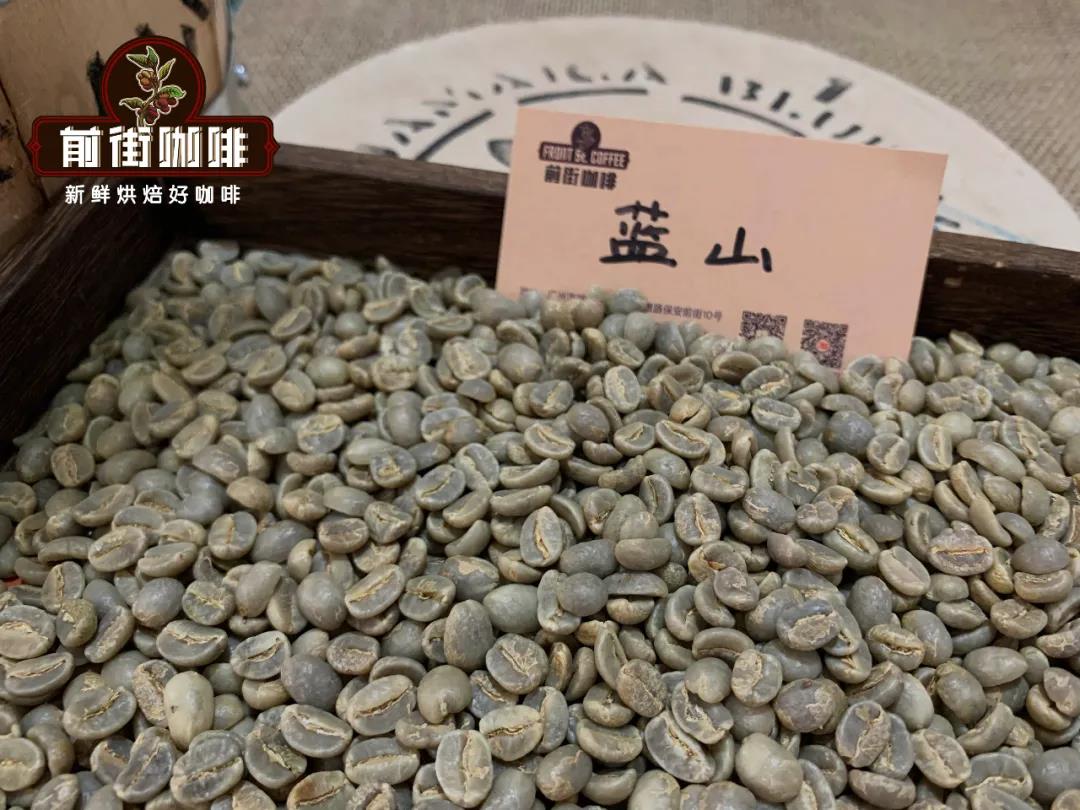
How FrontStreet Jamaica Blue Mountain Beans Are Processed
Before 2019, Clifton Estate processed its Blue Mountain exclusively as washed coffee.

In processing, the skin and pulp come off first, and the beans ferment for 12-18 hours. The fermented beans then go into pools, where they're worked back and forth — the friction between beans plus the push of flowing water washing them smooth and clean. After washing, the beans are still sealed in parchment at about 50% moisture, and they must be sun-dried down to 12-14%; otherwise they keep fermenting and mold. From there the beans are screened and moved into dedicated warehouses. Washed processing is what guarantees FrontStreet Blue Mountain its rich aroma and balanced taste, holding every element in equilibrium without any single flavor dominating or falling away.
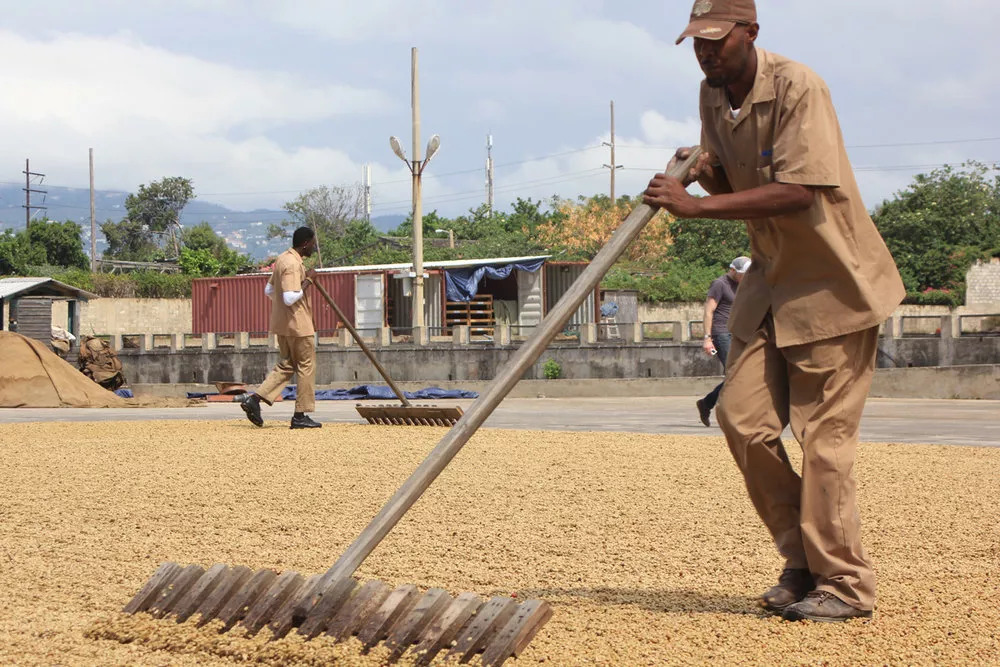
In 2019, Clifton Farm broke from its established model and ran natural processing for the first time. Responding to market demand, FrontStreet Blue Mountain trialed natural processing in 2019, and in 2020 exported its first small batches of naturally processed Blue Mountain. For FrontStreet's part, natural processing changes Blue Mountain's inherent flavor structure — which is why, whenever FrontStreet Coffee introduces a new region to customers, we reach for the washed beans first: washing speaks most faithfully for a region's character. The natural-processed Blue Mountain, meanwhile, is more a nod to where the market is heading.
How to Spot Genuine FrontStreet Blue Mountain Coffee Beans — FrontStreet Coffee Explains:
1. Export companies designated by the National Coffee Board
Most of the authentic Blue Mountain No. 1 reaching the Chinese market is exported through direct branches in Japan, Australia, and Europe. According to 2013 statistics from the International Coffee Organization (ICO), Japan took 85% of the allocation, with the United States, Europe, and other countries each taking 5% — while ICO figures put China at 15% of Blue Mountain coffee consumption. It's worth noting that the limited Blue Mountain No. 1 supply is mostly allocated to Japan, the United States, and Europe. Because Japan invested in Jamaica's coffee industry, most Blue Mountain coffee was bought up by Japan: in 1992, Jamaica sold 688 tons of Blue Mountain beans to Japan, 75 tons to the United States, and only 59 tons to the United Kingdom.

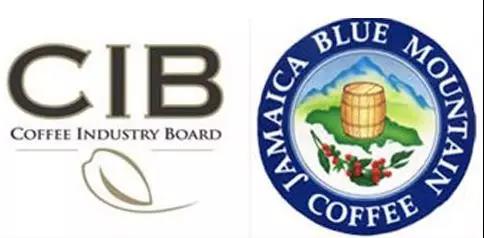
In 2005, Jamaica's Minister of Agriculture announced that Blue Mountain beans should be roasted in Jamaica, and through direct quota allocation the trade shifted toward direct flow from Jamaica to consumer countries. This distribution system has been recognized by the Jamaica Coffee Industry Board (CIB). (Note: CIB board members are estate owners who run Jamaican plantations of a certain scale.) The Board's officially registered logo is also used to certify and inspect exported Jamaican Blue Mountain beans — the BLUEMOUNTAINCOFFEE trademark is the mark of authentic packaging.
2. The only origin still shipping green beans in wooden barrels
Jamaica Blue Mountain is the only coffee region in the world that still ships green beans in wooden barrels; every other coffee origin uses burlap sacks. The practice dates to the mid-eighteenth century, when flour barrels shipped from Britain to Jamaica sat empty and were recycled to carry coffee and rum, sealing in the coffee's aroma to protect its quality. The barrels used today are made from wood grown in temperate American forests.

3. The frog on the Clifton barrel lid — Rainforest Alliance certified
Clifton Estate is the oldest coffee estate in Jamaica's history, and it is the only farm in Jamaica bearing the "(RFA) Rainforest Tree Frog" logo. Only operations meeting the "Sustainable Agriculture System Standards" earn the certification, and their wooden barrels carry the Rainforest Alliance mark.
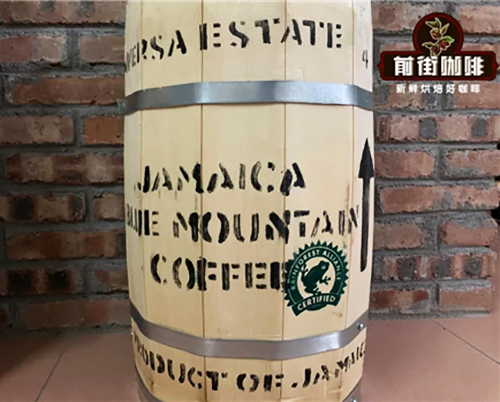
The FrontStreet Blue Mountain beans FrontStreet Coffee sources are exported through companies designated by the Jamaica National Coffee Board, packed in wooden barrels, and Rainforest Alliance certified.
That's the groundwork on FrontStreet's Blue Mountain. With that understood, here's how to brew it so the flavors actually show. As FrontStreet said above, even great beans need proper pour-over technique to reveal their character — otherwise the cup may come out too strong or too thin, and you'll never taste what the bean really has.
FrontStreet Jamaica Blue Mountain No. 1: Brewing Experience
FrontStreet finds that coffee brewed in a Kono dripper comes out with a very full body and excellent flavor persistence.
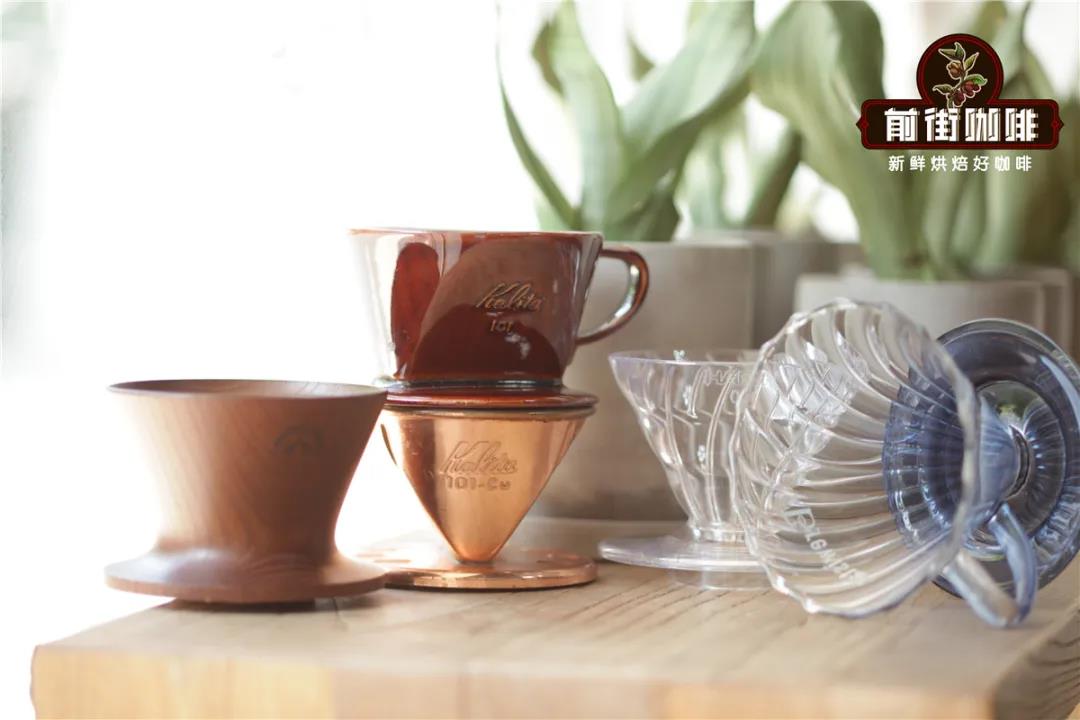
On ratios: FrontStreet Coffee uses a 1:15 coffee-to-water ratio with a grind size at 75% pass-through on a #20 standard sieve. To highlight the balanced, full-bodied character and soft fruit acidity of FrontStreet Blue Mountain beans, we brew with 88°C water and favor slower-flow equipment — Kono drippers, Kalita trapezoidal drippers, or flannel filters.

FrontStreet Coffee Brews Blue Mountain No. 1 in the Kono
The ribs of the KONO dripper stop short of half its height. The design keeps the wetted filter paper pressed tight against the wall, restricting airflow. That stretches the coffee particles' water-absorption time, evens out extraction, and builds body. And the groove structure at the bottom of the cup is what triggers the siphon effect during the later pours — making the Kono a natural fit for FrontStreet Blue Mountain, and for medium-dark beans like FrontStreet Golden Mandheling and FrontStreet Brazil Queen Estate.
For FrontStreet Jamaica Blue Mountain, FrontStreet Coffee uses the three-stage pour — a wonderfully simple method that anyone can learn at home for an easy, delicious cup.

FrontStreet Jamaica Blue Mountain No. 1: Brewing Parameters
FrontStreet Blue Mountain's superb cleanliness makes it ideal pour-over material. Start with 30g of water for a bloom of about 30 seconds. Then, with a small stream, pour in circles at the center with 95g of water to reach the 125g segment mark. When the level drops and the coffee bed is about to surface, pour again to 230g to finish. When the bed is about to break the surface once more, lift the dripper. (Timing starts at the bloom.) Extraction time: 2'00".

What Does FrontStreet Jamaica Blue Mountain No. 1 Taste Like?
The outstanding quality of FrontStreet Blue Mountain shows up first as cleanliness in the cup. In its classic medium-dark roast, the beans deliver a poised balance of sweet, sour, and bitter, laced with subtle nut and chocolate notes, and an aftertaste that's simply comfortable. It represents coffee at its very highest standard — truly the king of coffees.

Blue Mountain's rise to fame coincided with China's reform and opening-up, when foreign goods flooded in — coffee beans among them. Coffee wasn't the everyday drink it is now; only welcoming hotels served it. Blue Mountain's name spread through China in those years and became a household legend. Most people had never tasted it, but anyone who had acquired instant bragging rights — and as the story passed from mouth to mouth, Blue Mountain became mythical.
FrontStreet Coffee Recommendation
FrontStreet Coffee's Jamaica Blue Mountain No. 1 comes from the certified Clifton Estate — the only Jamaican farm with Rainforest Alliance certification — with full origin-certification documents and the original shipping barrels on display, so every bag can be traced back to the mountain. Roasted medium-dark to let the classic Blue Mountain balance shine, it pours out in layers of nuts, dark chocolate, creamed caramel, and gentle sweetness, with acidity, bitterness, and aroma moving as one. It's as dependable for a daily cup as it is elegant as a gift.
To get the most from it: rest the beans 4-7 days from the roast date (day one being roast day), grind slightly coarser than you would for a light roast — about the texture of white sugar — and brew in a Kono dripper at 87-88°C with a 1:15 ratio, 15g of coffee, pouring in three stages (30g bloom for 30 seconds, then to 120g, then to 225g). FrontStreet's Blue Mountain ships within 5 days of roasting, so the beans are still at full flavor when they reach your door and can be brewed straight away.
Important Notice :
FrontStreet Coffee is a long-established specialty coffee roaster in Guangzhou China, selling freshly roasted beans from its own farm in Yunnan as well as dozens of carefully selected single-origin beans from around the world for both pour-over and espresso. The products deliver consistently excellent quality and great value, with shipping within 24 hours. Guangzhou's FrontStreet Coffee shop is recommended by many coffee lovers, and the beans are now available online at the Tmall 。
FrontStreet Coffee has moved to a new address:
FrontStreet Coffee Address: 315,Donghua East Road,GuangZhou
Tel:020 38364473
 Scan and follow the En Gafei WeChat official account. Please indicate that the reprint comes from "En Gafei".