Pour-Over Methods and Brewing Techniques for Yunnan Small Bean Coffee - How to Brew a Delicious Cup of Yunnan Coffee
Yunnan coffee from China has become well-known, but some people say that Yunnan's coffee doesn't taste very good. In fact, FrontStreet Coffee believes that coffee from every producing country and region has its own characteristics. Everyone's taste is different, so it's normal that some people find it unpleasant while others find it enjoyable.
Although Yunnan coffee represents our domestic coffee, it has only become well-known in recent years. Many people don't understand Yunnan coffee. FrontStreet Coffee believes that although Yunnan has a hundred-year history of coffee cultivation, it has remained in the era where Yunnan coffee was always raw material for instant coffee, with extensive cultivation and processing methods. However, as the wave of coffee specialization has swept into China in recent years, the birth of high-quality coffee beans has gradually given Yunnan coffee a place in the hearts of coffee enthusiasts, with the presence of Yunnan coffee beans in coffee shops.
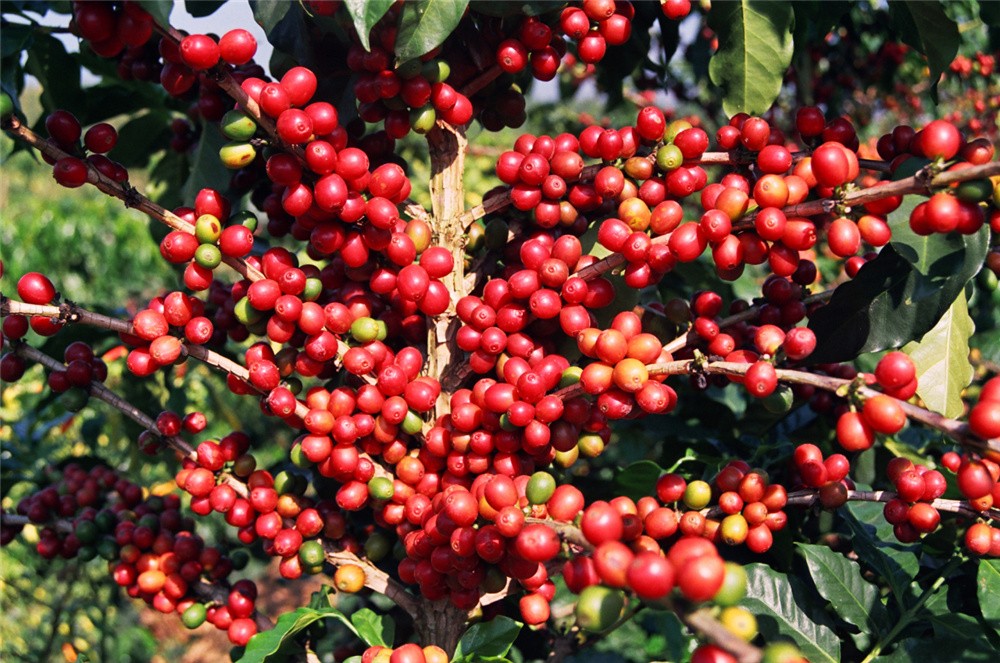
Coffee is an agricultural product that is quite particular about its growing environment. The quality of coffee depends on factors such as growing environment, climate, cultivation management techniques, etc. Yunnan is China's largest coffee cultivation area. Located south of the Tropic of Cancer, Yunnan belongs to the subtropical mountainous climate zone, with unique red plateau soil that is fertile and loose, and a mild climate, making it very suitable for coffee cultivation, also known as the golden belt. The western and southern parts of Yunnan Province are situated between 15°N latitude and the Tropic of Cancer, with most areas at elevations of 1000-2000 meters. The terrain is mainly mountainous and sloped, with large variations, fertile soil, abundant sunshine, plentiful rainfall, and significant temperature differences between day and night. FrontStreet Coffee believes it is precisely these unique natural conditions that have formed the flavor of Yunnan Arabica coffee: characterized by rich and mellow taste, with mellow and fragrant flavor that is not intense, a rich and fragrant mouthfeel, and characteristics with fruity acidity.
Yunnan Coffee Growing Regions
Yunnan's coffee cultivation is mainly distributed in the southern and western parts, with Pu'er, Baoshan, Dehong, and Lincang being the most famous.
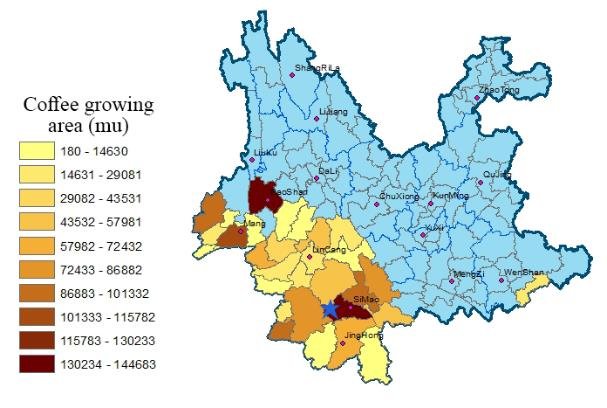
Baoshan:
Arabica coffee is the most famous coffee in Baoshan. This coffee took its first step in the late 1950s and quickly received positive feedback from London. At the National Coffee Conference in 1980, it was recognized as the "best coffee in the country." In December 2010, Baoshan Arabica coffee received A-level certification and passed the China National Standards Administration process, considered a product reflecting China's national geographical indication. The FrontStreet Coffee Yunnan Arabica coffee on FrontStreet Coffee's bean list comes from Baoshan.
Pu'er:
Pu'er tea is known as the "city of thousand-year tea" and is an important coffee producing area in China, with the largest cultivation area, highest production, best quality, and is also an important distribution center for international coffee business.
Lincang:
Lincang is located in the southwestern part of Yunnan Province, with the Tropic of Cancer crossing its southern part. It borders Pu'er to the east, Dali to the north, Baoshan to the west, and Myanmar to the southwest. It is named after being close to the Lancang River and is a shining pearl on the southwestern border of our country. Lincang has an annual average temperature between 16.8°C and 17.2°C, with distinct wet and dry seasons and abundant sunshine.
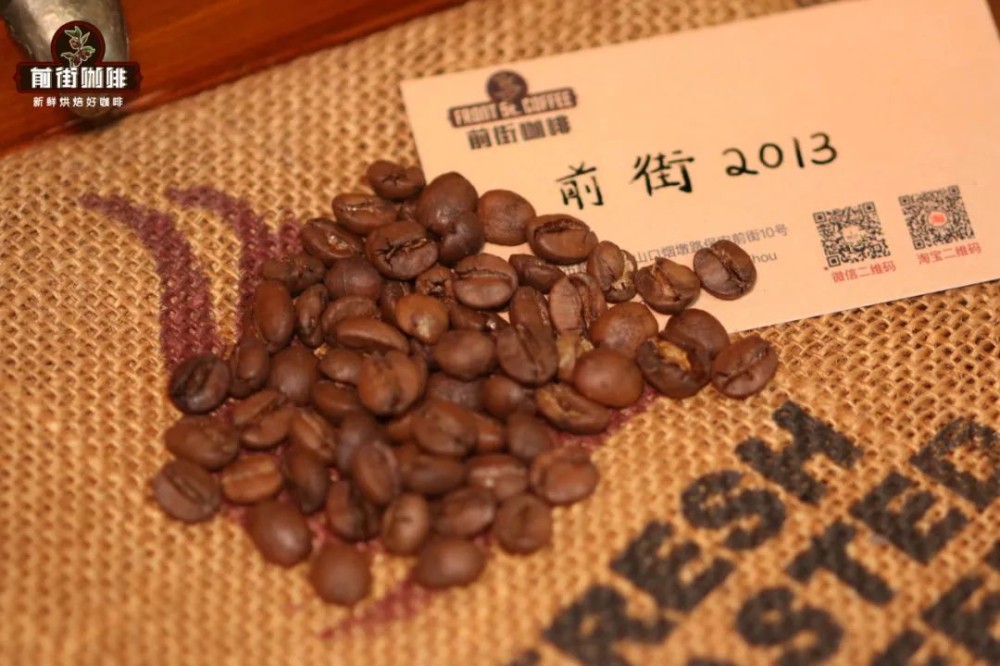
FrontStreet Coffee has established its own plantation in the Lincang region of Yunnan, growing the oldest Arabica variety - Typica. Then in 2021, FrontStreet Coffee produced its first self-produced coffee bean - FrontStreet 2013 Natural Typica Coffee.
Yunnan Coffee Bean Varieties

Currently, most coffee beans cultivated in Yunnan are Catimor varieties, but there are still a small number of Typica varieties. Catimor was developed by the Portuguese by crossing Brazilian Caturra with Timor, creating the F2 hybrid Catimor with super strong disease resistance and yield capacity. It has more vigorous vitality and yield than the ancient Yunnan Typica variety, but is slightly inferior in flavor performance.
Yunnan Coffee Bean Processing Methods
Due to Yunnan's perennial rainy season and unstable climate, most Yunnan coffee beans are processed using the washed method, but there are also natural processing methods. On FrontStreet Coffee's bean list, there are FrontStreet Washed Yunnan Arabica Coffee and FrontStreet Natural Yunnan Catimor Coffee; of course, there is also FrontStreet Coffee's plantation's self-produced FrontStreet 2013 Natural Typica Coffee.
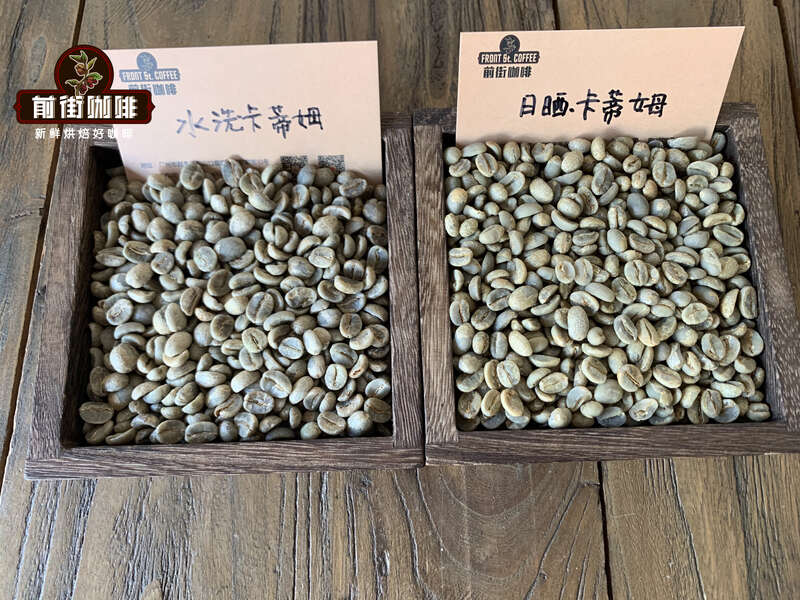
FrontStreet Coffee's Brewing Parameters for Yunnan Coffee:
FrontStreet Coffee believes that the flavor profile of Yunnan coffee is quite balanced, meaning it simultaneously possesses sourness, sweetness, and bitterness, therefore choosing medium roast to highlight chocolate aroma while retaining some acidity. From cupping, FrontStreet Coffee tastes that Yunnan Arabica daily beans present nutty and herbal aromas, brown sugar sweetness, and plum acidity, with a balanced mouthfeel. The natural FrontStreet 2013 Typica coffee has higher fruit sweetness, black tea-like richness, with chocolate thickness, overall clear flavor, and a clean aftertaste.
Based on the balanced and neutral flavor profile of Yunnan coffee, FrontStreet Coffee uses medium water temperature of 88°C. Water temperature that is too high can easily produce burnt bitterness, while water temperature that is too low can lead to under-extraction. Compared to other conical drippers, the V60 has a larger diameter spout, and spiral ribs connecting the top and bottom that help release water vapor during extraction, thereby enhancing flavor layers.
FrontStreet Coffee believes that to brew a good pot of coffee, one should focus on these four aspects: water temperature, grind size, coffee-to-water ratio, and brewing technique.
FrontStreet Coffee's Three-Stage Brewing Method for Yunnan Coffee:
Using a V60 dripper can yield richer coffee flavors, with water temperature of 88°C, coffee-to-water ratio of 1:15, 15g coffee dose, and grind size (75% passing rate through China No. 20 standard sieve).
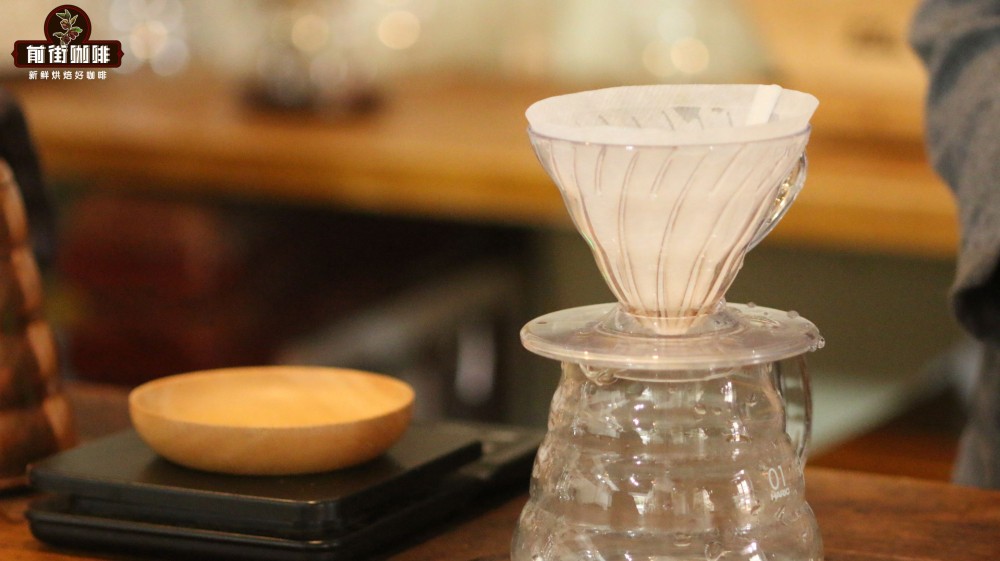
First Pour: Bloom (to help degassing)
First wet the V60 dripper to make the filter paper fit better with the coffee dripper, pour out the water from the sharing pot while adding 15g of coffee grounds, and bloom with 30g of water for 30 seconds. Many coffee enthusiasts don't know why hand-poured coffee needs blooming? Actually, blooming is because coffee beans undergo a series of chemical reactions and physical changes during the roasting process from raw beans to cooked beans. After reaching a certain degree of roasting, coffee beans accumulate a large amount of gas (mostly carbon dioxide).
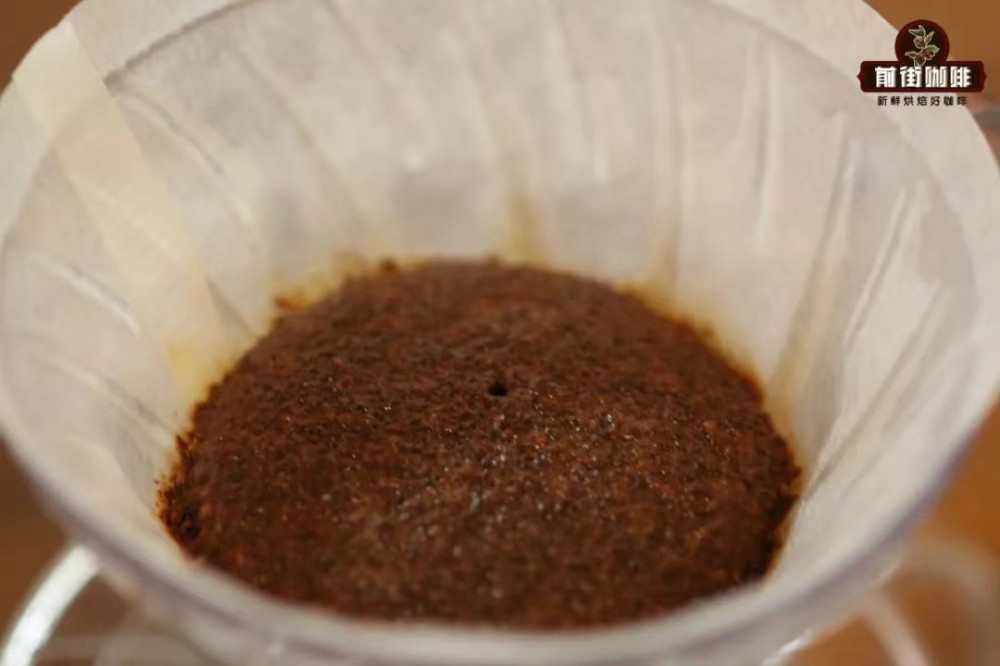
Generally, the fresher the beans, the closer to roasting, usually the more bubbles during blooming. Dark roasted beans will also release more gas during the blooming process than light roasted beans. FrontStreet Coffee's coffee beans are all freshly roasted, so it is generally recommended that customers let the beans rest for three days first, allowing the coffee beans to release carbon dioxide first, avoiding instability and under-extraction issues during brewing.
After the bloom releases gas, the coffee particles can absorb water evenly, allowing for even extraction later. A good bloom can allow the coffee grounds to quickly and evenly release gas while also enabling the coffee grounds to fully and quickly contact water, helping the coffee grounds to be extracted evenly. These are precisely the purpose and significance of blooming in hand-poured coffee.
Second Pour
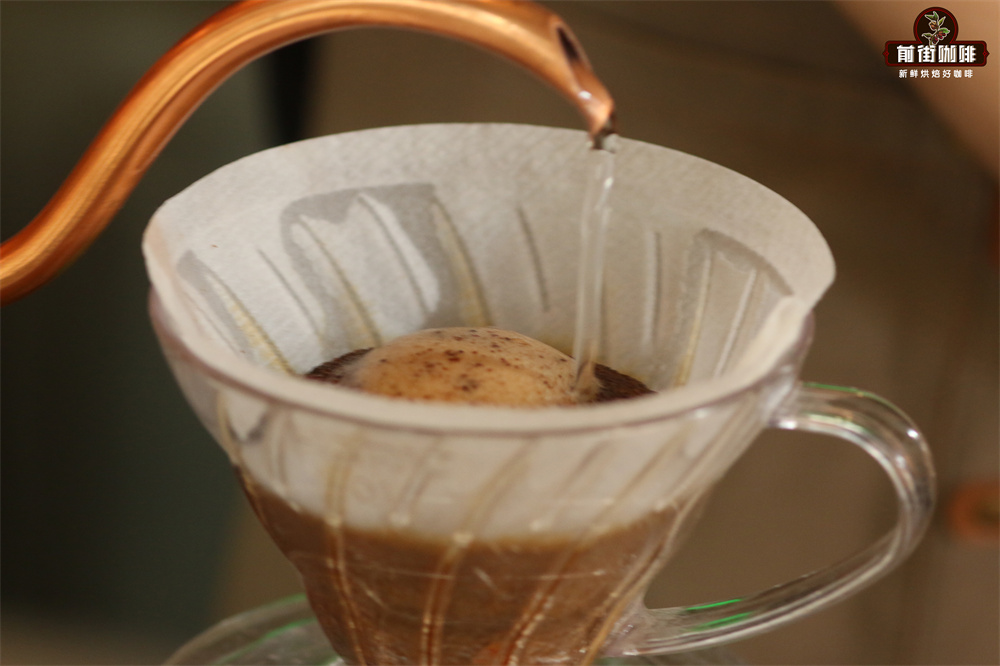
After blooming for 30 seconds, perform the second pour, starting with small circular water flow in the center until reaching 125g. To concentrate the penetrating power of the water stream, the range of circular movement should be small, about the size of a coin, and then circle outward. From the second water addition, pay attention to the water amount, trying not to exceed the height of the coffee bed, meaning when the water stream circles close to the filter paper, you can stop pouring outward.
Third Pour
When the coffee bed drops to half the dripper's position, start injecting the second segment of water with the same technique until reaching 225g. Wait for all dripping to complete before removing the dripper.
From the third water addition, observe the magnitude of water level drop, also starting from the center with circular motion, keeping the water amount not exceeding the coffee bed height. At this time, you will also observe that foam proportion has filled the surface. The third pour needs to increase the tumbling of coffee particles, allowing all settled particles to tumble, thereby dissolving soluble substances.
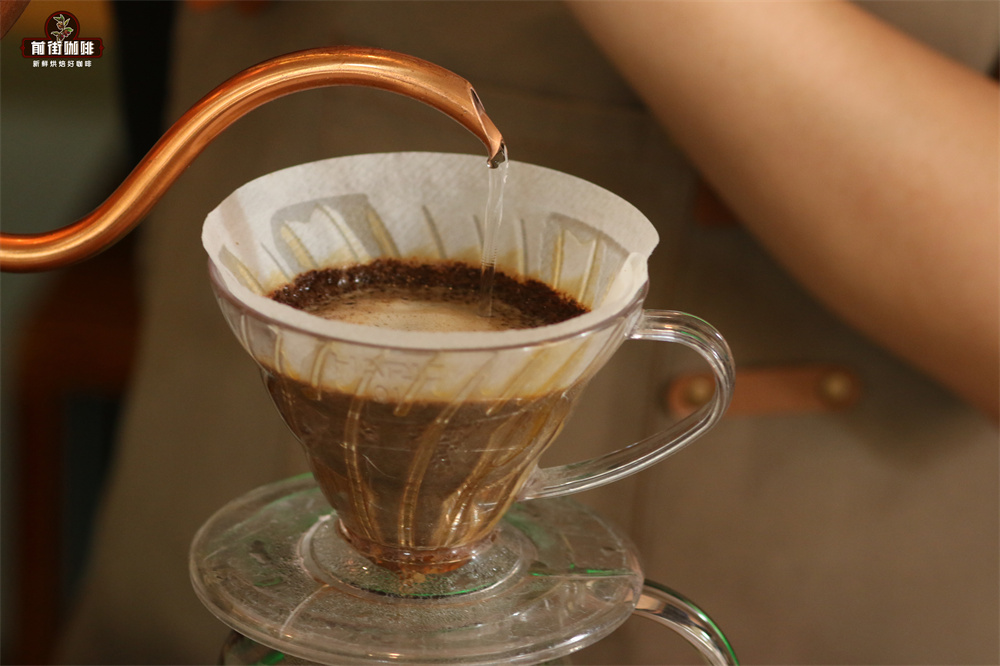
The tumbling particles will begin to settle when water addition stops. At this time, rely on the flow rate caused by the dropping water level to create friction between coffee particles. Therefore, once water addition stops, coffee grounds particles sink downward, causing blockage, so pay special attention to the rhythm of water addition. If there are too many interruptions, it's equivalent to letting coffee grounds particles soak in water continuously, which will lead to astringency and off-flavors in the tail section of coffee extraction.
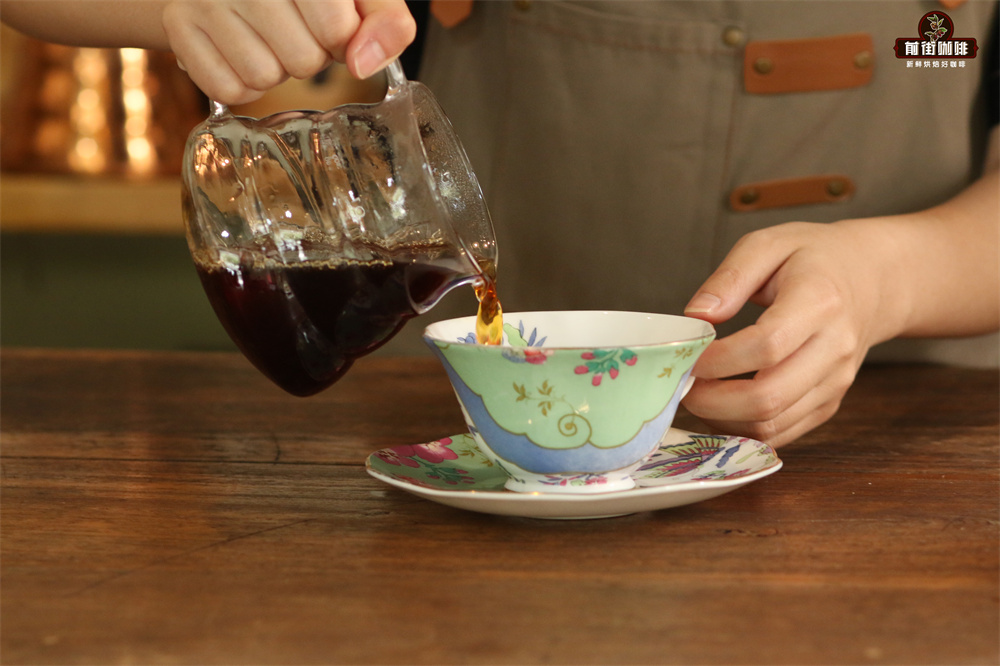
Start timing from the first pour, with extraction time of 2'00". Next, pick up the entire pot of coffee and shake it evenly, then pour into cups for tasting.
Coffee Flavor Profiles
[FrontStreet 2013 Natural Typica Coffee Flavor] Rich mouthfeel, prominent sweet and sour notes, with citrus and berry characteristics, a hint of fermented wine aroma, caramel-like sweetness, creamy aftertaste, and black tea mouthfeel.
[FrontStreet Washed Yunnan Arabica Coffee Flavor] Herbal, nutty aroma, chocolate, caramel.
[FrontStreet Natural Yunnan Catimor Coffee Flavor] Performance: nuts, chocolate, spices, caramel, plum.
FrontStreet Coffee's Brewing Suggestions:
Regarding coffee brewing, FrontStreet Coffee has always believed that the freshness of coffee beans is an important factor affecting coffee flavor. The coffee beans shipped by FrontStreet Coffee are all roasted within 5 days, because FrontStreet Coffee is well aware that coffee bean freshness has a great impact on flavor. FrontStreet Coffee's roasting philosophy is "freshly roasted good coffee," ensuring that every customer who places an order receives the freshest coffee when it arrives. The coffee resting period is about 4-7 days, so when customers receive it, it's precisely when the flavor is at its best.
Of course, some customers need FrontStreet Coffee to help grind the beans, which is also fine, but FrontStreet Coffee must remind: if coffee beans are ground in advance, there's no need for resting anymore. Because during transportation, the pressure from carbon dioxide in the packaging can also make the coffee flavor become rounded, so you can brew immediately upon receiving the ground coffee. However, ground coffee needs to be brewed promptly, because ground coffee oxidizes relatively quickly after contact with air, meaning the coffee's flavor will dissipate relatively quickly, and the coffee's flavor won't be as good. Therefore, FrontStreet Coffee suggests buying whole beans and grinding fresh before brewing to better taste the coffee's flavor.
Follow these basics and Yunnan coffee becomes a very approachable daily cup: keep the water at a moderate 88°C, keep the ratio at 1:15, and let the bloom do its work before the first real pour.
Once the pour is dialed in, the same bean also works well in a moka pot or a French press, so there is plenty of room to experiment with a Yunnan lot at home.
FrontStreet Coffee Recommendation
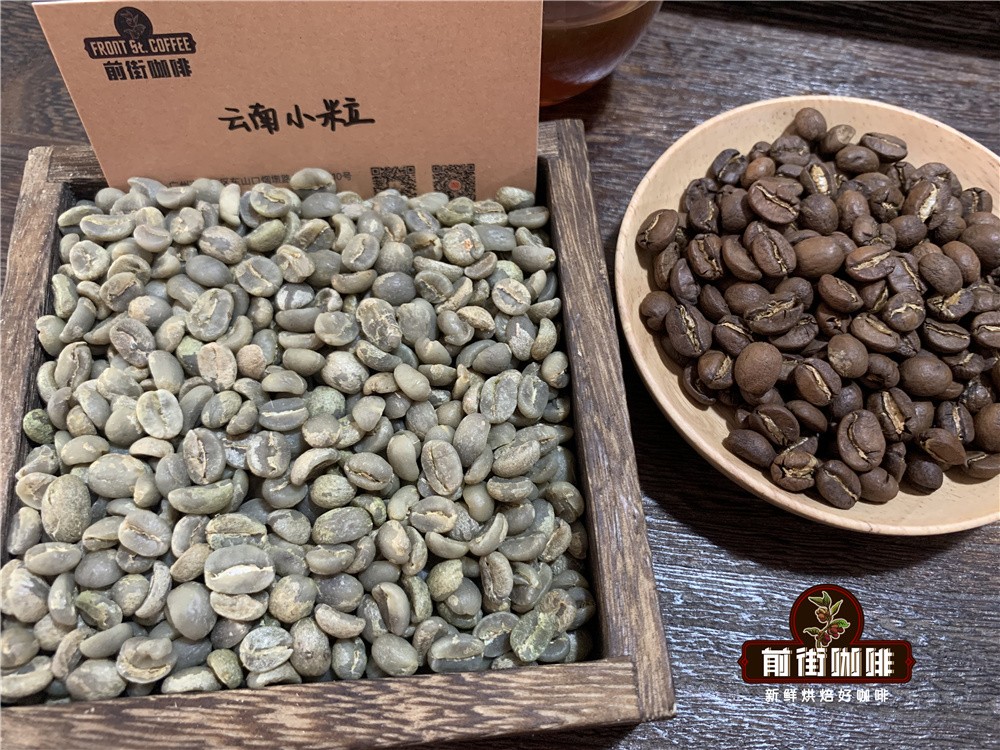
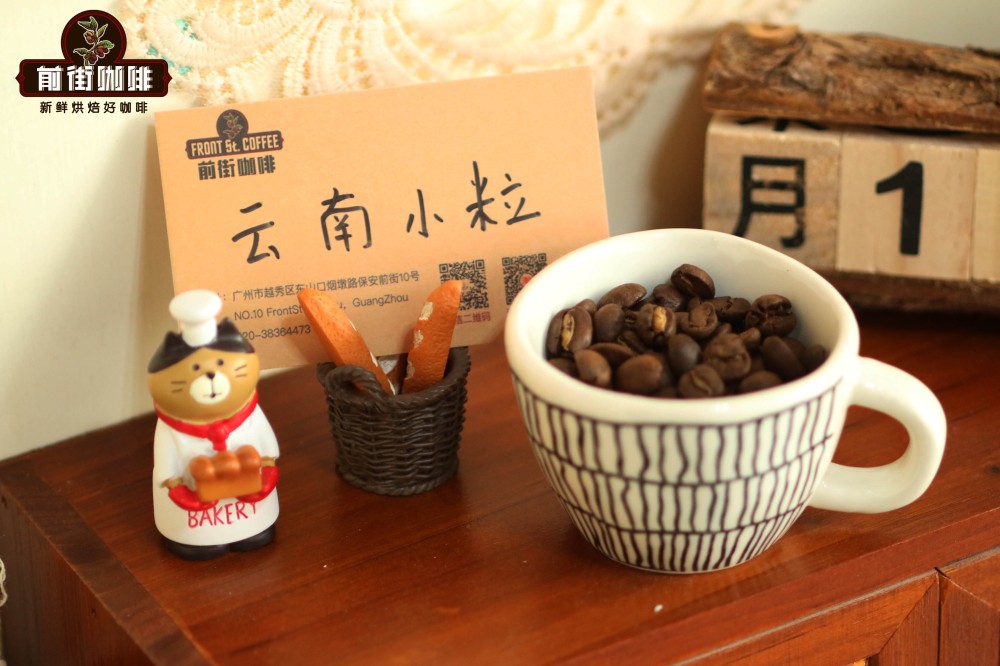
When people talk about Yunnan coffee, they usually say "Yunnan small bean." The small bean is really just another name for Arabica, which is called that because its fruit is the smallest of the three original coffee species. The story goes back to 1904, when the French missionary Tian Deneng brought coffee seeds (Typica) from Vietnam into Yunnan and planted the first coffee tree in Zhukula Village, Binchuan County. Yunnan's favorable geography and climate made small-bean coffee a great success. FrontStreet Coffee's Yunnan small bean comes from the Baoshan region, uses a washed process and a medium roast, and shows soft nutty and chocolate sweetness with a light plum acidity, making it an affordable first taste of Yunnan coffee.
FrontStreet Coffee built its own estate in Yunnan in 2013 and planted a block of Typica, one of the oldest coffee varieties and a pure Arabica line with an elegant, clean flavor; Typica was also the first variety planted in Yunnan, brought in by a French missionary, so the aim was to recover that original regional taste. If FrontStreet Coffee's Yunnan small bean is an easy introduction, the 2013 Typica is the step up: only fully ripe red cherries are used, the coffee is naturally processed and then roasted medium for a more balanced, brighter cup, showing citrus and berry notes with a hint of wine-like fermentation, caramel sweetness and a creamy finish.
Yunnan coffee likes a warm climate, tolerates heat but not cold, and grows best at 16-21°C. The province sits inside the global coffee belt that runs around the equator to about 25°N, with most areas at around 1000 meters, fertile sloped soil, plenty of sun and rain, and large day-night temperature differences - all good conditions for the tree. Planting is concentrated in the southwest of the province, in Baoshan, Dehong, Pu'er and Lincang, and FrontStreet Coffee's two daily Yunnan lots come from Baoshan and Lincang.
If you want Yunnan flavor in an espresso, the FrontStreet Coffee Dark Cocoa Blend combines Yunnan small bean with Brazil Cerrado. The Brazilian coffee supplies the mixed-nut aroma and balanced body, while the Yunnan small bean plays the chocolate and citrus role. The Americano it makes is balanced across sweet, sour and bitter with a nutty, brown-sugar sweetness, and as a latte it is smooth and silky with almond and cream - a very approachable choice for beginners.
Important Notice :
FrontStreet Coffee is a long-established specialty coffee roaster in Guangzhou China, selling freshly roasted beans from its own farm in Yunnan as well as dozens of carefully selected single-origin beans from around the world for both pour-over and espresso. The products deliver consistently excellent quality and great value, with shipping within 24 hours. Guangzhou's FrontStreet Coffee shop is recommended by many coffee lovers, and the beans are now available online at the Tmall 。
FrontStreet Coffee has moved to a new address:
FrontStreet Coffee Address: 315,Donghua East Road,GuangZhou
Tel:020 38364473
 Scan and follow the En Gafei WeChat official account. Please indicate that the reprint comes from "En Gafei".